Beef Doneness
Beef Ribs Done Temperature
Also: beef ribs pull temp, beef short ribs done, beef back ribs done, BBQ beef ribs temperature
Beef ribs are done at 200–205°F (93–96°C), when connective tissue has fully dissolved and a probe slides in with zero resistance.
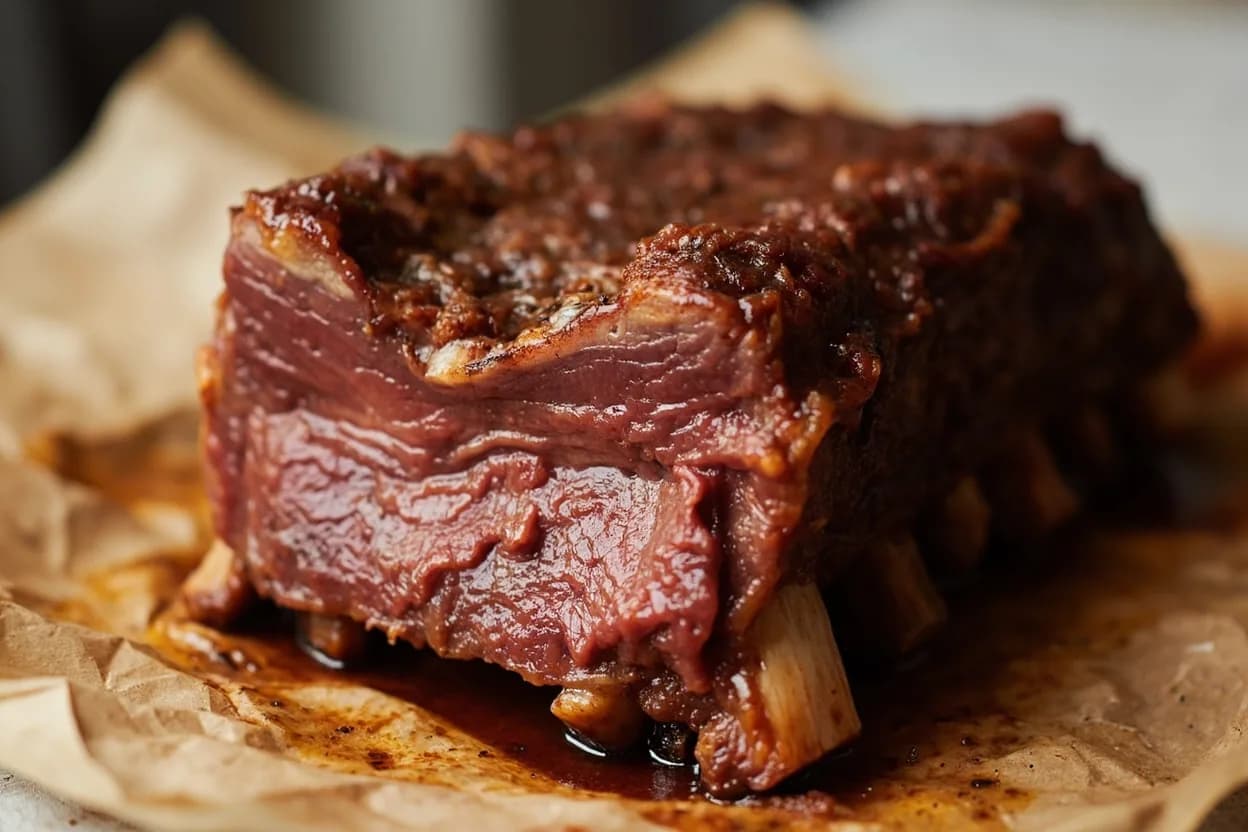
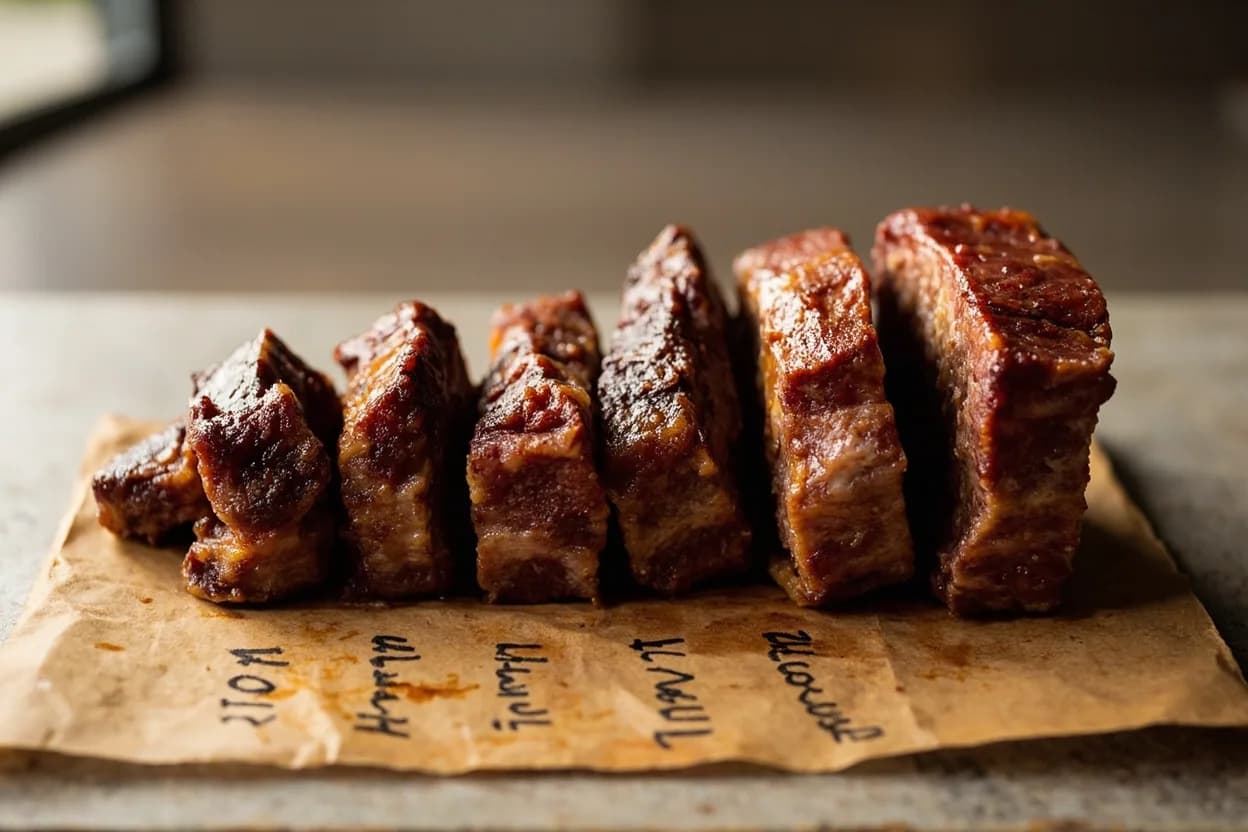
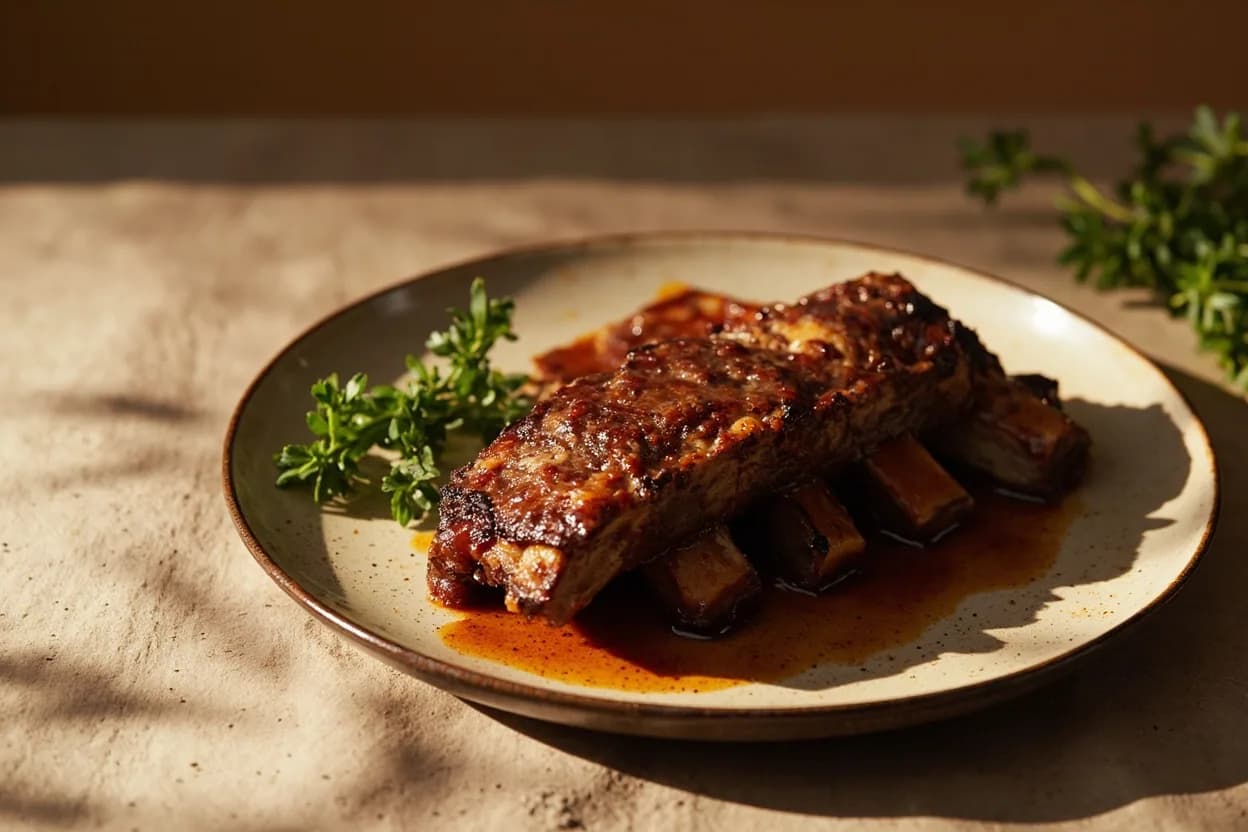
Beef ribs — whether meaty back ribs or beef plate short ribs — are a collagen-dense cut that must reach 200–205°F (93–96°C) internal temperature before they are tender. Unlike steaks, where a lower pull temperature preserves a pink, firm texture, ribs require extended time in this high range to fully convert collagen to gelatin, rendering the intercostal connective tissue and making the meat pull cleanly from the bone. Temperature alone is necessary but not sufficient: the probe-tender test (a cake skewer or thermometer probe should slide into the thickest part of the meat between the bones with no more resistance than room-temperature butter) is the definitive gate. Bone pull-back — the meat receding to expose 1/4 to 1/2 inch of clean bone — is a supporting visual cue that collagen breakdown is well underway.
In photos
What happens
At 200–205°F, the remaining collagen strands between muscle fibers — particularly the dense sheaths around the intercostal muscles — have undergone near-complete hydrolysis into gelatin. Muscle fibers that contracted and expelled moisture during the long cook are now saturated by that liquefied gelatin, creating the unctuous, self-basting quality prized in competition BBQ and Korean galbi-jjim alike. Intramuscular fat has fully rendered, lubricating each fiber bundle. The periosteum (bone membrane) softens and releases, allowing the visible bone pull-back. If ribs are pulled before this range — say at 185°F — the collagen is still chewy and the meat clings stubbornly to the bone.
What to look for
- Probe or skewer slides into the meat between bones with no resistance — the 'butter test'
- Bones visibly exposed 1/4–1/2 inch at the ends, clean of meat
- Rack bends and begins to crack when lifted from one end with tongs — the 'bend test'
- Surface bark is deeply mahogany and firm to the touch, not sticky or wet
- A gentle shake of the rack causes the meat to jiggle loosely on the bone
How to check
- Insert an instant-read thermometer or thin cake skewer into the thickest part of the meat, between two bones, avoiding contact with bone itself
- Confirm temperature reads 200–205°F; then re-probe in two or three spots — ribs can cook unevenly along the rack
- Perform the bend test: lift one end of the rack with tongs; it should arc and begin to crack at the surface
- Probe-tender test is the final gate: if the probe meets any springback, return to the cooker regardless of temperature
Food safety
Carryover & resting
Carryover in whole rib racks is minimal — typically 2–4°F — because the large thermal mass and the wrapping foil (if used) stabilize temperature during rest. A 30–45 minute rest in a foil-wrapped rack or a cambro (dry cooler) allows juices to redistribute and gelatin to re-set slightly, making slicing or pulling cleaner without significant temperature overshoot.
The science behind it
The biochemical transformation driving rib tenderness; begins around 160°F but completes in the 200–205°F window over time
Wrapping ribs in foil at the stall (around 160–170°F) accelerates the collagen conversion phase and pushes ribs to done faster
- Probe-Tender Test
The definitive doneness check — texture, not temperature alone, is the final gate for all collagen-rich beef cuts
- Beef Stall
The evaporative cooling plateau at 150–170°F that precedes the final push to done temperature
- Maillard Reaction / Bark Formation
The surface crust (bark) that develops on unwrapped ribs is the product of Maillard and sugar-char reactions; a firm bark indicates adequate time at temperature
Appears in
References
- 1.Meathead: The Science of Great Barbecue and Grilling — Meathead Goldwyn
- 2.The Food Lab — J. Kenji López-Alt
- 3.Franklin Barbecue: A Meat-Smoking Manifesto — Aaron Franklin & Jordan Mackay
- 4.On Food and Cooking — Harold McGee
Confidence: high
Notes
Plate Short Ribs vs. Back Ribs
Beef plate short ribs (NAMP 123) carry dramatically more meat than back ribs (NAMP 124) and benefit most from the 200–205°F target. Back ribs have less intercostal meat and can finish slightly sooner — around 195–200°F — though the probe-tender test remains the true gate for both.
Time at Temperature Matters
A rib rack that spikes to 205°F and is immediately pulled may still feel slightly tough. The best results come from holding 200–205°F for 30–60 minutes (common in a wrapped cambro rest or a foil finish in the cooker), which ensures the collagen conversion is thorough throughout the full thickness of the cut.