Beef Doneness
Beef Stall (150–170°F)
Also: BBQ stall, the stall, evaporative cooling plateau, brisket stall, pork butt stall, Texas crutch trigger
The stall is an evaporative cooling plateau at 150–170°F where internal temperature stops rising for hours as surface moisture evaporates faster than the cooker can add heat.
The stall (also called the plateau) is a phenomenon encountered when smoking large, collagen-rich cuts of beef — primarily brisket and chuck roast — at low ambient temperatures (225–275°F). After climbing steadily through the early cook, the internal temperature of the meat stalls between 150–170°F (65–77°C) for anywhere from 2 to 6 hours, sometimes appearing to drop slightly. The cause is evaporative cooling: moisture migrating from the interior of the meat to the surface evaporates, and the latent heat of vaporization absorbs energy from the meat at exactly the rate the smoker is adding it. The meat behaves like a wet-bulb thermometer — it cannot rise above the evaporative cooling temperature until the surface dries sufficiently. The stall ends when the surface moisture is depleted enough that evaporative cooling can no longer balance the heat input, after which the internal temperature resumes its climb toward the 200–205°F done range.
In photos
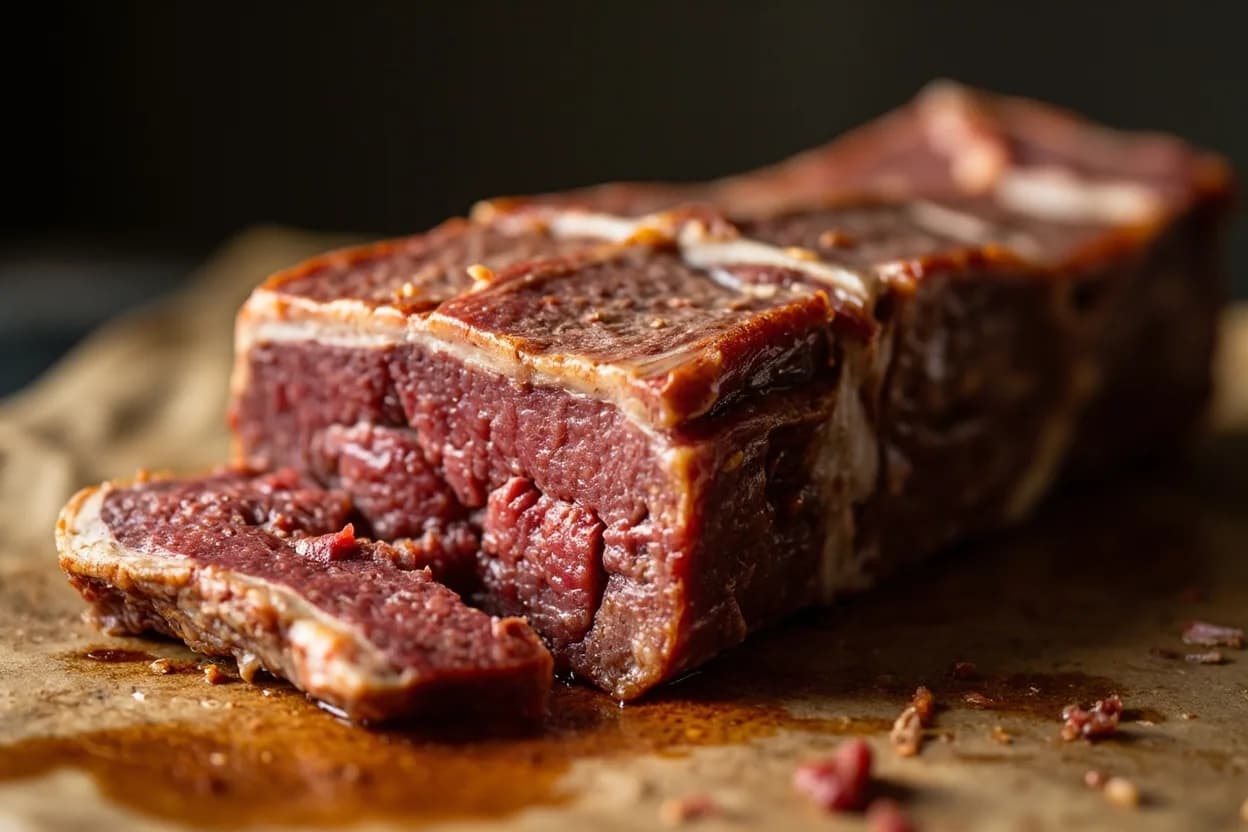

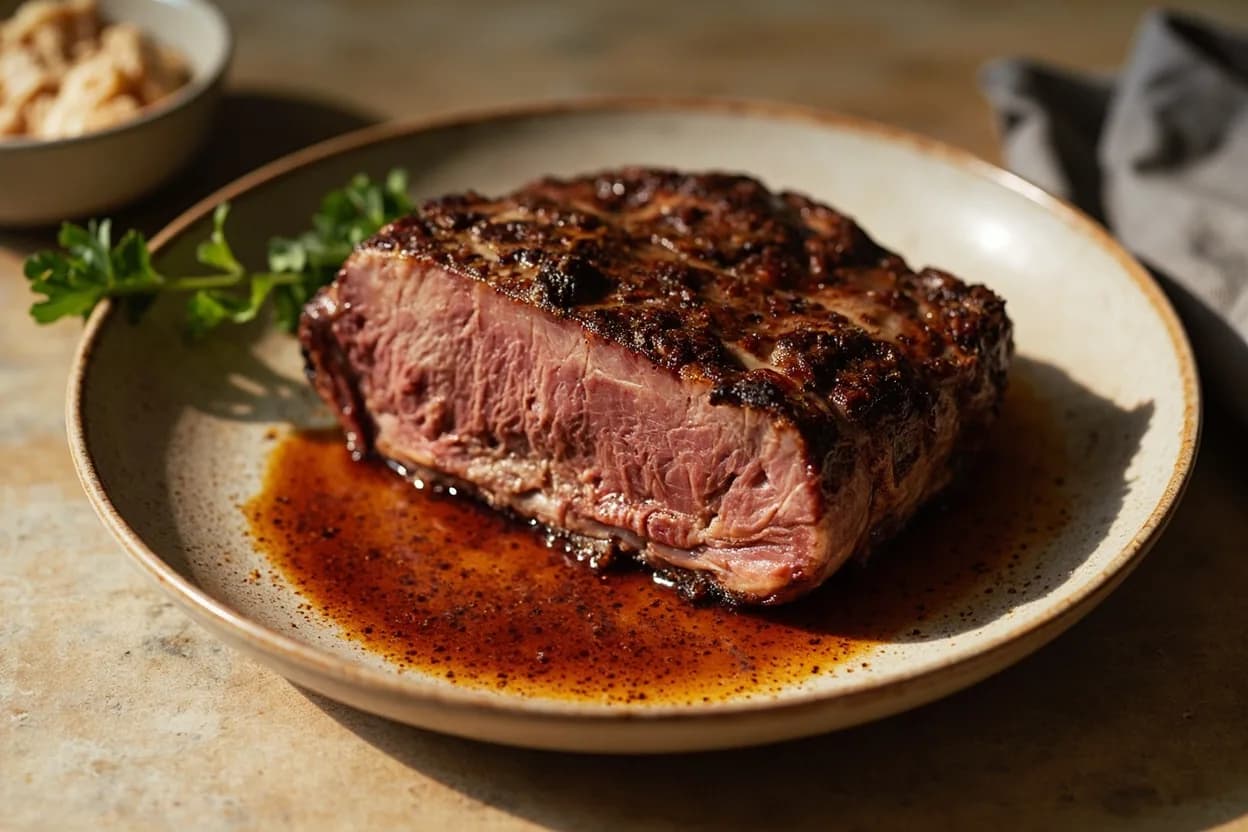
What happens
At 150–165°F, collagen has begun denaturing and the muscle fibers are well contracted, having expelled significant free moisture. This expelled water migrates outward through the meat via diffusion and capillary action, reaches the surface, and evaporates. Evaporation is an endothermic process: it absorbs approximately 2,260 joules per gram of water. In a 225°F smoker, the rate of evaporative cooling from a large, moist brisket surface can precisely match the rate of heat transfer from the smoker — creating a temporary equilibrium that holds the internal temperature flat. The stall is entirely a surface moisture phenomenon: if the surface is covered (Texas crutch / foil wrap), the moist microclimate inside the foil eliminates evaporative cooling and the temperature resumes climbing within 30–60 minutes. Collagen conversion accelerates during the stall period even though temperature appears static, because the internal temperature is still within the conversion range.
What to look for
- Thermometer reading holds flat or fluctuates within a 3–5°F band for 1–4+ hours
- Surface of the meat appears moist and shiny — the bark has not yet set fully
- Cooker temperature is stable, confirming the stall is in the meat, not a fuel issue
- Meat feels cool to a gentle touch on the surface (evaporative cooling is physically perceptible)
- After the stall breaks, the temperature climbs steadily and the surface begins to dry and darken
How to check
- Monitor an instant-read or leave-in probe thermometer: a stall is confirmed when temperature holds within ±5°F for more than 30 minutes with a stable cooker
- Distinguish from a cooker temperature drop: check ambient probe or vent/damper status — a stall occurs with a stable cooker, a drop indicates fuel or airflow issues
- Touch the surface lightly: evaporative cooling makes the surface noticeably cooler than a dry piece of meat at the same reading would feel
- Track time: if you are more than 2 hours past when you expected to be done and the temperature has not moved, the stall is the likely culprit
The science behind it
Wrapping brisket or pork butt tightly in foil or butcher paper at the stall onset to eliminate evaporative cooling and push past the plateau
- Bark Formation
The stall is when bark is setting on the surface; wrapping too early (before a firm bark) results in soft bark that steams rather than crisps
- Brisket Done Temperature
The stall is a midpoint obstacle en route to the 200–205°F done range; understanding it prevents premature pulling
Collagen conversion continues during the stall — the plateau in temperature does not mean the meat is not changing
- Evaporative Cooling (Physics)
The same principle as a wet-bulb thermometer; latent heat of vaporization of water absorbs energy from the meat surface
Appears in
References
- 1.Meathead: The Science of Great Barbecue and Grilling — Meathead Goldwyn
- 2.Franklin Barbecue: A Meat-Smoking Manifesto — Aaron Franklin & Jordan Mackay
- 3.The Food Lab — J. Kenji López-Alt
- 4.'The Stall': Evaporative Cooling and Meat Temperature During Low-Temperature Cooking — Greg Blonder, AmazingRibs.com research
Confidence: high
Notes
Foil vs. Butcher Paper Wrap
The Texas crutch can use either aluminum foil (airtight, maximum steam, fastest stall break but softest bark) or unwaxed butcher paper (breathable, less steam, slower stall break but better bark preservation). Aaron Franklin popularized the butcher paper method for brisket flat; foil is more common for pork shoulder and chuck. Neither is universal — the choice reflects bark texture preference and cook time constraints.
Push Through vs. Wrap
Experienced pit masters sometimes choose to push through the stall unwrapped, accepting a 2–4 hour penalty in exchange for maximum bark development. This requires confidence in the cooker's fuel supply and a generous time buffer. At competition BBQ, where timing is critical, wrapping at the stall is nearly universal. For backyard cooks, pushing through is a valid choice when bark quality matters more than schedule.
Myth: The Stall Happens Because Collagen is Melting
A common misconception attributes the stall to the energy consumed by collagen denaturation. This is false — the heat required to melt collagen is orders of magnitude too small to account for a multi-hour plateau. The evaporative cooling explanation, demonstrated empirically by Greg Blonder and confirmed by physics, is the correct one.