Beef Doneness
Beef: Well-Done
Also: fully cooked beef, well done steak, no pink
Beef cooked to 74°C/165°F or higher — fully grey-brown throughout with significantly reduced moisture and a firmer texture.
Well-done beef has reached an internal temperature of 74°C (165°F) or above, at which point all pink color has been driven off and the meat is uniformly grey-brown from edge to center. Muscle fibers have contracted substantially, squeezing out a large proportion of moisture, and collagen that hasn't yet dissolved simply toughens further. It is the highest recognized doneness stage for whole-muscle beef cuts.
In photos
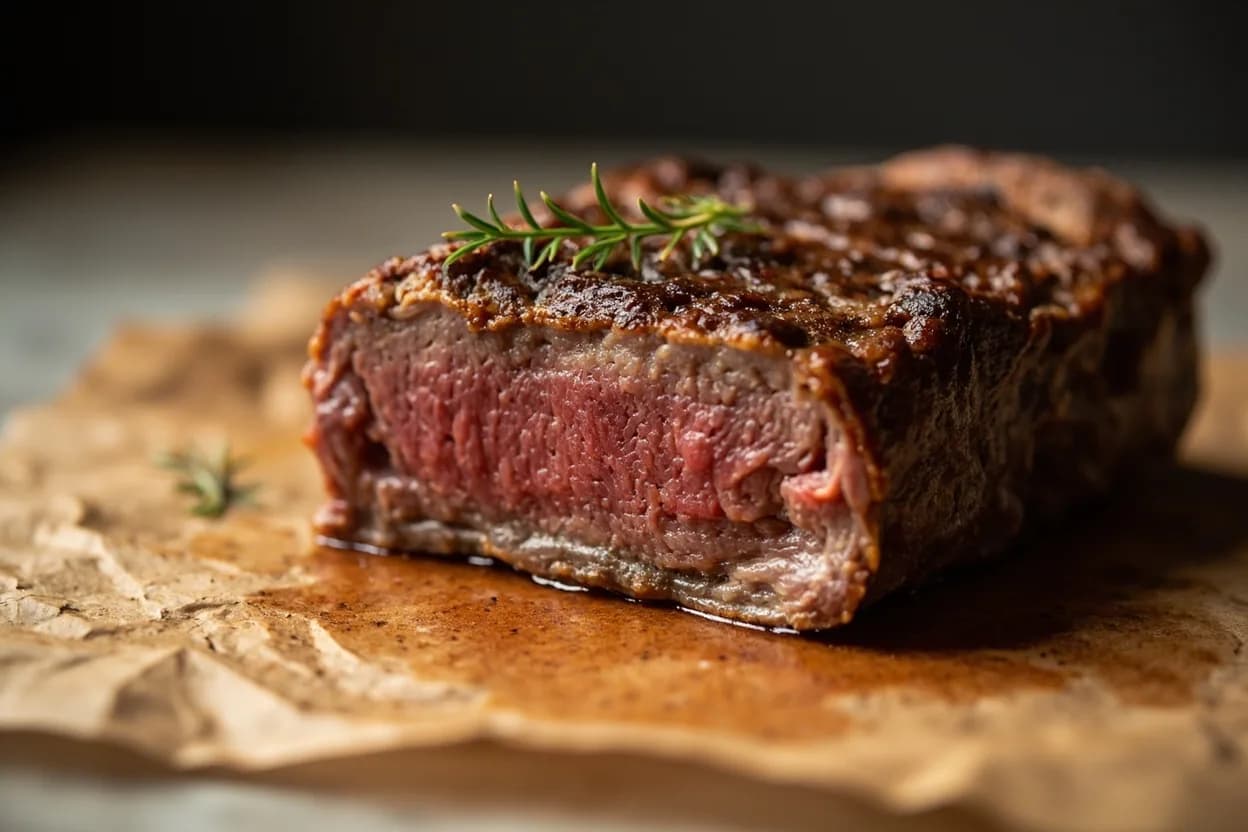
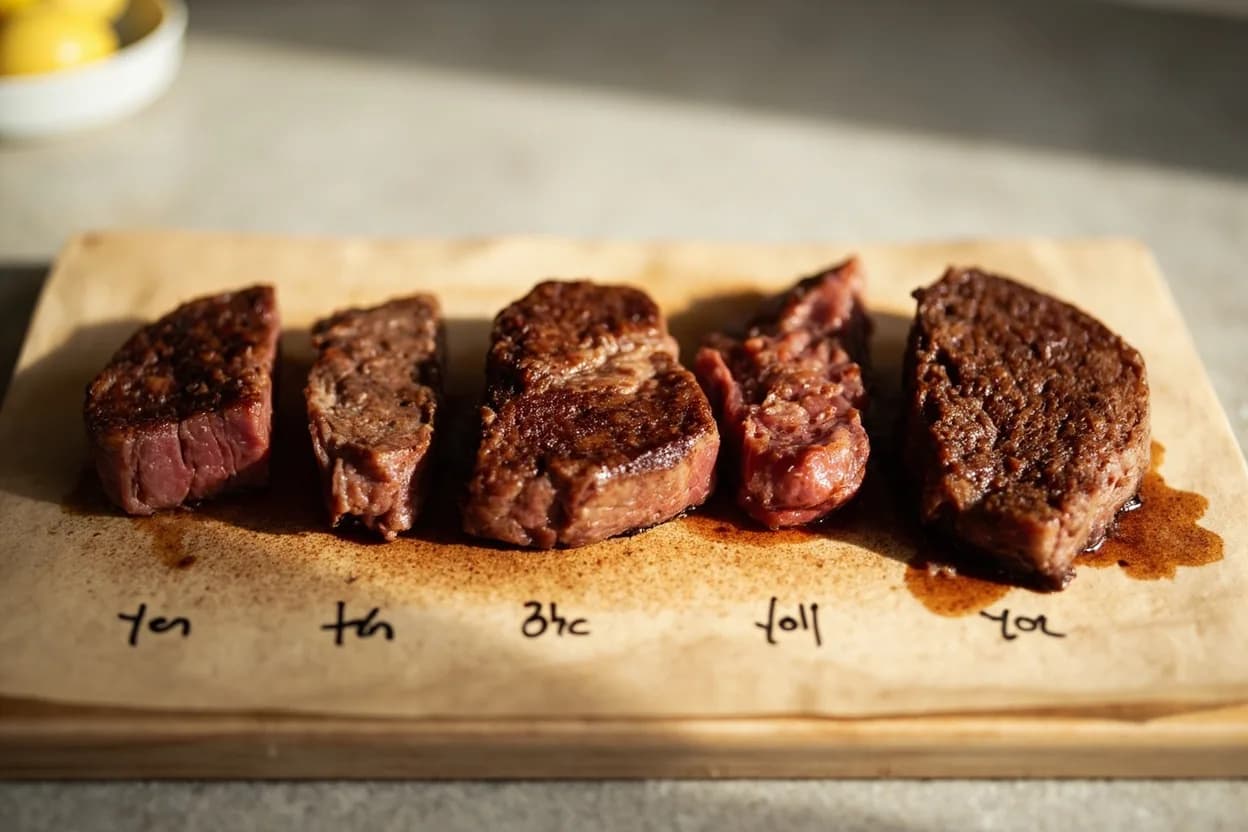
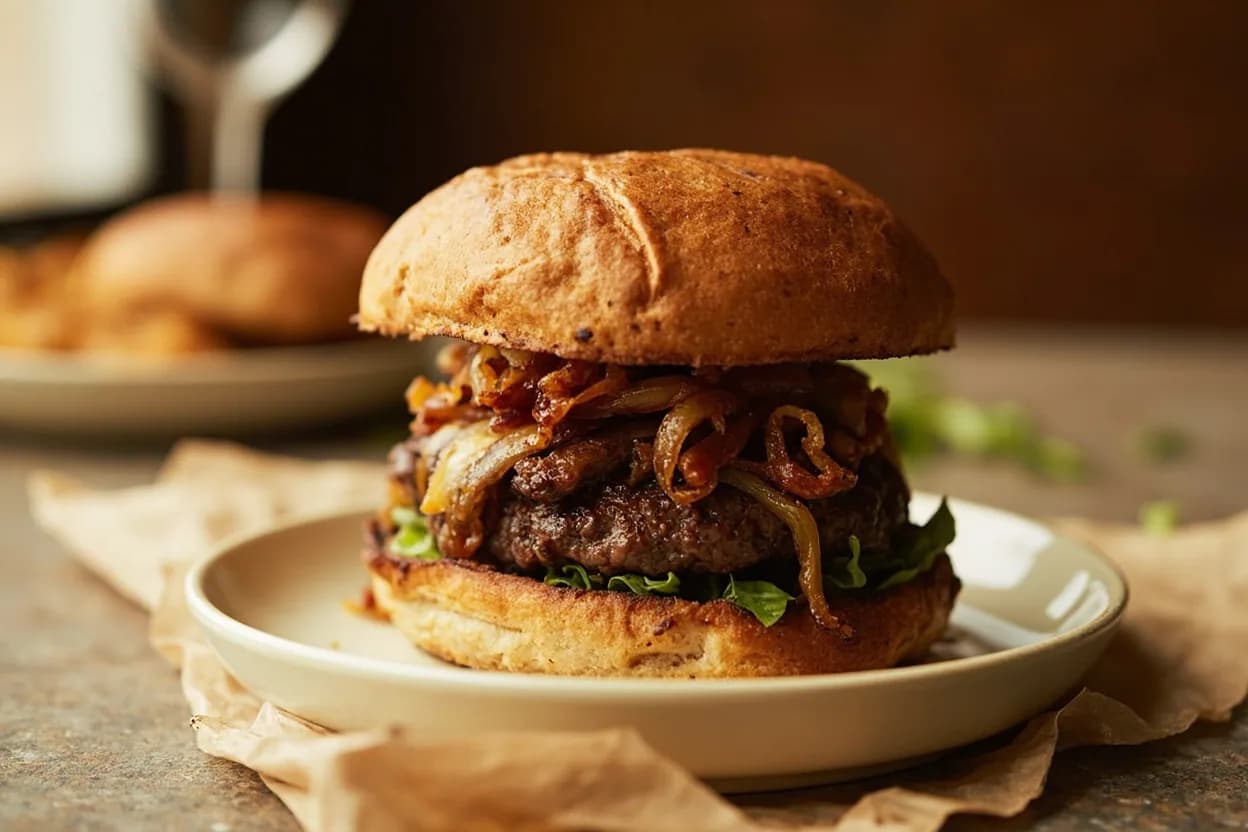
What happens
Above 70°C the remaining myoglobin fully denatures and oxidizes, leaving no pink pigment. Fast-twitch (white) and slow-twitch (red) muscle fibers alike have contracted to their maximum, expelling intracellular moisture as juice loss can exceed 40% of starting weight. Intramuscular fat has largely rendered out of lean cuts, leaving a dry, firm texture. Collagen in connective tissue either toughens (short cooking) or has had insufficient time to hydrolyze to gelatin unless the cut is braised long enough.
What to look for
- Uniformly grey-brown color from surface to center — no trace of pink
- Firm, resistant texture throughout; no springiness when pressed
- Pronounced juice loss visible on cutting board
- Exterior crust deeply browned; interior noticeably drier than medium steaks
- Aroma is deeply savory with more Maillard-roasted notes and less raw-meat scent
How to check
- Insert instant-read thermometer into the geometric center of the thickest part, avoiding fat pockets and bone — read 74°C (165°F) or above
- Cut test: slice through the center and examine color — no pink or red should remain
- Press test: flesh feels very firm and does not spring back
- Clear or lightly browned juices run out (not pink) when pierced
Food safety
Carryover & resting
Carryover cooking at well-done is modest compared to lower doneness stages — typically 1–3°C — because the temperature gradient between surface and center is smaller. Pull from heat at 72°C (162°F) if relying on carryover to reach 74°C.
The science behind it
- Myoglobin denaturation
Complete myoglobin denaturation above 70°C is what eliminates all pink color in well-done beef
- Moisture loss in meat
Muscle fiber contraction at high temperatures drives the pronounced juice loss characteristic of well-done beef
- Medium-well doneness
The immediately preceding stage at 68–71°C where a small pink center may remain
Surface browning reactions that generate flavor compounds, more fully developed on well-done cuts with extended cooking time
- Braising
Low-and-slow wet cooking converts collagen to gelatin, making tough well-done cuts palatable in braises
Appears in
References
- 1.On Food and Cooking — Harold McGee (2004)
- 2.USDA FSIS Safe Minimum Internal Temperature Chart (2023)
- 3.The Food Lab — J. Kenji López-Alt (2015)
- 4.Modernist Cuisine: The Art and Science of Cooking — Myhrvold et al. (2011)
Confidence: high
Notes
When well-done works
Well-done is not inherently inferior for every cut or cuisine. Thin-cut beef cooked very quickly on a screaming-hot griddle (smash burgers, Korean bulgogi, Ethiopian tibs) can remain remarkably palatable at well-done because the high-heat crust forms before interior moisture fully escapes. Conversely, thick steakhouse cuts lose most of their appeal beyond medium-well due to severe juice loss.
Cultural context
Preferences for well-done beef are widespread across South and Southeast Asia, East Africa, and the Middle East, often driven by religious dietary law, tradition, or local expectations of beef texture. A skilled cook in these traditions achieves palatability through marinades, spice coatings, saucing, and cut selection rather than preserving interior moisture.