Vegetable Doneness
Blanched Vegetable Bright-Green Stage
Also: blanched green, par-blanched, shocked vegetables, crisp-tender
A 60–180-second boil followed by immediate ice-bath shock sets chlorophyll at its most vivid, preserves crunch, and halts enzymatic browning.
Blanching to the bright-green stage is a precise two-phase technique: a brief immersion in aggressively boiling, well-salted water (1–3 minutes depending on vegetable density) immediately followed by transfer to ice water. The goal is to fix chlorophyll in its most vibrant form, achieve crisp-tender texture, and deactivate enzymes responsible for color degradation and off-flavors — all without cooking through to softness. The ice bath arrests cooking in seconds, preventing carryover from pushing the vegetable past the target.
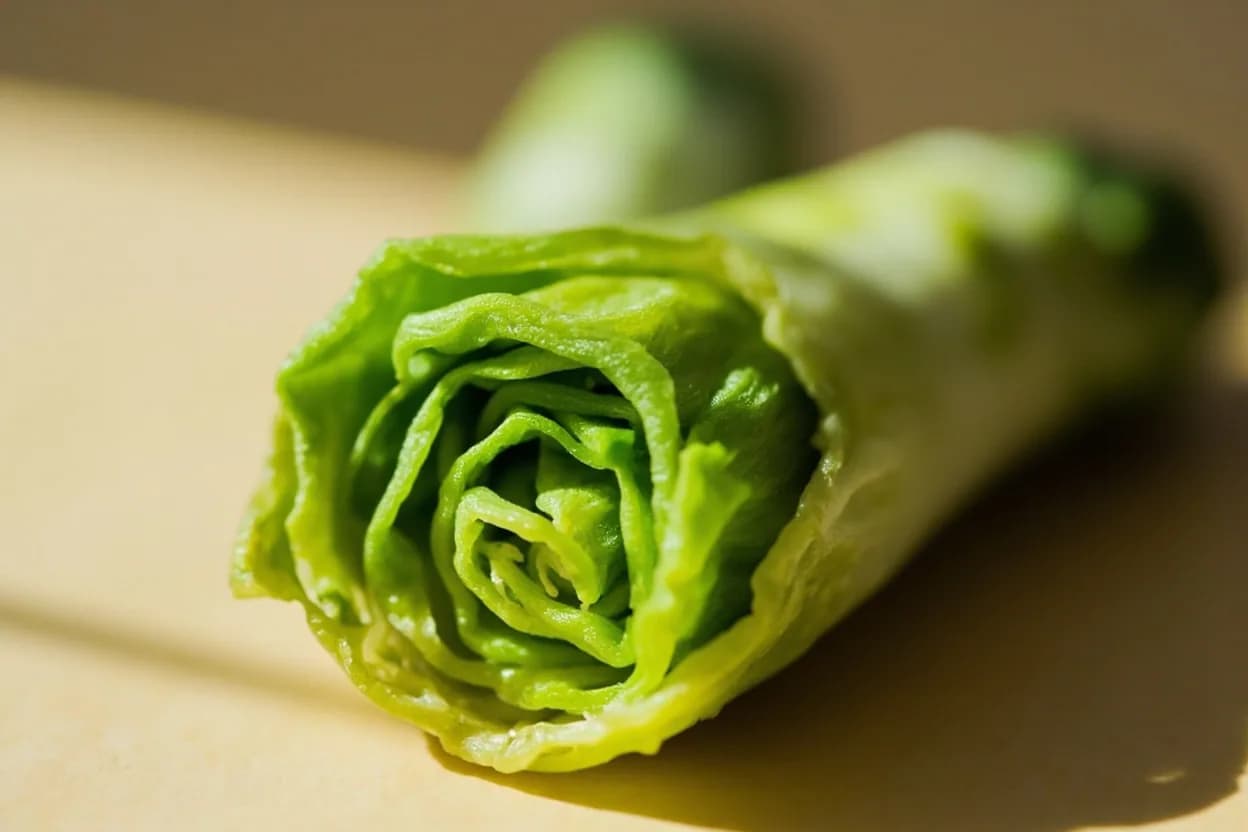
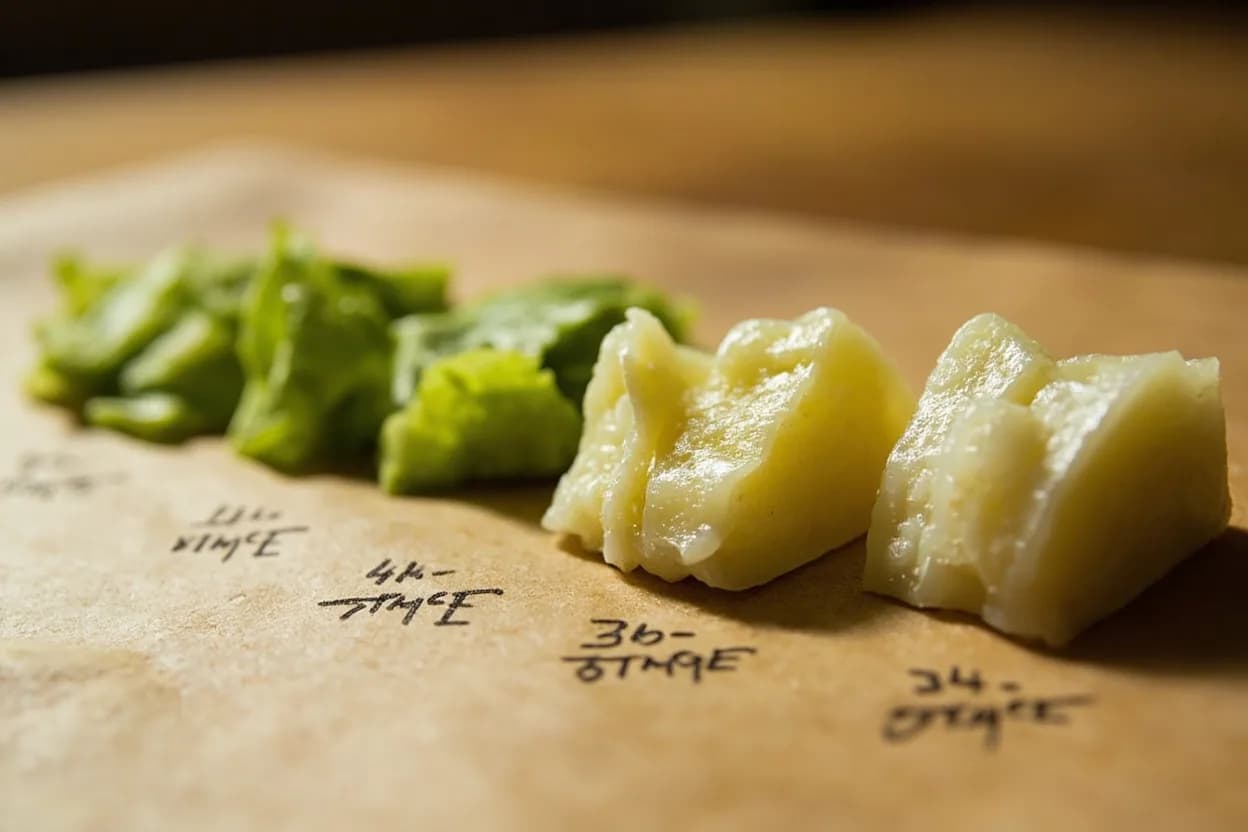
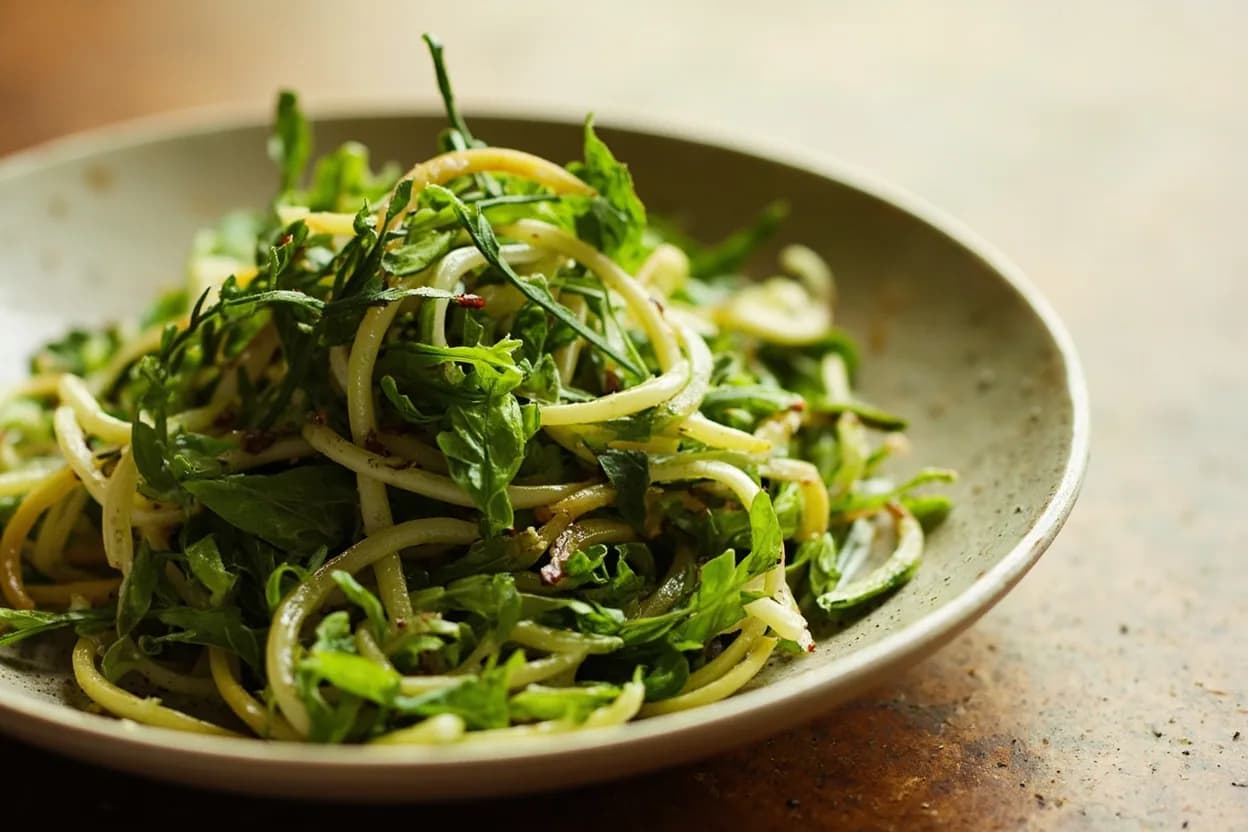
In photos
What happens
In boiling water, heat rapidly deactivates chlorophyllase and peroxidase enzymes that degrade the green pigment chlorophyll. Simultaneously, dissolved gases trapped between cells escape, making the chloroplasts more visible and the color appear to intensify. Cell walls partially soften as pectin begins to break down, converting raw crunch to crisp-tender bite. The ice bath (0–4°C) stops enzyme activity and halts cell-wall softening within 30–60 seconds. Critically, the window between crisp-tender and dull olive-green is narrow: at 100°C, chlorophyll begins converting to pheophytin (grey-green) within 2–4 minutes — precision matters.
What to look for
- Color shifts from dull or pale raw green to brilliant, saturated emerald or vivid green — the most reliable visual cue
- Texture yields slightly on bite but maintains distinct snap — no mushiness
- Raw grassy or bitter off-notes are gone; clean vegetal sweetness emerges
- In ice bath: vegetable stops steaming quickly and feels cold within 60 seconds
- Overcooked: color turns olive-drab or khaki; texture softens past snap
How to check
- Visual: watch for the color saturation shift — dull raw green turns vivid; this happens within 30–90 seconds for thin vegetables
- Bite test: remove one piece, bite through — should resist slightly then give cleanly with no raw starchiness
- Squeeze test for asparagus: stalk should bend slightly but not flop
- Timing guides by vegetable: thin green beans 90 sec; asparagus spears 2 min; broccoli florets 2 min; edamame 3–4 min; peas 60 sec
- Ice bath temperature: keep ice bath below 4°C (40°F); replace ice if it melts before vegetables are fully cold
Food safety
Carryover & resting
Carryover is minimal for thin vegetables in an ice bath; however, dense vegetables (large broccoli stems, whole beets) retain internal heat longer. Remove from boiling water 10–15 seconds before the target stage if vegetables are large or will rest before shocking.
The science behind it
- Chlorophyll degradation
Conversion of chlorophyll to pheophytin causes the characteristic olive-drab color of overcooked green vegetables
- Enzyme deactivation
Blanching deactivates peroxidase and lipoxygenase, preventing off-flavors and color loss during storage
- Ice bath / water shocking
Immediate transfer to ice water is inseparable from blanching — without shocking, carryover continues cooking
- Par-cooking
Blanching is a common par-cook step before sautéing, roasting, or finishing in a pan sauce
Pre-blanched and shocked vegetables are a professional kitchen mise en place staple, ready for quick finishing
Appears in
References
- 1.On Food and Cooking — Harold McGee (Scribner, 2004)
- 2.The Professional Chef, 9th ed. — The Culinary Institute of America (Wiley, 2011)
- 3.The Food Lab — J. Kenji López-Alt (W. W. Norton, 2015)
- 4.Modernist Cuisine at Home — Nathan Myhrvold & Maxime Bilet (The Cooking Lab, 2012)
Confidence: high
Notes
Salt the water generously
Blanching water should be seasoned like pasta water — roughly 10 g salt per liter. Salt raises the boiling point marginally but more importantly seasons the vegetable from the outside in during its brief immersion and enhances the perception of green flavors. Under-salted blanching water produces bland, washed-out vegetables even if color is preserved.
Blanching vs. steaming for color
Steaming preserves more water-soluble vitamins (C, B-group) than boiling, but large-volume boiling water recovers temperature faster after adding vegetables — critical for bright color. A small pot of boiling water drops below 90°C when cold vegetables are added, extending the time before color-fixing enzymes deactivate. Use a large pot with at least 4–6 liters per 500 g of vegetables.