Pork Doneness
Blood Sausage Coagulation & Poaching Temperature
Also: boudin noir poaching temp, morcilla setting temperature, black pudding coagulation, blood pudding doneness
Blood proteins coagulate and set between 70–80°C; poach in water held at 75–80°C to firm the filling without bursting the casing.
Blood sausage — boudin noir, morcilla, black pudding, blutwurst, and their kin — relies on the thermal coagulation of blood proteins (primarily fibrinogen and albumin) to transform a pourable liquid filling into a sliceable, firm matrix. This sets between 70–80°C internal temperature. Poaching in water maintained at 75–80°C is the traditional cooking method: hot enough to coagulate the blood quickly but below the 82–85°C threshold at which steam pressure inside the casing can cause blowouts.
In photos
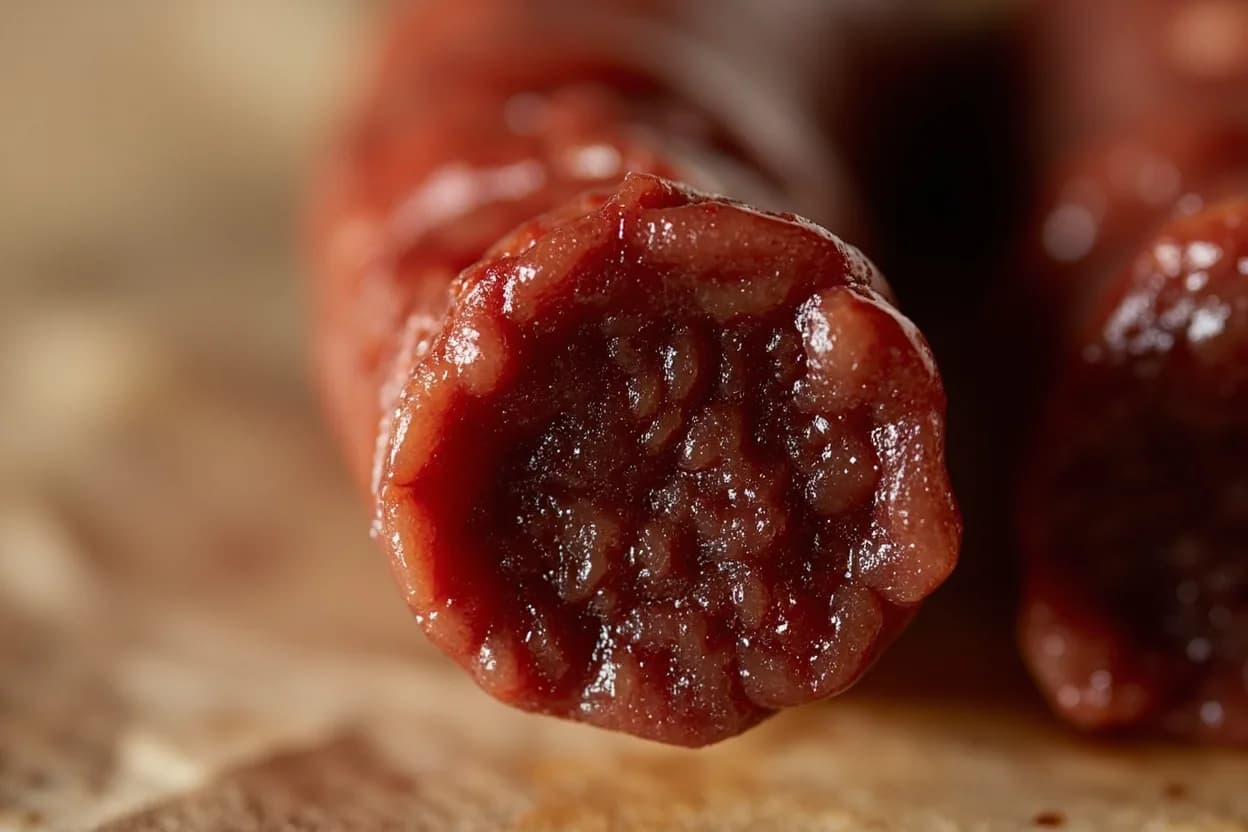
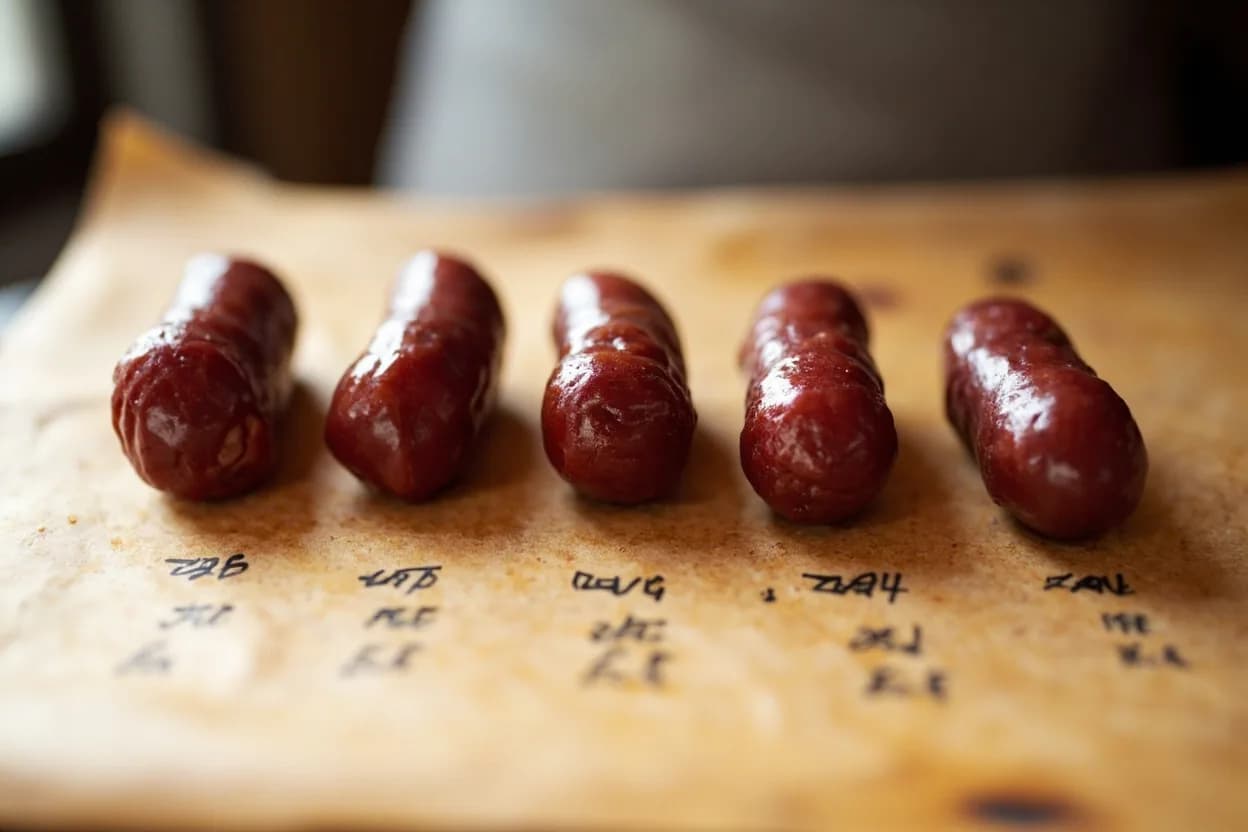

What happens
Raw blood is a colloidal suspension of proteins — primarily hemoglobin, albumin, and fibrinogen — in a water-salt plasma. When heated above 68–70°C, these proteins denature and cross-link, forming a gel network that traps fat globules, onions, grains (oats, rice, barley depending on tradition), and spices in a solid matrix. Below 70°C the filling remains liquid or semi-liquid and the sausage will collapse when sliced. Above 85°C, trapped moisture expands rapidly, generating steam pressure that can rupture the natural or artificial casing — the feared 'blowout' that releases filling into the poaching water. The window between 75–80°C water temperature gives a gentle, even heat transfer that reaches the core without boiling the exterior.
What to look for
- Sausage feels firm throughout when gently squeezed (through a cloth or with tongs) — no liquid-filled give at the center
- Casing tightens and loses its wrinkled, raw appearance, turning smooth and taut
- No bleeding or leakage of dark blood through the casing
- When pierced gently with a thin skewer at the thickest point, juices run dark brown-clear, not liquid red
- Sausage holds its shape when lifted from the water rather than sagging
How to check
- Use an instant-read thermometer inserted lengthwise through the end into the center — target 72–75°C internal
- Squeeze gently through a towel: fully set sausage feels uniformly firm with no soft liquid core
- Pierce the thickest point with a thin skewer or cake tester: juices should run brown and clear, not red and liquid
- Maintain poaching water with a thermometer — 75–80°C visually shows as gentle wisps of steam with no rolling boil
Food safety
Carryover & resting
Blood sausages carry over 2–3°C after removal from the poaching liquid. Remove from water when the core reads 70–72°C and allow to rest in a warm place — it will reach the safe 74°C target without risk of overcooking or casing rupture.
The science behind it
The thermal denaturation and cross-linking of blood albumin and fibrinogen that firms the filling
- Casing Integrity
The temperature ceiling (below 85°C water) that prevents steam-pressure blowout
Related concept — fat-protein emulsion in frankfurters sets by similar coagulation principles
- Poaching vs. Boiling
The critical distinction: boiling water (100°C) virtually guarantees casing failure for blood sausage
- Gel Network Formation
Blood proteins form a gel matrix analogous to egg custard coagulation
Appears in
References
- 1.Charcuterie: The Craft of Salting, Smoking, and Curing — Michael Ruhlman & Brian Polcyn
- 2.On Food and Cooking — Harold McGee
- 3.The River Cottage Meat Book — Hugh Fearnley-Whittingstall
- 4.USDA Food Safety and Inspection Service: Safe Minimum Internal Temperatures
Confidence: high
Notes
The two-stage life of blood sausage
Most blood sausage traditions involve a two-stage cooking process. The first stage — the poach described here — sets the sausage into a stable, sliceable form. The second stage, often applied just before serving, involves pan-frying slices in butter or lard until the exterior crisps and caramelizes. This second stage reaches far higher surface temperatures but the interior is already safely cooked; the goal becomes texture contrast (crisp-exterior, creamy-interior) rather than food safety.
Grain fillers and heat distribution
Morcilla de Burgos (rice) and black pudding (oatmeal) incorporate grain fillers that absorb liquid and act as thermal insulators. The dense center of a thick morcilla can take significantly longer to reach 72°C than an all-blood boudin noir of the same diameter. When poaching heavily grain-filled sausages, allow extra time (45–60 minutes for a 4 cm diameter sausage) and always verify with a thermometer rather than relying on time alone.