Offal & Specialty Cuts
Bone Marrow Rendering Temperature
Also: marrow rendering point, roasted bone marrow doneness, marrow liquefaction temperature, Os à moelle temperature
Bone marrow liquefies and bubbles at 60–70°C / 140–158°F internal; roasted until just jiggly and pulling from the bone walls, it is at peak richness before it melts out entirely.
Bone marrow is the soft fatty tissue found inside large bones — primarily femur (leg), tibia, and knuckle bones — consisting primarily of fat cells (adipocytes), blood cell precursors, and a loose connective tissue matrix. When roasted or heated, marrow undergoes a gradual rendering: fat cells rupture and release their stored lipids, the connective tissue dissolves, and the whole mass transitions from solid to liquid. The ideal serving state is a jiggling, barely-set semi-liquid — not raw (waxy, fatty, cold) and not over-rendered (completely liquid and pooling in the pan). This state occurs between 60–70°C internal temperature in the marrow cavity.
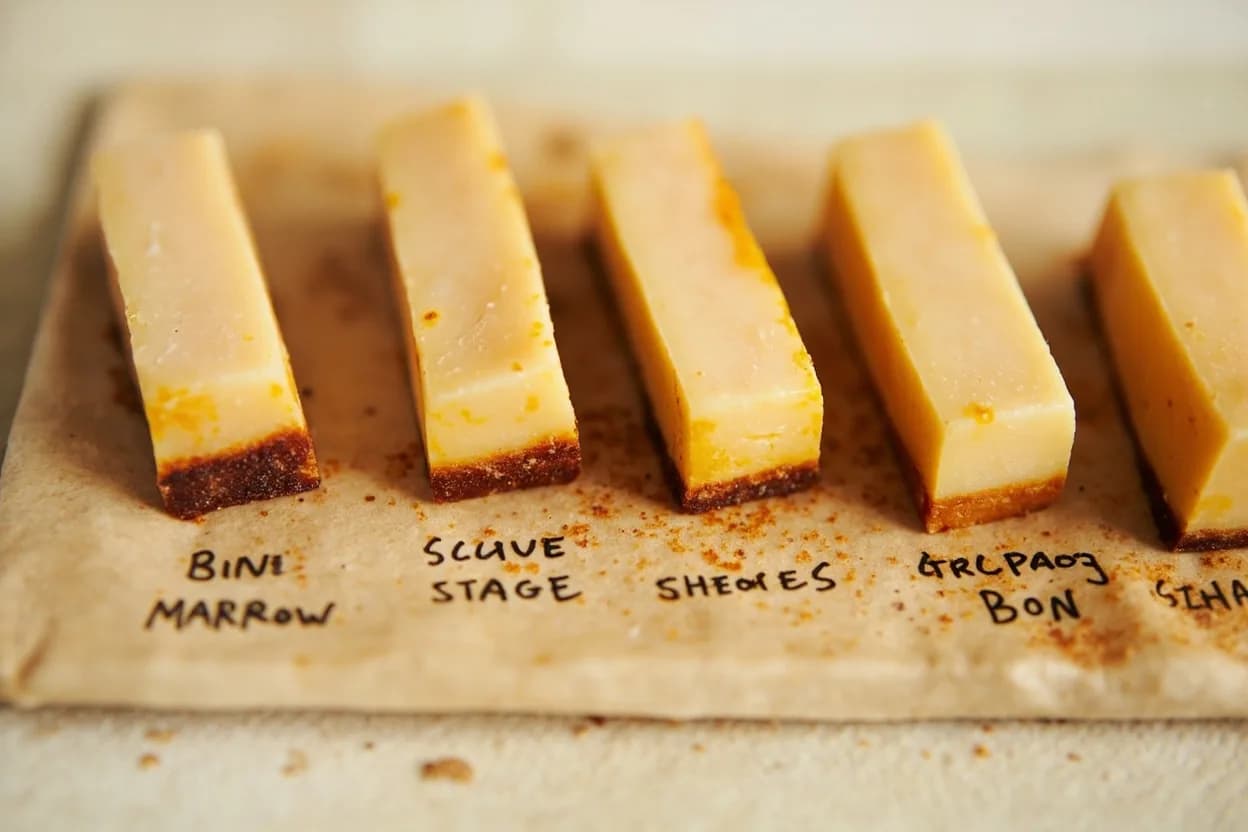
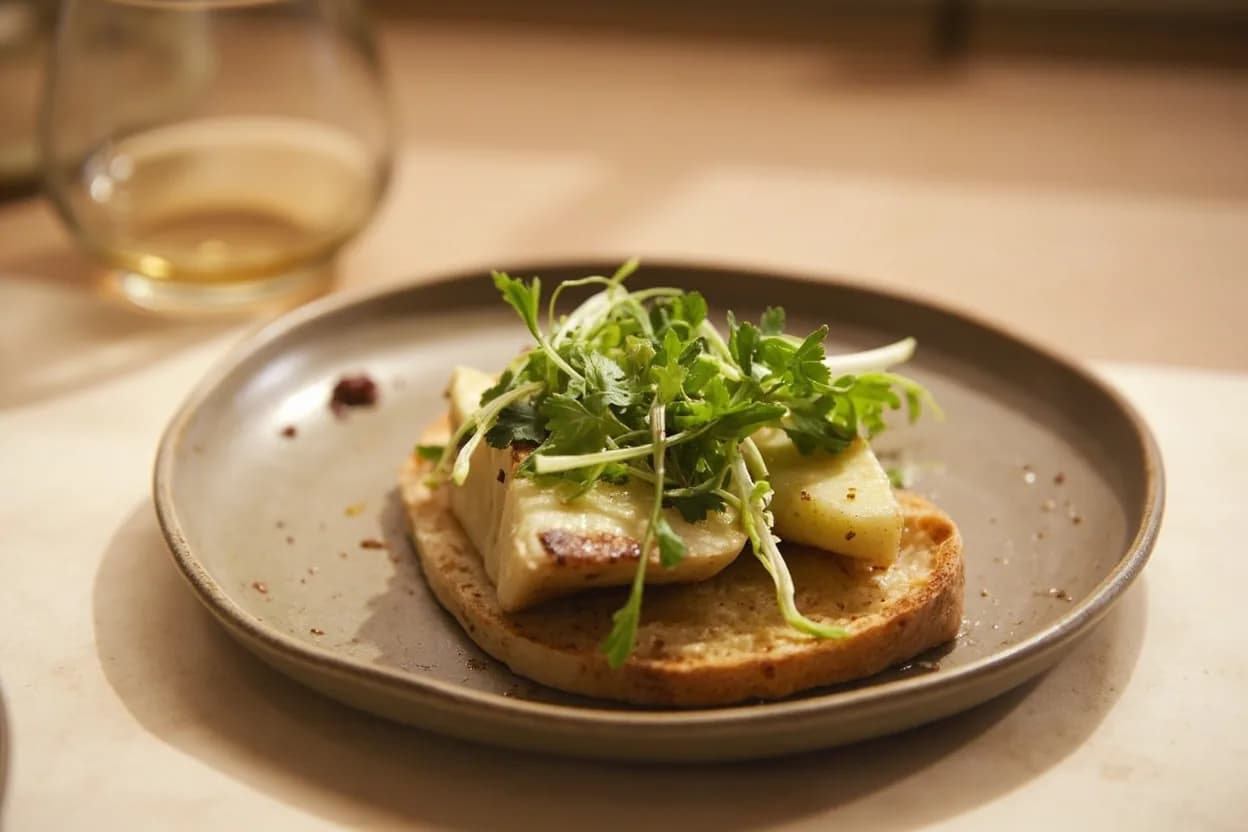
In photos

What happens
Marrow fat is primarily neutral triglycerides with a high proportion of oleic acid and other mono- and poly-unsaturated fatty acids, giving it a much lower melting point than, say, beef suet. The connective tissue matrix (loose reticular fibers, hematopoietic scaffold) also breaks down rapidly with heat. Below 60°C, the marrow remains waxy and resistant, with a cold, lard-like mouthfeel. Between 60–70°C, adipocytes rupture progressively, releasing fat as the protein scaffold begins to dissolve — the mass achieves a semi-liquid, trembling state. Above 75°C, marrow liquefies fully and begins to pool at the bottom of the bone or drip out of the cut ends; prolonged heat at this level causes additional rendering and shrinkage, leaving behind a thin, oily residue with diminished richness.
What to look for
- Surface of the marrow (in cross-cut canoe-style bones) shows gentle bubbling at the edges where marrow meets bone wall
- The marrow mass jiggles when the bone is tapped or shaken — like a barely-set gelatin
- Color shifts from cream-white or pale pink (raw) to golden-ivory or pale amber (rendered)
- The marrow has visibly pulled slightly away from the bone walls around the perimeter
- Rendered drips visible on the roasting pan below the bone, but not excessive pooling
- Aroma is deeply savory, beefy, and richly fatty — similar to clarified butter but with intense umami
How to check
- Insert a thin probe thermometer into the center of the marrow cavity at its thickest point; target 60–65°C
- Shake the bone: fully rendered marrow at the correct point should tremor like a panna cotta
- Use a thin skewer to probe the center — at correct doneness it enters with minimal resistance and comes out slicked with molten fat
- Roasting time guide: canoe-cut beef femur at 230°C oven — approximately 15–18 minutes; whole cylindrical shin bones — 20–25 minutes
- Err on the side of checking at 15 minutes; overcooked marrow drips into the pan and is unrecoverable
Food safety
The science behind it
- Fat rendering
Marrow rendering is an extreme case of adipose tissue fat release — similar physics to lard rendering from back fat
The cut surface of the marrow and bone end caps brown during roasting, contributing savory crust flavor
- Collagen dissolution
The connective tissue scaffold of marrow dissolves as part of the rendering process
- Dry-aged bone selection
Dry-aged animals have marrow with more concentrated flavor and slightly lower water content
- Osso buco braising
Long braise at lower temperatures also renders marrow in cross-cut veal shank in a different texture register
Appears in
References
- 1.Nose to Tail Eating — Fergus Henderson (Bloomsbury, 2004)
- 2.On Food and Cooking: The Science and Lore of the Kitchen — Harold McGee (Scribner, 2004)
- 3.The Food Lab — J. Kenji López-Alt (W. W. Norton, 2015)
- 4.Modernist Cuisine: The Art and Science of Cooking — Nathan Myhrvold et al.
- 5.Fat: An Appreciation of a Misunderstood Ingredient — Jennifer McLagan (Ten Speed Press, 2008)
Confidence: high
Notes
Canoe cut vs. cylindrical bones
Butchers split bones lengthwise (canoe-style) to expose the marrow surface for easy scooping — this is the modern restaurant preparation popularized by Fergus Henderson at St. John in London. Cylindrical whole bones (osso buco-style cross-cuts or full shin bones) retain the marrow inside the tube and take slightly longer to render fully. Canoe-cut bones are quicker to cook and easier to serve but lose more marrow to pan drip; cylindrical bones self-contain the marrow better but require a narrow spoon or marrow scoop (manche à gigot) to extract.
Soaking before roasting
Many chefs soak raw marrow bones in salted cold water (or lightly brined water) for 12–24 hours before roasting, changing the water once or twice. This draws out residual blood (which can give a bitter, ferrous note when it coagulates on the cut surface during cooking) and results in a cleaner, purer fat flavor. It also gives the marrow a slightly whiter appearance. Soaking is optional but recommended for presentation-quality service.