Aromatic & Fat Doneness
Bhuna / Bhunnao Stage (Oil Separation in Masala)
Also: bhunnao, masala bhuno, oil separation stage, masala ready, bhuna stage
The stage in Indian masala cooking when the onion-tomato-spice base has shed all its water and oil visibly pools at the edges of the pan — signaling that raw flavors are cooked out and a deep, concentrated fond has formed.
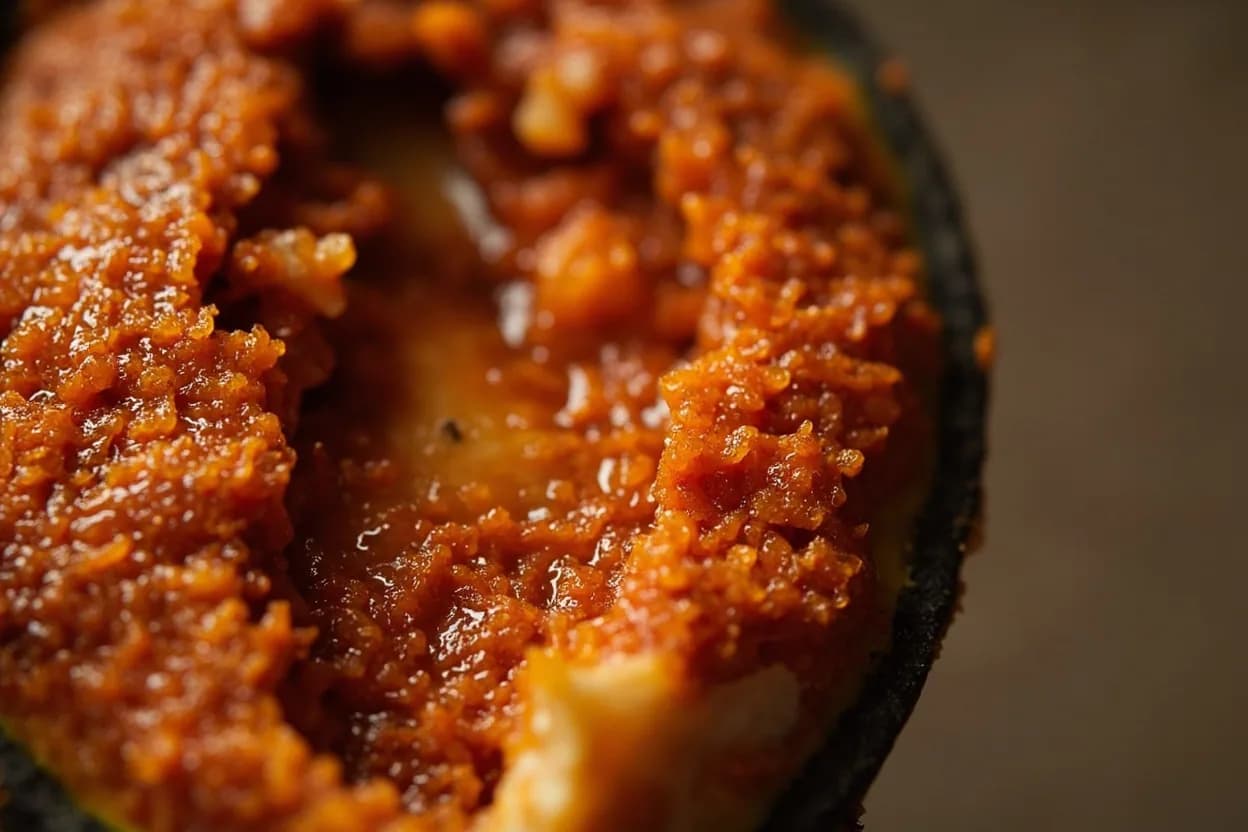
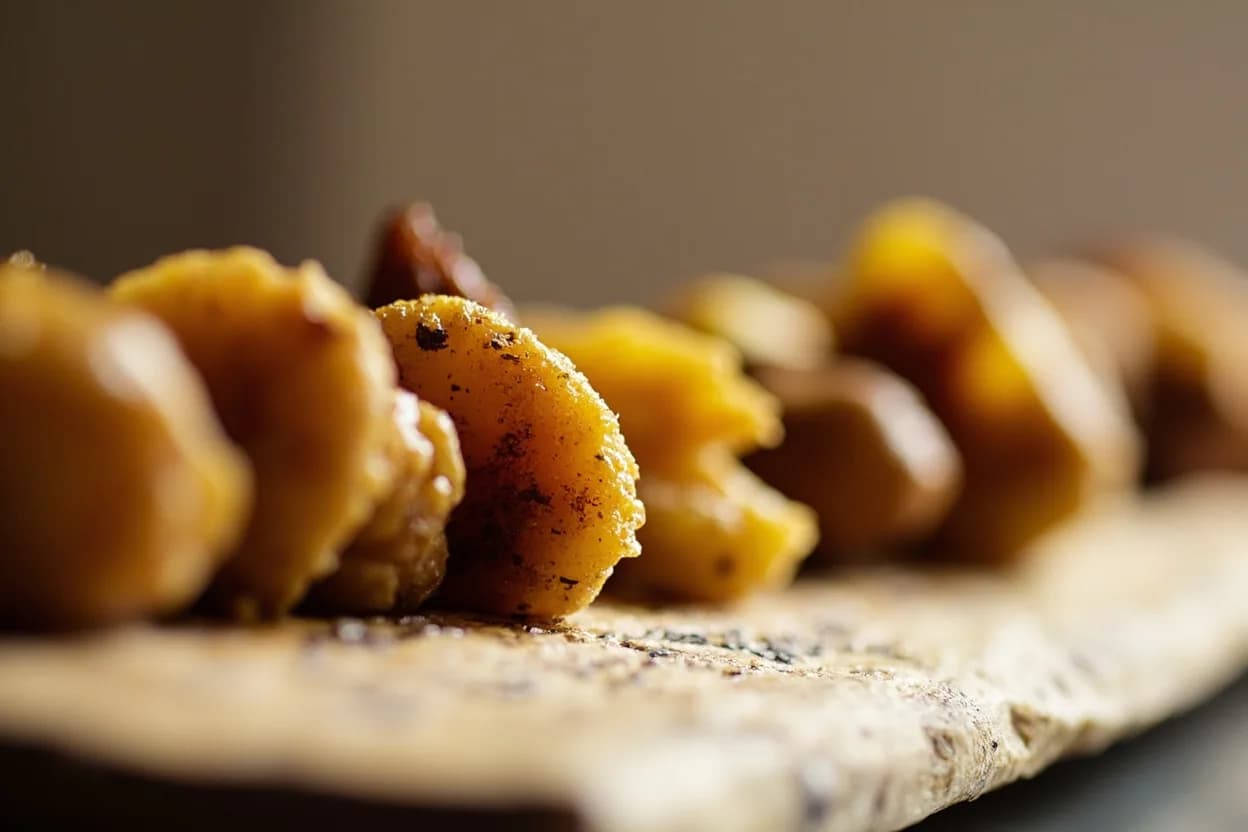
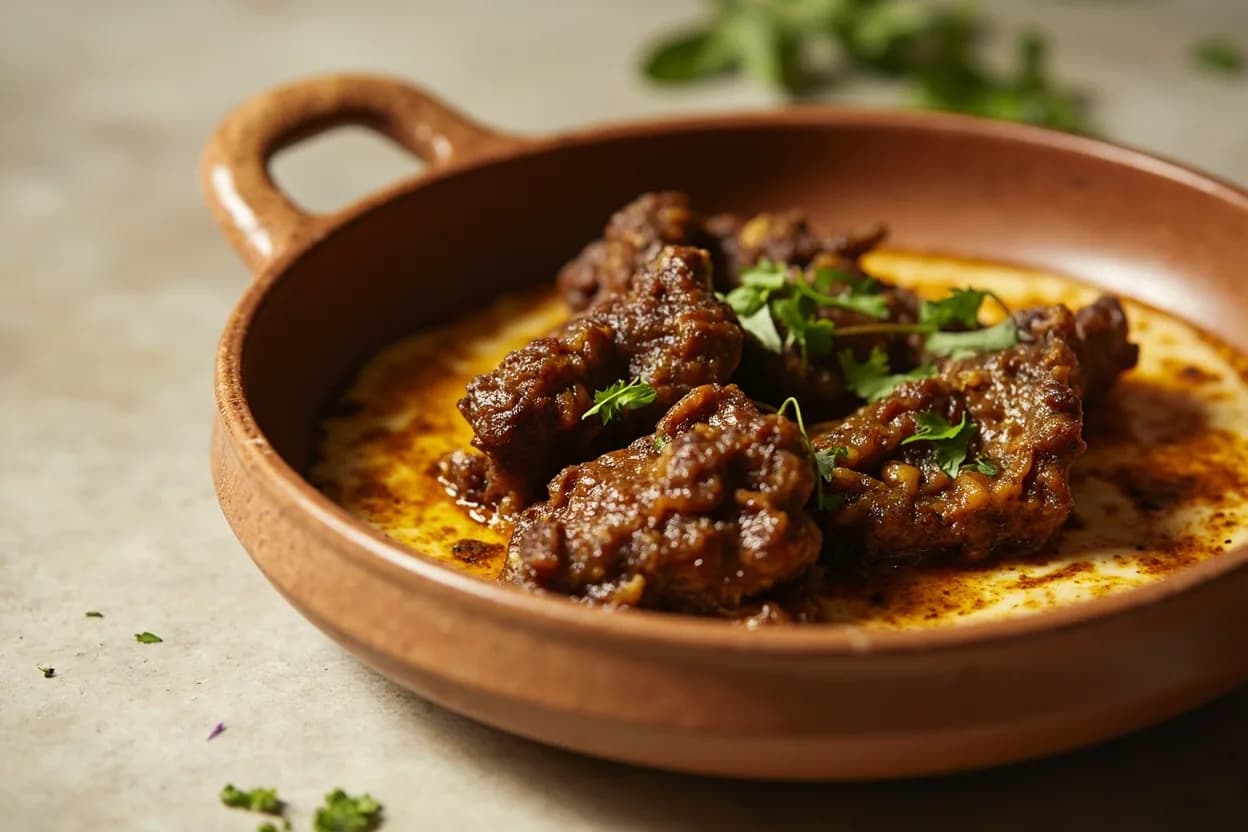
Bhunnao (Hindi: to fry, to roast) describes both a technique and a doneness endpoint in Indian cooking: the vigorous, continuous stirring-and-frying of a wet masala base (onions, tomatoes, ginger, garlic, ground spices) over medium-high heat until all moisture evaporates and the oil that was emulsified into the base breaks out and pools visibly at the pan edges and surface. This separation is a definitive visual doneness marker, not a step to rush past. It indicates that: water activity has dropped to near zero in the base, Maillard and caramelization reactions have proceeded fully, raw ground spice flavors have cooked through, and the base is now fat-continuous — essential for carrying fat-soluble flavor compounds throughout the finished dish.
In photos
What happens
A freshly combined onion-tomato-spice masala contains 70–90% water by weight. In the early cooking phase, this water evaporates steadily, keeping the base temperature at or near 100°C — the mixture bubbles and steams. During this phase the base is effectively stewing, not frying. Once free water drops below ~10%, the temperature in the base rises above 100°C and the Maillard reaction accelerates, deepening color from orange to rich brick-red or mahogany. The oil — added at the outset and emulsified into the water — can no longer stay suspended once the aqueous phase is gone, and it releases visibly as gleaming pools around and under the masala solids. This moment corresponds to maximum flavor development: the spice essential oils have fully bloomed into the hot fat, the onion sugars have caramelized, and acidity from tomatoes has cooked off. The base is now stable and ready to receive proteins or vegetables.
What to look for
- Oil visibly pools at the edges and bottom of the pan, glistening separately from the masala solids
- The mixture stops steaming and sputtering continuously; sound shifts from wet bubbling to a dry, sizzling fry
- Color deepens to a dark, glossy brick-red or deep mahogany rather than orange or pale pink
- The masala mass pulls away slightly from the pan sides and moves as a cohesive unit when stirred
- Aroma shifts from sharp, raw-tomato-and-spice to deep, roasted, caramelized, and savory
- The surface of the masala develops small dark crusted bits (fond) at the pan contact points
How to check
- Drag a wooden spoon or spatula through the center of the masala — free oil should flow back into the channel, not watery liquid
- Tilt the pan slightly; oil should pool visibly at the lower edge without the masala appearing watery
- The masala should leave a light caramelized residue on the pan floor between stirs, not a wet smear
- Taste a small amount: raw-spice harshness and tomato acidity should be fully resolved into a mellow, complex, savory depth
- Do not add stock, water, or protein until oil separation is complete — premature addition traps raw spice flavor and prevents full caramelization
The science behind it
The preceding stage — whole or ground spices must bloom in oil before the wet masala ingredients are added
Proceeds at full speed only after water is expelled; the dark color and depth of a good masala are Maillard products
- Onion caramelization
The long frying phase that precedes tomato addition; properly bhuna'd onions are the flavor backbone
- Deglazing
Adding liquid after oil separation lifts the fond from the pan and integrates it into the sauce; this is when stock or coconut milk is added
- Water activity
Dropping water activity in the base below ~0.85 is what enables frying temperatures above 100°C and the subsequent oil separation
Appears in
References
- 1.Indian Cooking Unfolded — Raghavan Iyer (Workman, 2013)
- 2.Madhur Jaffrey's Indian Cooking — Madhur Jaffrey (BBC Books, 1982)
- 3.The Curry Guy — Dan Toombs (Quadrille, 2017)
- 4.On Food and Cooking — Harold McGee (Scribner, 2004)
- 5.Prashad Cookbook — Kaushy Patel (Saltyard Books, 2012)
Confidence: high
Notes
Common failure: adding liquid too early
The single most common error in masala-based cooking is adding stock, cream, or coconut milk before oil separation occurs. The masala continues to stew rather than fry, the spices never develop their full Maillard depth, and the finished dish tastes one-dimensional, often with a raw-spice bitterness. If the masala is taking too long, raise the heat rather than adding liquid.
Oil quantity and re-incorporation
Professional Indian restaurant cooking uses a relatively generous amount of oil (often 50–80 ml per 4-portion masala base) deliberately, knowing that much of it will be ladled off after cooking. Home cooks who reduce oil significantly still need the emulsified-then-released cycle to occur — just with a thinner pooling. Regardless of quantity, the visual oil-at-edges cue remains valid. The separated oil is often spooned off the finished curry at service — it is deeply flavored and can be re-used.