Aromatic & Fat Doneness
Spice Bloom Readiness in Hot Fat
Also: tempering spices, tarka readiness, tadka bloom, spice sizzle stage, blooming dried spices
The 30–60 second window in 180–200°C oil when whole dried spices crackle, pop, and release their fat-soluble aromatics — the moment to add the next ingredient before crossing into scorching.
Blooming (tempering) spices in hot fat extracts their fat-soluble flavor compounds — essential oils, terpenes, and fat-soluble pigments like curcumin and paprika — which would otherwise remain trapped in the spice matrix or dissolve only partially in water-based dishes. The technique appears across Indian (tarka/tadka, phoran), Sri Lankan, Mexican, and Southeast Asian cuisines. It is a precise doneness window: oil at 180–200°C (350–390°F) is hot enough to volatilize aromatics and trigger surface Maillard reactions on the spice exterior, but the spices must be removed or the next ingredient added before the essential oils oxidize and bitter compounds dominate.
In photos

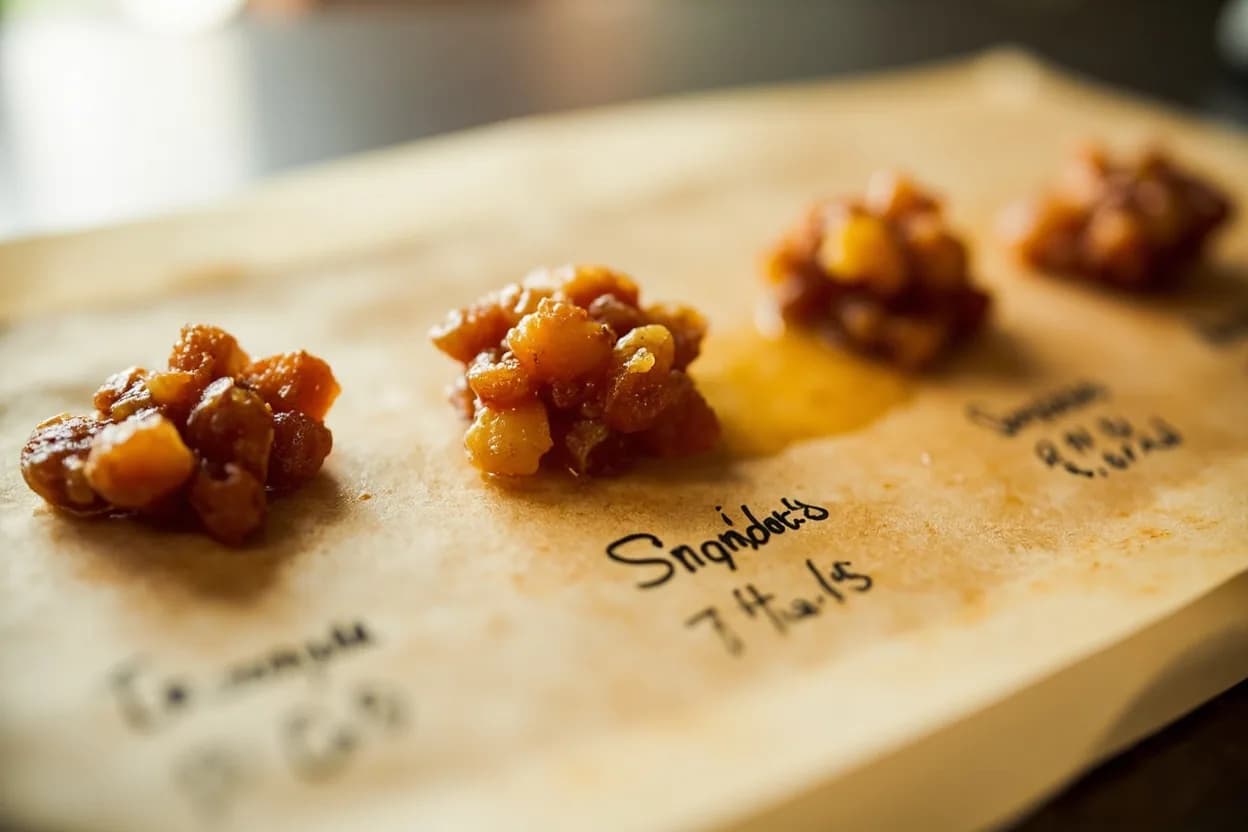
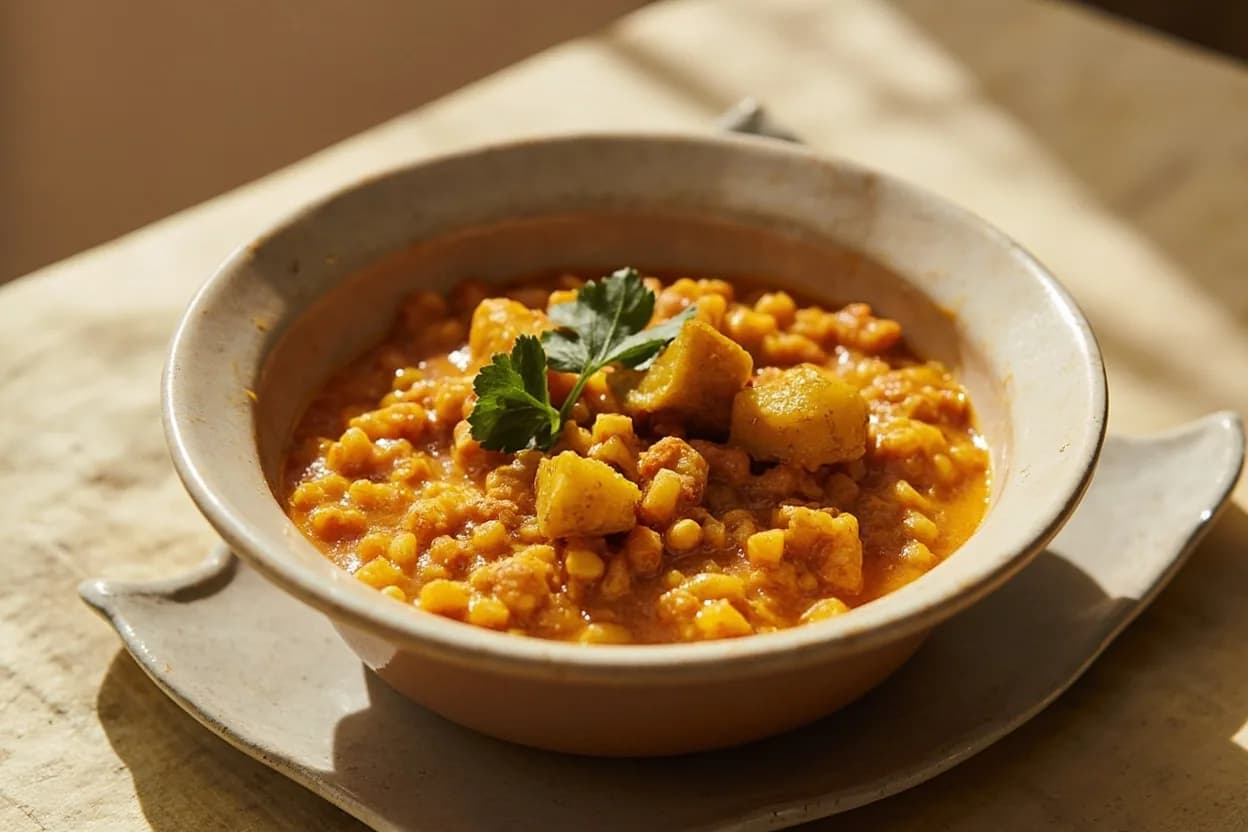
What happens
Fat-soluble aroma compounds (terpenes, terpenoids, volatile esters) in whole spices have low vapor pressures and require heat and a lipid solvent for rapid extraction. At 180–200°C, oil acts as both heat-transfer medium and solvent: it heats the spice rapidly, expands trapped moisture into steam (causing crackling and popping), and simultaneously dissolves liberated essential oils. Cumin and mustard seeds pop as internal moisture vaporizes explosively. Curry leaves and bay leaves blister as leaf moisture releases. The Maillard reaction begins on the seed surface, producing roasted, nutty flavors absent in raw spices. Above 210°C or with excessive time, essential oils oxidize and polycyclic aromatic compounds form, producing harsh, acrid flavors. The fat becomes the vehicle that carries these extracted aromatics throughout the dish.
What to look for
- Mustard seeds begin to pop and jump within 15–30 seconds — when popping subsides and seeds have mostly bloomed, move to the next step
- Cumin seeds darken from tan to a rich golden-brown and emit an intensely nutty, earthy aroma (not a raw-grain smell)
- Curry leaves blister and spit loudly as their moisture content flashes to steam — they become translucent and fragrant
- Dried red chilies puff slightly and deepen in color; the oil takes on a red-orange hue from capsaicin and carotenoid extraction
- The kitchen fills with a warm, appetizing spice aroma rather than a raw or papery smell
- Oil surface shimmers with tiny micro-bubbles around the spices as moisture expels
How to check
- Test oil temperature by dropping one mustard seed into the oil before adding the full spice measure — it should pop within 3–5 seconds; if it sits inert, the oil is too cool; if it immediately smokes and blackens, reduce heat before blooming
- Keep a wooden spoon or spider in hand throughout; the window between perfect bloom and scorching is under 30 seconds
- Add the next ingredient (onion, aromatics, base) the moment the dominant sensory cue peaks — popping subsides, aroma reaches peak intensity, seeds are golden-brown
- Never leave whole spices in hot oil unattended; the blooming stage cannot be paused
- For ground spices, reduce oil temperature to 160–170°C and limit bloom time to 15–20 seconds — ground spices have far more surface area and burn almost instantly above 180°C
Food safety
The science behind it
- Tarka / tadka
The South Asian technique of blooming spices in hot fat and pouring the infused oil over a finished dish (dal tarka) or using it as a cooking base
- Phoran (panch phoron)
Bengali five-spice blend (fenugreek, nigella, cumin, black mustard, fennel) tempered whole in oil or ghee — timing governed entirely by the bloom stage
- Mexican recado base
Toasted whole spices bloomed in lard before grinding into a paste — a related fat-extraction technique
- Oil smoking point
Bloom oil must exceed 180°C but not reach the oil's smoke point; use ghee (250°C), coconut oil (200°C), or refined vegetable oil (220°C) rather than butter or extra-virgin olive oil
- Ground spice Maillard
Ground spices bloomed briefly (15 sec) at lower temperature develop roasted depth; distinct from whole-spice bloom technique
Appears in
References
- 1.The Flavor Bible — Karen Page & Andrew Dornenburg (Little, Brown, 2008)
- 2.Indian Cooking Unfolded — Raghavan Iyer (Workman, 2013)
- 3.On Food and Cooking — Harold McGee (Scribner, 2004)
- 4.Plenty More — Yotam Ottolenghi (Ten Speed Press, 2014)
- 5.The Spice Merchant's Daughter — Christina Arokiasamy (Clarkson Potter, 2008)
Confidence: high
Notes
Ghee versus neutral oil
Ghee is the traditional fat for tarka in North Indian cooking because its high smoke point (~250°C) and clarified milk-solid base complement spice aromatics without competing. Neutral oils (sunflower, refined coconut) are a clean-tasting substitute. Extra-virgin olive oil is not recommended for whole-spice blooming above 180°C as it contains polyphenols that can impart bitterness and has a lower effective fry point.
The order of addition in compound tadka
When blooming multiple aromatics, add them in order of the time they require: dried red chilies and dried spices (30–45 sec), then curry leaves and asafoetida (5–10 sec), then garlic (20 sec), then fresh ginger. Each ingredient has its own bloom window; adding them together results in some burning before others begin.