Fish & Seafood Doneness
Squid & Calamari Doneness (Curl & Opaque Stages)
Also: calamari doneness, squid cook stages, cephalopod doneness
Squid must be cooked either very quickly (under 2 minutes) or very slowly (45+ minutes) — the middle zone produces inedible rubber.
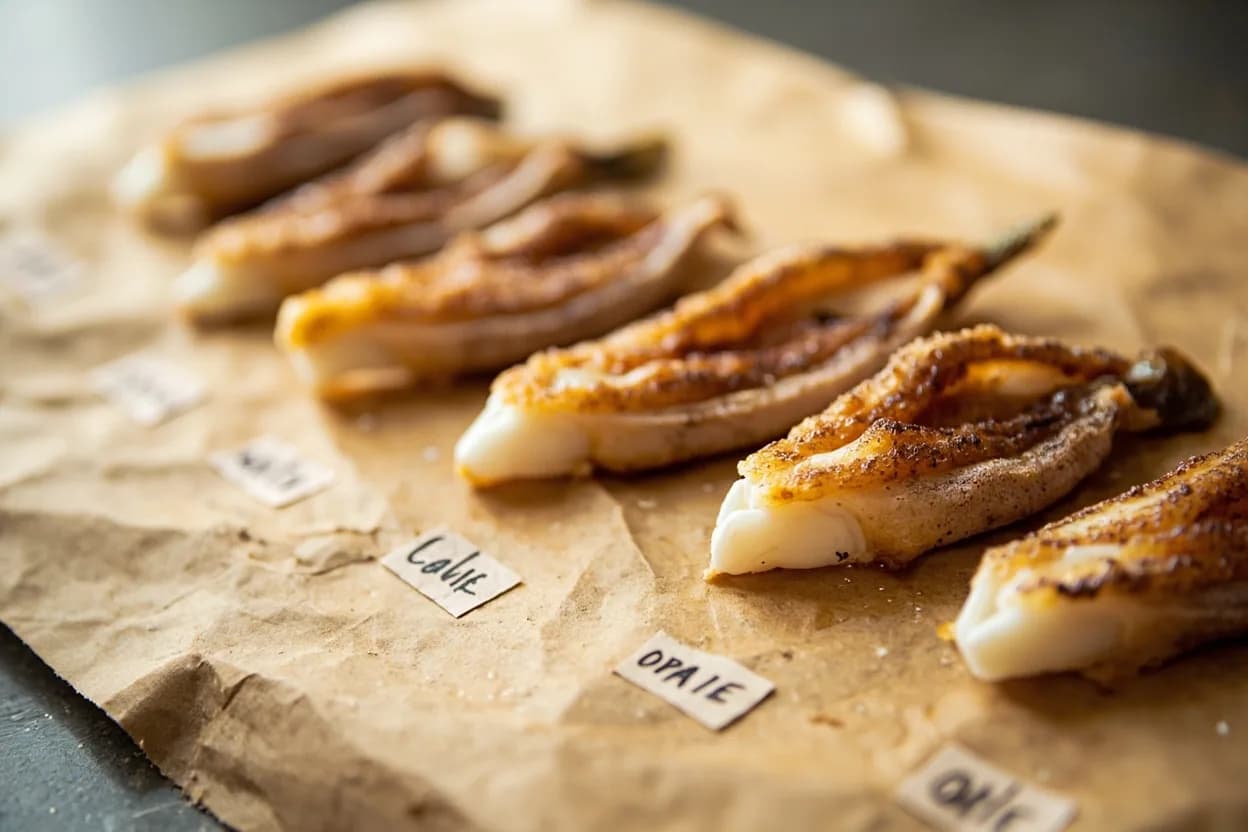
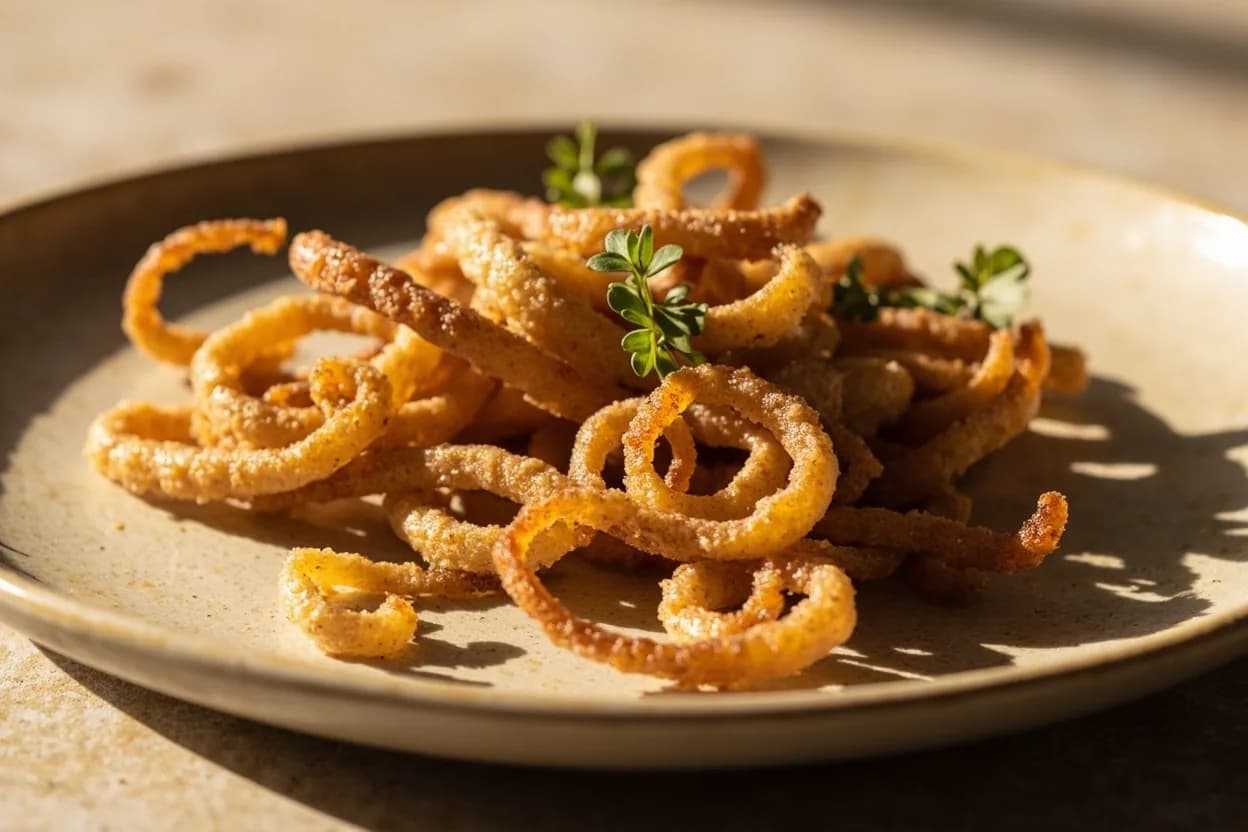
Squid and calamari have a narrow window of palatability that splits into two entirely different cooking strategies: brief high-heat searing or grilling (1–2 minutes) that keeps the flesh tender and just opaque, or long, slow braising (45 minutes or more) that breaks down the tough collagen network into gelatin. The infamous 'rubbery stage' occurs between roughly 2 and 40 minutes of cooking, when proteins have fully coagulated and tightened but collagen has not yet converted. Visual cues — the characteristic curl of the body and the shift from translucent to uniformly opaque white — signal the fast-cook endpoint.
In photos

What happens
Squid mantle is rich in collagen but low in fat. Above 50°C, myosin proteins begin to denature and the flesh turns opaque. By 60–65°C, all muscle proteins have coagulated and the texture tightens dramatically. At this point, if cooking stops, the result is tender because the cooking time has been too short for the muscle fibers to become chewy. If heat continues past 2 minutes, collagen in the connective sheaths contracts but has not yet hydrolyzed into gelatin — producing the notorious rubbery texture. Only after 45+ minutes at 80–90°C does the collagen dissolve, yielding the meltingly tender braised squid of Italian and Spanish cuisines.
What to look for
- Fast cook: body curls into a tight ring or C-shape as the mantle contracts — the most reliable visual cue
- Flesh transitions from glistening translucent to uniformly chalky white (opaque)
- Tentacles tighten and splay outward, curling at the tips
- Surface picks up golden-brown char in a very hot pan within 60–90 seconds
- Braise endpoint: flesh yields easily when pressed with a spoon — no springback resistance
- Slow-cooked squid becomes visibly plump and soft, almost gelatinous at the edges
How to check
- Visual curl test: squid rings that have closed into nearly complete O-shapes are done for fast cooking
- Opacity check: pierce the thickest part of the mantle with a paring knife — opaque throughout signals the fast-cook endpoint
- Finger-press for braise: tender flesh that compresses without resistance after 45+ minutes
- Taste test on a small piece at the 45-minute and 60-minute marks during braising
- Instant-read thermometer: 60–65°C (140–149°F) inside the mantle confirms fast-cook doneness
Food safety
The science behind it
- Collagen Hydrolysis
The slow-braise strategy succeeds only because prolonged heat converts squid's collagen into gelatin, reversing toughness
Rapid protein coagulation above 50°C drives the visual opaqueness cue used in fast cooking
High dry heat (200°C+) produces browning and nutty flavor on the surface before the flesh overtightens
- Cephalopod Muscle Structure
Squid mantle has alternating layers of circular and longitudinal muscle; their simultaneous contraction causes the characteristic curl
- Stir-Fry Doneness
Flash-cooking at wok heat (200°C+) is the East Asian parallel to Italian quick-sear — same principle, different seasoning
Appears in
References
- 1.McGee, Harold. On Food and Cooking: The Science and Lore of the Kitchen. Scribner, 2004.
- 2.López-Alt, J. Kenji. The Food Lab: Better Home Cooking Through Science. W. W. Norton, 2015.
- 3.Davidson, Alan. The Oxford Companion to Food. Oxford University Press, 2014.
- 4.USDA Food Safety and Inspection Service. Safe Minimum Internal Temperature Chart. USDA, 2023.
Confidence: high
Notes
The Two-Zone Rule
Professional cooks describe squid cooking as an hourglass: cook it for under 2 minutes or over 45 minutes — never between. The 2-to-40-minute window is a culinary dead zone. This is not myth but structural biology: the myofibrillar proteins seize well before the collagen softens.
Size Matters
Small whole squid (under 15 cm body length) are ideal for quick grilling; large Pacific squid (Humboldt squid, jibia) are usually cleaned, scored, and braised. Baby squid (chipirón, botarga) tolerate brief heat best because their mantles are thinner and curl uniformly.