Chocolate
Chocolate Tempering: Milk Chocolate
Also: milk chocolate temper, milk couverture tempering, milk chocolate working temperature
Melt to 45–50°C, cool to 26°C, reheat to 29–30°C — milk solids lower every threshold by 2–3°C versus dark chocolate.
Tempering milk chocolate follows the same three-stage crystallization protocol as dark chocolate, but all temperature targets are shifted downward by approximately 2–3°C. The presence of milk solids (milk powder, lactose, milk fat) dilutes the cocoa butter, lowers its effective melting point, and slightly inhibits crystal nucleation. The goal is identical — a predominance of stable Form V cocoa butter crystals — but the tighter, lower working temperature window demands more precision and faster execution before the mass stiffens.
In photos
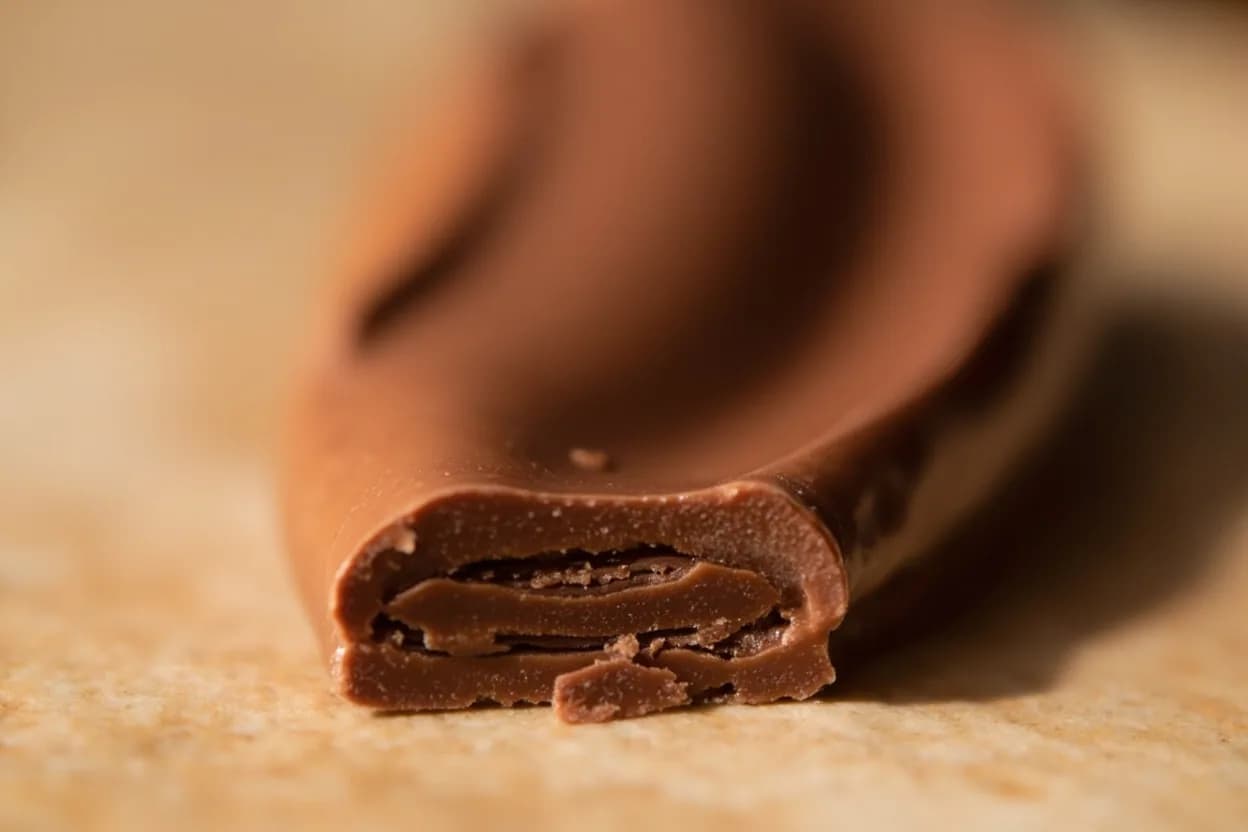
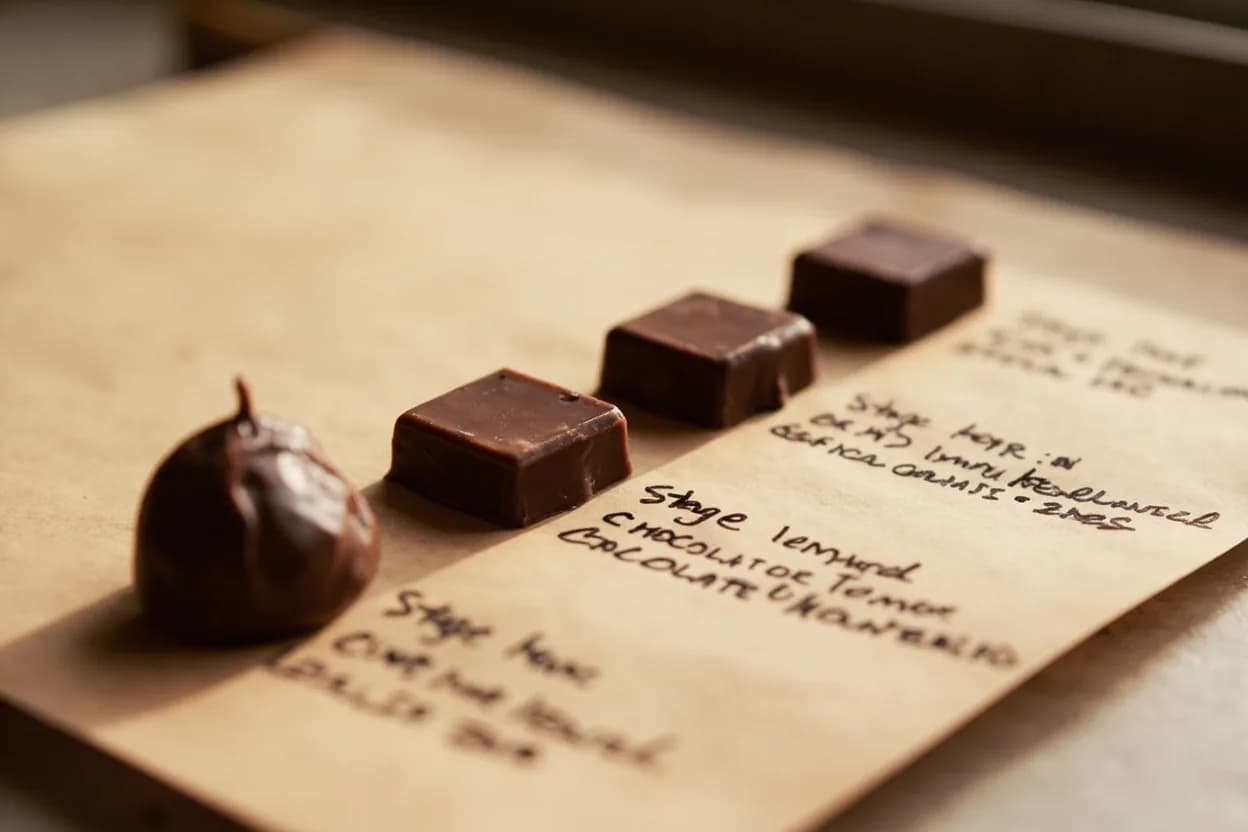
What happens
Milk fat in milk chocolate has a lower melting point than cocoa butter and remains liquid at temperatures where cocoa butter Form V crystals nucleate. This means the cocoa butter pool crystallizes within a partially liquid fat matrix, making Form V seeds more fragile and easier to destroy by overheating. The reheat ceiling of 29–30°C is critical: even 1°C above 30°C risks melting back the Form V seeds, returning the chocolate to an untempered state. The milk solids also slightly impede crystal mobility, meaning thorough mechanical agitation (stirring) during the cooling phase is more important than with dark chocolate.
What to look for
- At 29–30°C working temperature, milk chocolate flows smoothly off a spatula in a thick, even ribbon
- A smear on marble sets glossy and firm in 2–3 minutes, slightly slower than dark chocolate
- Properly tempered milk chocolate has a warm, caramel-toned sheen — not dull or grey
- Molds show visible contraction from the sides within 5–10 minutes at room temperature
- Demolded pieces produce a clean snap, though slightly less resonant than dark chocolate due to higher milk fat content
How to check
- Use a digital chocolate thermometer accurate to 0.1°C — the working window (29–30°C) is only 1°C wide
- Run the knife test: dip the tip of a cool, dry knife blade; tempered milk chocolate sets firm and glossy in 3–5 minutes
- Watch the texture closely — milk chocolate thickens noticeably below 27°C and is difficult to work; if this happens, warm gently to 29°C before continuing
- If the smear test sets with a streaky or matte finish, the chocolate has passed through an untempered zone and must be fully remelted and retempered
Carryover & resting
Set milk chocolate in an environment of 15–17°C — slightly cooler than for dark chocolate — because milk fat makes the crystalline network more susceptible to partial remelting at marginally warm ambient temperatures. Avoid drafts, which cause rapid surface cooling and stress bloom. Store finished pieces below 22°C.
The science behind it
- Cocoa Butter Polymorphism
The six-form crystallization model applies equally to milk chocolate; milk fat complicates the phase diagram
- Milk Fat Interference
Milk fat (anhydrous butter fat) remains liquid at Form V nucleation temperatures, making the working window narrower and more fragile
Higher cocoa solid content shifts all thresholds up 2–3°C; same protocol, higher temperatures
No cocoa mass at all; white chocolate's pure cocoa butter base sets at the lowest of the three working temperatures
- Sugar Bloom
Condensation on chilled milk chocolate dissolves surface sugar; when it re-evaporates, grey sugar crystals remain — a separate defect from fat bloom
Appears in
References
- 1.Chocolates and Confections — Peter Greweling (CIA)
- 2.The Art of the Chocolatier — Ewald Notter
- 3.Chocolate Science and Technology — Emmanuel Ohene Afoakwa
- 4.Professional Baking — Wayne Gisslen
Confidence: high
Notes
Why the window is narrower
Dark chocolate tolerates a 2°C reheat band (31–33°C) before Form V seeds melt. Milk chocolate's band is effectively 1°C (29–30°C). This makes seeding — adding 20–25% pre-tempered callets to chocolate melted to 45°C and stirring to 29°C — the preferred professional approach, as it reaches working temperature without the separate cooling phase where overcontrol errors occur.
Milk chocolate coating viscosity
Milk chocolate typically has higher viscosity than dark at working temperature due to the milk powder particles. If coating proves difficult, raising the cacao butter percentage (adding pure cocoa butter) or using a couverture formulated for enrobing (higher cocoa butter, 36–38%) is preferable to warming the chocolate, which risks destroying the temper.