Chocolate
Chocolate Tempering: Dark Chocolate
Also: dark chocolate temper, couverture tempering, dark chocolate working temperature
Melt to 50–55°C, cool to 27°C, reheat to 31–32°C to seed stable Form V crystals for glossy, snapping dark chocolate.
Tempering dark chocolate is a three-stage temperature protocol that guides cocoa butter through a controlled crystallization sequence, ending with a predominance of stable Form V (beta-2) polymorphic crystals. These crystals give finished chocolate its characteristic high gloss, sharp snap, smooth mouthfeel, and clean release from molds. Untempered chocolate sets dull, soft, and streaked with grey bloom. Dark chocolate (typically 55–85% cocoa solids) requires higher working temperatures than milk or white because the absence of milk solids and higher cocoa butter fraction shifts the crystal melt and set points upward.
In photos
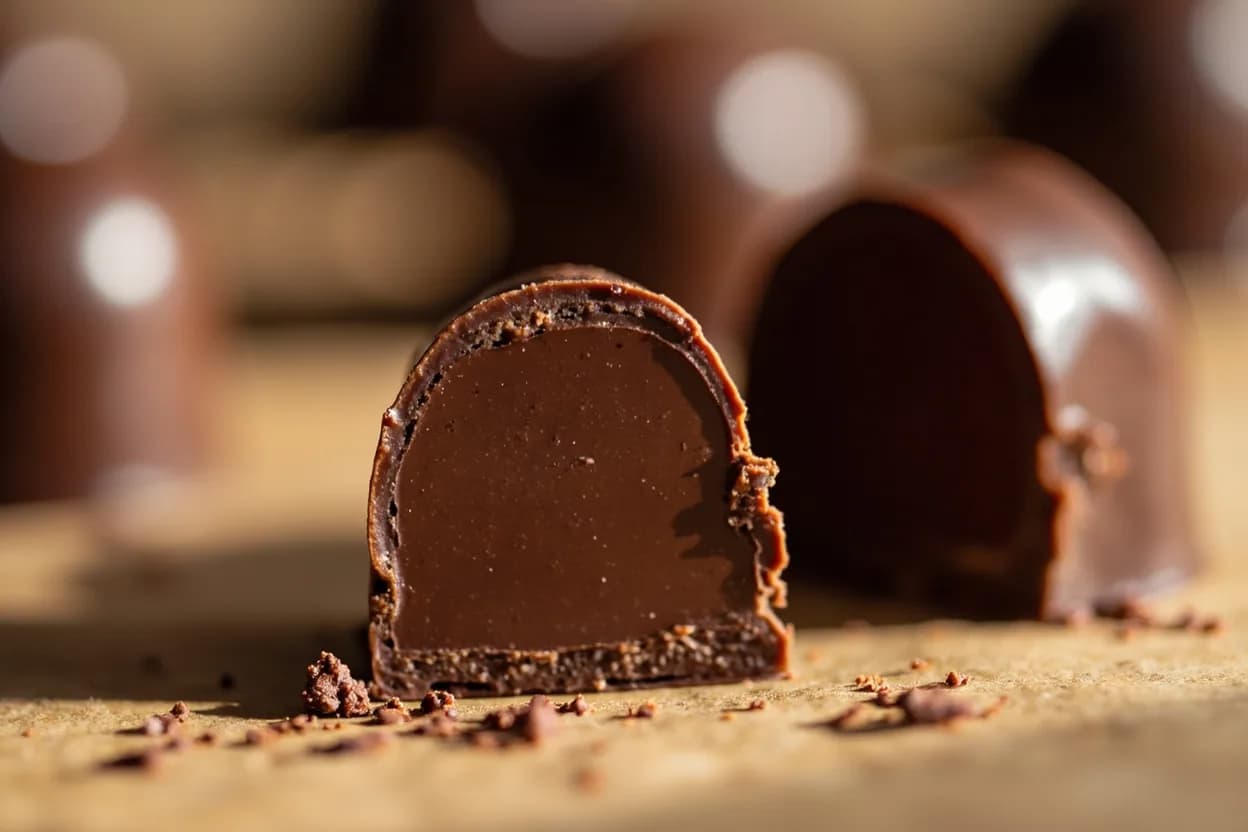
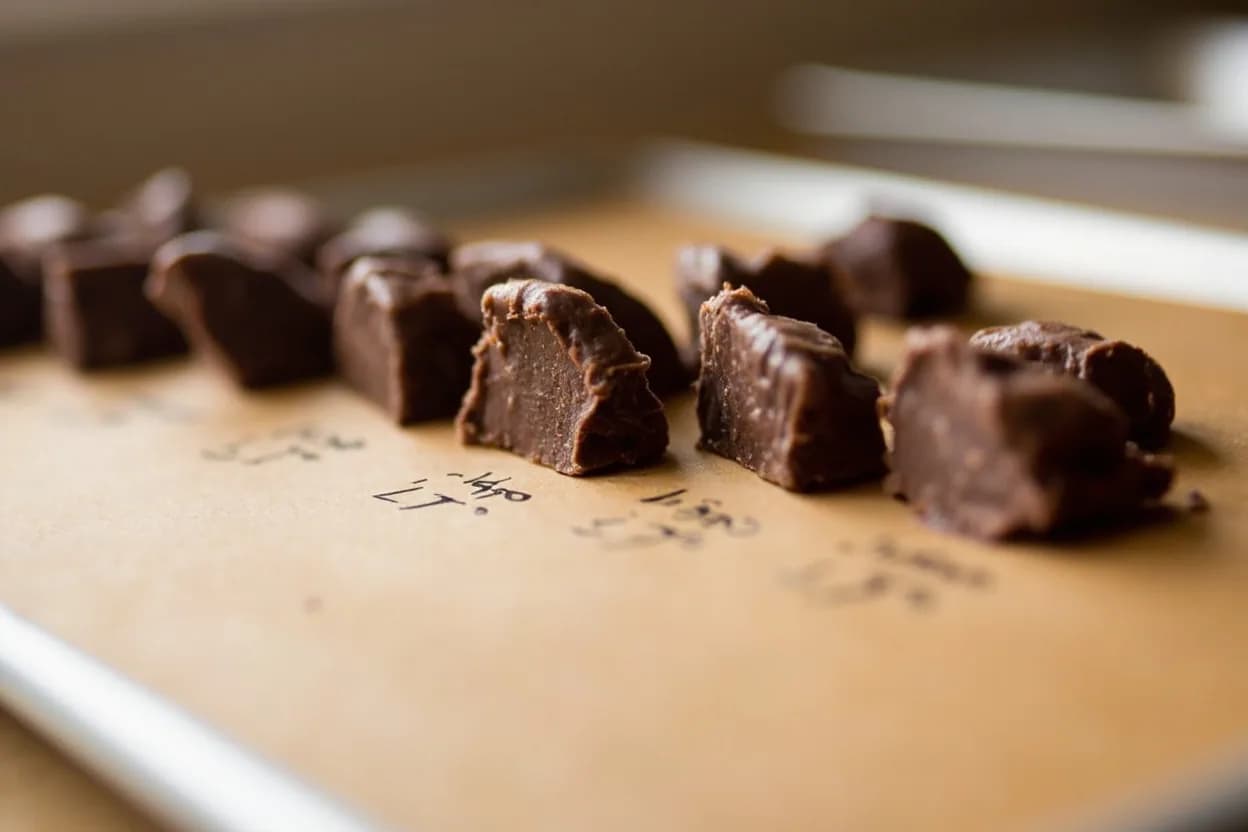
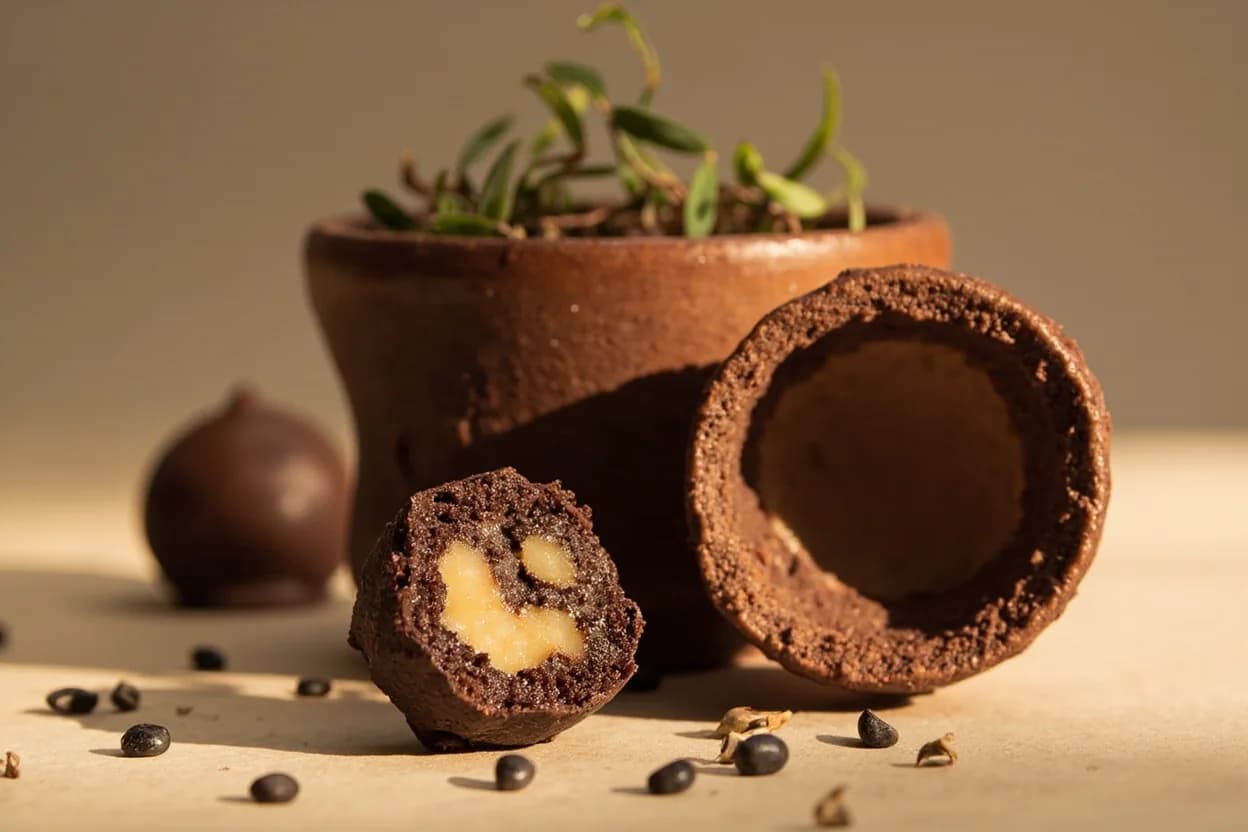
What happens
Cocoa butter can crystallize in six polymorphic forms (I–VI). Forms I–IV are unstable and melt at 17–28°C, creating soft, crumbly, or bloom-prone chocolate. Form V melts at 33–34°C — just below body temperature — giving the ideal snap and melt-in-mouth sensation. Form VI is too stable and produces a hard, slow-melting, grainy product. By melting fully to 50–55°C, all existing crystal structures are destroyed. Cooling to 27°C allows a mix of Forms IV and V to nucleate. The reheat to 31–32°C melts the unstable Form IV crystals while leaving Form V seeds intact, creating a working mass seeded exclusively with the desired polymorph.
What to look for
- At 31–32°C working temperature, chocolate flows like thick cream — not stiff, not watery
- When a small amount is spread on marble and scraped up, it sets firm and streak-free within 2–3 minutes
- Tempered chocolate in a mold begins to contract away from the sides as it cools
- The set surface is mirror-bright with no dull patches or grey swirls
- A tap on the mold produces a clean, resonant snap rather than a dull thud
How to check
- Use a digital chocolate thermometer accurate to 0.1°C — standard probe thermometers lack the resolution needed
- Spread a thin smear on parchment or marble at room temperature (18–20°C); properly tempered chocolate sets hard and glossy in under 3 minutes
- Check working temperature continuously — dark chocolate stiffens quickly if it drops below 29°C and must be rewarmed carefully
- The 'knife test': dip the tip of a cool knife; correctly tempered chocolate sets in 3–5 minutes with a sharp crack when peeled off
Carryover & resting
Once tempered and poured, dark chocolate should be set in an environment of 16–18°C to allow gradual, even crystal growth. Setting too cold (below 14°C) causes stress cracks; setting too warm (above 22°C) risks Form V melting back to Form IV before it stabilizes. After demolding, chocolate is stable at room temperature for weeks if stored below 25°C.
The science behind it
- Cocoa Butter Polymorphism
The science underpinning all tempering — six crystal forms with distinct melt points and textures
- Fat Bloom
The grey streaking that results from improper tempering or temperature shock, caused by Form VI crystal migration
- Seeding Method
Adding pre-tempered chocolate callets (chips) to melted chocolate is the professional shortcut to nucleate Form V directly
- Tabling Method
Pouring two-thirds of melted chocolate onto marble and working it with a scraper to cool and seed, then combining with the remainder
- Milk Chocolate Tempering
Milk solids lower working temperature to 29–30°C, requiring separate protocol
No cocoa mass makes white chocolate the most temperature-sensitive to temper, working at 27–28°C
Appears in
References
- 1.Chocolates and Confections — Peter Greweling (CIA)
- 2.The Art of the Chocolatier — Ewald Notter
- 3.On Food and Cooking: The Science and Lore of the Kitchen — Harold McGee
- 4.Chocolate Science and Technology — Emmanuel Ohene Afoakwa
Confidence: high
Notes
Seeding shortcut
Professional chocolatiers commonly skip the full melt-cool-reheat cycle by adding 20–30% by weight of finely grated, already-tempered couverture (callets) to chocolate melted to 50°C. The callets seed the mass directly with Form V crystals. Stir until the working temperature reads 31–32°C. Faster, less skill-dependent, and widely taught in pastry schools.
Equipment matters
Chocolate is very sensitive to even small amounts of water — a drop causes immediate seizing. All bowls, spatulas, and molds must be bone-dry. Marble slabs are ideal for tabling because they are non-porous and thermally stable. Microwave tempering works in short bursts (15–20 seconds, stir between) but risks hot spots that destroy crystal seeds.