Chocolate
Chocolate Tempering: White Chocolate
Also: white chocolate temper, white couverture tempering, white chocolate working temperature
Melt to 40–45°C, cool to 25°C, reheat to 27–28°C — pure cocoa butter with no cocoa mass makes white chocolate the most temperature-sensitive chocolate to temper.
White chocolate contains no cocoa solids — only cocoa butter, sugar, milk solids, and vanilla. Because cocoa butter is the sole fat, tempering white chocolate is entirely about controlling cocoa butter crystallization with no additional fats to stabilize or dilute the system. Paradoxically, this purity makes white chocolate more difficult to temper: the temperature targets are the lowest of the three main types, the working window is the narrowest (often less than 1°C), and overheating by even a few degrees above 28°C is enough to destroy all Form V seeds. Inferior white chocolates made with vegetable fats (compound coating) cannot be meaningfully tempered — only real couverture with high cocoa butter content responds correctly.
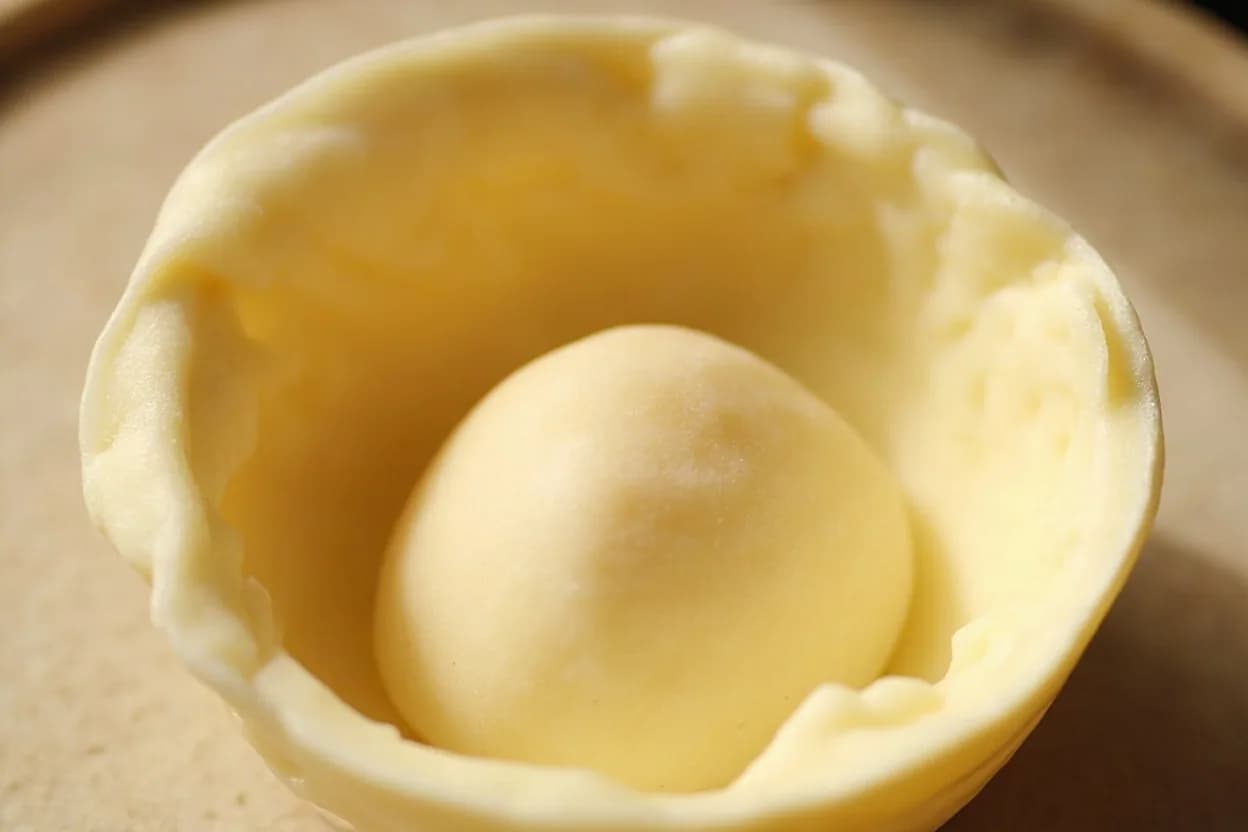
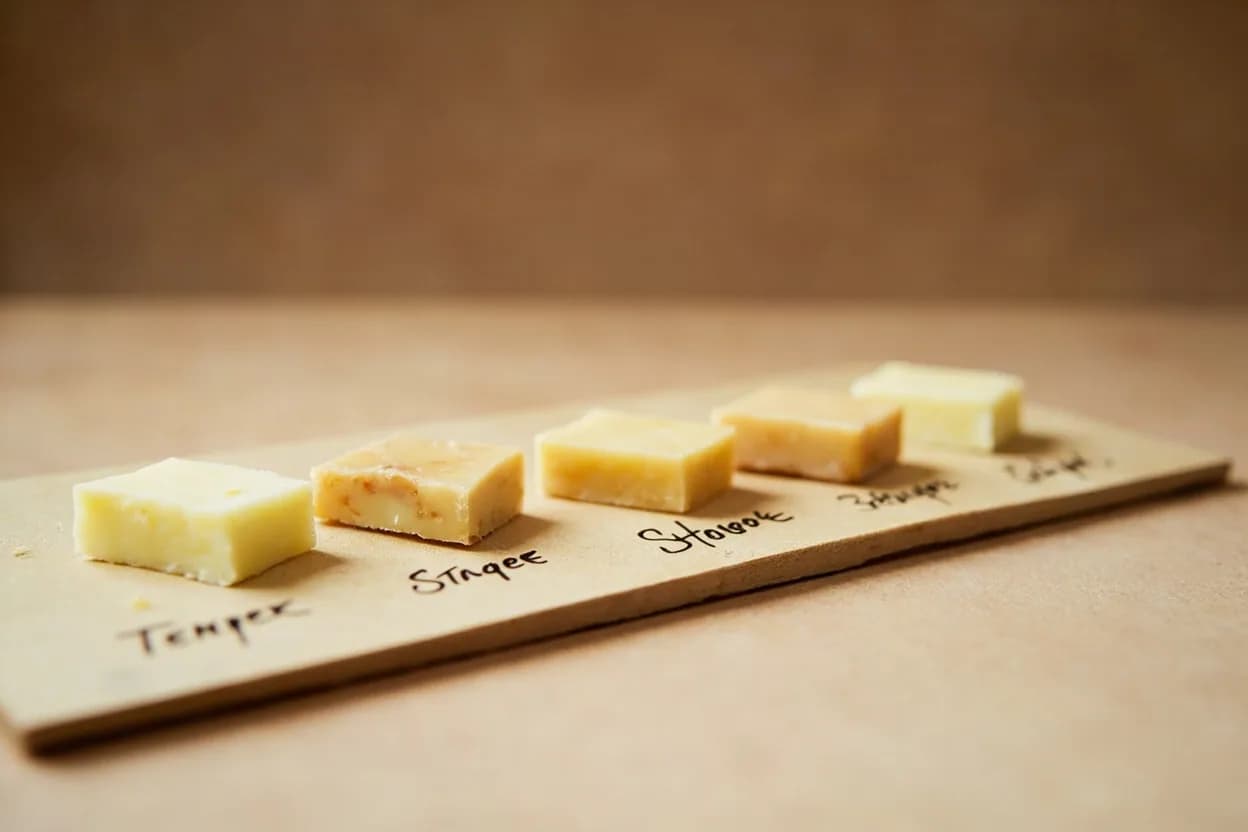
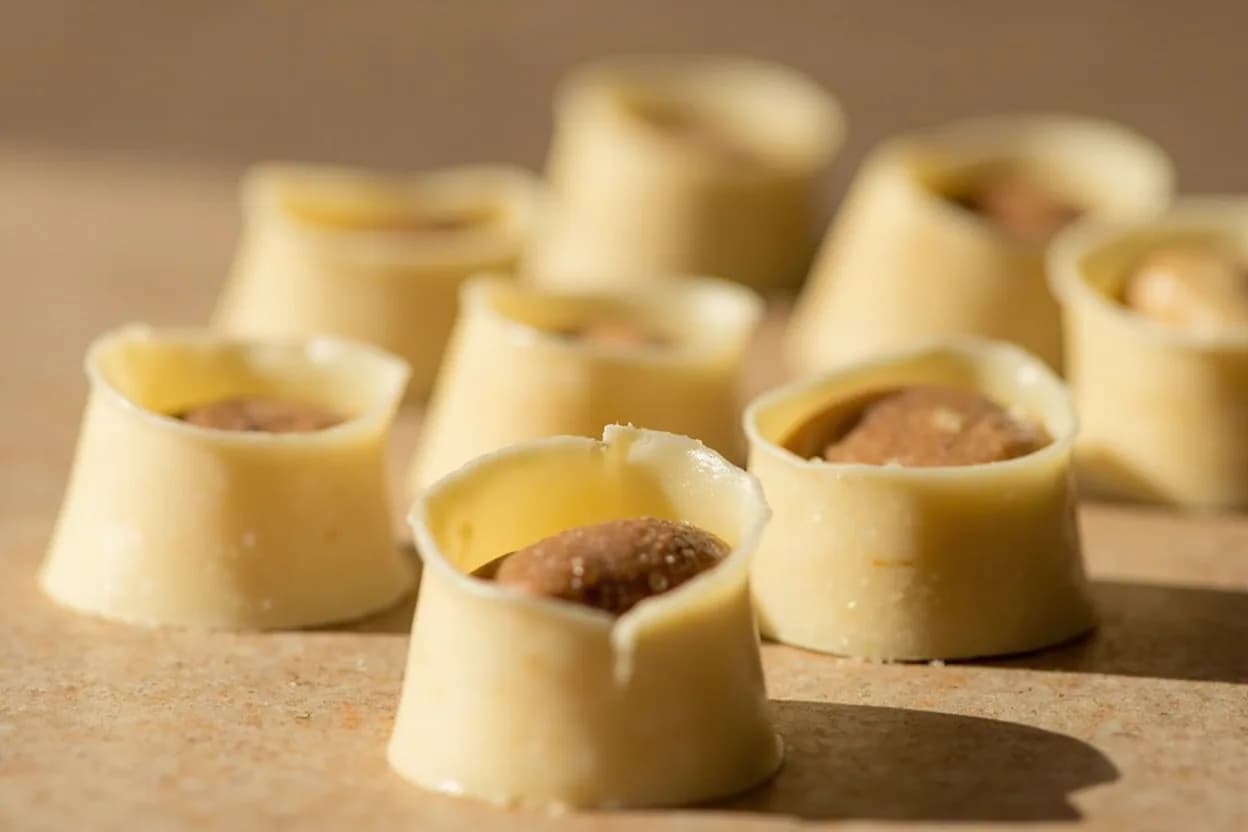
In photos
What happens
Without cocoa mass to absorb heat or milk fat to moderate crystal formation, white chocolate's cocoa butter crystallizes in a very narrow temperature band. Form V crystals nucleate around 26–27°C but the competing unstable forms (particularly Form IV, which nucleates rapidly between 20–26°C) are easy to generate if cooling is uneven or too fast. The reheat to 27–28°C is meant to selectively melt the lower-form crystals, but the gap between Form IV melt point (~26°C) and Form V melt point (~33°C) is wider in white chocolate's context than it might seem — the working temperature must be held almost exactly at 27–28°C, not above. Overheating to 30°C melts all Form V seeds and returns the chocolate to an untempered state, causing dull, soft results with rapid fat bloom.
What to look for
- At 27–28°C, white chocolate flows like a slightly thick cream — not watery, not stiff
- A smear on marble or parchment sets with a creamy-ivory gloss in 3–4 minutes; bloom shows as a dull, chalky surface
- The texture in the bowl thickens perceptibly as it approaches 25°C during cooling — this is normal and desirable
- Demolded white chocolate has a pale ivory sheen, not white or greying
- The snap is softer than dark chocolate but still present — white chocolate should not bend before it breaks
How to check
- A digital thermometer accurate to 0.1°C is non-negotiable for white chocolate — differences of 1°C are decisive
- Knife or parchment test: at 27–28°C, a smear should firm with a glossy surface in 3–4 minutes at 18–20°C room temperature
- If the set is tacky, oily, or streaky, the chocolate was not seeded with sufficient Form V crystals — rethink cooling stage
- Monitor the bowl constantly during reheating: white chocolate crosses from under- to over-temperature in seconds on a double boiler
Carryover & resting
Set white chocolate in a room held at 16–18°C, avoiding any warmth above 20°C which risks partial melt of the delicate crystal network. White chocolate is the most prone of the three types to fat bloom if subjected to temperature fluctuation after setting. Store finished white chocolate pieces below 20°C and away from direct light, which can cause surface yellowing via oxidation of milk fat.
The science behind it
- Cocoa Butter Polymorphism
Without cocoa mass to buffer the system, all tempering behavior in white chocolate is pure cocoa butter crystallization science
The same Form V target, 4–5°C higher at every stage due to higher cocoa solid content
Milk solids lower dark chocolate targets by 2–3°C; white chocolate is 2°C lower still due to the additional milk fat dilution
- Compound Coating
White compound coating uses vegetable fats instead of cocoa butter and does not require tempering — an important distinction when purchasing
- Colorful White Chocolate
Fat-soluble cocoa butter colors are added to tempered white chocolate for vivid confectionery; the coloring process must not introduce heat that destroys the temper
Appears in
References
- 1.Chocolates and Confections — Peter Greweling (CIA)
- 2.The Art of the Chocolatier — Ewald Notter
- 3.Chocolate Science and Technology — Emmanuel Ohene Afoakwa
- 4.Bo Friberg, The Professional Pastry Chef
Confidence: high
Notes
Seeding is strongly preferred
Because the working window is so narrow, the tabling method is impractical for white chocolate — temperature control over the marble is too imprecise. The seeding method (melting to 40°C, then stirring in 20–25% finely grated pre-tempered white callets until the mass drops to 27°C) is the professional standard for white chocolate and dramatically reduces failure rate.
Quality matters more here
Only couverture-grade white chocolate (minimum 30–35% cocoa butter, ideally 36%+) tempers reliably. Budget white chocolate chips are formulated with stabilizers and vegetable fats that interfere with cocoa butter crystallization. For molded or enrobed work, source from Valrhona (Ivoire), Callebaut (W2 or Gold), or Cacao Barry (Zéphyr) — the difference is not aesthetic preference but practical workability.