Pork Doneness
Cochinita Pibil & Carnitas: Collagen Breakdown Stage
Also: cochinita pibil doneness, carnitas temperature, pibil collagen conversion, Mexican slow pork doneness
Both cochinita pibil and carnitas are done when the pork shreds effortlessly at 90–96°C (195–205°F) internal, with collagen fully converted and fat rendered — though cochinita carries distinct achiote and citrus aromatic cues while carnitas finishes with a crisping stage.
Cochinita pibil (Yucatecan pit-barbecued pork) and carnitas (Michoacán-style lard-braised pork) are Mexico's two great slow-pork traditions, and both converge on the same thermal endpoint: sustained internal temperature of 90–96°C (195–205°F) until collagen fully hydrolyzes into gelatin and the meat falls apart under minimal mechanical force. Cochinita pibil achieves this via a banana-leaf-wrapped pit roast or oven braise, with the pork marinated in achiote paste and sour orange juice; the acid pre-treats the collagen and speeds conversion. Carnitas are submerged in lard (or a lard-and-liquid mixture) and cooked at a low rolling temperature of 85–95°C (185–205°F) until shred-ready, then the heat is raised to crisp the exterior fat — a unique two-stage process that produces the characteristic dual texture of soft interior and caramelized-crisp exterior.
In photos
What happens
In cochinita pibil: the citric and malic acids in sour orange (naranja agria) begin denaturing surface collagen during the overnight marinade, reducing the total cooking time needed for full conversion. Achiote (annatto) contributes norbixin pigments that bond to the meat surface and fat during cooking, intensifying orange-red color. During the banana-leaf pit roast or oven braise at 150–165°C (300–325°F) for 3–5 hours, the interior climbs to 90–96°C and collagen hydrolysis completes. The banana leaf wrapper creates a steaming micro-environment that prevents moisture loss while the aromatic compounds in the leaf (including linalool and geraniol) transfer to the meat fat. In carnitas: the lard bath at 85–95°C is just below the boiling point of water — the pork cooks in a hybrid confit/braise environment where collagen converts slowly (3–4 hours) and the meat's own water gradually evaporates, concentrating flavor. When the lard temperature is then raised to 180–190°C, the now-gelatin-rich meat surface fries in its own rendered fat, creating the crackling-crisp exterior of good carnitas.
What to look for
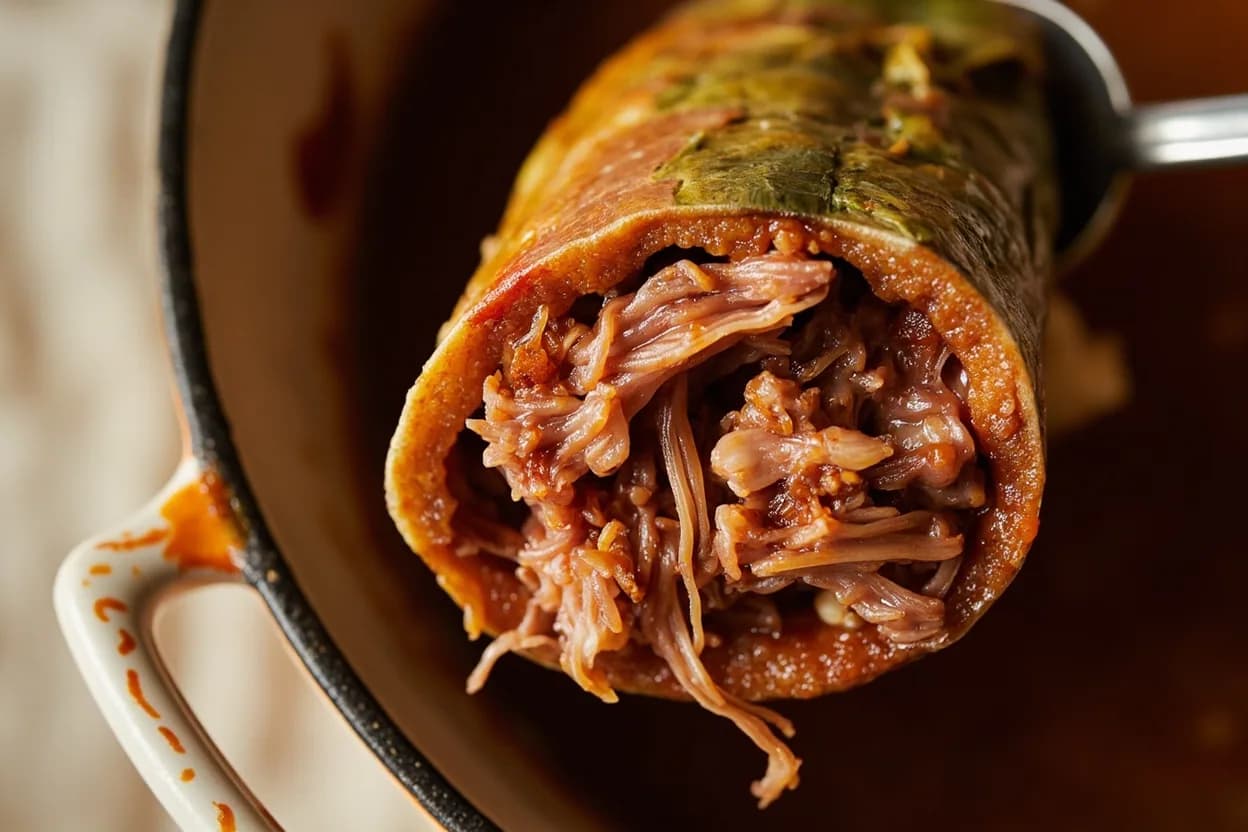
- Cochinita pibil: the banana leaf packet is swollen with steam, deeply colored orange-red where achiote has stained it; the aroma is citrus-forward and earthy-spiced when opened
- Cochinita pibil: a fork inserted into the meat center meets zero resistance and pulls apart strands of 8–12 cm fiber without tearing across the grain
- Carnitas (collagen stage): pork pieces yield completely when pressed with a spoon; liquid in the pot is opaque and fat-rich, not thin
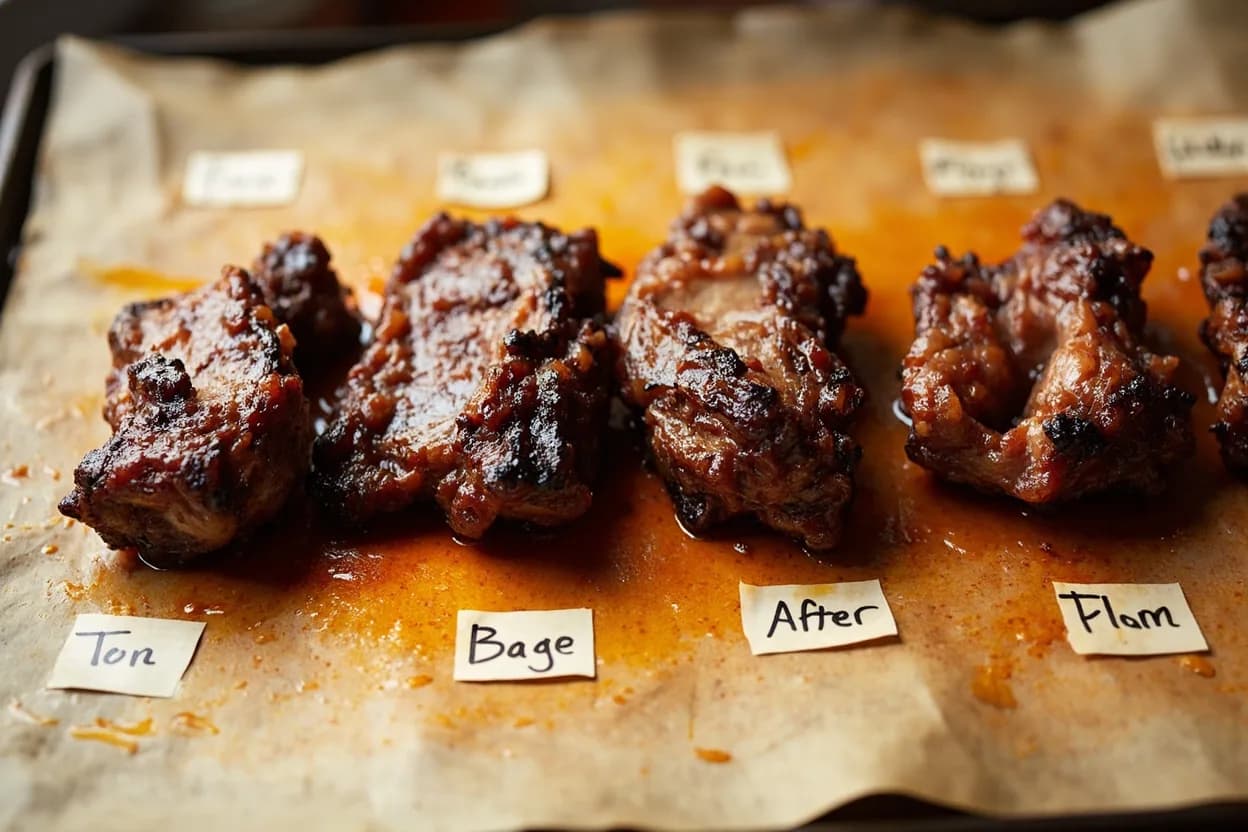
- Carnitas (crisp stage): the exterior of the pork pieces turns golden-amber and develops a slightly crisp, irregular surface with small puffy blisters
- Both: rendered fat is clear (not opaque white), indicating full liquefaction of intramuscular fat
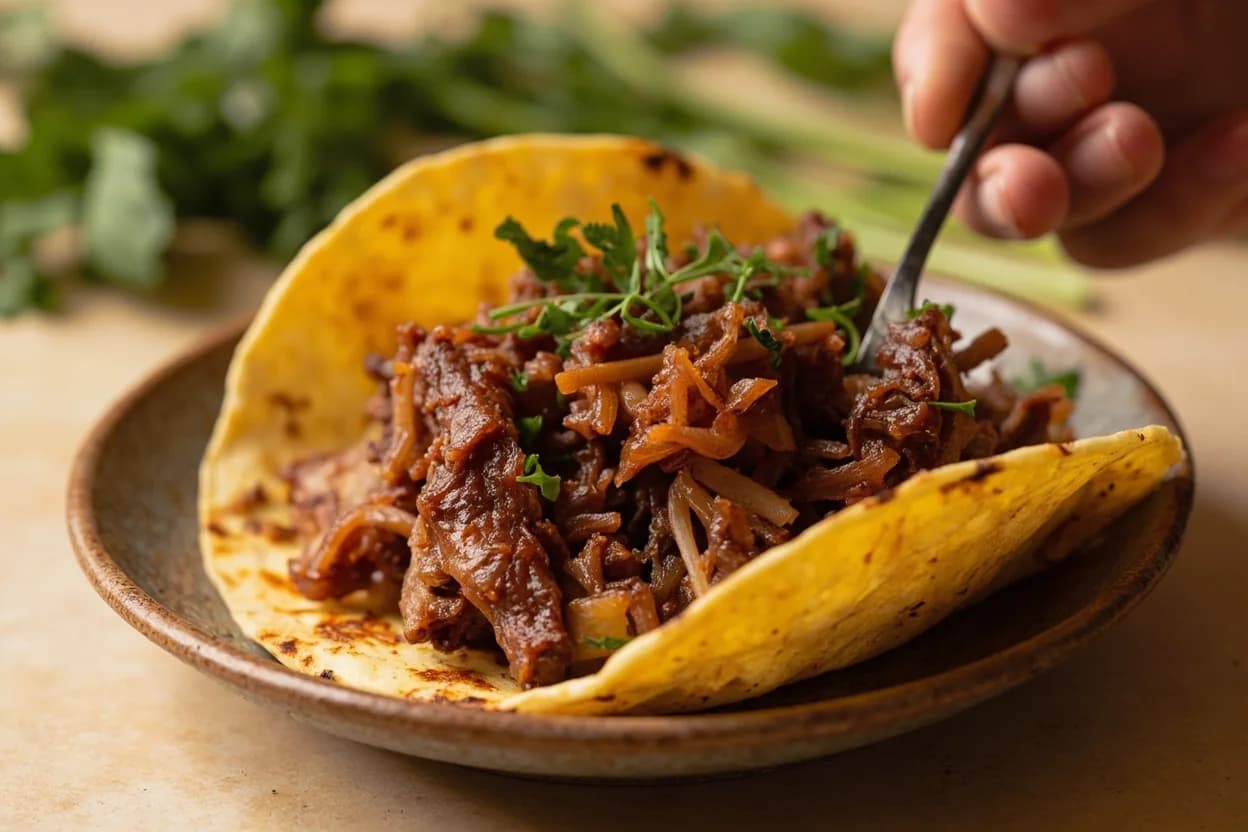
- Both: the meat pulls apart into long, moist fibers without gumminess — gumminess indicates incomplete collagen conversion
How to check
- Probe the thickest piece with an instant-read thermometer — target 90–96°C (195–205°F) internal
- Shred test: grasp a piece with two forks and pull in opposite directions; at doneness it should separate effortlessly into long strands with no tearing resistance
- For cochinita: open a corner of the banana leaf packet at the 3-hour mark and probe without disturbing the steam pocket
- For carnitas: during the collagen stage, press the largest piece with a wooden spoon — it should compress and crack apart rather than spring back
- For carnitas crisp stage: visual check on the lard surface — bubbling slows as surface moisture is exhausted; exterior turns golden within 5–8 minutes of raising the heat
Food safety
Carryover & resting
Both preparations are typically held in their cooking medium after reaching target temperature, so carryover is a non-issue: cochinita rests in the sealed banana-leaf packet where it holds temperature for 30–60 minutes, and carnitas are held in the lard until service. If the pibil is removed and plated, expect 5–8°F carryover.
The science behind it
The shared thermal process at the heart of both preparations — the goal that determines doneness for both
- Acid pre-treatment of collagen
The sour orange marinade in cochinita pibil partially denatures surface collagen before heat is applied, reducing cooking time
- Confit technique
Carnitas in lard is a form of confit — low-temperature fat immersion cooking — followed by a frying finish
- Achiote (annatto) pigmentation
The distinctive orange-red color of cochinita pibil comes from achiote paste; color deepens as norbixin bonds to fat during cooking
- Banana leaf wrapping
Creates a steam envelope in cochinita pibil that retains moisture and transfers subtle grassy-floral aromas to the meat
Appears in
References
- 1.Authentic Mexican: Regional Cooking from the Heart of Mexico — Diana Kennedy (William Morrow, 2011)
- 2.Cocina Yucateca — various regional sources; Yucatecan culinary tradition, oral and written records
- 3.The Food Lab — J. Kenji López-Alt (W. W. Norton, 2015)
- 4.Mexico: The Cookbook — Margarita Carrillo Arronte (Phaidon, 2014)
Confidence: high
Notes
Cochinita pibil: pit versus oven
Traditional cochinita is cooked in a pib — an underground stone-lined pit — where heated rocks radiate dry heat into the sealed pit while the banana-leaf packets steam the pork. Temperatures in a properly fired pib range from 150–180°C (300–355°F) with declining heat over 4–8 hours. The classic ratio of a pib-cooked cochinita (8 hours slow, no blast of heat) produces a more uniformly tender and delicately flavored result than oven-cooked versions. Modern Yucatecan restaurants replicate this with a low oven (160°C / 320°F) for 4–5 hours.
Carnitas fat: lard is not optional
Authentic carnitas requires lard — not oil, not water, not broth — because the fat chemistry matters. Lard is primarily monounsaturated oleic acid and saturated palmitic acid, both of which remain stable at the 180–190°C crisping temperature without smoking or imparting off-flavors. Lard also carries the pork's own rendered fat back into the exterior crust during the frying stage, intensifying flavor. Water or broth braising cannot replicate the dual-texture result of lard-braised carnitas.
The naranja agria question
Sour orange (naranja agria, Citrus aurantium) is not reliably available outside Mexico. Common substitutes combine equal parts fresh orange juice and lime juice, sometimes with a splash of grapefruit juice. The pH and acid profile is not identical to sour orange, so marinaded time should be extended (12–16 hours rather than 8) when using substitutes to achieve comparable surface collagen softening.