Technique-Specific Doneness
Clarified Butter Ready State
Also: ghee ready, beurre clarifié, drawn butter done, butter clarified
The stage at which butter's foam has subsided, milk solids have sunk, and the pure golden fat is clear — ready to pour off as clarified butter or held further for beurre noisette.
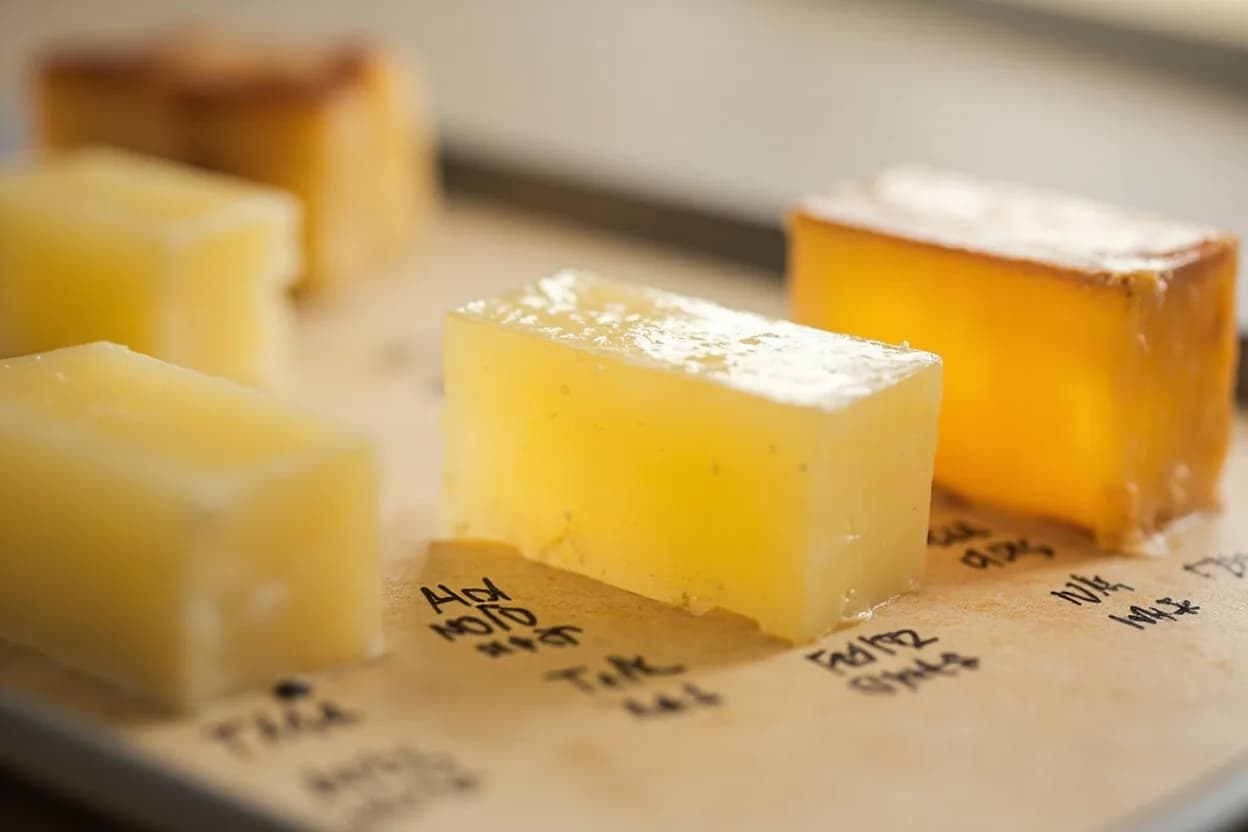
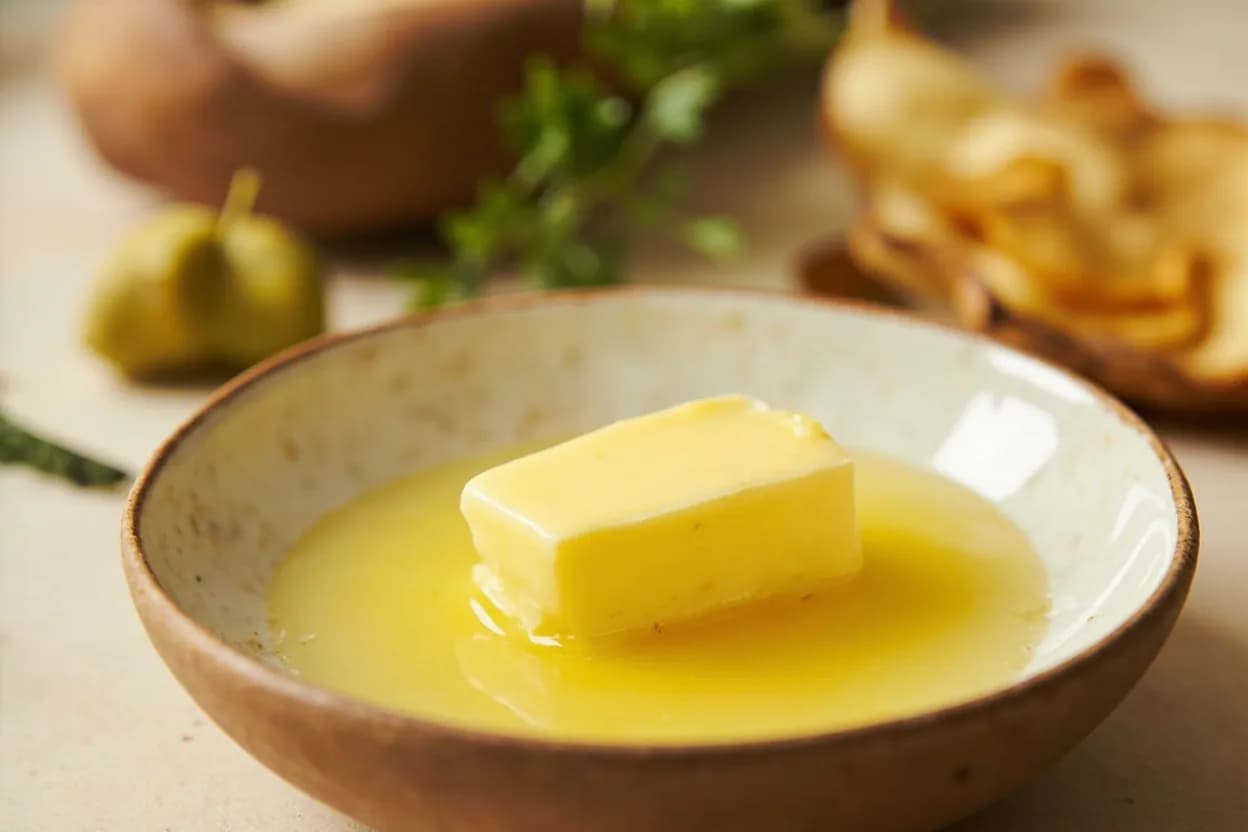
Clarified butter is produced by gently melting whole butter to separate its three components: water (~16%), milk solids (proteins and lactose, ~4%), and pure butterfat (~80%). The ready state is reached at approximately 150°C (302°F) when the initial foam (whey proteins denatured by heat) has fully subsided, the water has completely evaporated (marked by the cessation of bubbling), and the casein/lactose solids have settled to the bottom as a white or pale-tan sediment. The remaining liquid fat is translucent golden-yellow. Held further without straining, the solids begin to brown (beurre noisette, ~160°C/320°F) or darken to deep brown (beurre noir, ~175°C/347°F), each stage distinct in flavor.
In photos

What happens
At 80–90°C the butter melts and begins to separate. Water evaporates between 100–120°C, producing the vigorous initial bubbling. Whey proteins denature and form the white foam layer. Between 120–150°C, the remaining water flashes off and bubbling slows to a stop. At approximately 150°C, the fat is anhydrous and the milk solids have sedimented as discrete particles. The smoke point of the resulting clarified butterfat is approximately 250°C (482°F) — dramatically higher than whole butter's ~175°C (350°F) — because the scorching milk solids have been removed. If held to 160°C, the sediment Maillard-browns, releasing nutty, hazelnut-like compounds into the fat (beurre noisette). At 175°C, further browning produces bitter, more intense dark notes (beurre noir, rarely reached intentionally beyond classic French sauces).
What to look for
- First foam subsides and fat becomes visually clear and golden — primary clarified-butter cue
- Bubbling stops entirely, indicating water is fully evaporated
- Milk solids visible as a white or pale-tan sediment layer on the pot bottom
- A clean, pure dairy-fat aroma with no milky or cooked-cream notes
- For beurre noisette: foam re-forms briefly then clears, revealing golden-brown sediment and a toasted-hazelnut aroma
- For beurre noir: sediment darkens to deep brown, aroma becomes intensely nutty with slight bitterness
How to check
- Hold a spoon above the pan and look through the fat — it should be translucent gold, not opaque or white-cloudy
- Thermometer: 150°C (302°F) is the clarified-butter stage; 160°C (320°F) is beurre noisette entry
- Tilt the pan gently — clear fat flows freely away from the white sediment layer
- Listen: when all bubbling ceases completely, the water is gone and the butter is clarified
- Strain through cheesecloth or fine-mesh sieve; if the strained fat is crystal clear and golden, it is correctly clarified
Carryover & resting
Remove from heat promptly at the target stage. The pan retains significant heat; if producing clarified butter (not beurre noisette), pour immediately into a bowl or through a strainer to halt cooking. Sediment left in a hot pan will continue browning off-heat and can taint the fat with bitter notes.
The science behind it
Indian clarified butter, typically cooked slightly longer than French beurre clarifié to a light beurre noisette stage, imparting a distinctly nutty flavor
The next stage beyond clarified butter: sediment browns to produce a hazelnut-scented brown butter
- Beurre noir
Further browning of milk solids for very dark butter, traditional with skate and calf's brain dishes
- Smoke point
Clarified butter's smoke point (~250°C) is far higher than whole butter's (~175°C), making it superior for high-heat sautéing
- Milk solid separation
The technical process at the core of clarification — density difference between fat and hydrated proteins drives sedimentation
Appears in
References
- 1.Jacques Pépin, 'New Complete Techniques' — step-by-step clarified butter and brown butter
- 2.Harold McGee, 'On Food and Cooking' — milk solid composition, smoke points, and Maillard chemistry in butter
- 3.Thomas Keller, 'The French Laundry Cookbook' — ghee and clarified butter in professional kitchen use
Confidence: high
Notes
Ghee versus beurre clarifié
French clarified butter is stopped the moment the solids settle and the foam clears, preserving a neutral, pure fat. Indian ghee is intentionally taken a step further — the solids are allowed to brown slightly in the fat before straining — producing a nuttier, more aromatic product with a longer shelf life due to the complete removal of moisture. Both are anhydrous fats; ghee's flavor compounds come from controlled Maillard browning of the milk solids.
Storage
Properly clarified butter is shelf-stable at room temperature for several weeks and refrigerated for months, because the microbially-susceptible milk solids and water have been removed. Whole butter's 2–4 week refrigerated life is limited by the presence of those components.