Cheese & Dairy Doneness
Coconut Milk Split Point
Also: coconut cream cracking, coconut oil separation, breaking coconut milk
The moment — at 80–85°C or with sustained high heat — when coconut milk's emulsion breaks and the fat separates as golden oil, a technique deliberately exploited in Southeast and South Asian cooking.
Coconut milk is a natural oil-in-water emulsion stabilised by phospholipids and proteins from the coconut flesh. When heated above approximately 80–85°C (176–185°F), or subjected to prolonged moderate heat, the protein emulsifiers denature and can no longer hold the fat in suspension. The emulsion 'splits' or 'cracks': visible oil (golden, fragrant coconut fat) separates to the surface and edges of the pan. In many Thai, Indonesian, Malaysian, Sri Lankan, and South Indian recipes, this split is intentional — cooks fry paste ingredients in the rendered coconut oil before adding liquids, concentrating flavour in a way impossible if the emulsion remains intact.
In photos
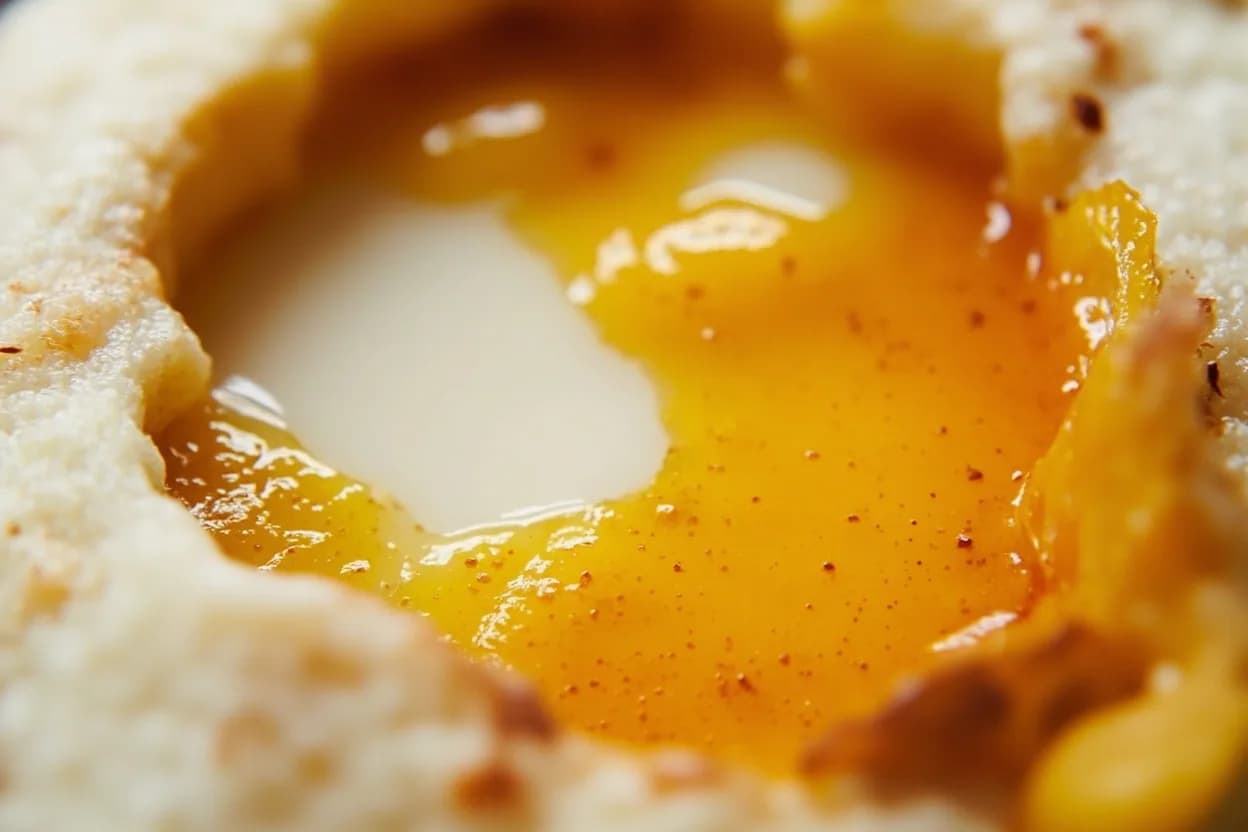
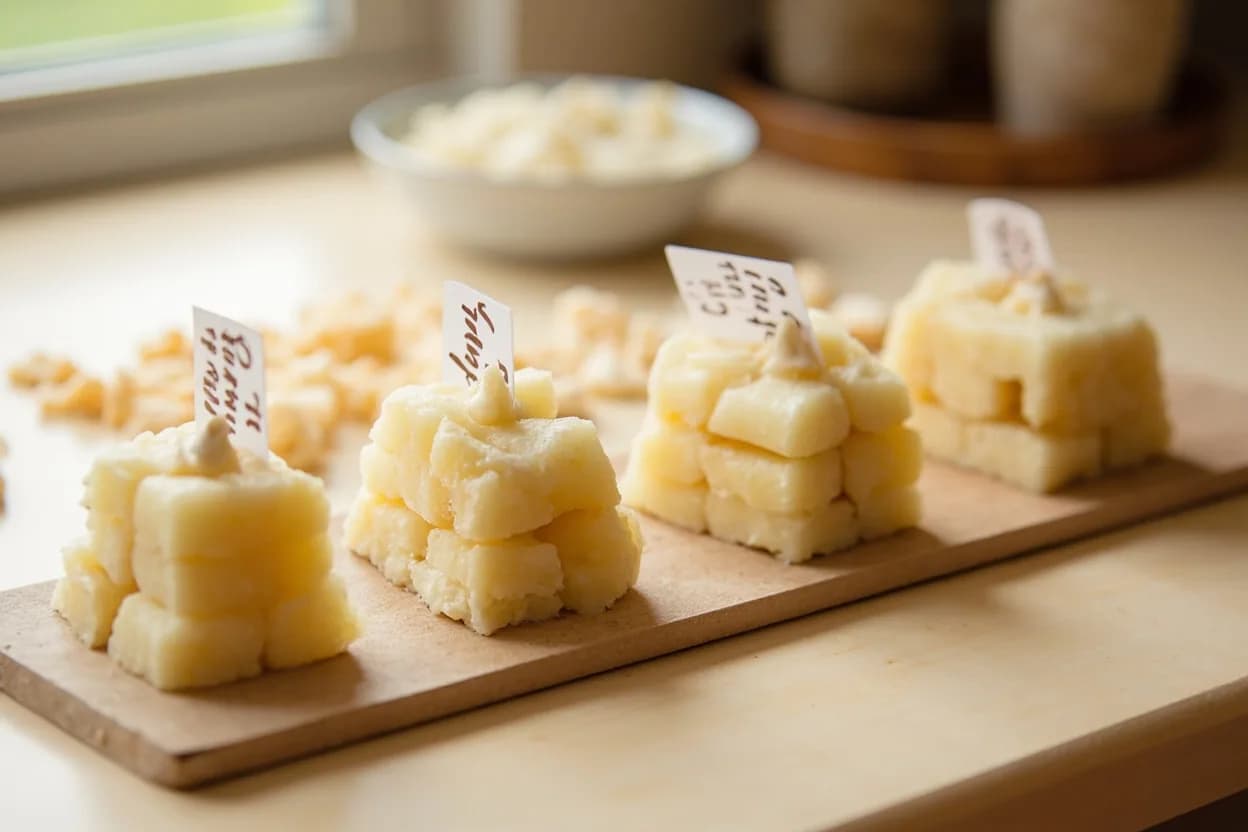
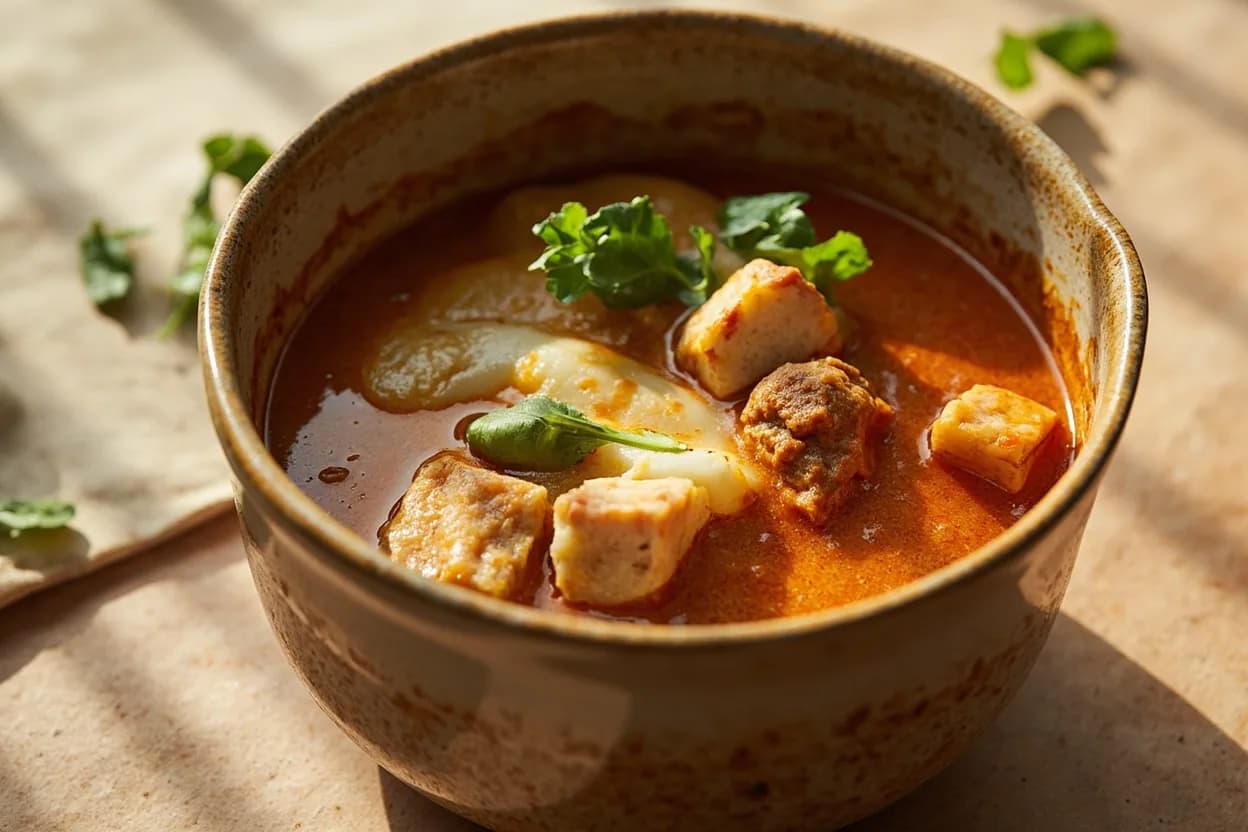
What happens
Fresh and canned coconut milk contain roughly 17–24% fat in emulsified form. The emulsifiers (mainly globulins and albumins in the coconut protein fraction) are relatively heat-labile. As temperature climbs toward 80°C, these proteins unfold and lose their hydrophilic coating around fat droplets; surface tension decreases and droplets coalesce. With sustained heat the fat fully separates, leaving a watery coconut serum below and a pool of golden oil on top or around the edges. The oil is then hot enough (~170–180°C in concentrated pockets) to fry aromatics — lemongrass, galangal, shrimp paste, dry spice pastes — in a process Thai cooks call 'frying the curry paste in coconut cream'. Acid (tamarind, lime juice) and salt can hasten splitting; rapid high heat is the most controllable trigger.
What to look for
- Golden, translucent oil pools at the edges or surface of the pan — clearly distinct from the opaque white liquid below
- Sizzling and spitting increases sharply as free oil reaches frying temperatures
- The milk's white colour shifts to pale yellow as fat separates; the remaining liquid turns more translucent
- Fragrant, toasted coconut aroma — distinctly different from raw coconut milk's neutral smell
- Pan sounds change from gentle bubbling to active frying if aromatics are already present
- Stirring reveals two-phase separation: oily layer on top, watery serum below
How to check
- Visual: watch for oil pooling at the pan edges and surface — the transition is visible and unmistakable
- Sound cue: listen for the shift from wet bubbling to a drier, active fry sound
- Probe thermometer in the bulk liquid: when it reads 80–85°C the split is imminent; higher if using a wok over high flame
- Tilt the pan: separated fat runs freely while the serum stays thicker — clear confirmation of two phases
- For intentional cracking: use thick (full-fat) coconut cream in a wide pan over medium-high heat and stir only occasionally to allow coalescence
The science behind it
Coconut milk is a natural emulsion; understanding how emulsifiers denature explains why heat and time cause splitting
- Fat as Cooking Medium
Once split, the rendered coconut oil functions as any frying fat — hot enough to toast and fry aromatics at true frying temperatures
- Paste Frying (Thai Curry Technique)
The split is the signal to add curry paste and fry it until fragrant — a canonical step in Thai red, green, and massaman curries
Aromatic pastes fried in the rendered coconut oil undergo Maillard browning that builds depth of flavour in the finished curry
- Coconut Cream vs. Coconut Milk
Cream (thicker, higher fat) splits faster and more completely; thinner coconut milk may require longer heating or reduction
Appears in
References
- 1.On Food and Cooking — Harold McGee (Scribner, 2004), Coconut and plant milks
- 2.The Food of Thailand — David Thompson (Pavilion Books, 2002)
- 3.Burma: Rivers of Flavor — Naomi Duguid (Artisan, 2012)
- 4.The Complete Asian Cookbook — Charmaine Solomon (Tuttle, 2011)
Confidence: high
Notes
When splitting is unwanted
In desserts, soups, and drinks (e.g., pandan coconut jelly, tom kha gai), a broken emulsion is undesirable. To prevent splitting: keep heat at or below 75°C, add coconut milk late in the cooking process, avoid prolonged simmering, and do not cover the pot (steam pressure raises the effective temperature). Adding a small amount of cornstarch or rice flour can stabilise the emulsion under moderate heat.
Rendang: the extreme case
In beef rendang, coconut milk is intentionally driven well past the split point over 3–5 hours of cooking. The emulsion breaks, the water evaporates, and the meat eventually fries in its own rendered coconut oil and tallow until deeply caramelised and nearly dry. The end state is the opposite of a saucy curry — a concentrated, coated, intensely flavoured dish in which the fat carrier has done its work and been largely reabsorbed into the meat.