Beverage Temperatures
Coffee Brew Temperature Range
Also: coffee extraction temperature, brew water temperature, espresso brew temp, pour-over temperature, coffee water temp
The 90–96°C window in which hot water extracts coffee's balanced spectrum of acids, sugars, and aromatic oils — below it you get sour underextraction, above it bitter overextraction.
Coffee brew temperature is the temperature of water at the moment it contacts coffee grounds. The widely accepted optimal range for most brew methods — filter drip, pour-over, French press, AeroPress, and espresso — is 90–96°C (194–205°F). Below 90°C, extraction is kinetically slow and preferentially pulls acidic compounds (chlorogenic acids, formic acid) while leaving sugars and aromatics behind, producing a sour, thin cup. Above 96°C, extraction overshoots into bitter phenolic and astringent compounds. Specialty coffee organisations codify the centre of this range (around 93°C / 200°F) as the default target, with adjustments for roast level and brew method.
In photos
What happens
Water temperature governs the rate and selectivity of compound extraction from roasted coffee grounds. Organic acids (acetic, citric, malic) are highly soluble and extract earliest; sucrose-derived sweetness follows; aromatic esters and melanoidins (responsible for body and roast character) require higher temperatures or longer contact to solubilise. At 93°C, all three categories extract in proportion during a typical 2–4 minute brew window. Below 90°C, the brew window closes before aromatic and sweet compounds fully extract, leaving the cup sour and underbodied. Above 96°C, rapid high-temperature extraction over-develops bitter chlorogenic acid lactones and harsh phenolic compounds.
What to look for
- At correct temperature (90–96°C): cup is balanced between brightness, sweetness, and body; roast character is evident but not harsh
- Underextraction (<90°C): distinctly sour or tart, thin body, no sweetness, flat aroma
- Overextraction (>96°C): bitter, astringent, hollow sweetness, sometimes a charred or ashy note
- Bloom phase (pour-over): CO₂ degasses actively when water contacts fresh-roasted grounds — vigorous bloom indicates correct temperature and fresh coffee
- Espresso extraction at correct temp: honey-coloured crema with hazel streaks; extraction in 25–30 seconds for a double shot
How to check
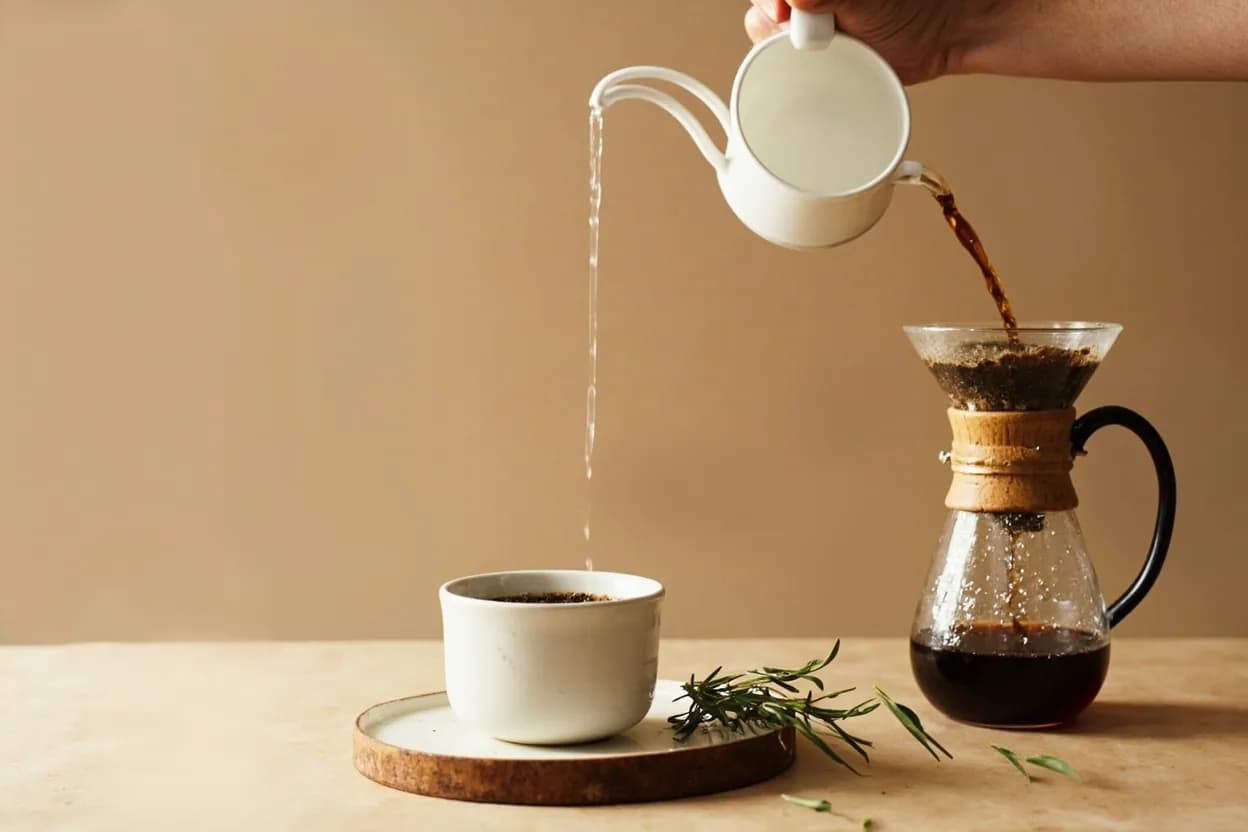
- Use a gooseneck kettle with a built-in thermometer or digital probe — measure at the spout, not the reservoir, as temperature drops slightly during pour
- If boiling water at sea level (100°C), allow to rest 30–60 seconds off heat to drop to ~93–96°C
- Espresso machines: the PID controller displays group head temperature; allow 10–15 minutes for full thermal stabilisation after switching on
- For AeroPress or French press, a simple instant-read thermometer in the vessel before adding grounds is sufficient
The science behind it
- Extraction yield
Percentage of soluble compounds removed from grounds; optimal yield 18–22% by weight for filter coffee
- Total dissolved solids (TDS)
Measure of extraction strength; target 1.15–1.45% for filter coffee (SCA standard)
- Coffee grind size
Interacts with temperature — finer grinds extract faster and may require lower temperature to avoid overextraction
- Roast level adjustment
Lighter roasts are denser and benefit from higher end of range (94–96°C); dark roasts are porous and can be brewed at 90–92°C
- Cold brew
Room-temperature or refrigerator extraction at 18–22°C over 12–24 hours uses time, not heat, to achieve extraction — produces a chemically different cup
Appears in
References
- 1.The Specialty Coffee Association (SCA) Brewing Control Chart and Standards
- 2.The World Atlas of Coffee — James Hoffmann
- 3.Everything But Espresso — Scott Rao
- 4.The Professional Barista's Handbook — Scott Rao
Confidence: high
Notes
Altitude adjustment
Water boils at lower temperatures at altitude — approximately 95°C at 1,000 m above sea level, 90°C at 3,000 m. At elevation, immediately-after-boil water is already at or below the lower target bound, so resting time before brewing should be reduced or eliminated.
Roast level calibration
Light, high-density specialty roasts are less porous and require higher temperatures (94–96°C) and finer grind to achieve full extraction. Dark roasts are pre-caramelised and porous — brewing above 92°C risks amplifying existing bitterness. The commonly taught 93°C default is calibrated for a medium roast.