Pork Doneness
Crispy Skin: Chicharrón & Suckling Pig Crackle Point
Also: pork crackling, chicharrón, cochinillo crackle, pork rind crisp
Surface temperature must exceed 200°C to flash off residual moisture and blister pork skin into glassy, brittle crackling.
The crackle point is not a single internal temperature but a surface-heat threshold: pork skin contains collagen and water-bound proteins that must first convert to gelatin (around 70–80°C), then lose virtually all remaining moisture before the Maillard reaction and bubble formation can create the characteristic glassy, brittle texture. This requires oven or frying temperatures of 200–250°C (or oil at 180–200°C for chicharrón). Internal flesh must simultaneously reach a safe 74°C/165°F minimum.
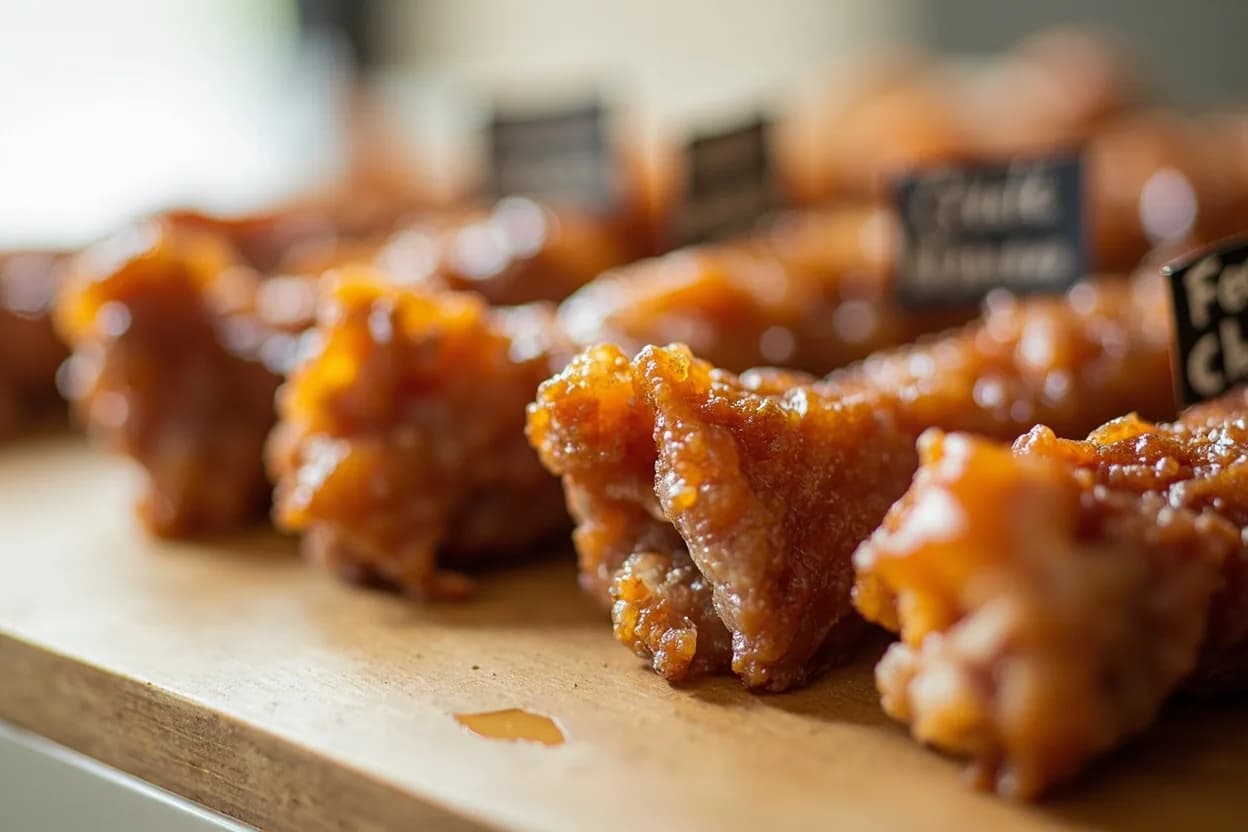
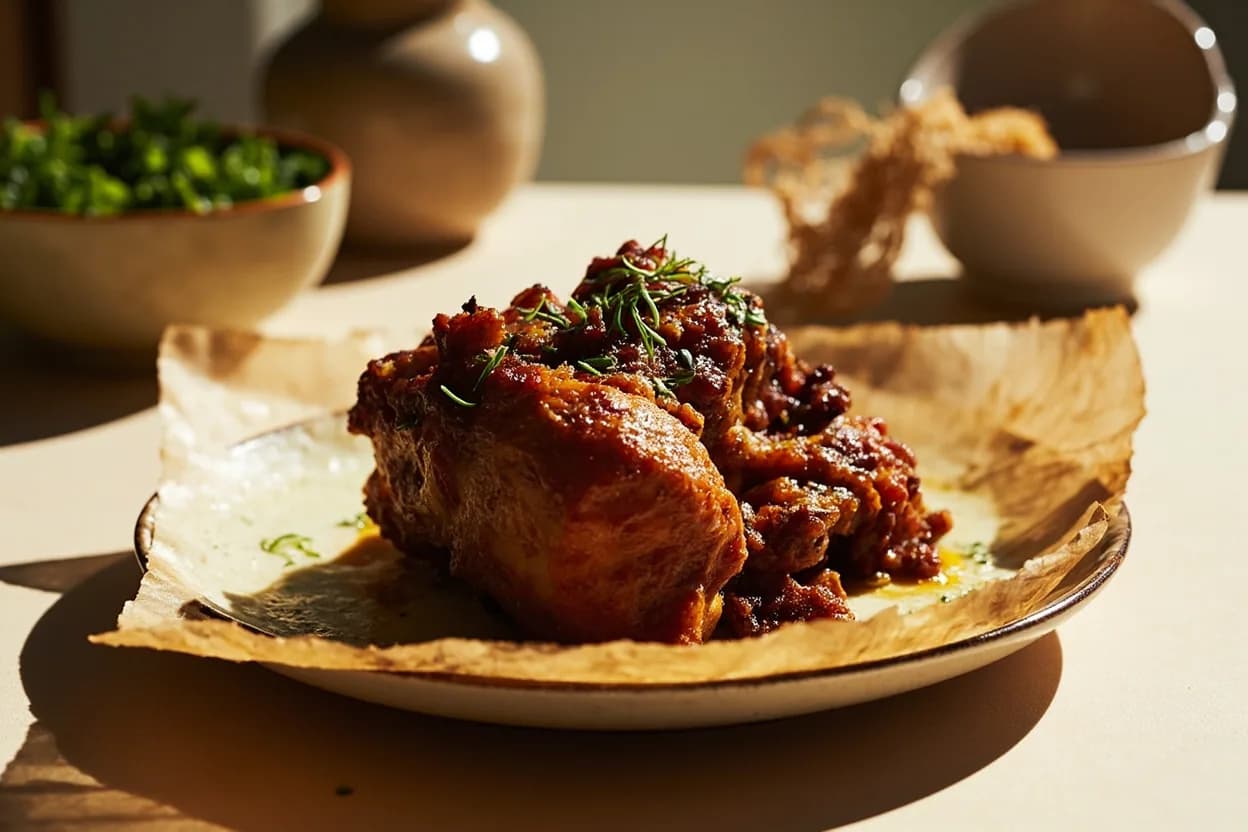
In photos

What happens
Below 150°C, skin stays leathery — collagen has gelled but water cannot escape fast enough. Above 180°C, residual water in the dermis layer superheats and flashes to steam, creating rapid pressure that blisters and puffs the skin into hollow bubbles. The Maillard reaction browns the proteins on the outer dermal surface simultaneously, producing the caramel-bitter, deeply savory crust. In deep-fried chicharrón, a two-stage process is often used: first a low-temperature cook (or prior drying/salting) to render fat and reduce moisture, then a high-heat flash fry at 190–200°C that causes rapid steam eruption and expansion of the puffed skin. The scored or pin-pricked surface of suckling pig (cochinillo) allows steam to escape evenly, preventing large bubbles from tearing.
What to look for
- Audible crackling and blistering sound as skin begins to puff
- Skin shifts from translucent pale gold to opaque, matte white-gold bubbles
- Surface becomes visibly rigid and brittle — tapping with a spoon produces a hollow knock
- Color deepens to deep amber without scorching; no soft or rubbery patches remaining
- Fat has fully rendered beneath the skin, leaving a thin, crispy-dry layer
- Aroma of deep caramelized pork fat and Maillard browning, no raw or steamy smell
How to check
- Tap the surface firmly with the back of a spoon — a hollow, glassy knock confirms full crackle; a dull thud means moisture remains
- Probe flesh at the thickest point (not touching bone) to confirm internal ≥74°C (165°F)
- Lift a corner of skin; it should snap cleanly rather than flex or stretch
- Visually inspect for uniform bubble formation with no pale, unset patches
Food safety
Carryover & resting
Crackling does not benefit from resting in the way meat does — in fact, resting under foil will steam and soften the skin. Serve immediately once crackle is achieved, or rest the carcass uncovered in a warm oven (60°C/140°F, door ajar) to avoid steam condensation on the surface.
The science behind it
Browning of skin proteins above 140°C that produces flavor and color
Prerequisite step that loosens skin structure before it can crisp
- Flash Evaporation
Rapid moisture loss above 180°C that creates the bubble structure in crackled skin
- Two-Stage Frying
Classic chicharrón method: low-temp render then high-temp crisp flash
- Scoring & Pricking
Surface preparation technique to control steam release in oven-roasted suckling pig
Appears in
References
- 1.On Food and Cooking — Harold McGee
- 2.The Food Lab — J. Kenji López-Alt
- 3.Modernist Cuisine — Myhrvold et al.
- 4.USDA Food Safety and Inspection Service: Safe Minimum Internal Temperatures
Confidence: high
Notes
Why scoring matters
In cochinillo and whole roast pig traditions, the skin is scored or extensively pricked before roasting. This creates controlled escape routes for steam, distributing the puffing force evenly so the skin blisters into a uniform sheet of crisp bubbles rather than tearing unpredictably. Salt rubbed into the scores draws out additional surface moisture via osmosis, accelerating the drying process during the initial low-heat phase.
Chicharrón versus oven crackling
Deep-fried chicharrón is a distinct product from oven crackle. Traditional preparation involves boiling or simmering the skin first to hydrate and soften it, then air-drying (or sun-drying) for hours to days, producing an almost brittle, desiccated sheet. The high-heat fry then causes dramatic rapid expansion — the dried skin can nearly double in volume in seconds. Oven crackling relies on retained moisture being driven off by sustained high heat, requiring a higher final oven temperature to overcome the insulating fat layer beneath.