Smoking & Curing
Cured Meat Water Activity Target
Also: Aw target, water activity charcuterie, shelf-stable cured meat
Aw ≤0.85 for shelf-stable charcuterie; Aw ≤0.92 for refrigerated safety — salt and drying are the twin controls.
Water activity (Aw) measures the availability of free water in a food on a scale of 0 (bone dry) to 1.0 (pure water). Microbial growth requires free water — reducing Aw below critical thresholds starves pathogens. For shelf-stable whole-muscle or fermented charcuterie, Aw must reach ≤0.85 to prevent growth of all significant pathogens including mold, yeast, Staphylococcus aureus, and Clostridium botulinum. Refrigerated cured products (vacuum-packed cooked hams, wet-cured bacon) require Aw ≤0.92 combined with refrigeration and often nitrite to achieve safety.
In photos
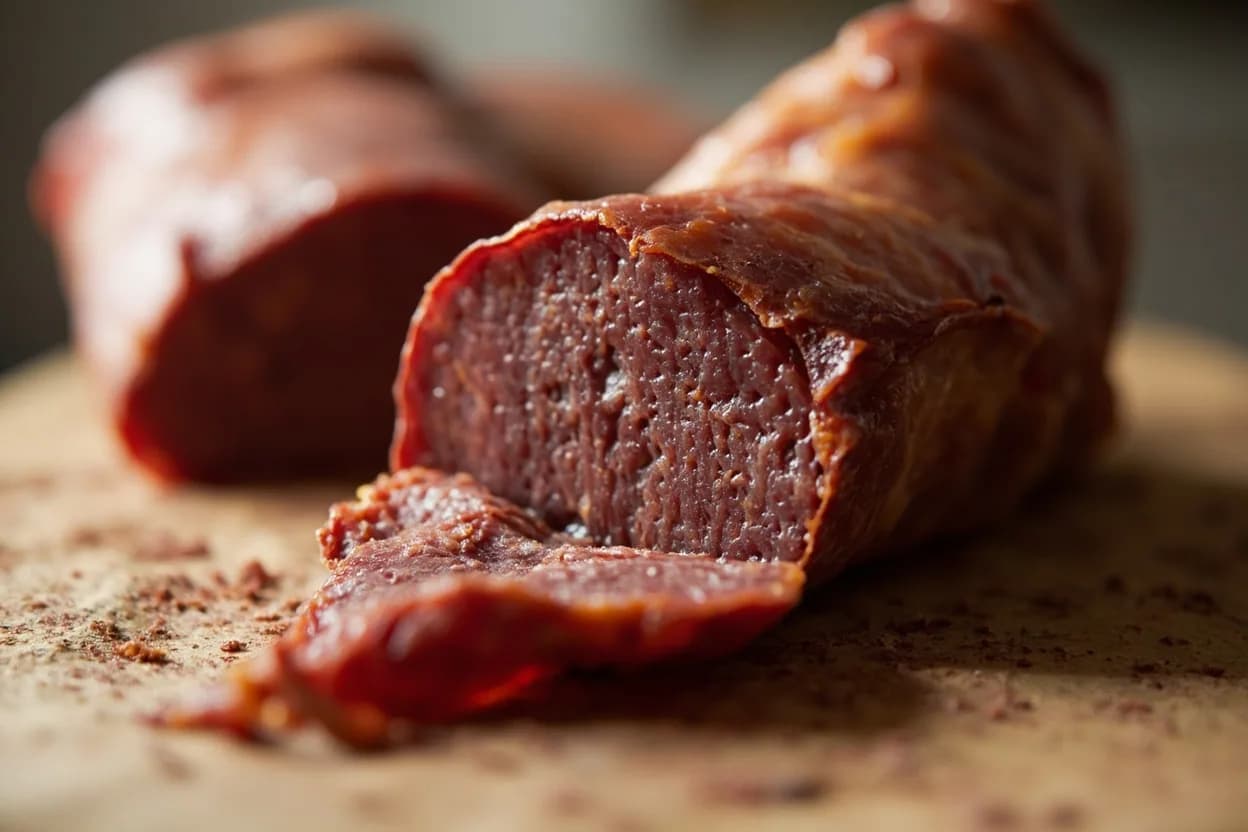

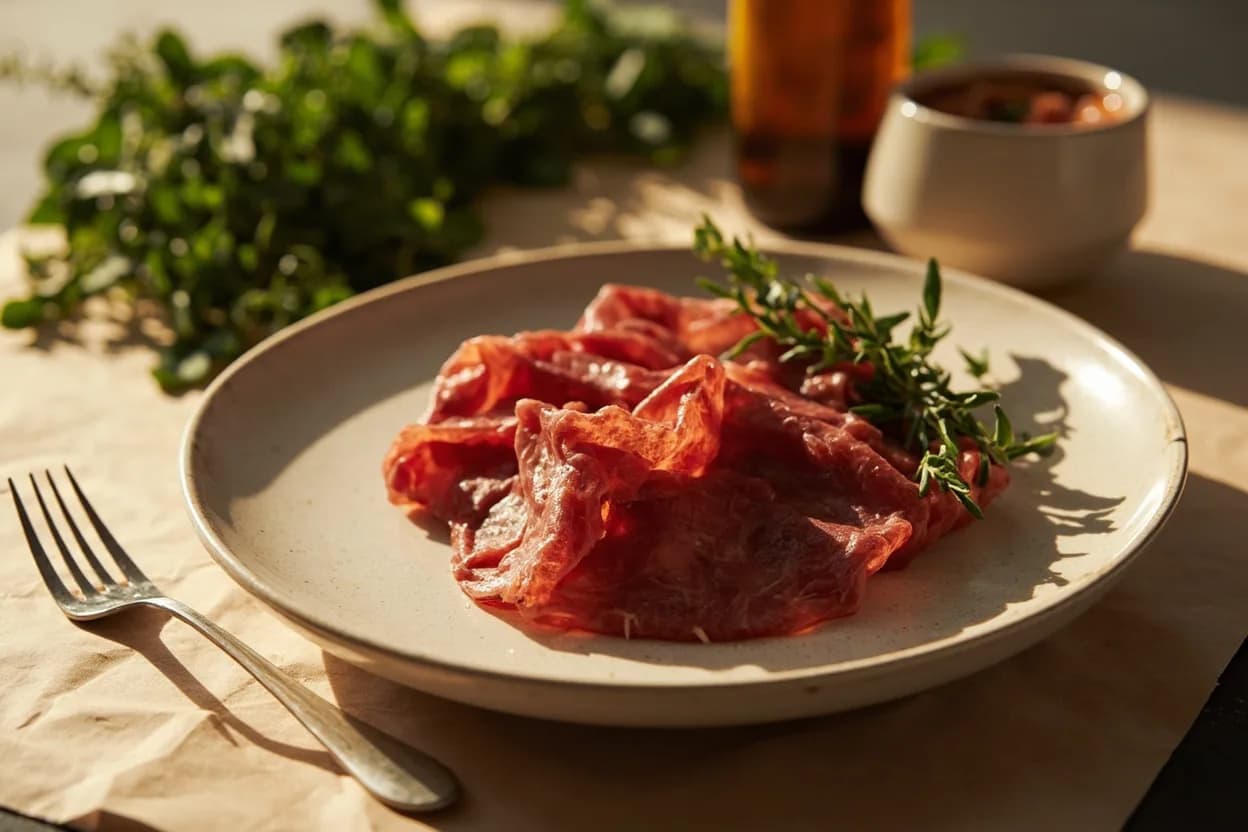
What happens
Salt dissolved in the water phase creates osmotic pressure that 'ties up' free water molecules, lowering Aw. During drying, evaporation removes free moisture and concentrates dissolved solutes, further lowering Aw. At Aw 0.92, most gram-negative pathogens (Salmonella, E. coli) cannot proliferate. At Aw 0.85, Staphylococcus aureus growth ceases (critical because it can produce heat-stable toxin). Clostridium botulinum in anaerobic environments is inhibited below Aw 0.95 for non-proteolytic strains and 0.94 for proteolytic strains — nitrites remain essential for botulinum control even at low Aw. Below Aw 0.60, even xerophilic molds cannot grow.
What to look for
- A properly dried whole-muscle product (coppa, bresaola) loses 30–40% of its green weight, producing a firm, dense texture with no wet or spongy feel
- At target Aw, slicing reveals a deep ruby or burgundy interior with fine, dry fat striations — no moisture beading on the cut face
- The exterior develops a characteristic firm rind; excessive surface drying ('case hardening') creates a hard shell trapping moisture inside — a sign the drying environment was too hot or too dry
- Correct Aw produces clean, concentrated flavors; too-high Aw results in a livery, metallic, or sour off-note from bacterial activity
- Salt bloom (white crystal effloresce) on the surface can indicate over-salting or very low Aw
How to check
- Measure with a calibrated water activity meter (Aqualab, Rotronic) — the gold standard for commercial and serious home producers
- For home charcutiers without meters: track weight loss from green (fresh) weight; whole muscle products are generally at safe Aw after losing 30–35% of starting weight
- Squeezing a bresaola or coppa slice should reveal no free moisture; it should feel like dry-aged beef, not lunch meat
- Cross-cut the thickest part — if the color is uniform (no pink ring indicating moisture migration), drying has penetrated
- Commercial producers test finished product Aw as a critical control point under HACCP
Food safety
The science behind it
- Hurdle Technology
Aw is one hurdle — combined with pH, Aw, salt, nitrite, and temperature to create multi-barrier safety
- Salt Concentration
Dissolved salt is the primary mechanism for Aw reduction; 3% NaCl by product weight is a common starting point
- Case Hardening
Excessive surface drying traps internal moisture, preventing Aw reduction in the core — a critical safety and quality defect
- Nitrite Curing
Inhibits Clostridium botulinum in anaerobic cured meats, complementing Aw reduction
- Fermented Sausage pH
Acidification below pH 5.3 works synergistically with low Aw to ensure safety in salami
Appears in
References
- 1.Charcuterie: The Craft of Salting, Smoking, and Curing — Michael Ruhlman & Brian Polcyn
- 2.The Art of Making Fermented Sausages — Stanley Marianski
- 3.Food Microbiology: Fundamentals and Frontiers — Doyle, Beuchat & Montville
- 4.USDA FSIS Compliance Guidelines for Ready-to-Eat Meat and Poultry Products
Confidence: high
Notes
Weight loss as a practical proxy
Professional charcutiers without Aw meters use weight loss from green (fresh, unsalted) weight as a reliable proxy. Most whole-muscle products reach Aw ≤0.87 at 30% weight loss, and ≤0.85 at 35% loss. Weigh the product before salting (green weight), then track on a kitchen scale weekly. This method works best for uniform cuts; irregular pieces dry unevenly and warrant actual Aw measurement before declaring shelf stability.
The case hardening trap
Beginners often rush drying with high temperatures or excessive airflow, producing a rock-hard exterior rind while the core remains moist. Interior Aw can stay above 0.95 — dangerously high — while the outside looks and feels perfectly cured. Optimal drying chambers maintain 12–15°C at 70–80% relative humidity with gentle air circulation, allowing moisture to migrate from the core outward gradually.