Egg Doneness
Custard Nappe Point
Also: nappe, à la nappe, coats the spoon, crème anglaise doneness, custard sauce doneness, nappant
The custard thickens to coat a wooden spoon and hold a clean line when a finger is drawn across it — the precise moment crème anglaise is perfect.
Nappe (from the French 'nappe' — tablecloth, or 'napper' — to coat) describes the viscosity stage of a stirred egg-yolk custard, typically crème anglaise, at which the liquid has thickened enough to coat the back of a spoon in a thin, even film that does not drain off immediately. The definitive test is the spoon-line test: a finger drawn across the spoon's coated back leaves a clean, crisp line that does not fill back in. This occurs at 82–84°C (180–183°F) in a standard crème anglaise (three to six yolks per 500 ml cream/milk). At this temperature, enough yolk lipoprotein has partially coagulated to raise viscosity dramatically without triggering full curdling, which begins above 85–88°C.
In photos
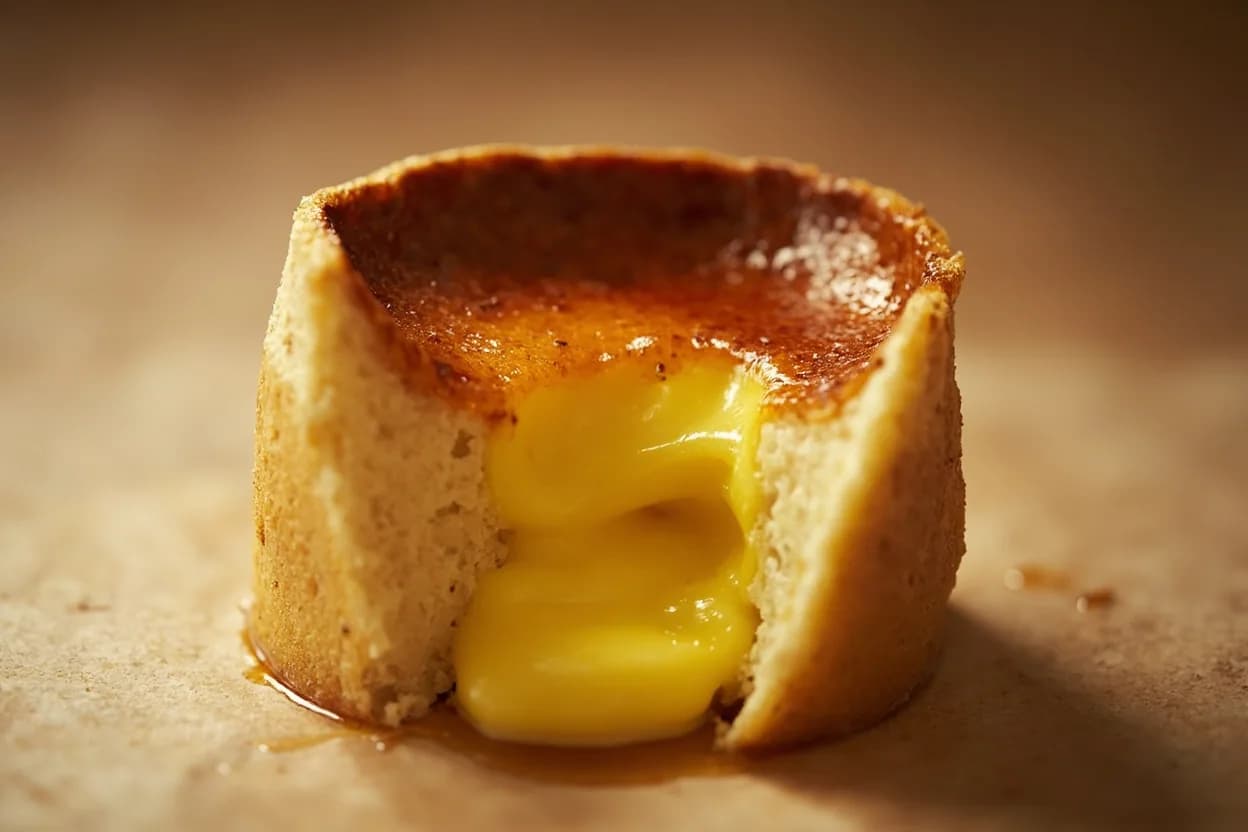
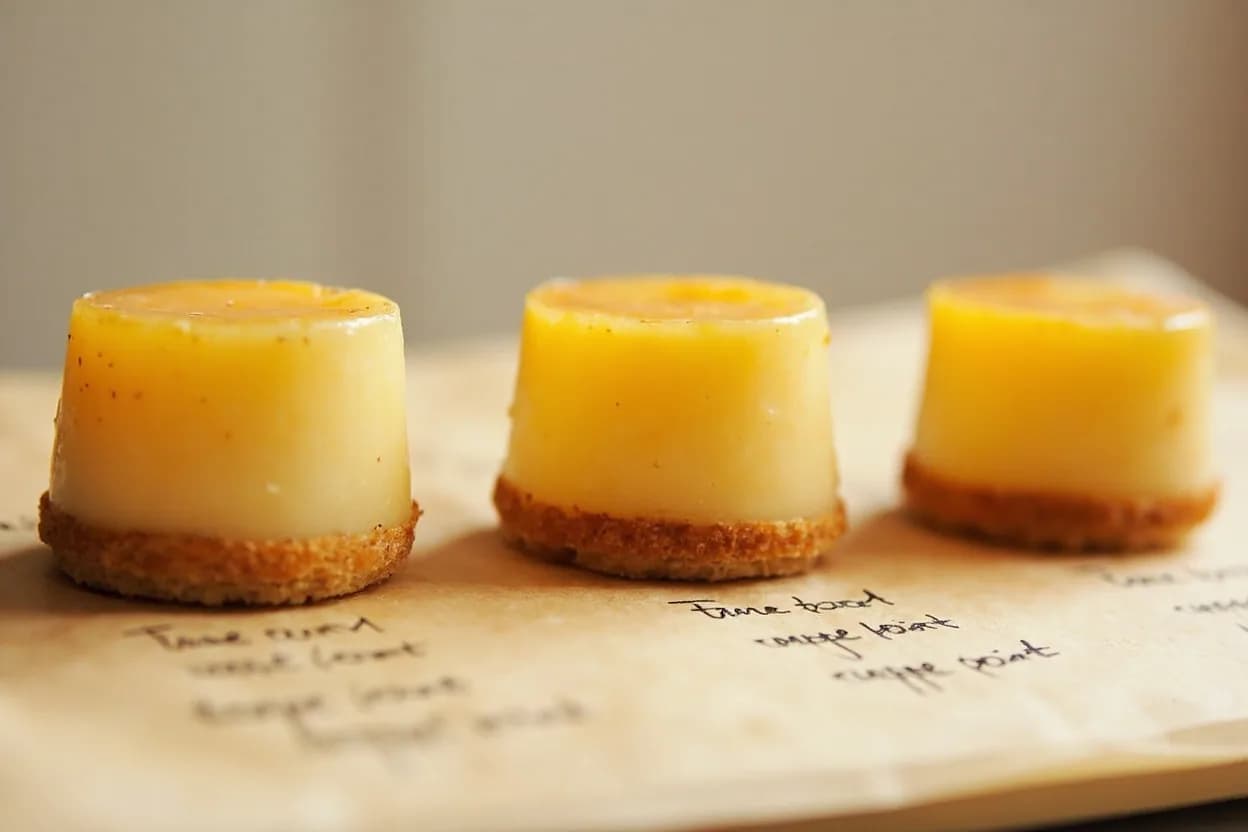
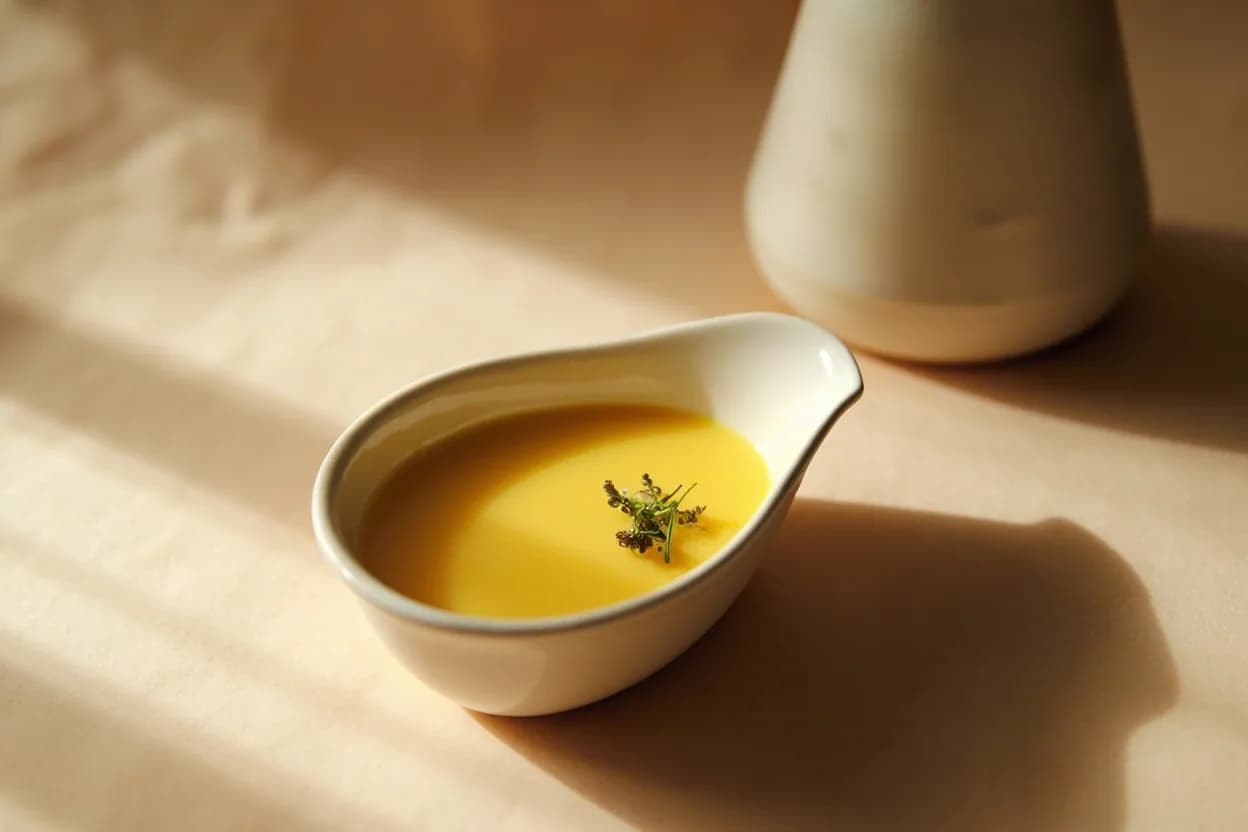
What happens
Between 70°C and 85°C, egg yolk lipoprotein particles unfold and begin to aggregate into a loose, continuous network throughout the custard. The viscosity of crème anglaise increases roughly ten-fold across this range. At 82–84°C the network is dense enough to produce nappe consistency — the liquid behaves like a thin syrup that clings to surfaces. Above 85°C, aggregation accelerates and crosses a threshold into curdling: the protein network contracts and expels liquid (syneresis), producing grainy, scrambled-textured curds floating in a thin serum. The sugar in the custard raises the curdling threshold by several degrees, giving a small safety window; cream (vs. milk) also extends the safe range due to fat interference with protein aggregation.
What to look for
- Custard visibly thickens in the pan — a wooden spoon moved through it leaves a trail that closes slowly
- Steam rises but no bubbles break the surface; if boiling bubbles appear, the custard is already close to curdling
- Dip a spoon and run a finger across the back: the line holds clean and crisp without the custard flowing back
- Colour deepens slightly from the pale cream-yellow of raw custard to a richer, more opaque tone
- Slight resistance felt when stirring — the spoon drags gently rather than moving freely through water
How to check
- Spoon-line test: coat the back of a wooden or silicone spoon, draw a finger through the centre — a clean, stable line indicates nappe
- Instant-read thermometer: pull from heat at 82°C; carry-over in the residual heat of the pan can push to 84°C
- For precision, temper yolks with hot liquid before combining and cook over a bain-marie (double boiler) with constant stirring to control temperature rise
- Observe consistency in the pan: the custard should part visibly when the spoon is drawn across and close back very slowly
Food safety
Carryover & resting
Pour the finished custard immediately through a fine-mesh strainer into a bowl set in an ice bath, stirring to release heat rapidly. Carry-over from the hot pan can raise temperature 2–3°C after removal from heat. Straining also removes any incipient curd particles that formed at the edges of the pan before they fully cook into noticeable lumps.
The science behind it
A different yolk preparation — mechanical aeration rather than heat thickening — that can precede a cooked sabayon
- Sabayon / Zabaione
Uses the same yolk-thickening mechanism but adds aeration via beating over heat to produce a foam rather than a pourable sauce
- Custard: Full Set (Baked)
Higher yolk-to-liquid ratio and oven baking produce a fully gelled set custard versus the pourable nappe state
- Tempering Technique
Essential prerequisite — hot liquid is ladled into beaten yolks to raise temperature slowly, preventing curdling when the mixture enters the pan
- Ice Bath Shock
Immediate chilling halts coagulation after the nappe point is reached, preventing carry-over curdling
Appears in
References
- 1.On Food and Cooking — Harold McGee
- 2.Patisserie: Mastering the Fundamentals of French Pastry — Christophe Felder
- 3.The Professional Pastry Chef — Bo Friberg
- 4.Larousse Gastronomique
- 5.The French Laundry Cookbook — Thomas Keller
Confidence: high
Notes
Rescuing a broken custard
If curdling begins — evidenced by sudden graininess and separation of liquid — immediately pour the custard through a fine sieve into a cold bowl set in ice water and whisk vigorously. In mild cases the curd particles are small enough that blending with an immersion blender will re-emulsify the sauce to a nearly smooth consistency. Prevention is far more reliable than rescue: a thermometer and constant stirring over moderate heat is the professional approach.
Sugar's protective role
Sugar raises the coagulation temperature of egg proteins by disrupting water structuring around the proteins, delaying the aggregation that causes curdling. A crème anglaise with 150 g sugar per litre of liquid curdles several degrees higher than an unsweetened custard, giving the cook a slightly wider safe window. This is why savory custards (quiche, tian) set at lower temperatures and require more careful temperature management.
The nappe test in professional kitchens
The spoon-line test is taught as the primary visual cue in classical French culinary training precisely because it requires no equipment — no thermometer, no timer. A skilled pastry cook can judge nappe by sight, feel of the spoon drag, and the behaviour of steam rising from the pan. The test works because the relationship between viscosity and surface-coating thickness at this temperature is consistent across standard crème anglaise ratios.