Cheese & Dairy Doneness
Curd Cooking Temperature (Low-Cook vs. High-Cook Cheeses)
Also: curd scalding temperature, scalded-curd cheese, cooked-curd cheese
The temperature at which freshly cut curds are heated in the whey, governing moisture expulsion, texture, and the final character of the cheese.
After milk is coagulated and the gel is cut into curds, cheesemakers apply heat — a step called 'cooking the curd' or 'scalding' — to cause syneresis: the curd granules contract and expel whey. Low-cook cheeses (soft, semi-soft) are held at 30–38°C (86–100°F), producing moist, pliable curds with relatively high residual lactose and water content. High-cook (or 'cooked-curd') cheeses such as gruyère, emmental, parmigiano-reggiano, and grana padano push curd temperature to 48–58°C (118–136°F), driving out far more whey and denaturing starter bacteria, resulting in denser, longer-aged wheels with complex crystalline texture.
In photos
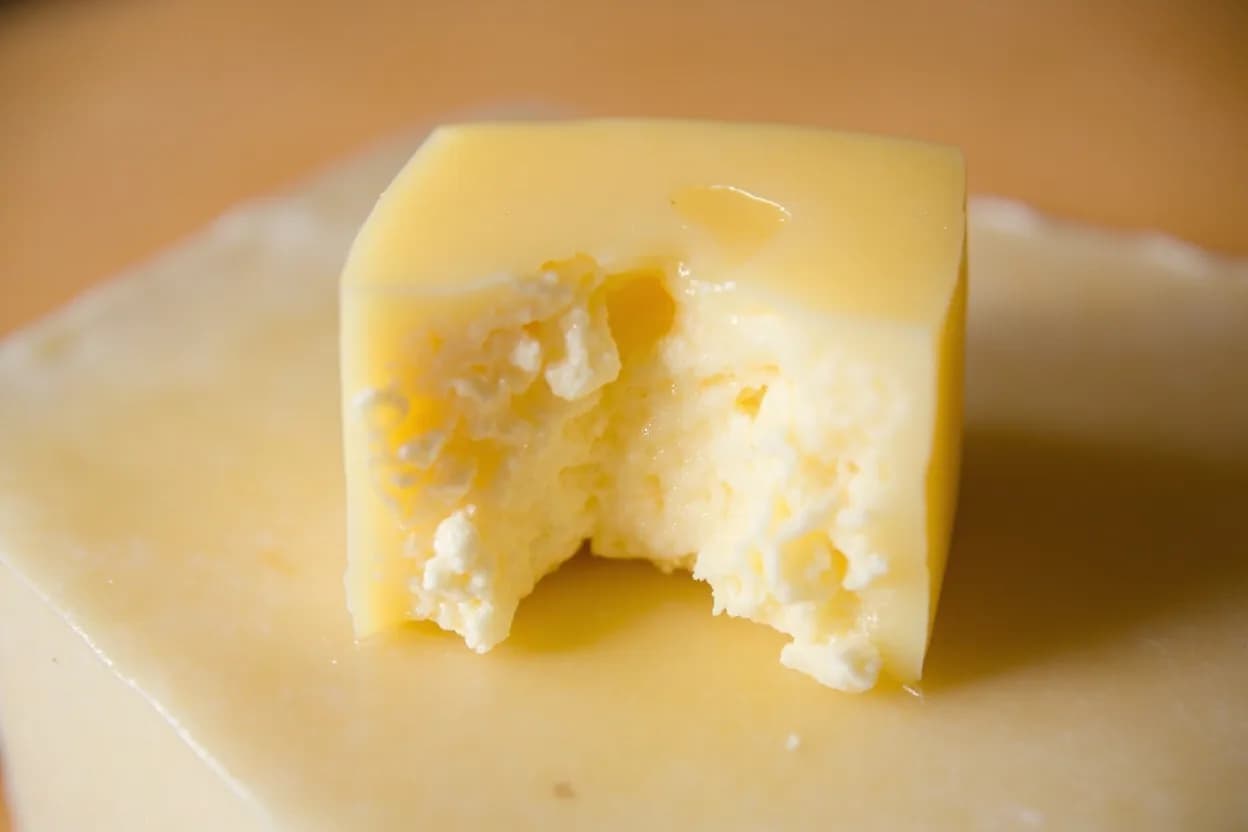

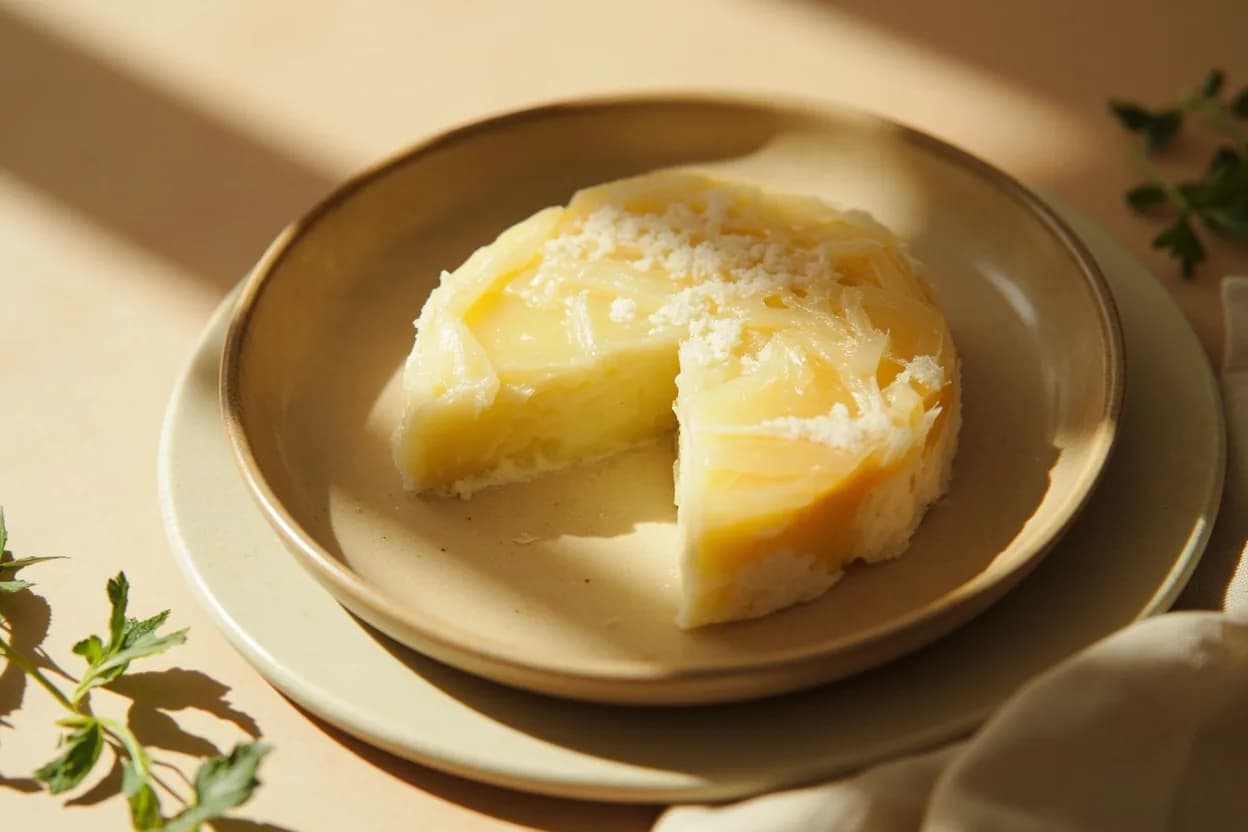
What happens
Heat triggers syneresis: casein networks in the cut curd tighten, expelling trapped whey through the protein matrix. At low-cook temperatures (30–38°C) casein remains relatively pliable and the interior stays moist — ideal for brie, camembert, havarti, and gouda-style cheeses. At high-cook temperatures (48–58°C) extensive cross-linking of casein occurs, thermophilic starter cultures thrive while mesophilic ones are killed, lactose is rapidly converted to lactic acid, and the curd becomes firm enough to support a long affinage. The resulting low-moisture environment in high-cook cheeses is critical for the formation of tyrosine crystals and complex Maillard-derived flavor compounds during aging.
What to look for
- Low-cook curds feel springy and moist when pressed between fingers; they clump readily but don't 'squeak'
- High-cook curds become firm and granular, resembling dry scrambled egg; they squeak when bitten raw
- Whey expelled during high-cook is notably more translucent and less milky as protein and fat are retained in the curd
- The vat temperature registers a gentle climb over 20–40 minutes, not a rapid boil
How to check
- Use a calibrated probe thermometer inserted near the center of the curd mass in the vat
- Stir curds continuously during heating to ensure even temperature distribution and prevent matting
- Perform a 'firm ball' test: scoop a handful of high-cook curds — they should hold their shape and not stick together when pressed
- Monitor with a HACCP data logger in commercial settings to ensure target temperature is held for the required duration
The science behind it
The underlying mechanism by which curds shrink and expel whey when heated or acidified
High-cook cheeses support longer cave aging because low moisture inhibits unwanted microbial growth
- Starter culture thermophiles
Thermophilic cultures (Streptococcus thermophilus, Lactobacillus helveticus) are mandatory for high-cook cheeses as they survive scalding temperatures
The characteristic crunchy white crystals in aged high-cook cheeses (parmigiano, gruyère) are tyrosine amino acids precipitated from densely packed, low-moisture curd
A textural alternative to curd cooking: cheddar achieves low moisture by stacking and turning mats of uncooked curd rather than heating them
Appears in
References
- 1.Cheese and Fermented Milk Foods — Frank Kosikowski & Vikram Mistry (3rd ed., 1997)
- 2.Cheesemaking Practice — R. Scott, R.K. Robinson & R.A. Wilbey (3rd ed., 1998)
- 3.Technology of Cheesemaking — Barry Law & Adnan Tamime, eds. (2nd ed., 2010)
Confidence: high
Notes
Temperature vs. time
Cheesemakers often speak of 'cooking schedule' rather than a single temperature: curds may be slowly raised from 32°C to 52°C over 30–40 minutes, then held. The rate of rise affects moisture loss as much as the final temperature — a rapid cook creates a surface skin on curd granules that traps whey inside, a slow cook allows gradual, even expulsion.
Low-cook wash-curd variants
Gouda and edam are nominally low-cook but incorporate a 'curd washing' step where a portion of whey is replaced with warm water, diluting lactose and producing a sweeter, less acidic curd. This gives these cheeses their characteristic mild, buttery flavor even after moderate aging.