Fish & Seafood Doneness
Dashi Extraction Temperature (Kombu)
Also: kombu dashi temperature, 昆布だし温度, konbu extraction, cold brew dashi
Kombu releases its peak glutamate load between 60°C and 65°C — never boiled, or slippery alginates and harsh iodine notes overwhelm the clean umami.
Dashi is Japan's foundational stock, built on two primary ingredients: kombu (dried kelp, Saccharina japonica) and katsuobushi (dried, fermented bonito flakes). Kombu's extraction window is the most temperature-sensitive step: the seaweed's cell walls release glutamic acid (the primary umami compound) most freely between 60°C and 65°C (140–149°F). Below this range, extraction is slow and incomplete; above 70°C, alginic acid in the kombu cell walls dissolves, releasing mucilaginous alginates that make the broth slimy and introducing bitter, iodine-forward off-notes. Boiling kombu is considered a fundamental error in Japanese culinary tradition.
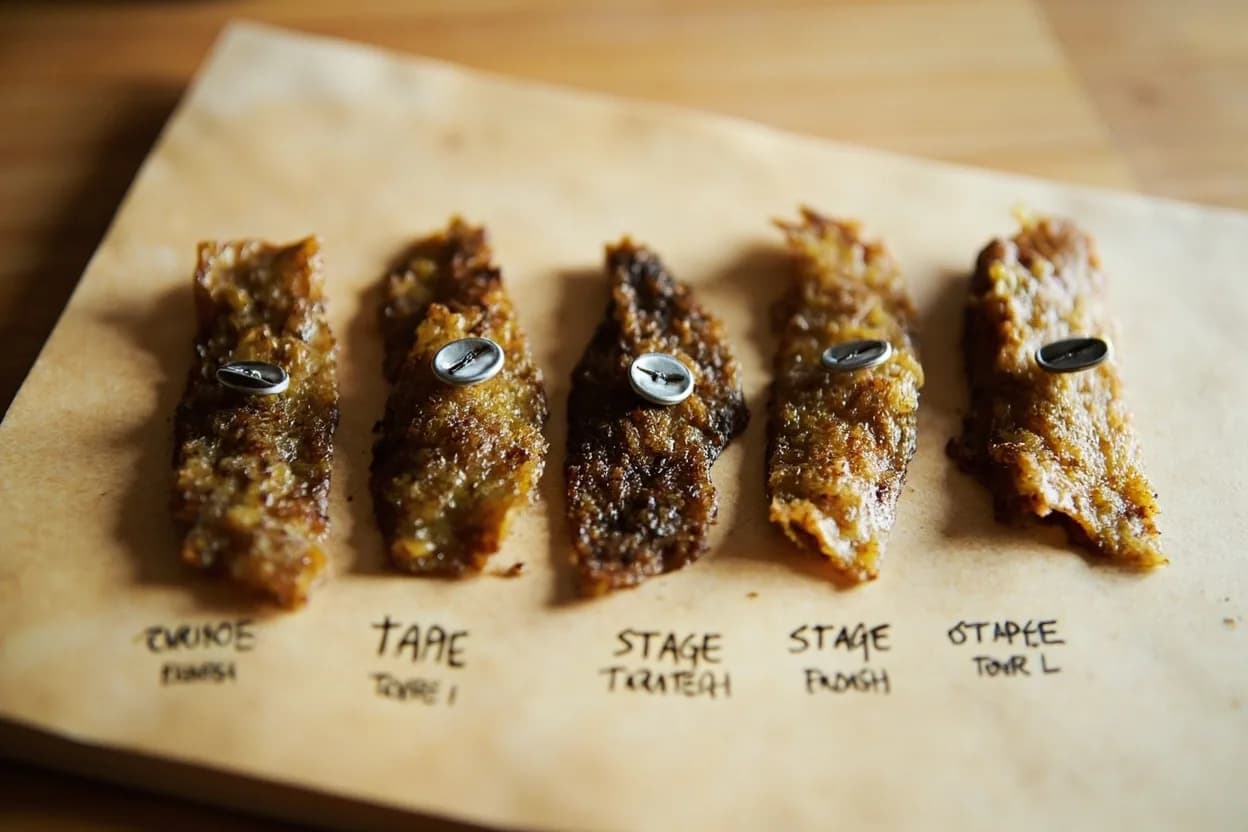
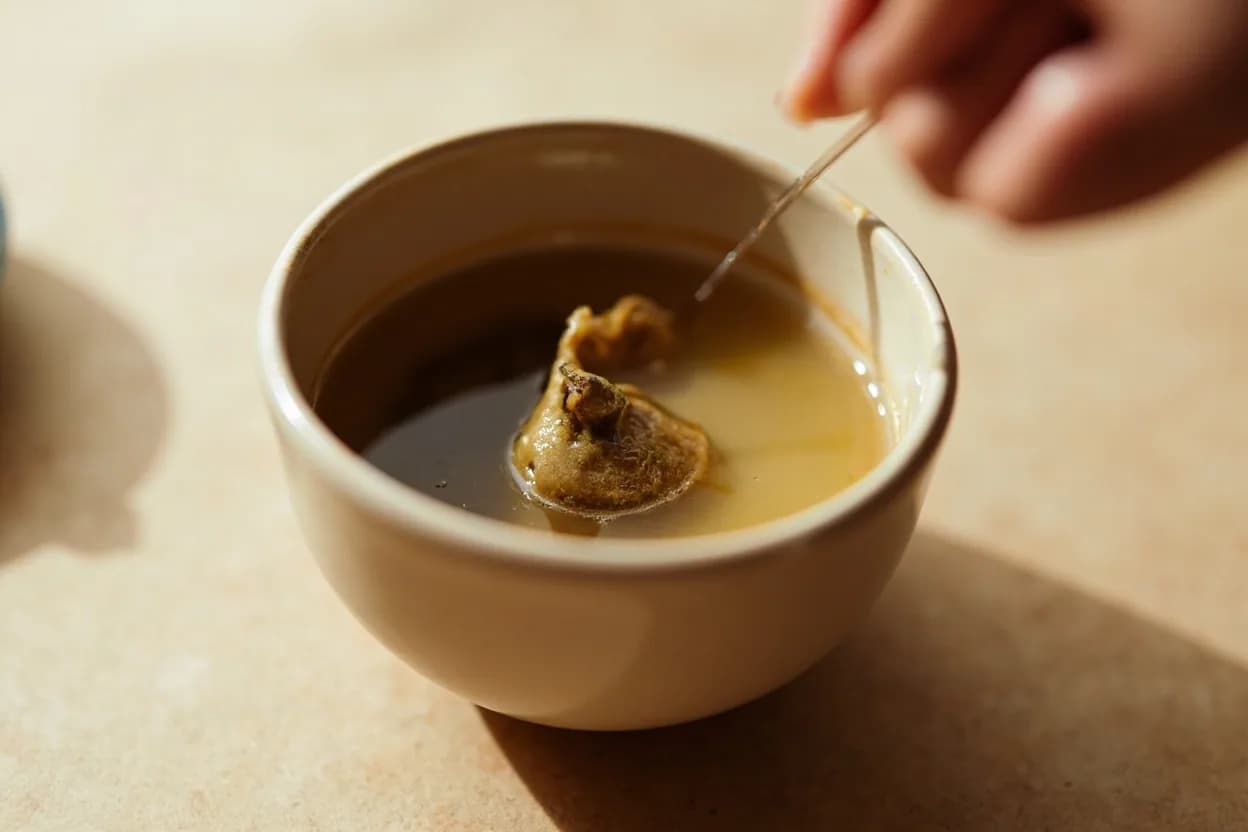
In photos

What happens
Kombu cell walls contain alginic acid, mannitol, and high concentrations of free glutamic acid. At 60–65°C, glutamate diffuses rapidly through softened cell walls into the surrounding water. Simultaneously, mild heat releases inosinic acid precursors and trace minerals that round the flavor. Above 70°C, alginase activity and thermal disruption break down cell walls, releasing alginates into solution — these polysaccharides form a viscous slime and impart bitterness. Rapid heating past the sweet spot (as in a cold-start approach brought just to a simmer) allows the brewer to catch the kombu at peak extraction before those thresholds are crossed. Katsuobushi is added after the kombu is removed: the flakes are steeped off-heat in the 80–85°C broth for approximately 3 minutes, extracting inosinic acid (IMP) without releasing the bitter compounds that emerge with prolonged boiling.
What to look for
- Kombu strands turn from rigid and dark to supple and slightly lighter in color as the extraction temperature is approached
- Tiny bubbles rise from the kombu surface as the water climbs toward 60°C — a visual cue to monitor closely
- The broth takes on a delicate golden hue and a clean, oceanic aroma without any seaweed slime
- Properly extracted kombu dashi smells of the sea — saline, subtly sweet, mineral — not of fishy or iodine funk
- If the broth feels slightly viscous or slimy on the palate, the kombu was held too hot for too long
How to check
- Instant-read thermometer: clip to the pot side or hold probe mid-liquid; remove kombu when reading reaches 60–65°C
- Visual cue: watch for first wisps of steam and tiny pin-bubbles rising from the kombu surface — the stock is approaching extraction temperature
- Cold-start method: place kombu in cold water, heat gently over medium-low, remove kombu just as the water reaches a near-simmer (small bubbles at the bottom); bring to 80–85°C for katsuobushi steep
- Overnight cold extraction (mizudashi): steep kombu in cold water (4°C) for 8–12 hours — this yields a cleaner, more delicate dashi with no risk of alginate release; warm briefly to serve
The science behind it
- Glutamic acid (umami)
Kombu is the richest natural food source of free glutamate — up to 3,000 mg per 100g dry weight — the compound responsible for umami synergy
- Katsuobushi steep temperature
Added after kombu removal at 80–85°C; steeped 2–3 minutes off-heat to release IMP (inosinic acid) without bitterness
- Umami synergy (glutamate + inosinate)
Glutamate from kombu and IMP from katsuobushi create a synergistic umami amplification greater than either compound alone
- Alginate extraction
Boiling kombu dissolves alginic acid into the broth, causing sliminess and off-flavors — the primary reason temperature control is critical
- Mizudashi (cold dashi)
Cold-water kombu extraction over 8–12 hours yields purer glutamate extraction with no thermal risk — preferred in kaiseki for its delicacy
Appears in
References
- 1.Japanese Farm Food — Nancy Singleton Hachisu (Andrews McMeel, 2012)
- 2.The Japanese Kitchen — Hiroko Shimbo (Harvard Common Press, 2000)
- 3.On Food and Cooking — Harold McGee (Scribner, 2004)
- 4.Modernist Cuisine, Vol. 2 — Myhrvold, Young & Bilet (The Cooking Lab, 2011)
- 5.Dashi and Umami: The Heart of Japanese Cuisine — Eat-Japan / Cross Media Ltd (2009)
Confidence: high
Notes
Cold extraction vs. hot extraction
Mizudashi (cold-brew dashi) extracts a purer, more nuanced glutamate profile. The absence of heat prevents any alginate dissolution, producing a crystal-clear broth of exceptional delicacy. Preferred in kaiseki cuisine, it requires forethought (8–12 hours minimum) but is forgiving — there is no extraction window to miss.
Kombu variety matters
Ma-kombu (Saccharina japonica) from Hokkaido's Rishiri and Rausu coasts is prized for clean umami and mild bitterness. Hidaka kombu, more widely available, is thinner and extracts faster but with slightly less depth. Naga-kombu is tougher and better suited to long simmered preparations (oden, nimono) than delicate dashi.
Reuse the spent kombu
Kombu removed from dashi is not waste. It can be simmered further in soy sauce, mirin, and sake to make tsukudani (simmered kombu relish), or finely sliced and added to rice dishes. Second dashi (niban dashi) is made by simmering the spent kombu with additional katsuobushi to extract remaining compounds.