Frying Temperatures
Deep-Fry Oil: Temperature Zones
Also: frying temperature zones, deep-fry heat zones, oil temperature for frying
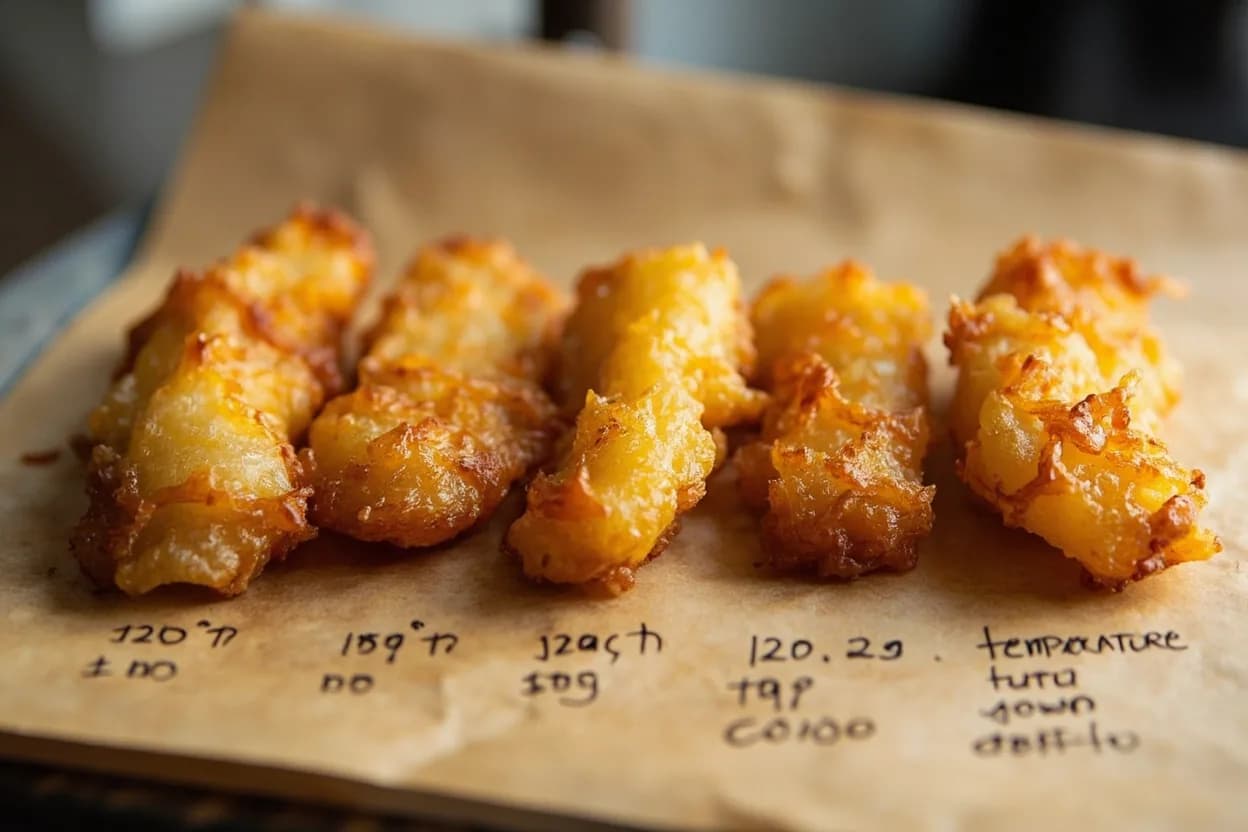
Deep-frying operates across three zones — low (160°C/320°F), standard (175°C/350°F), and high (190°C/375°F) — each suited to different foods based on size, density, and desired crust character.
Deep-frying is a dry-heat cooking method in which food is submerged in oil maintained at controlled temperatures between roughly 150°C and 200°C (300–390°F). The precise temperature zone determines how quickly surface moisture evaporates to form a crust, how fast heat penetrates to the center, and the color and texture of the final crust. Three principal zones cover most deep-frying: low (150–165°C / 300–325°F) for gentle cooking of delicate or dense items; standard (170–180°C / 340–355°F) for most everyday frying; and high (185–200°C / 365–390°F) for finishing, thin items, or maximum crispness.
In photos

What happens
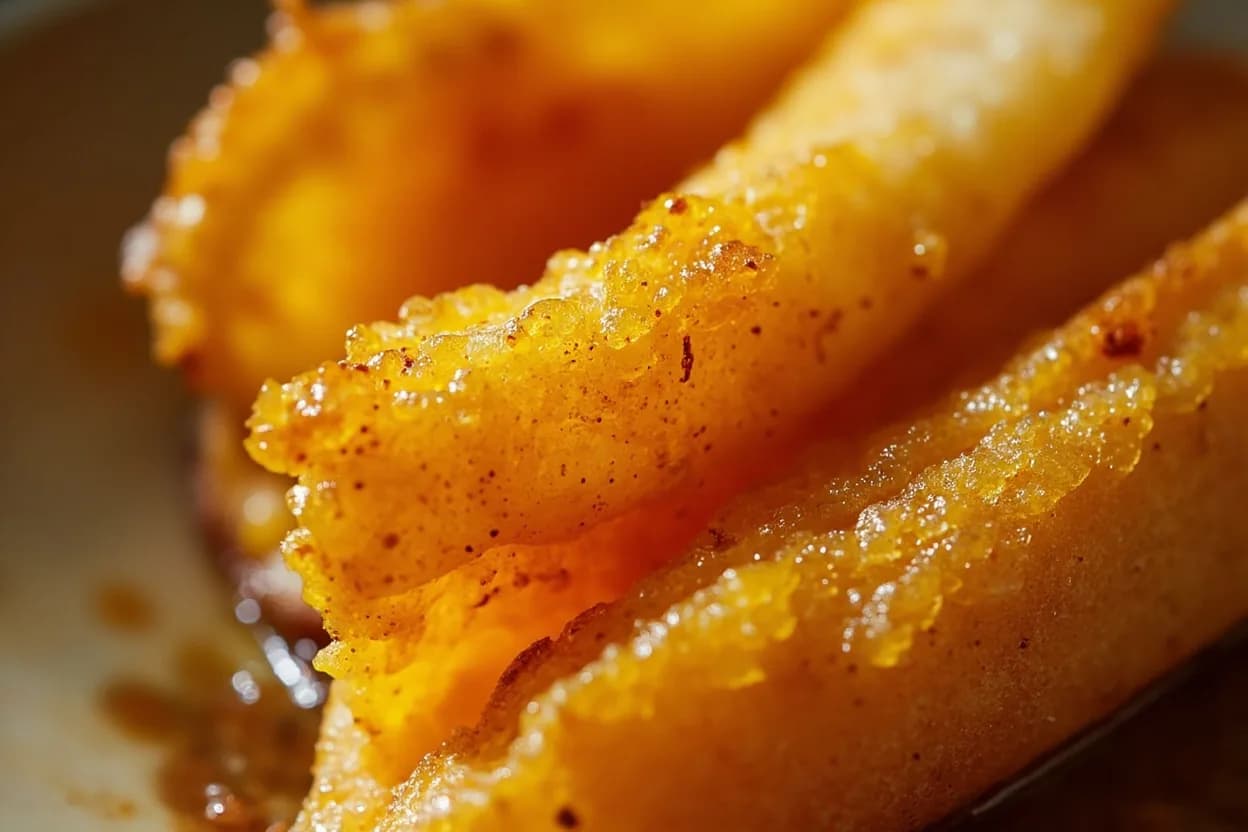
When food enters hot oil, surface moisture flashes to steam and escapes rapidly as bubbles — the vigorous bubbling visible during frying. This steam barrier temporarily prevents oil absorption. As surface temperature rises above 100°C, Maillard reactions begin (above ~140°C on the food surface), producing brown color and hundreds of flavor compounds. Gelatinization of surface starches, protein denaturation, and moisture loss create the crust. When bubbling slows significantly, the crust is formed and oil absorption risk rises. At too low a temperature, the steam barrier is weak, oil penetrates early, and the food becomes greasy. At too high a temperature, the exterior browns before the interior cooks through. Oil recovery time after adding food is critical — most oils drop 10–15°C upon immersion — so maintaining adequate oil volume and not overcrowding the fryer is essential.
What to look for
- 150–165°C: slow, gentle bubbling; food cooks through without rapid browning — suitable for raw chicken pieces or thick vegetables
- 170–180°C: vigorous, sustained bubbling immediately on immersion; food browns within 3–5 minutes
- 185–200°C: intense bubbling and rapid color development; correct for thin items like chips or second-fry crisping
- When the bubbling slows dramatically and the food floats, moisture has largely escaped — the interior is cooked
- Too-cool oil: sluggish bubbles, food sinking and sitting dull; result will be greasy
How to check
- Use a clip-on candy/deep-fry thermometer or an instant-read probe inserted in the oil away from the heating element
- Wooden chopstick test: insert tip in oil — fine, steady bubbles indicate ~170°C; vigorous bubbles indicate ~185°C; no bubbles = too cool
- Cube of white bread test: browns in 60 seconds = ~190°C; 40 seconds = ~200°C (approximate only — use a thermometer for accuracy)
- Monitor oil temperature continuously; it drops 10–15°C when cold food is added and should recover within 60–90 seconds
Food safety
The science behind it
Amino acid + reducing sugar browning reaction that generates fry crust color and flavor; begins at ~140°C on the food surface
- Smoke Point
Temperature at which oil begins to break down and smoke; must stay well above frying temperature to avoid off-flavors and free radical formation
- Oil Absorption
Inversely related to crust formation speed; adequate frying temperature minimizes oil uptake by creating a moisture-steam barrier
- Double-Frying
Low first fry to cook through, high second fry to crisp; exploits both zones in sequence
- Blanching in Oil
First stage of confit-style frying at 120–140°C used in some French technique to cook without color
Appears in
References
- 1.The Food Lab — J. Kenji López-Alt (W. W. Norton, 2015)
- 2.On Food and Cooking — Harold McGee (Scribner, revised 2004)
- 3.Professional Cooking — Wayne Gisslen (Wiley, 9th ed., 2018)
- 4.Modernist Cuisine, Volume 2 — Nathan Myhrvold, Chris Young & Maxime Bilet (The Cooking Lab, 2011)
Confidence: high
Notes
The double-fry principle
Many of the world's crispiest fried foods — Belgian frites, Taiwanese popcorn chicken, Korean fried chicken — use two oil temperatures. The first fry at 155–165°C cooks the interior through without browning. The food is then rested or held, and the second fry at 185–195°C rapidly dehydrates the surface starch network and achieves maximum Maillard browning. This produces a thicker, more durable crust than a single-temperature fry.
Oil volume and recovery time
A common home-frying error is using too little oil, which causes a dramatic temperature drop when food enters. Restaurants maintain a minimum 4:1 oil-to-food ratio by weight. At home, frying small batches in a generous volume of oil (at least 1.5–2 L for most countertop applications) and allowing 2–3 minutes between batches for temperature recovery produces dramatically better results than continuous loading of a small oil volume.