Fermentation & Culturing Temperatures
Doenjang & Ganjang Fermentation Maturity
Also: 된장 숙성, 간장 숙성, meju fermentation, Korean soybean paste maturity, Korean soy sauce maturity
Visual, olfactory, and temporal markers that indicate Korean soybean ferments have transformed from raw meju into complex, umami-rich doenjang or ganjang.
Doenjang (된장, fermented soybean paste) and ganjang (간장, soy sauce) are both derived from meju — sun-dried bricks of cooked, inoculated soybeans colonized by Aspergillus oryzae, Bacillus subtilis, and wild molds. Fermentation maturity is not a single temperature moment but a progression judged by color deepening from beige to dark amber-brown, the evolution of aroma from raw/beany to savory and complex, the development of free glutamates (umami), and the reduction of harsh or off notes. Traditional doenjang reaches baseline maturity in 3–6 months; premium aged versions mature 1–3 years or more. Ganjang drawn off the same vessel shows analogous progression.
In photos
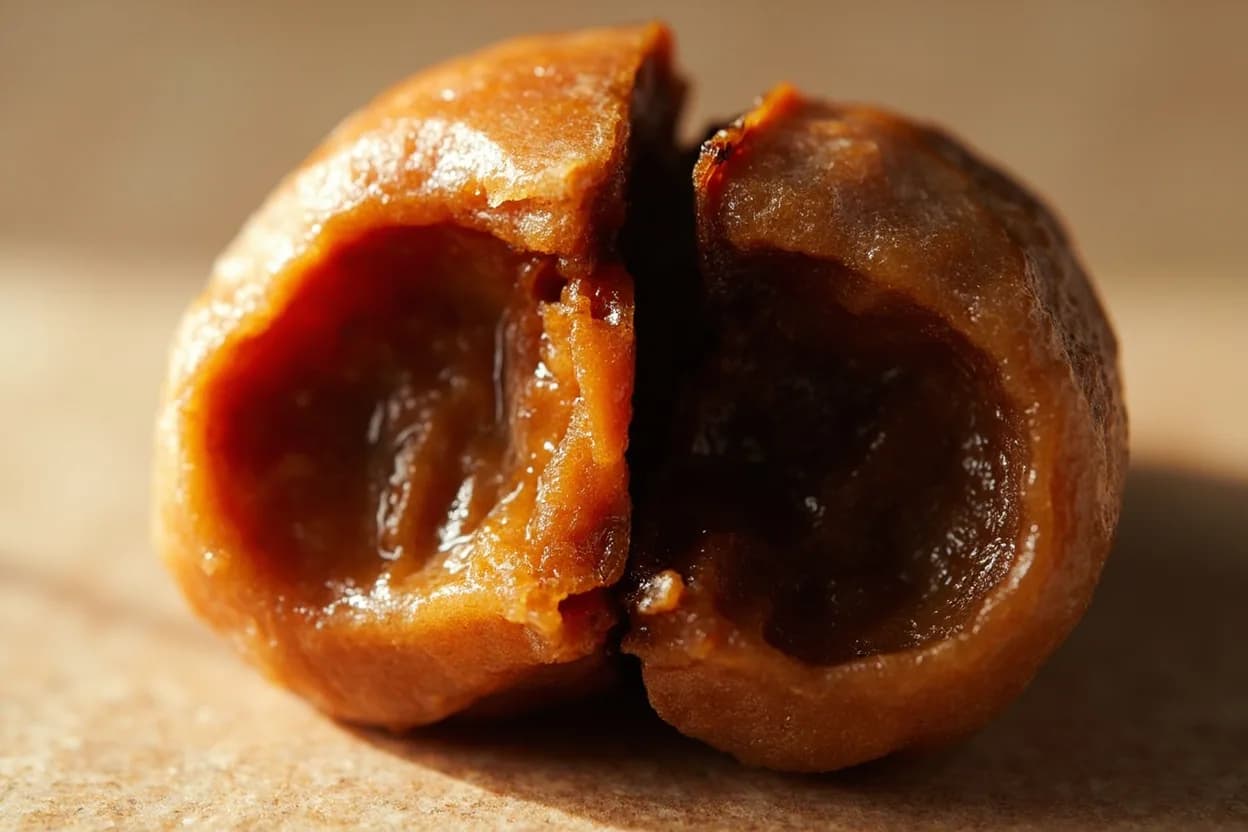

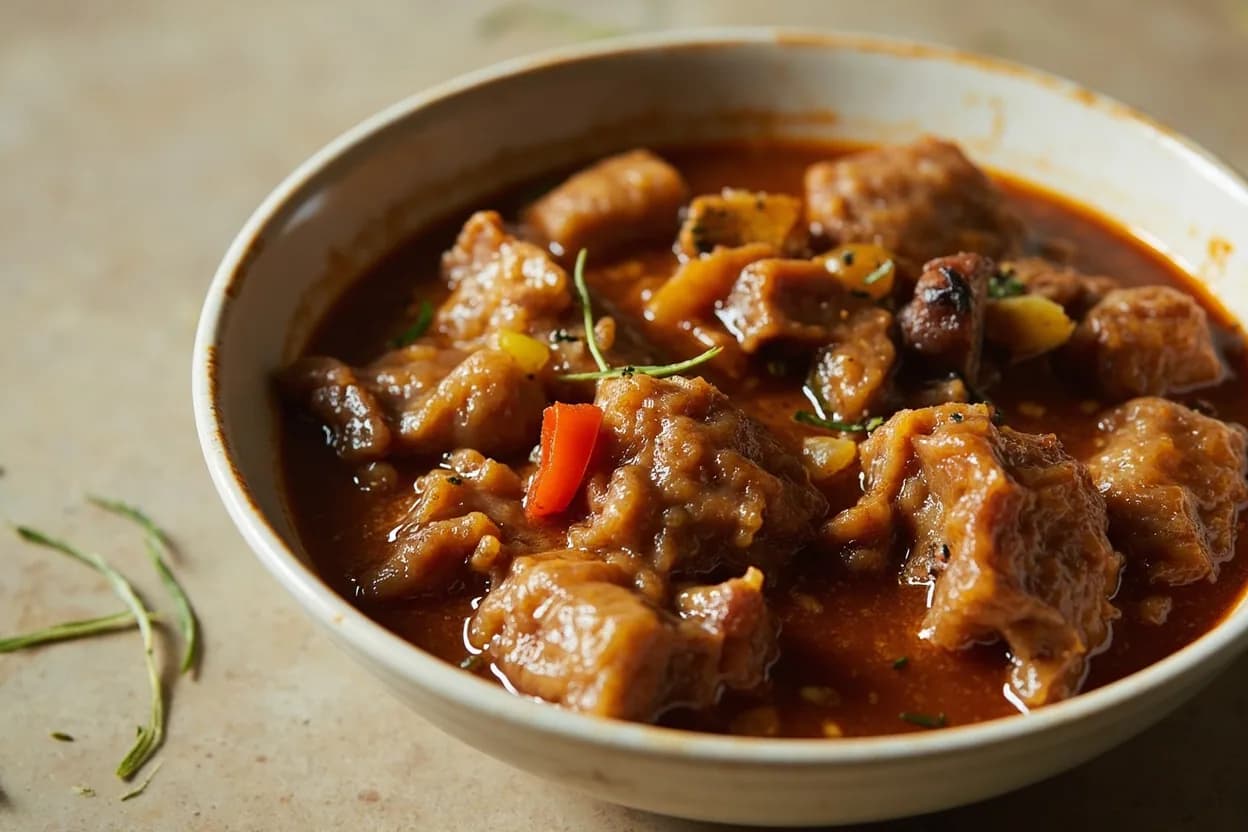
What happens
Protease enzymes produced by Aspergillus and Bacillus strains cleave soy proteins into free amino acids, especially glutamic acid, which drives umami intensity. Amylases convert residual starches into simple sugars that feed Maillard browning and feed minor yeast/LAB populations. Oxidation during periodic sun-exposure darkens pigments. Ethyl esters and volatile sulfur compounds generated by microbial metabolism create the layered, sometimes funky aroma signature. Sodium chloride in the brine suppresses putrefactive bacteria while permitting halophilic fermenters. Over months, bitterness and raw soybean odors diminish as these aromatic compounds reach equilibrium.
What to look for
- Color: paste shifts from pale tan to deep reddish-brown or near-black; liquid ganjang turns from amber to dark mahogany
- Aroma: raw beany smell gives way to complex, savory, slightly earthy and mushroom-like notes; pungency softens
- Taste: umami peaks and bitter/raw soy notes recede; salt integration becomes rounder
- Texture: paste thickens and darkens as proteins break down and Maillard products accumulate
- Surface: healthy white or pale gray mold (Aspergillus) may appear; blue-green molds indicate spoilage and must be removed
- Bubbling: active early fermentation produces CO2 from microbial activity; cessation of bubbling signals transition to maturation phase
How to check
- Taste a small amount of paste — absence of raw beany bitterness and presence of deep, round umami indicates readiness
- Assess color against a reference: traditional doenjang is dark brown to near-black at full maturity; ganjang should be clear and dark amber to mahogany
- Smell the vessel — a pleasant, complex fermented aroma without sulfurous or ammonia off-notes signals healthy maturity
- Check elapsed time: minimum 3 months for doenjang, 6 months for premium ganjang; artisanal batches often age 1–3 years
- Inspect for surface molds: skim any blue-green molds, which are contaminants; white Aspergillus bloom is normal early in the process
The science behind it
- Meju
The inoculated soybean brick that seeds both doenjang and ganjang fermentation
Browning reaction driven by amino acids + sugars that deepens color and flavor during aging
- Umami Development
Free glutamate accumulation from proteolysis is the primary marker of fermentation maturity
- Onggi Pottery Fermentation
Traditional earthenware jars (onggi) regulate moisture and allow controlled oxidation critical to proper maturation
- Halophilic Fermentation
Salt concentration (typically 18–20% in ganjang brine) selects for beneficial salt-tolerant microbes
Appears in
References
- 1.On Food and Cooking — Harold McGee (Scribner, 2004)
- 2.The Art of Fermentation — Sandor Ellix Katz (Chelsea Green, 2012)
- 3.Korean Food Culture — Korean Ministry of Agriculture, Food and Rural Affairs
- 4.Flavor Chemistry of Fermented Soybean Products — Shin, Jeong, et al., Journal of Food Science (2016)
Confidence: high
Notes
Seasonal timing in traditional practice
Historically, meju bricks were prepared in the lunar 10th–11th months (October–November), dried over winter, then placed in onggi with brine in early spring. The cool fermentation through winter slowed putrefactive bacteria while the warming spring accelerated beneficial enzymatic activity — a naturally calibrated two-phase schedule that modern producers replicate with temperature-controlled chambers.
Distinguishing doenjang from Japanese miso
Unlike Japanese miso — which is fermented as a single mixed paste — traditional Korean doenjang is separated from its liquid (ganjang) after primary fermentation, then aged further as a solid paste. This secondary aging without koji addition produces a coarser, more pungent paste with higher protease activity and a distinctly robust flavor profile.