Beef Doneness
Dry-Aged Beef Crust Trim Threshold
Also: dry-age pellicle trim, crust removal point, bark trim, age crust threshold
The visual and tactile point at which the oxidized outer bark of dry-aged beef is cut away to reveal the clean, deep-red interior.
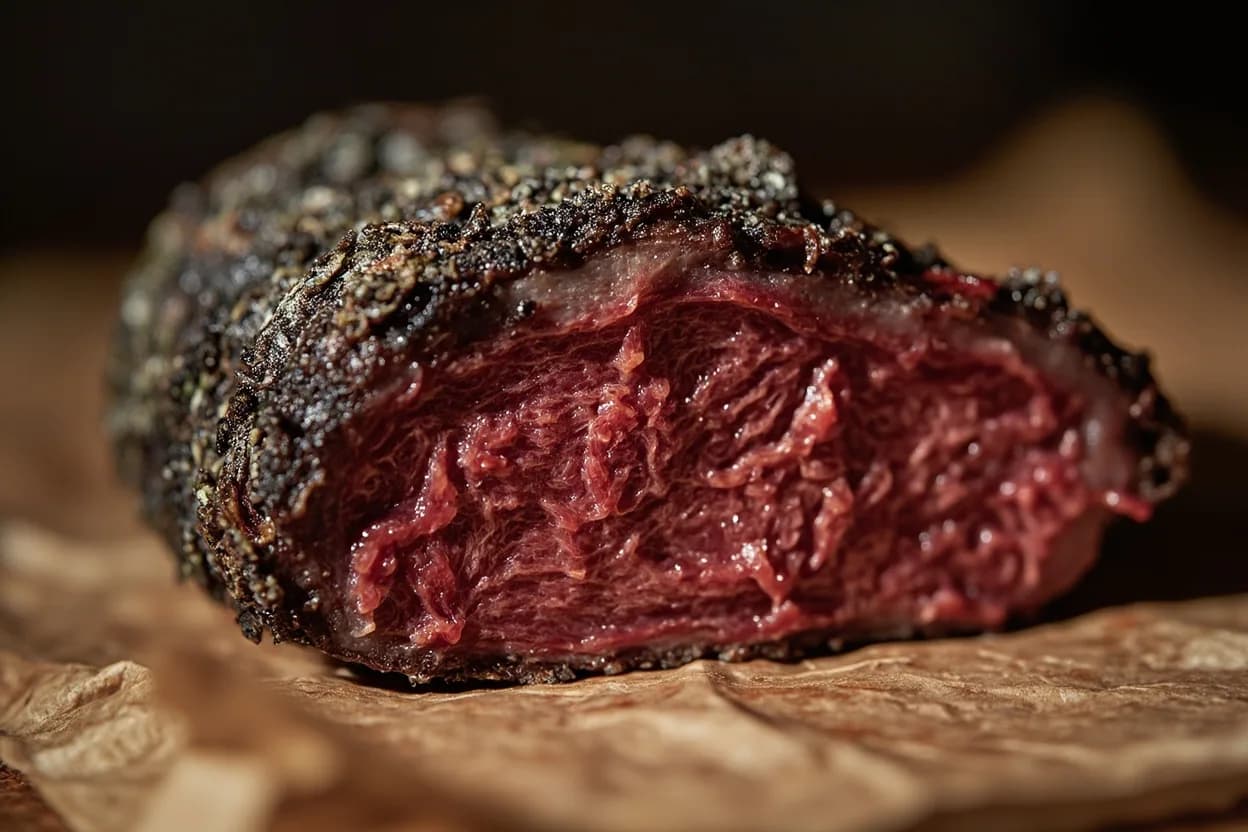
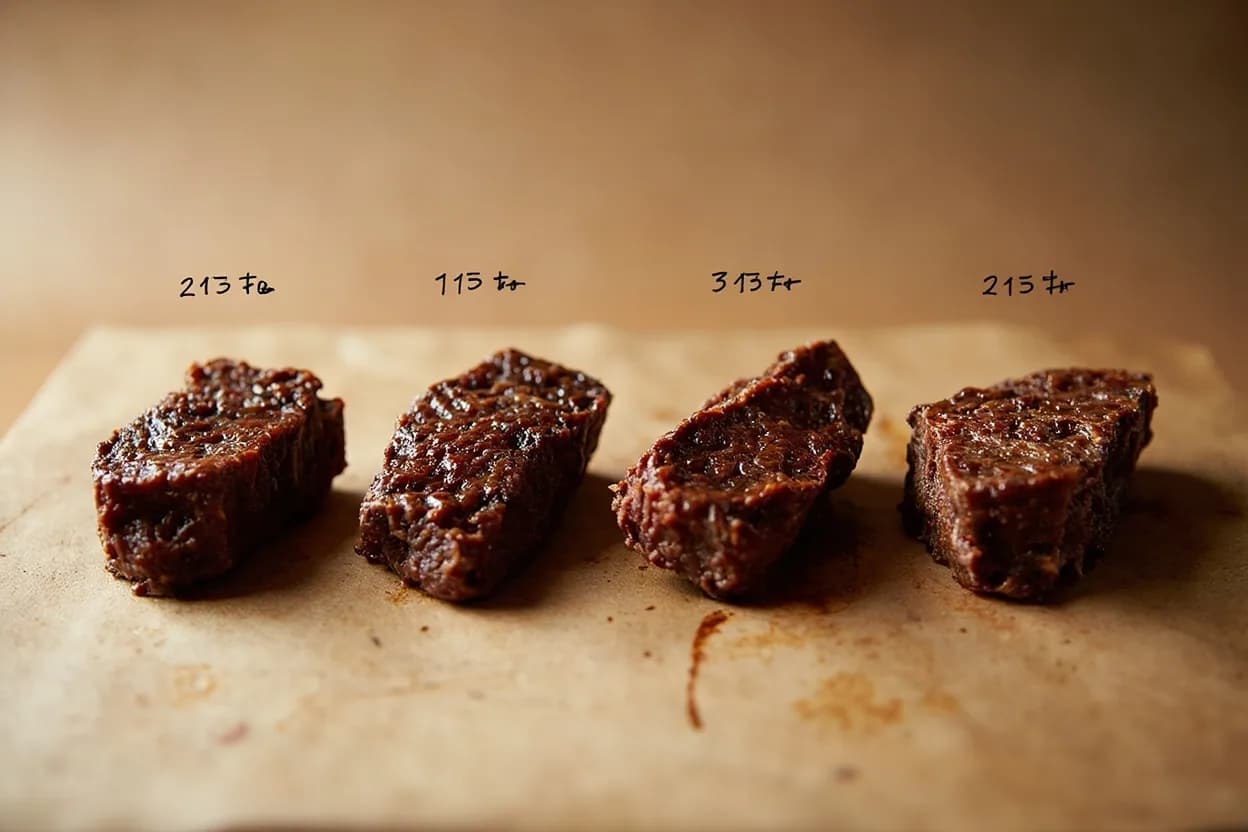
Dry-aged beef develops a thick outer crust called the pellicle — a desiccated, oxidized, often mold-covered layer that concentrates flavor and protects the meat beneath. The trim threshold is not a temperature but a sensory and visual judgment: the butcher removes this bark until flesh transitions from dark brown or grey-black at the surface to a bright, deep burgundy-red interior that is fully moist, firm, and free of off-odors. The trimmed crust is discarded (or rendered for stock); what remains is the prized dry-aged meat ready for portioning.
In photos

What happens
During dry aging at controlled temperatures (1–3°C) and humidity (75–85% RH), proteolytic enzymes (cathepsins, calpains) break down myofibrillar proteins, tenderizing the interior. Meanwhile, the surface dehydrates aggressively: water evaporates, concentrating proteins and Maillard precursors, while native spoilage microbes and molds colonize the exterior. Harmless Penicillium and Thamnidium species form a protective rind that further restricts oxygen ingress. The crust itself is generally inedible — excessively salty, desiccated, sometimes bitter — but acts as a sacrificial shield. Trim losses typically run 20–35% of the original subprimal weight depending on age duration.
What to look for
- Surface shifts from very dark brown to black or grey-green where mold is present — all of this is trim
- Just beneath the crust, flesh transitions through a thin grey-brown oxidized layer before revealing deep burgundy-red interior
- Cut surface of the retained meat should glisten with moisture when freshly exposed
- Aroma of the exposed interior should be nutty, beefy, and clean — not putrid, ammonia-sharp, or sulphurous
- Texture under the knife is firm and yielding, without the leathery resistance of the outer bark
- For bone-in cuts, exposed bone ends may show yellowing or minor mold — trim conservatively around the joint
How to check
- Trim with a sharp boning knife in long, decisive strokes, peeling the bark back in sections to check depth of discoloration
- After each pass, press the exposed surface — if it springs back and the color is rich red with no grey margin, trimming is complete
- Smell the exposed surface after each trim pass; any ammoniacal or sour note indicates trimming deeper is necessary
- For whole subprimals, trim all six faces before final portioning to avoid carrying crust flavor into steaks
- A trained butcher targets zero visible oxidation on the final cut face while minimizing yield loss
The science behind it
- Dry aging
The controlled cold-storage process that creates the crust requiring trimming
- Pellicle formation
Surface drying that builds the protective outer crust during aging
The concentrated surface compounds in the crust exemplify Maillard precursors in extreme form
- Yield loss
Trim threshold decisions directly govern the economic cost of dry-aging programs
- Wet aging
Vacuum-sealed alternative that produces no pellicle or trim loss, with different flavor development
Appears in
References
- 1.Modernist Cuisine: The Art and Science of Cooking — Nathan Myhrvold et al.
- 2.The Food Lab — J. Kenji López-Alt (W. W. Norton, 2015)
- 3.On Food and Cooking: The Science and Lore of the Kitchen — Harold McGee (Scribner, 2004)
- 4.Dry Aging of Beef — Kansas State University Meat Science Extension
- 5.USDA Guidance on Dry-Aged Beef Products — FSIS Directive 6120.1
Confidence: high
Notes
Economic stakes of the trim line
A dry-ager trimming too conservatively carries oxidized crust flavor into steakhouse product; trimming too aggressively destroys the economic case for aging. Top-tier programs often weigh each subprimal before and after aging to calculate yield precisely, factoring trim loss into per-ounce retail pricing. At 60–90 day ages, trim losses can reach 35–40%, meaning a 20 lb rib section yields under 13 lbs of saleable steak.
Mold: when to trim vs. discard
White, grey-green, or blue-grey molds on the exterior are expected and benign in a well-run aging environment. However, black, pink, or bright orange molds — especially if accompanied by sliminess or off-odor — indicate pathogen risk and the section should be discarded, not trimmed through. A competent dry-age program maintains airflow and humidity control to keep only food-safe mold species predominant.