Legume Doneness
Dried Legume Fully Cooked Stage
Also: legume doneness, chickpea doneness, kidney bean doneness, black bean doneness, fully cooked beans
Chickpeas, kidney beans, and black beans have reached full doneness when the exterior is firm but the interior is uniformly creamy — one step before mushiness.
The fully cooked stage for dried legumes such as chickpeas, kidney beans, and black beans describes the narrow window in which starch gelatinization and protein denaturation are complete throughout the cotyledon, but the cell walls retain enough integrity to hold the bean's shape. At this point the legume has a firm, defined exterior — it will not dissolve in a stew — while the interior crushes to a smooth, gently creamy paste under moderate pressure. Crossing into the overcook zone (mushy stage) causes cell walls to rupture, releasing starch into the liquid and turning beans into a formless paste. Each species has slightly different endpoints: chickpeas remain intact longer, while black beans and kidney beans transition from done to mushy faster.
In photos

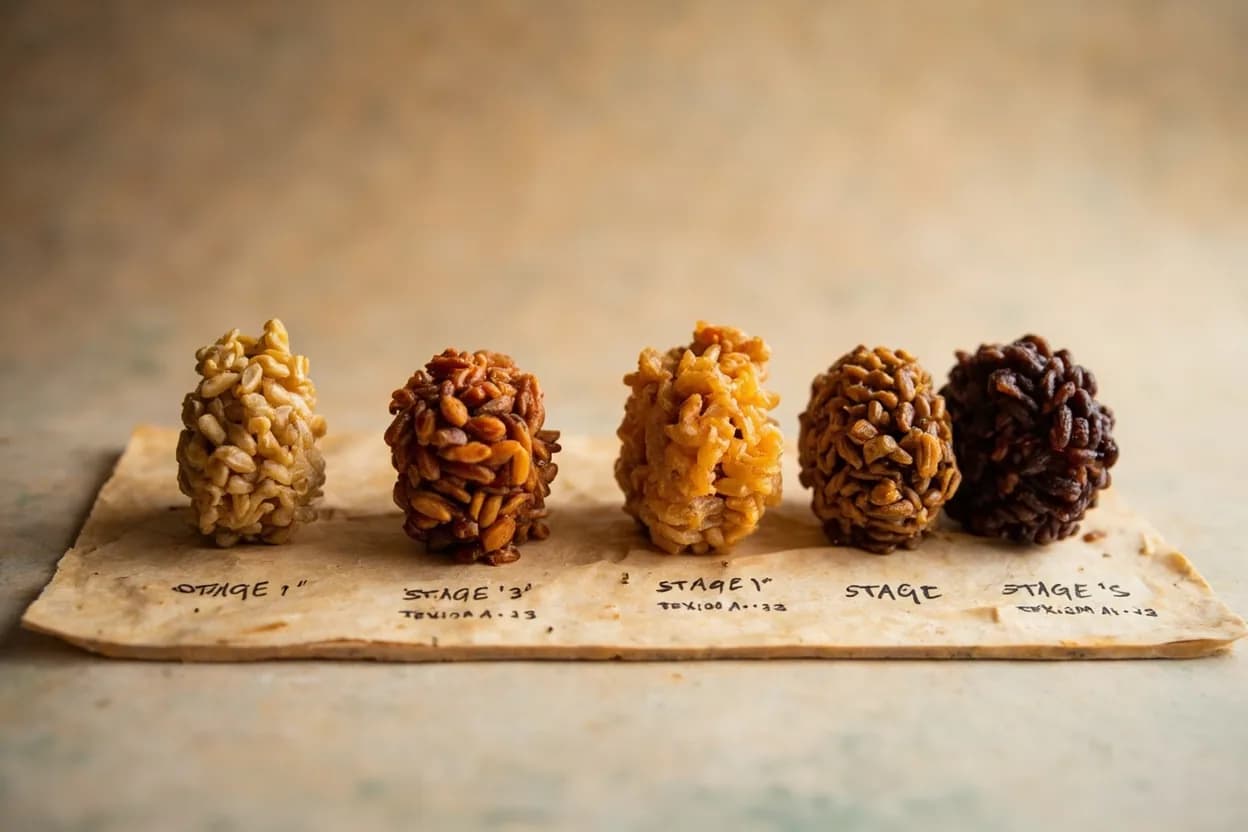
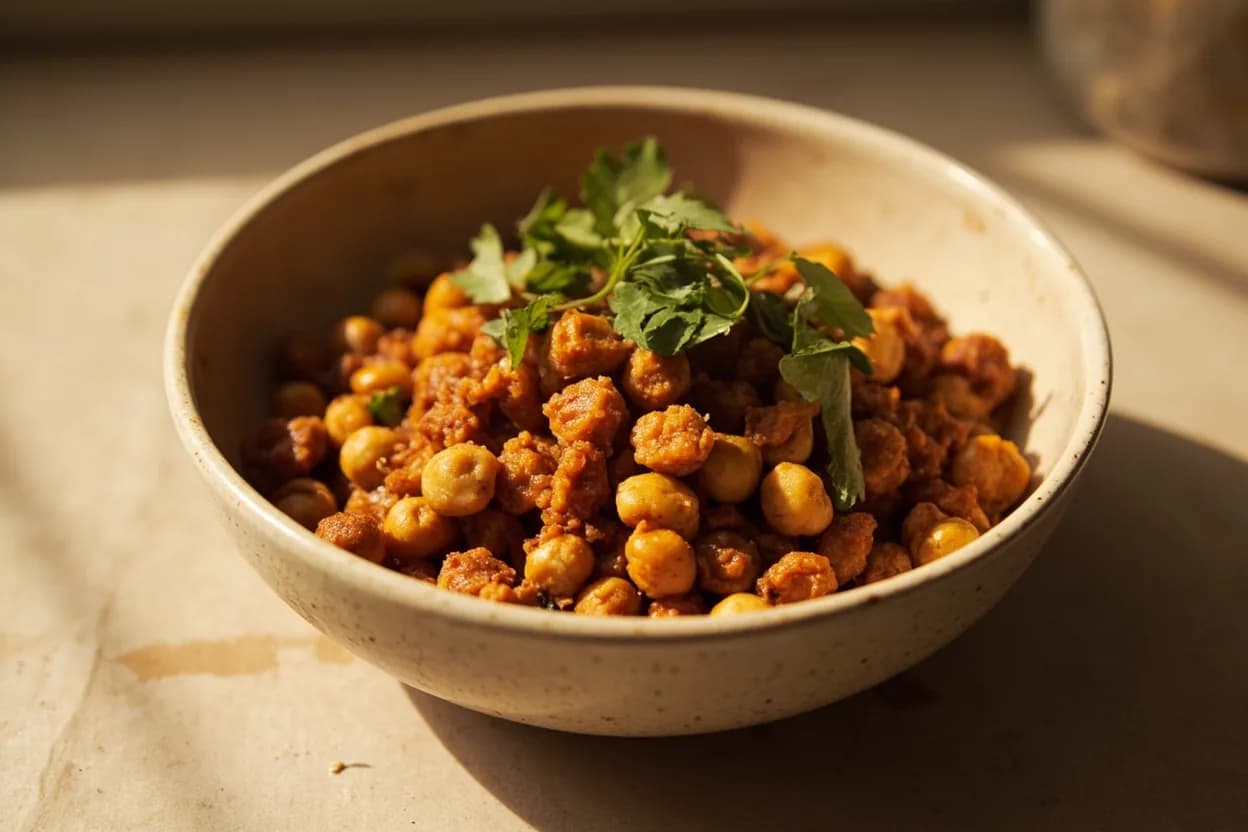
What happens
During the final minutes of cooking, pectin in the middle lamella (the cement between cells) fully dissolves under the combined action of heat and water, and the starch granules in the cotyledon complete gelatinization. Protein networks that gave the raw bean its dense, rubbery texture relax into a softer matrix. The seed coat, which softens more slowly than the interior (due to its higher cellulose and cutin content), reaches a state where it is pliable but not disintegrating. As cooking continues past this point, pectic polysaccharides break down further, cell walls rupture, and gelatinized starch leaches out — producing mushiness and a thickened, starchy cooking liquid.
What to look for
- Exterior surface is smooth and taut with no wrinkling or skin separation
- Interior yields to a gentle bite with no chalk, grain, or resistance — smooth and creamy
- Bean holds its shape when lifted with a spoon; does not collapse or split open
- Cooking liquid is gently cloudy but not thick or paste-like
- Chickpeas have a mild, nutty sweetness; black beans a deeper, earthy flavor; kidney beans a full, meaty body
How to check
- Bite test: bite a bean in half — interior should be uniformly creamy and slightly moist, not chalky
- Pinch test: press between thumb and forefinger — should flatten smoothly without an audible crack
- Spoon lift: lift a bean from the liquid; it should hold its form without splitting or deflating
- Taste: flavor should be fully developed, not raw or starchy — fully cooked beans taste rounded and complete
Food safety
Carryover & resting
All three species continue to soften after the heat is removed, particularly when left in hot cooking liquid. Drain or spread on a sheet pan if planning to use beans immediately at peak texture. For soups and braises, account for 5–15 additional minutes of carry-on cooking while the dish rests.
The science behind it
The general pinch/mash protocol that applies across all bean species
Intentional cooking past fully cooked stage for ultra-smooth purees
- Pressure cooking
Dramatically reduces time to fully cooked stage: chickpeas 35–40 min conventional vs. 12–15 min pressure
- Hard water effect
Calcium and magnesium ions in hard water strengthen pectin cross-links, extending cook time and sometimes preventing full doneness
- Trypsin inhibitors
Anti-nutritional factors in raw legumes deactivated by cooking; fully cooked stage ensures complete deactivation
Appears in
References
- 1.On Food and Cooking — Harold McGee
- 2.The Complete Legume Cookbook — America's Test Kitchen
- 3.Food Science: An Ecological Approach — Sari Edelstein
- 4.FAO Legumes — Quality Protein Sources for Food Security (2016)
Confidence: high
Notes
Species differences in the done-to-mushy window
Chickpeas (Cicer arietinum) have a notably forgiving window — they hold shape even 15–20 minutes past standard doneness, making them ideal for long-simmered stews. Kidney beans transition from done to mushy relatively quickly (within 10 minutes of reaching doneness). Black beans fall in between but their thin seed coats split before their interiors fully soften if heat is uneven, creating a marbled texture. Check each species on its own clock.
The starch-cloud indicator
One of the most reliable non-tactile indicators of impending doneness is the cooking liquid: as beans approach fully cooked, the liquid clouds noticeably from dissolved starch and broken-down cell wall material. A clear or lightly hazy liquid usually means more time is needed; a paste-thick liquid often means the beans are already over.