Poultry Doneness
Duck Breast: Medium-Rare (Rosé) Target
Also: duck breast rosé, magret medium-rare, duck breast 57°C, canard rosé
Duck breast is routinely served rosé at 57–60°C — pink, blush, and yielding — a deliberate culinary choice rooted in the muscle's density and distinct pathogen risk profile compared to standard poultry.
Unlike chicken or turkey, duck breast — particularly the magret de canard from Moulard or Muscovy ducks raised for foie gras — is widely served medium-rare (rosé) at an internal temperature of 57–60°C in professional culinary practice. The flesh at this temperature is blush-pink to deep rose at the center, tender and silky, with a texture closer to a medium beef steak than to cooked chicken. This practice is accepted in France and much of Europe and is common at quality restaurants worldwide. The scientific basis rests on the duck breast's muscle composition (rich in myoglobin, closer to red meat than white meat), the fat cap's protective role, and the lower prevalence of Salmonella contamination in duck muscle tissue compared to chicken — though it remains below USDA guidelines and carries regulatory caveats.
In photos

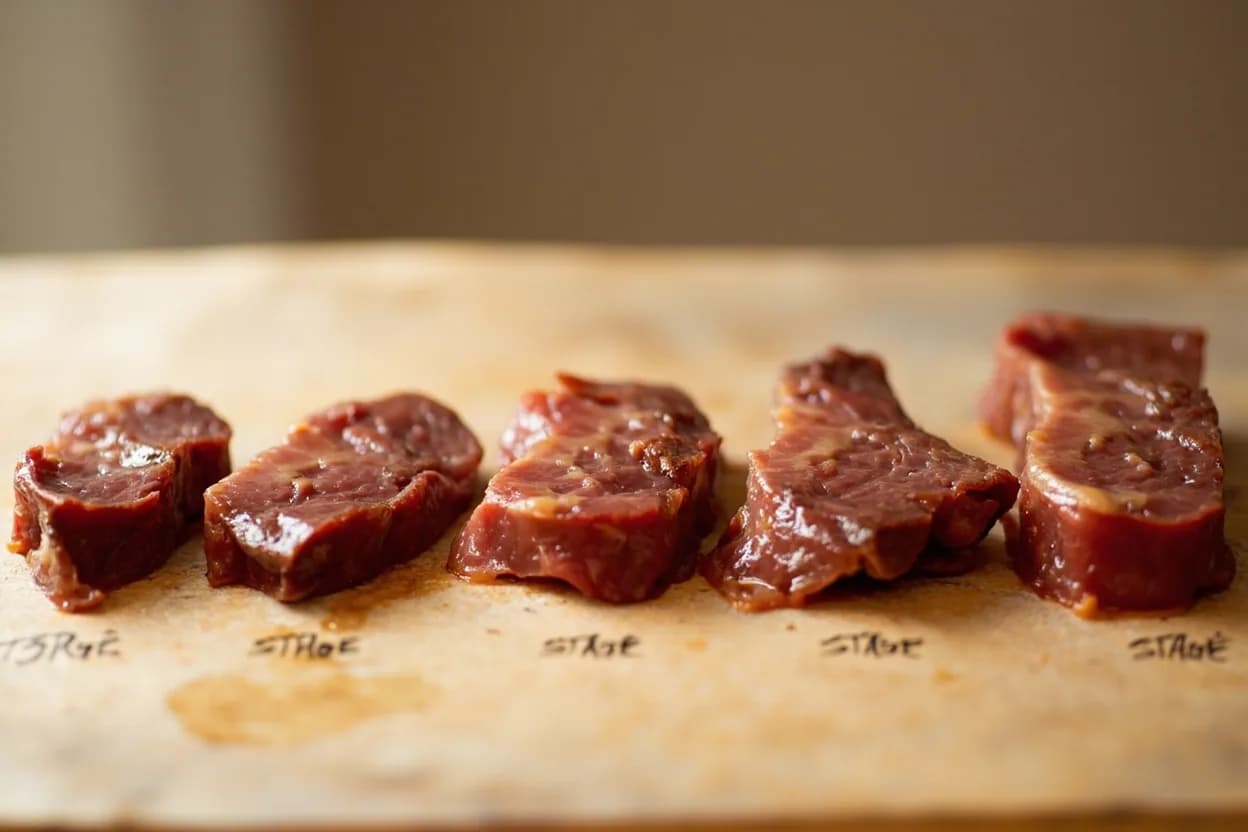
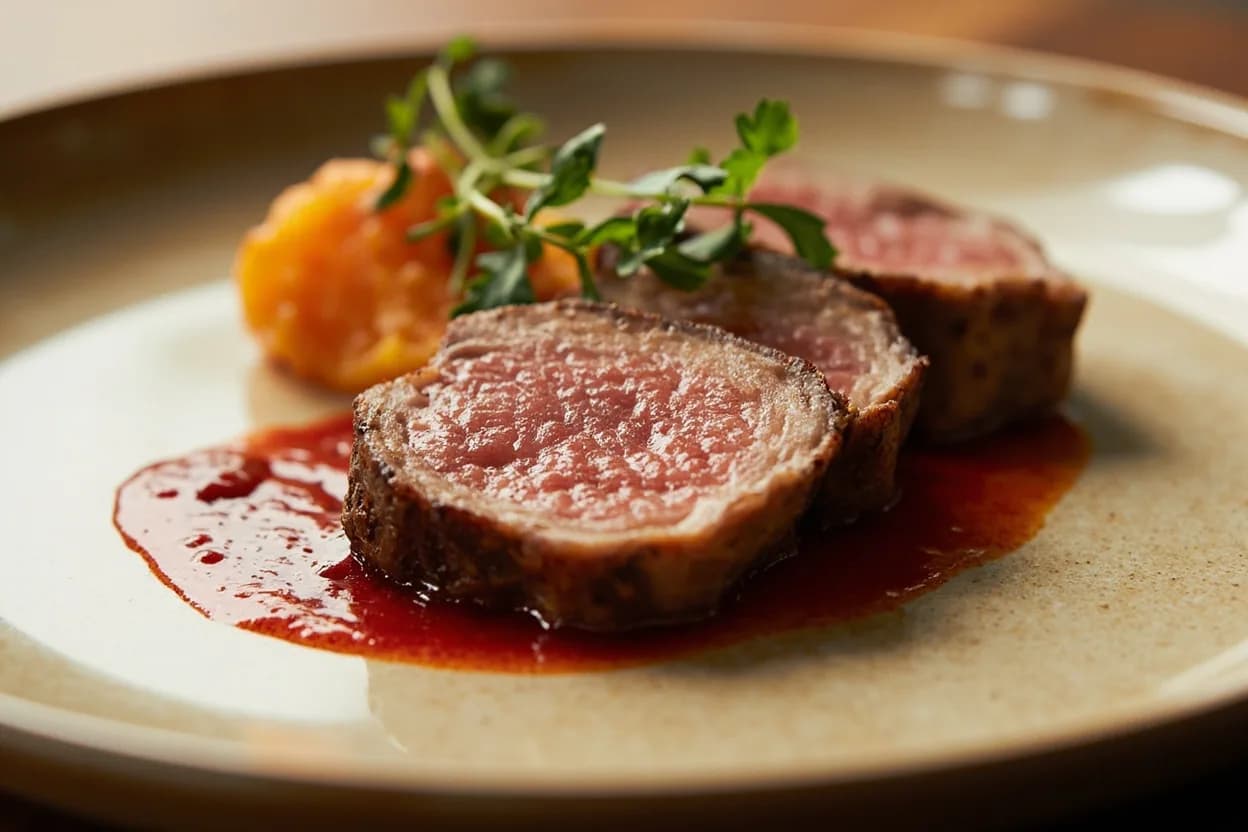
What happens
Duck breast myoglobin concentration is significantly higher than chicken — comparable to beef in some respects — which means the meat remains visibly pink even as proteins firm. At 57–60°C, myosin has fully denatured (firmness established) and much of the inter-fiber collagen has softened, but actin is still largely intact (no actin-denaturation toughening). The result is a meat that is firm but yielding, with a silky texture and deep, iron-rich flavor. The thick fat cap (rendered to translucency and crisp on the exterior) insulates the lean muscle, allowing the cook to achieve a very well-rendered, crispy skin at high surface temperatures while holding the flesh interior at rosé temperatures through the oven or resting period. Above 65°C the flesh tightens noticeably; above 74°C it becomes dry and loses the characteristic livery richness.
What to look for
- Cross-section shows a blush-rose gradient: deep magenta at the very center fading to pale pink, with a thin grey-cooked band at the exterior
- Flesh is firm to the touch but gives with gentle pressure — comparable feel to a medium beef fillet
- Fat cap has rendered to translucency and the skin is crackly-crisp, gold to deep amber
- Juices run faintly pink when sliced — not bright red (that would indicate rare, <55°C)
- Aroma is deeply savory, iron-forward, with rendered duck fat fragrance — no raw or bloody smell
- Flesh pulls apart with slight resistance, with clearly defined grain structure
How to check
- Insert a thin probe thermometer through the side of the breast, parallel to the fat cap, targeting the geometric center — avoid hitting the fat layer which reads higher
- Remove from heat at 54–56°C (for rosé target of 57–60°C after 5-minute rest carryover)
- Finger-press test: medium-rare duck feels like the fleshy base of a relaxed thumb — more resistance than raw, less than fully cooked
- Slice the thickest section to check the gradient — a restaurant cook's confirmation step before plating
- Allow 5 minutes rest before slicing — rushed slicing releases juices and the center reading drops misleadingly
Food safety
Carryover & resting
Duck breast carries over 3–5°C after removal from heat, more aggressively than chicken breast due to the insulating fat cap retaining heat. Pull from the pan at 53–55°C and rest skin-side up, uncovered, on a wire rack for 5 minutes. It will reach 57–60°C reliably. Do not tent with foil — steam will soften the crispy skin.
The science behind it
- Myoglobin Content
Duck breast is exceptionally myoglobin-rich — closer to beef than chicken — explaining the persistent pink color at safe temps
- Actin Denaturation
Above 65–68°C actin sets hard and duck breast toughens rapidly — the upper boundary for rosé
- Fat Cap Rendering
The duck fat layer must reach 70–80°C surface temp to render and crisp, requiring a separate high-heat sear before or after the low-heat oven step
- Carryover Cooking
The fat cap insulates and stores heat — duck carryover is more pronounced than lean poultry
- Pasteurization Time-Temperature Curve
Lower temperatures held longer achieve pathogen reduction — basis for considering rosé duck safe under controlled conditions
Appears in
References
- 1.The French Laundry Cookbook — Thomas Keller
- 2.On Food and Cooking — Harold McGee
- 3.The Food Lab — J. Kenji López-Alt
- 4.Modernist Cuisine — Myhrvold et al.
- 5.ANSES (Agence nationale de sécurité sanitaire) — Avis sur la cuisson des volailles
Confidence: high
Notes
The scoring and rendering technique
Duck breast cookery almost universally begins with scoring the fat cap in a crosshatch pattern — cuts through the fat only, not into the muscle — and placing the breast fat-side-down in a cold pan brought slowly to medium heat. This cold-pan start allows the thick fat layer (often 1–1.5 cm) to render gradually without burning the skin before the fat has had time to evacuate. The breast may spend 6–10 minutes on the fat side alone before being flipped briefly for the flesh side, then transferred to a 180°C oven (or rested off-heat) to reach the interior target. This fat-rendering process is the defining technical challenge of duck breast cookery.
Moulard vs. Pekin vs. Muscovy
Duck breast thickness and myoglobin content vary significantly by breed. Moulard magret (the foie-gras-duck breast) is the thickest and most intensely flavored — 400–600 g breasts with a fat cap over 1 cm — and benefits most from the rosé treatment. Pekin (Long Island) duck breasts are smaller and leaner, often served closer to 63–65°C to avoid the gamier quality that can come through at very low temperatures in this breed. Wild duck and teal, with their even higher myoglobin and game flavor, are sometimes served at an even lower 52–55°C rare in high-end European kitchens.