Preserves & Confits
Duck Confit Internal Temperature
Also: confit temperature, duck leg confit doneness, fat-poaching temperature, whole duck confit doneness, confit de canard doneness, slow-fat-cooked duck
Duck confit is held at 75–80°C (167–176°F) fat temperature for 6–8 hours, converting collagen to gelatin while keeping the legs fully submerged in fat for preservation and tenderness.
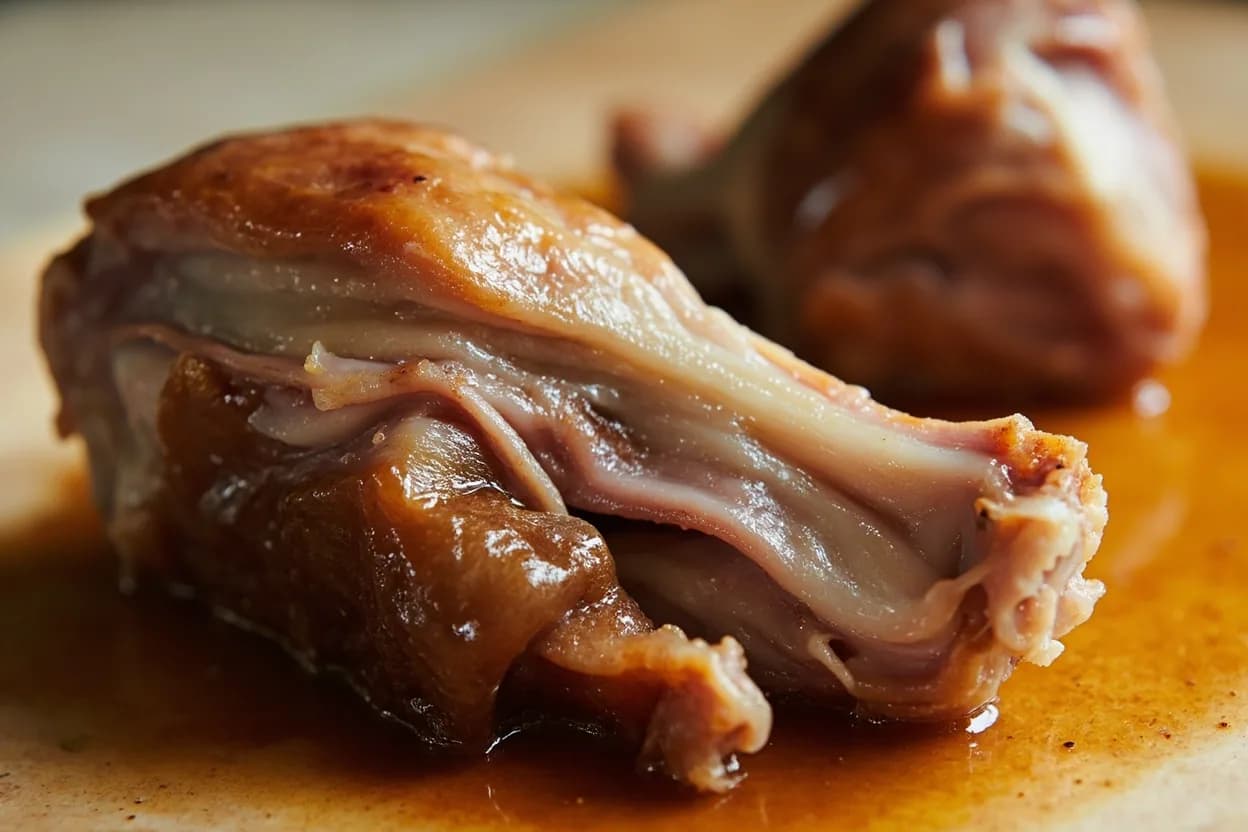
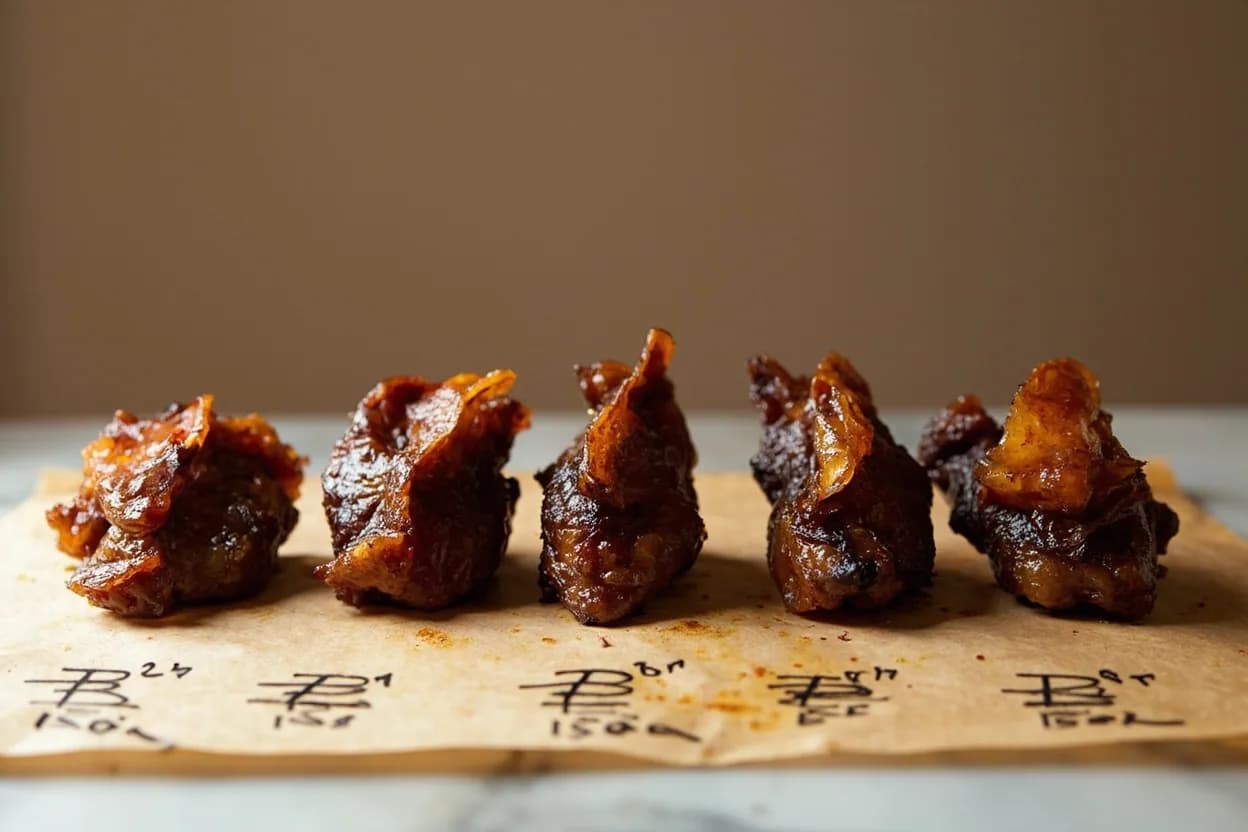
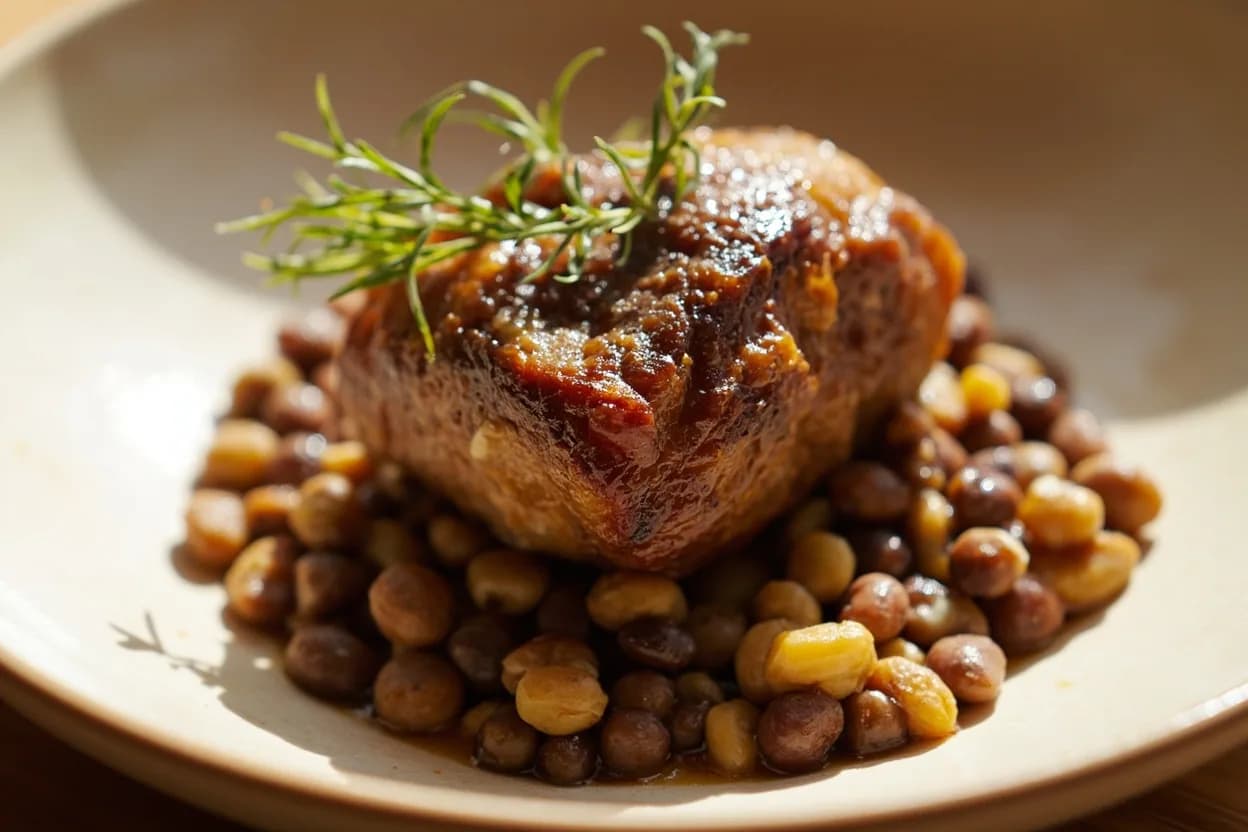
Duck confit (confit de canard) is a technique in which salted duck legs are submerged in rendered duck fat and held at a low, stable temperature — 75–80°C (167–176°F) — for an extended period, typically 6–8 hours. This temperature window is not a minimum-doneness threshold in the conventional sense; it is a carefully maintained environment in which collagen progressively hydrolyzes to gelatin (beginning around 70°C), muscle proteins set, connective tissue dissolves, and the meat acquires the characteristic fall-from-bone tenderness. The fat simultaneously acts as a barrier to oxygen and microbial contamination, enabling refrigerated shelf life of several weeks when legs remain submerged and sealed. The internal temperature of the duck meat during cooking mirrors the fat temperature closely, reaching 75–80°C throughout.
In photos
What happens
At 70°C and above, collagen triple helices destabilize and hydrolyze to gelatin, which dissolves into the surrounding fat and cooking juices, lubricating the meat. Myofibrillar proteins (actin, myosin) have already denatured at lower temperatures (50–65°C) but remain moist because fat surrounds the meat and the very low cooking temperature minimizes moisture expulsion through pressure. Over 6–8 hours at 75–80°C, virtually all the collagen in the leg — abundant in this working muscle — converts, producing the silky, pull-apart texture that defines classic confit. Higher temperatures (>85°C) shorten cooking time but produce drier, stringier meat as moisture loss accelerates. Below 70°C, collagen conversion is too slow for a practical cook time and food-safety margins narrow.
What to look for
- The fat should show only gentle, intermittent surface tremors — never a rolling boil; a few lazy bubbles of steam or air at the surface indicate correct temperature
- Duck legs should look opaque and pale throughout, with the drumstick skin beginning to pull back from the bone tip
- The meat should feel completely yielding when pressed with tongs — no spring-back, no resistance
- A skewer or cake tester inserted into the thickest part should slide in with zero resistance and feel warm (not hot) against the inner wrist
- The fat should remain clear and golden, not brown — browning indicates the temperature has crept too high
- The drumstick bone rotates almost 360° at the hip joint with minimal effort — a reliable secondary check alongside the skewer test
How to check
- Monitor fat temperature with a digital probe thermometer clipped to the pot side, measuring the fat midway up the duck legs; maintain 75–80°C throughout
- Use an instant-read thermometer to verify duck internal temperature in the thickest part of the thigh (away from bone) — should read 75–80°C to confirm the fat temperature has penetrated
- Oven setting: most home ovens at 90–100°C (with variation) hold duck fat within the correct range; calibrate your oven with a thermometer
- Precision approach: use an immersion circulator (sous vide) set to 75–80°C for perfect temperature control and completely hands-off cooking
- Time check: at correct temperature, 6 hours produces tender confit; 8 hours produces fully dissolved connective tissue for the most gelatinous result
- Probe-tenderness test: insert a thin metal skewer or cake tester horizontally into the thickest part of the thigh — no resistance means collagen is fully converted
- Wiggle test: the drumstick should rotate almost 360° at the hip joint with minimal effort once collagen has converted
Food safety
Carryover & resting
Carryover is minimal in confit because the cooking temperature is low and the fat continues to insulate the legs after removal from heat. The critical finishing step — crisping the skin in a hot pan or under the broiler — does cause rapid surface temperature rise; the already fully cooked interior is unaffected.
The science behind it
- Collagen to Gelatin Conversion
The extended low-temperature hold is specifically designed to maximize collagen hydrolysis to gelatin, creating the defining textural quality of confit
- Sous Vide
A modern equivalent using a water bath at the same temperature range; achieves identical results with more precise temperature control
- Salt Curing
Pre-salting is integral to traditional confit preservation — it is not optional seasoning but a safety and flavor-development step
Crisping the skin after confit cooking triggers rapid Maillard browning at high heat, adding flavor not developed during the low-temperature fat bath
- Water Activity
Salt cure and fat submersion both reduce water activity, contributing to the multi-hurdle preservation of confit
Appears in
References
- 1.Charcuterie: The Craft of Salting, Smoking, and Curing — Michael Ruhlman and Brian Polcyn
- 2.The Fat Duck Cookbook — Heston Blumenthal
- 3.On Food and Cooking — Harold McGee
- 4.Modernist Cuisine — Nathan Myhrvold et al.
- 5.The Art of Eating Well — Patience Gray and Primrose Boyd
Confidence: high
Notes
Traditional vs. modern temperature
Traditional Gascon confit, made before thermometers, was cooked 'at a tremble' — the cook held a spoon at the fat surface and adjusted heat so that a single tremor appeared every few seconds. This empirical method corresponds closely to 75–80°C. Modern chefs use immersion circulators set to 75–82°C for 8–12 hours, or lower (68°C for 24 hours) for a slightly more translucent, silkier texture. All these approaches are valid; what matters is the time-temperature relationship sufficient to convert collagen and pasteurize the meat.
Fat choice and reuse
Duck fat is traditional and ideal — it has a high smoke point (~190°C), neutral flavor, and produces a clean, ungreasy confit. Goose fat is an excellent alternative. Some modern recipes use neutral oils (grapeseed, rice bran) for a lighter result. Traditional confit fat from the previous batch was reused repeatedly — its gelatin and salt content from previous legs improved subsequent batches. Today, after straining and refrigerating, duck fat can be reused 3–4 times before the accumulating coagulated proteins and water reduce its quality.