Technique-Specific Doneness
Egg Drop Ribbon Consistency
Also: egg flower soup doneness, egg ribbon stage, danhuatang doneness, egg drop stage
Beaten egg poured in a thin, slow stream into simmering broth at 85°C or above sets immediately into long, silken ribbons — the correct texture for egg drop soup; broth below this temperature produces ragged clumps or partially raw streaks.
Egg drop ribbon consistency is the specific doneness state of eggs set by the heat of a hot, simmering liquid rather than a pan. When beaten eggs are drizzled in a controlled, thin stream into broth held at or above 85°C (185°F), the proteins coagulate on contact and form continuous, feather-light ribbons — called 'egg flowers' (蛋花, dànhuā) in Chinese — that float through the soup. The technique depends entirely on broth temperature: too cool and the egg cooks slowly, breaking apart into ragged pieces and dispersing into the broth; too hot (a violent boil) and the egg cooks too fast, creating dense, rubbery chunks rather than delicate ribbons. The ideal is just below a full rolling boil, with the liquid moving enough to gently swirl the forming ribbons into attractive strands.
In photos

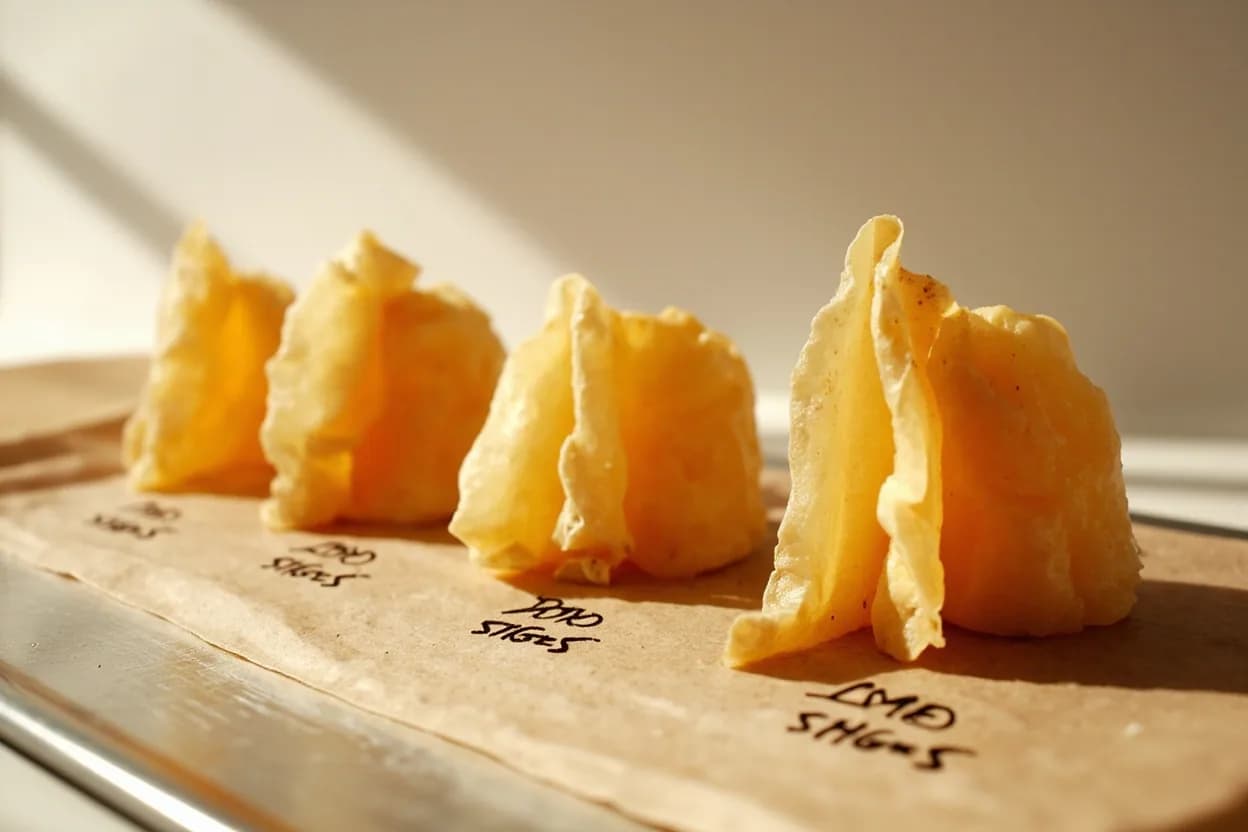
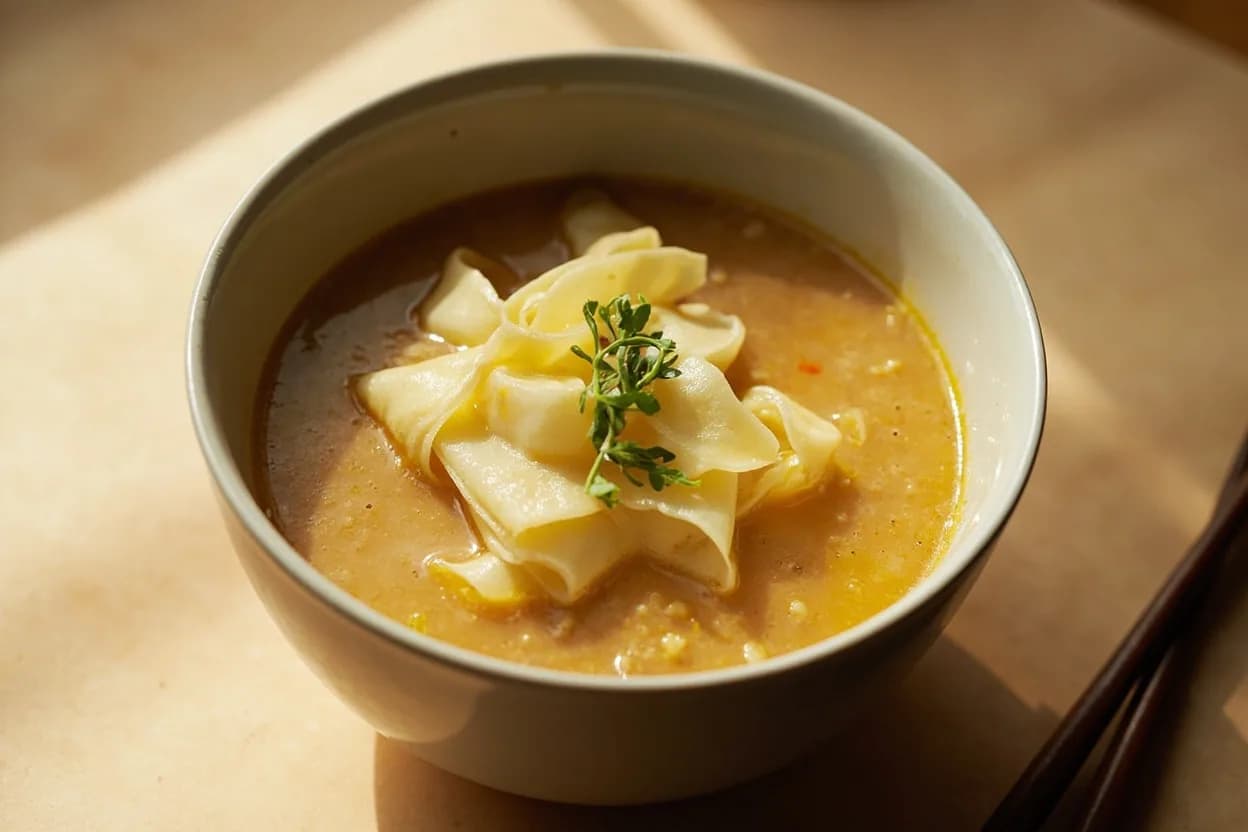
What happens
Egg white proteins (primarily ovotransferrin and ovalbumin) begin denaturing at 60–65°C and are fully set by 80°C. Egg yolk proteins set between 65°C and 70°C. When beaten whole egg hits broth at 85°C+, the outer surface of the egg stream instantly denatures, forming a protective skin. As the stream continues to flow into the hot liquid, this skin extends into a ribbon. The interior of the ribbon cooks through within seconds. The key variable is flow rate: a thin, steady stream from height (or through a ladle or fork) ensures each increment of egg sets before the next is added, creating continuity. A starch slurry added to the broth beforehand increases viscosity, which slows the egg's dispersal and produces slightly thicker, more distinct ribbons.
What to look for
- Eggs set within 1–2 seconds of entering the liquid, forming continuous strands rather than dissolving into the broth
- Ribbons are opaque white-yellow and float freely, not sinking to the bottom in a lump
- Broth remains clear or only lightly clouded; heavily clouded broth indicates egg dispersed before setting
- Ribbons are tender and silken, pulling apart in long threads when stirred gently
- No raw egg smell; a clean, delicate cooked-egg aroma
How to check
- Temperature check: verify broth is at 85°C minimum before adding egg; use an instant-read thermometer
- Drop test: add a few drops of beaten egg to the broth before the main pour — if they set immediately into white threads, the broth is hot enough
- Visual ribbon check: the first addition of egg should produce visible ribbons within 2 seconds; if egg disperses into the liquid, the temperature is too low
- Texture check after cooking: finished ribbons should hold their shape when scooped with a spoon, not dissolve or break into fine particles
The science behind it
- Egg protein coagulation
Ovalbumin sets at 80°C, ovotransferrin at 62°C; combined beaten egg sets definitively between 70–80°C; broth above 85°C ensures instant surface set
- Starch slurry thickening
Cornstarch or potato starch slurry added before the egg increases broth viscosity, supporting the forming ribbons and keeping the soup body silky
- Pouring technique
Height of pour, flow rate, and whether a fork or chopstick is used to break the stream all affect ribbon fineness — finer streams make silkier, more delicate flowers
- Broth clarity
A full rolling boil disrupts forming ribbons mechanically; medium simmering (85–95°C) allows ribbons to set without being broken apart
- Sesame oil finishing
Added at the end off-heat so it doesn't break into the broth or cook further; provides aromatic finish to the egg ribbons
Appears in
References
- 1.On Food and Cooking — Harold McGee (Scribner, 2004)
- 2.Every Grain of Rice — Fuchsia Dunlop (Bloomsbury, 2012)
- 3.The Wok: Recipes and Techniques — J. Kenji López-Alt (W. W. Norton, 2022)
- 4.Japanese Farm Food — Nancy Singleton Hachisu (Andrews McMeel, 2012)
Confidence: high
Notes
Italian stracciatella: a European parallel
Stracciatella alla Romana — beaten egg mixed with Parmigiano-Reggiano and nutmeg, stirred into simmering meat broth — uses the same principle. The word 'stracciatella' means 'little rags', describing the torn-ribbon texture that results from stirring as the egg sets. The same minimum broth temperature applies: below 85°C the egg disperses into the broth and the soup turns opaque and grainy. The key difference from Chinese egg drop soup is the act of stirring during the pour, which creates shorter, more ragged pieces rather than long flowing ribbons.
The role of starch and seasoning order
In Chinese egg drop soup, the cornstarch slurry is stirred in before the egg, not after. The thickened broth coats the egg strands as they form, giving the finished soup its characteristic silky mouthfeel. Salt and white pepper are added to the broth before the egg, since seasoning after sets the ribbons will partially dissolve them. The sesame oil garnish — added off-heat at the very end — prevents the aroma compounds from volatilizing.