Legume Doneness
Fava Bean Softening Stages
Also: broad bean doneness, fava doneness, ful stages, fava cooking stages
Fava beans pass through three distinct doneness stages — bright-tender for salads, slip-skin for peeling, and full-soft for ful medames — each requiring different timing and technique.
Fava beans (Vicia faba), whether fresh or dried, cook through a staged progression of textural states that correspond to entirely different culinary endpoints. Fresh favas transition from snappy-raw through bright-tender (salad-ready) to fully soft (puree-ready). Dried favas, especially the split variety common in Egyptian and Levantine cooking, progress from partially hydrated and starchy through a full-soft stage suitable for ful medames. The skin-slip point — where the tough, slightly bitter outer testa releases freely from the cotyledon — is the critical diagnostic for fresh fava preparation and marks the end of the blanching stage before peeling. Overcooking fresh favas past the bright-tender stage causes the vivid green interior to turn grey-brown and the flavor to become stale and sulfurous.
In photos

What happens
Fresh favas: brief blanching deactivates peroxidase enzymes that cause rapid grey-browning, sets chlorophyll in the 'bright green' state, and begins softening the testa. At the skin-slip point, pectin bonding between testa and inner bean loosens enough to allow manual peeling. Extended cooking gelatinizes starch in the cotyledon, softening the bean for mashing. Dried favas: rehydration during soaking allows water to penetrate the cotyledon; sustained simmering then gelatinizes the dense starch and denatures seed storage proteins. Dried split favas cook faster (no testa to penetrate) and dissolve more readily into a creamy porridge.
What to look for
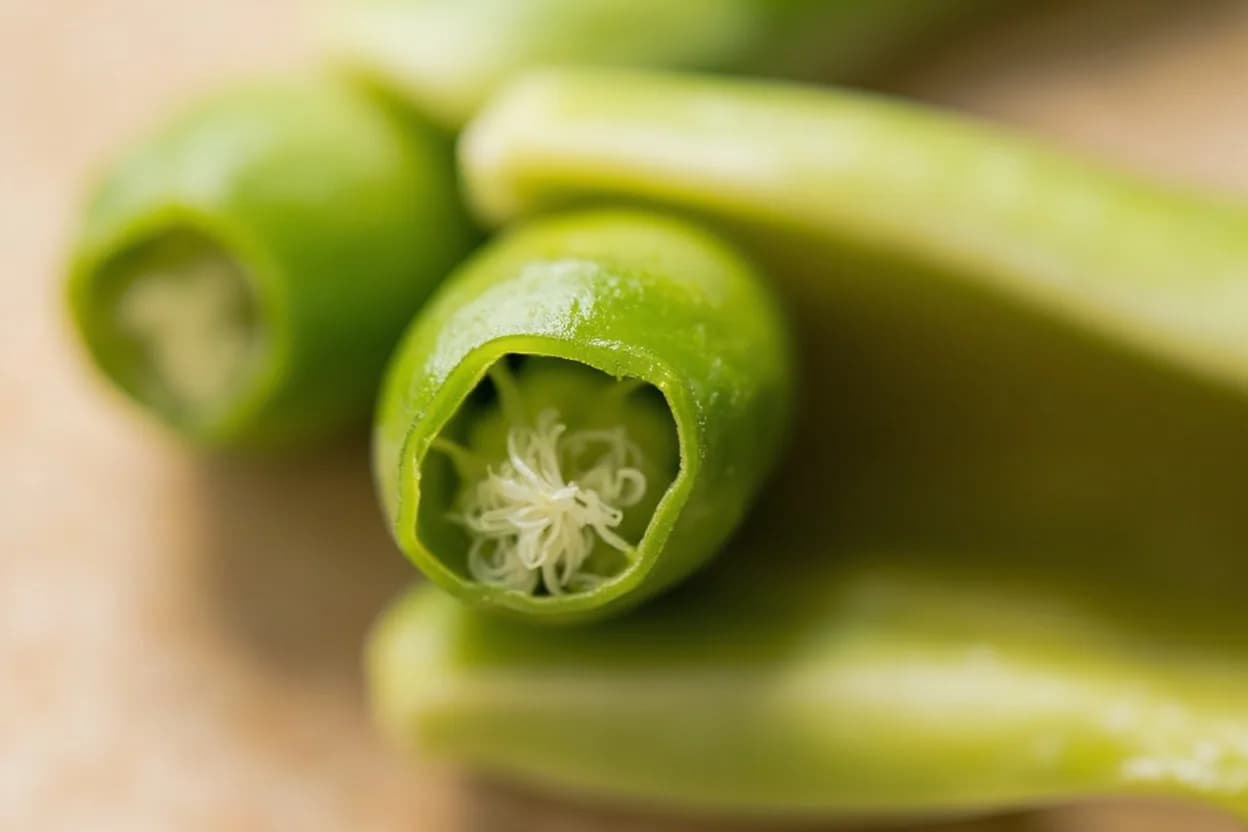
- Bright-tender (salad stage): exterior is emerald green, bean resists the bite gently with a grassy sweetness
- Skin-slip (peel point): testa wrinkles visibly and a light pinch at the seam causes the outer skin to slide off revealing a vivid green inner bean
- Salad-ready (after peeling): inner bean is glossy, bright green, slightly firm with a clean pea-like flavor
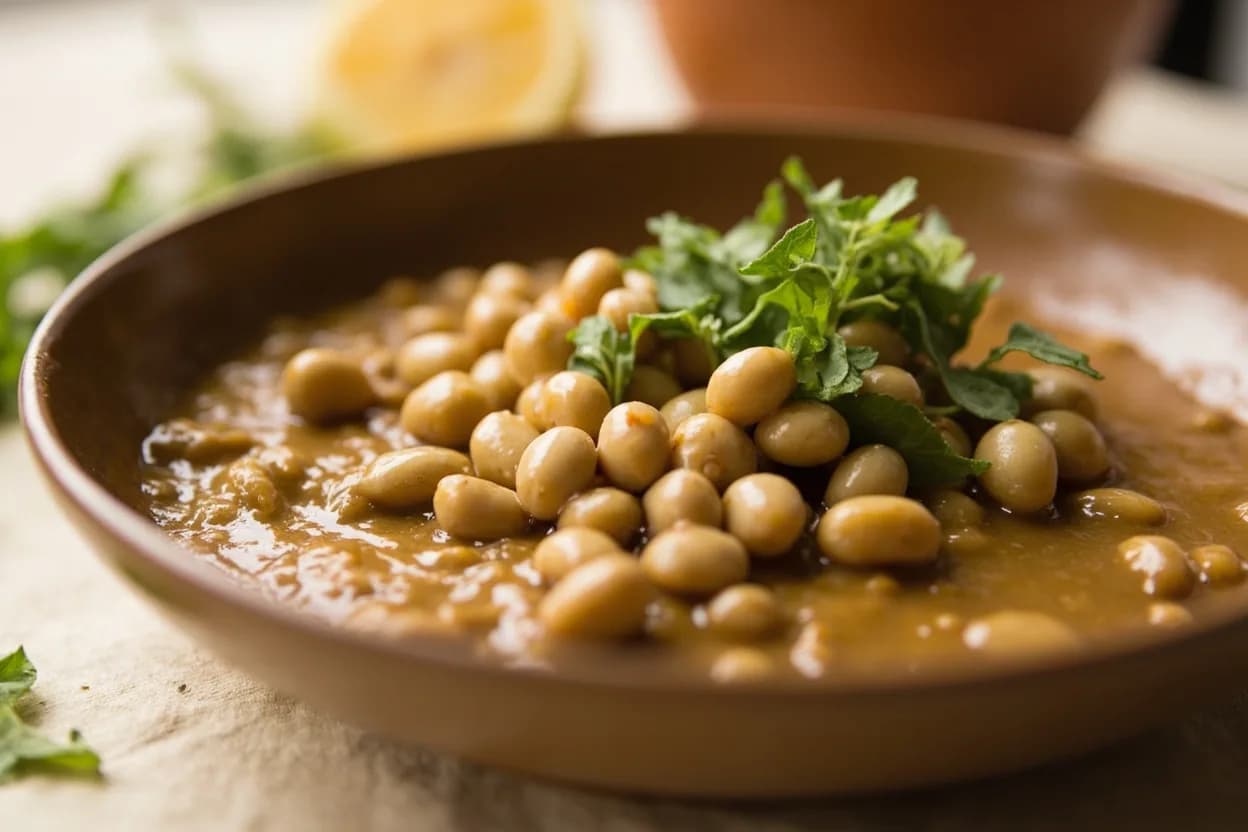
- Full-soft (ful medames stage): dried favas mash easily under a spoon, exterior is golden-beige, flavor is earthy and rich
- Overcooked fresh fava: color fades from emerald to olive-grey, skin tears and collapses, sulfurous off-notes emerge
How to check
- Skin-slip test: after blanching, press a fava at the seam end — if the inner bean pops out cleanly, skin-slip has been achieved
- Bite test (bright-tender): halve a peeled fava; interior should be evenly green with a slight give, not starchy or grainy
- Fork mash test (dried fava): press a cooked dried fava against the side of the pot; it should mash with light pressure for ful medames stage
- Color check (fresh): the outer pod or blanched bean should remain bright green; any graying signals overcook
Carryover & resting
Fresh favas must be shocked in ice water immediately after blanching to halt cooking at the skin-slip/bright-tender stage. Without shocking, carryover heat in the bean interior will push them into the grey, overcooked zone within 2–3 minutes. Dried favas in a covered pot continue softening for 10–15 minutes after the heat is removed.
The science behind it
- Blanching and shocking
The core technique for locking fresh favas at bright-tender; ice bath must be ready before the beans hit the water
- Chlorophyll preservation
Brief cook time and immediate shocking protect magnesium-centered chlorophyll from pheophytinization (the green-to-grey reaction)
- Double-peeling
Fresh favas have two skins: the outer pod (removed raw) and the inner testa (removed after blanching at skin-slip point); both must be removed for salads
Egyptian national dish of slow-cooked whole dried favas; achieves the full-soft stage through hours of gentle simmering or overnight slow cooking
- Favism risk
Individuals with G6PD deficiency (glucose-6-phosphate dehydrogenase, prevalent in Mediterranean and African populations) can experience hemolytic crisis from consuming fava beans regardless of cook stage
Appears in
References
- 1.Jerusalem: A Cookbook — Yotam Ottolenghi & Sami Tamimi
- 2.Zaitoun: Recipes from the Palestinian Kitchen — Yasmin Khan
- 3.On Food and Cooking — Harold McGee
- 4.Claudia Roden's The Food of Italy
Confidence: high
Notes
Fresh vs. dried: two entirely different culinary objects
Fresh and dried fava beans share a species name but behave so differently in the kitchen that they should be treated as separate ingredients. Fresh favas are seasonal (spring), vibrant, and quick-cooking — their entire culinary contribution is the sweet, grassy brightness of the inner bean after double-peeling. Dried favas are pantry staples used across North Africa and the Levant for long-cooked porridges and dips; they develop a deeper, earthier, slightly mealy flavor that defines dishes like ful medames. No substitution is direct.
The salt question for dried favas
Dried whole favas (unpeeled) have a particularly tough testa that resists water penetration. Soaking in lightly salted water (2 tsp per quart) can actually help by softening the outer skin via osmotic effects. Unlike kidney beans or chickpeas, dried whole favas almost always require 12+ hours of soaking and may still need 90 minutes of simmering. Split dried favas (peeled before drying) cook in 30–45 minutes and do not require soaking.