Smoking & Curing
Fermented Sausage pH Target
Also: salami pH, fermented sausage acidity, pH 5.3, acidification target
pH ≤5.3 is the critical safety threshold for fermented dry sausage — acid drop from lactic bacteria kills or inhibits pathogens that nitrites alone cannot stop.
In fermented sausages — salami, pepperoni, soppressata, saucisson sec, chorizo — lactic acid bacteria (LAB) convert added sugars to lactic acid, driving down pH over 18–72 hours of fermentation. Reaching pH ≤5.3 within a prescribed time window is the primary critical control point for pathogen safety, particularly against Escherichia coli O157:H7 and Salmonella. The combination of low pH, salt, nitrite, and subsequent drying (Aw reduction) forms the complete safety hurdle system. Products failing to reach pH 5.3 within the target time window (typically 48–72 hours at 22–26°C) must be heat-treated or discarded.
In photos

What happens
LAB starter cultures (Lactobacillus sakei, Pediococcus acidilactici) metabolize dextrose or sucrose into lactic acid, dropping pH from a starting 5.8–6.2 to below 5.3. At pH 5.3, the protein isoelectric point is approached, causing myosin and actin filaments to partially denature and bind water — this 'set' or 'bind' of the meat matrix gives salami its characteristic firm, sliceable texture. Simultaneously, E. coli O157:H7 and Salmonella — acid-sensitive at this pH — are suppressed. However, they are not necessarily killed at pH 5.3 alone; the acidification step is a hurdle that, combined with Aw reduction during drying, delivers cumulative lethality. USDA's 5-log reduction standard for E. coli in fermented sausage requires validated pH + drying protocols or a heat treatment step.
What to look for
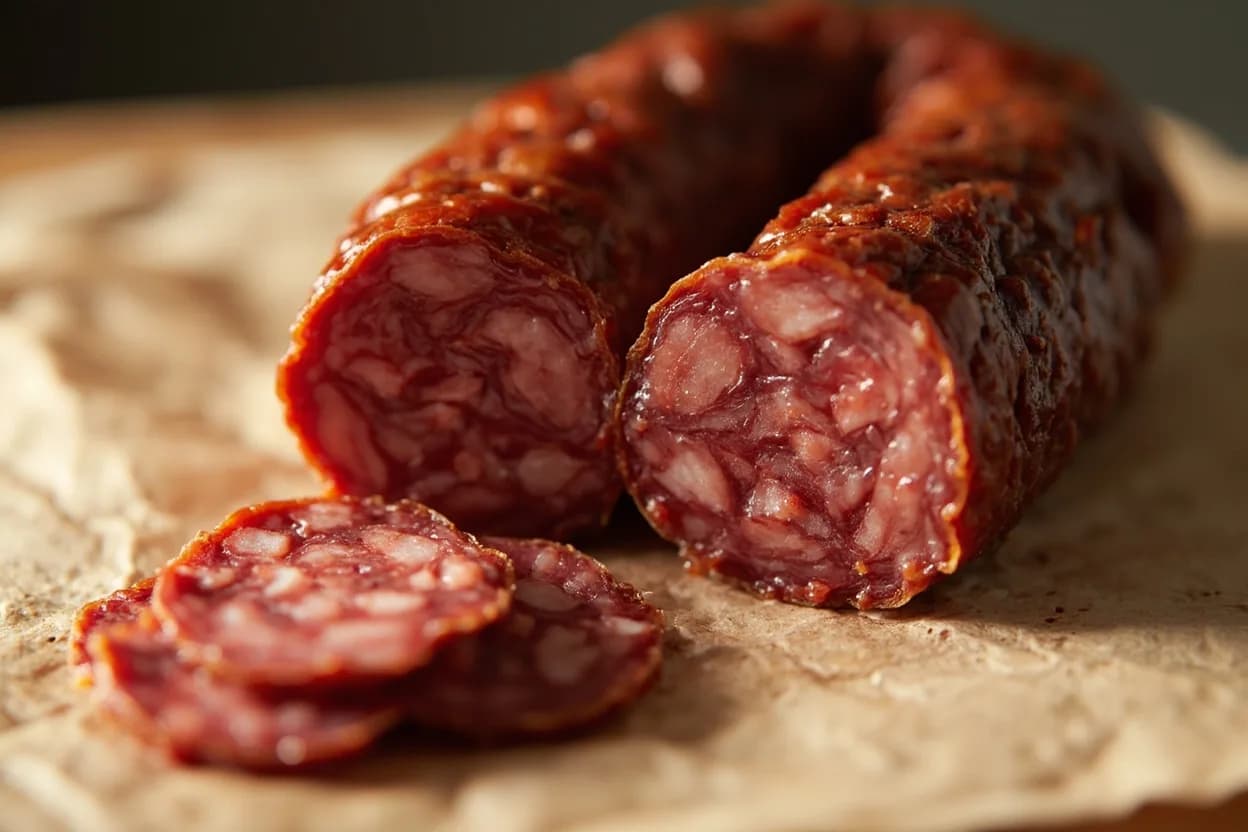
- At pH 5.3 the sausage smells cleanly tangy — a bright lactic sourness, not putrid or ammoniated
- Properly acidified salami feels noticeably firmer after fermentation than when first stuffed; the casing is snug with no slack pockets
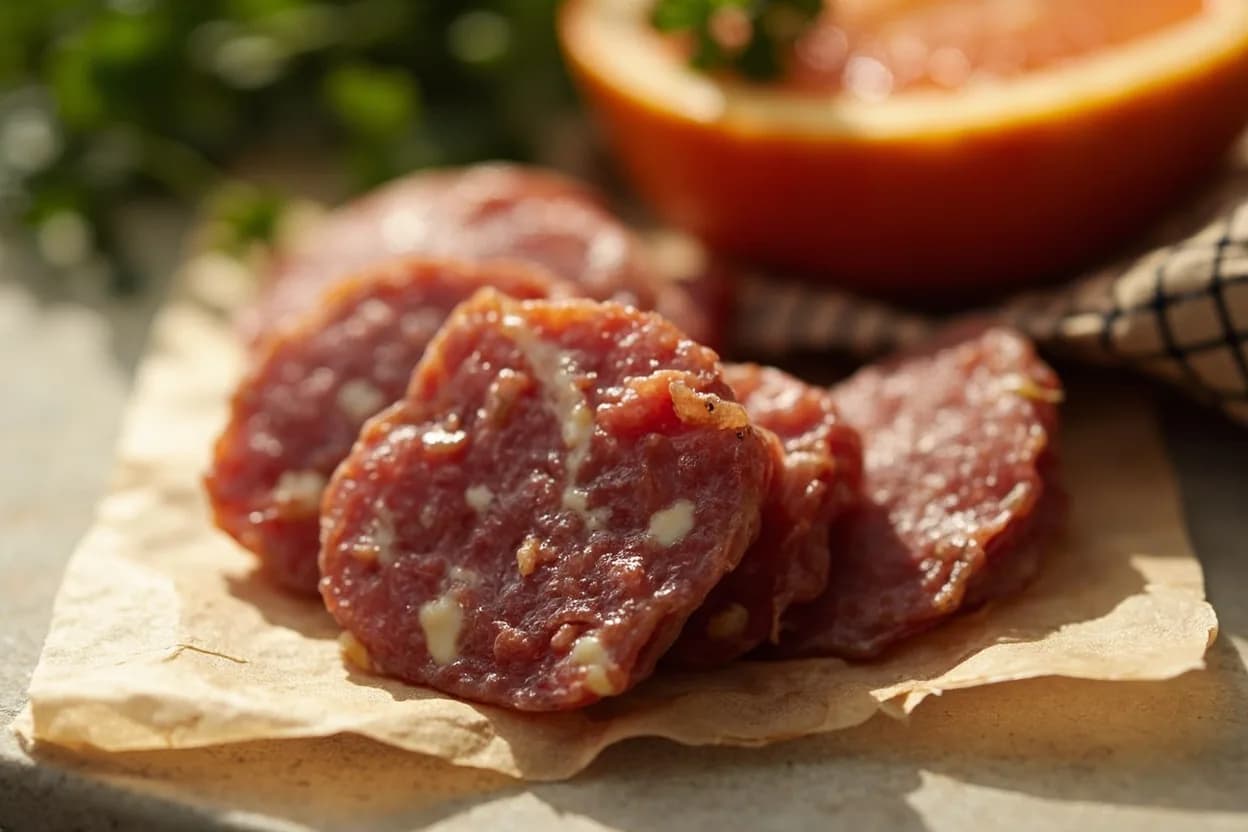
- Interior color shifts from pink-red to a deeper, more uniform ruby as myoglobin is stabilized by nitrite and acid
- A tangy, slightly sharp flavor on tasting a fermentation-stage sample confirms adequate acidification
- The cut face of correctly acidified salami binds together when pressed — the protein matrix has set
- White powdery mold bloom (Penicillium nalgiovense) beginning on the casing indicates correct fermentation environment
How to check
- Stick a calibrated pH pen or strip into a sliced pilot sausage — the most direct method
- For pH pens: insert probe into the geometric center of a sacrificed link after fermentation period
- pH paper strips (range 4.0–7.0) give adequate accuracy (±0.2 pH units) for hobby producers
- Titration test kits offer reliable results without equipment calibration concerns
- Commercial producers validate pH at multiple production points under HACCP; home producers should test at least one link from each batch before proceeding to drying
Food safety
The science behind it
- Lactic Acid Bacteria Starters
LAB cultures (Lactobacillus sakei, Pediococcus) are the biological agents that produce lactic acid and drive pH down
- Water Activity Target
Works synergistically with low pH — together they achieve cumulative pathogen lethality during drying
- Nitrite Curing
Controls Clostridium botulinum in anaerobic sausage interior; pH alone does not
- Fermentation Temperature
22–26°C is the sweet spot for LAB dominance; higher temps risk spoilage organisms outcompeting LAB
- Mold Ripening
Surface Penicillium mold regulates drying, prevents case hardening, and contributes to flavor complexity in long-aged salami
Appears in
References
- 1.The Art of Making Fermented Sausages — Stanley Marianski
- 2.Charcuterie: The Craft of Salting, Smoking, and Curing — Michael Ruhlman & Brian Polcyn
- 3.USDA FSIS Compliance Guidelines: Salami and Fermented Sausage Products
- 4.Food Microbiology: Fundamentals and Frontiers — Doyle, Beuchat & Montville
Confidence: high
Notes
The 48-hour window is not negotiable
pH must drop to ≤5.3 within the prescribed fermentation window — typically 48 hours for warm-room fermentation at 24°C. If pH stalls above 5.3 (common causes: insufficient sugar, wrong LAB culture, low fermentation temperature, or high salt inhibiting LAB), the batch has not met its safety hurdle. Options: raise temperature and extend monitoring, or apply a heat treatment. Proceeding straight to drying at pH 5.6 or 5.8 is a genuine safety violation, not a quality miss.
Flavor as a function of acidification speed
Rapid acidification at 26°C with Pediococcus yields a more pronounced sour punch — characteristic of American pepperoni and summer sausage. Slower fermentation at 20°C with Lactobacillus sakei produces a subtler, more complex tang with greater mold and enzyme activity during extended drying — the flavor profile of traditional Italian salami and French saucisson. The pH target is the same; the flavor profile is shaped by how fast you get there.