Fish & Seafood Doneness
Fish Gelatin Set Point (Aspic & Terrine)
Also: fish aspic set, fish collagen gel, fish terrine set point, gelatine de poisson
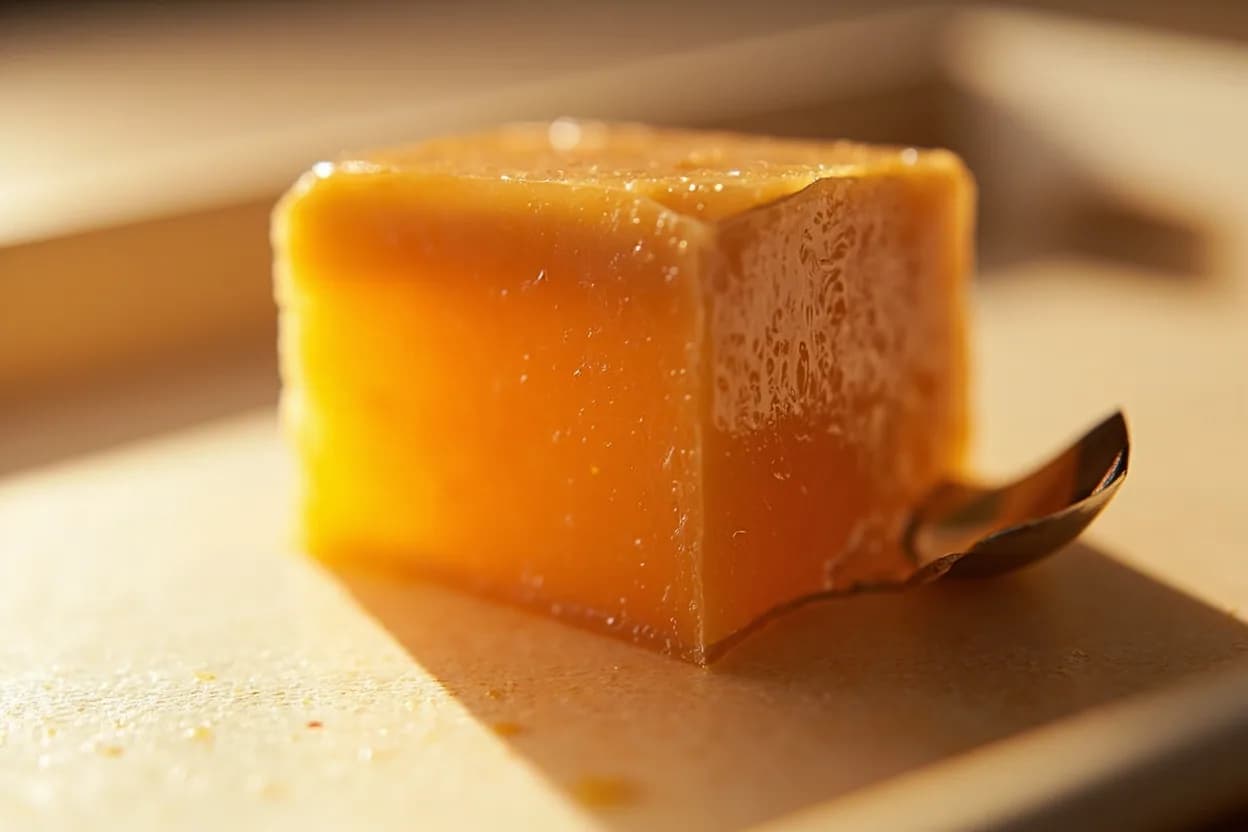
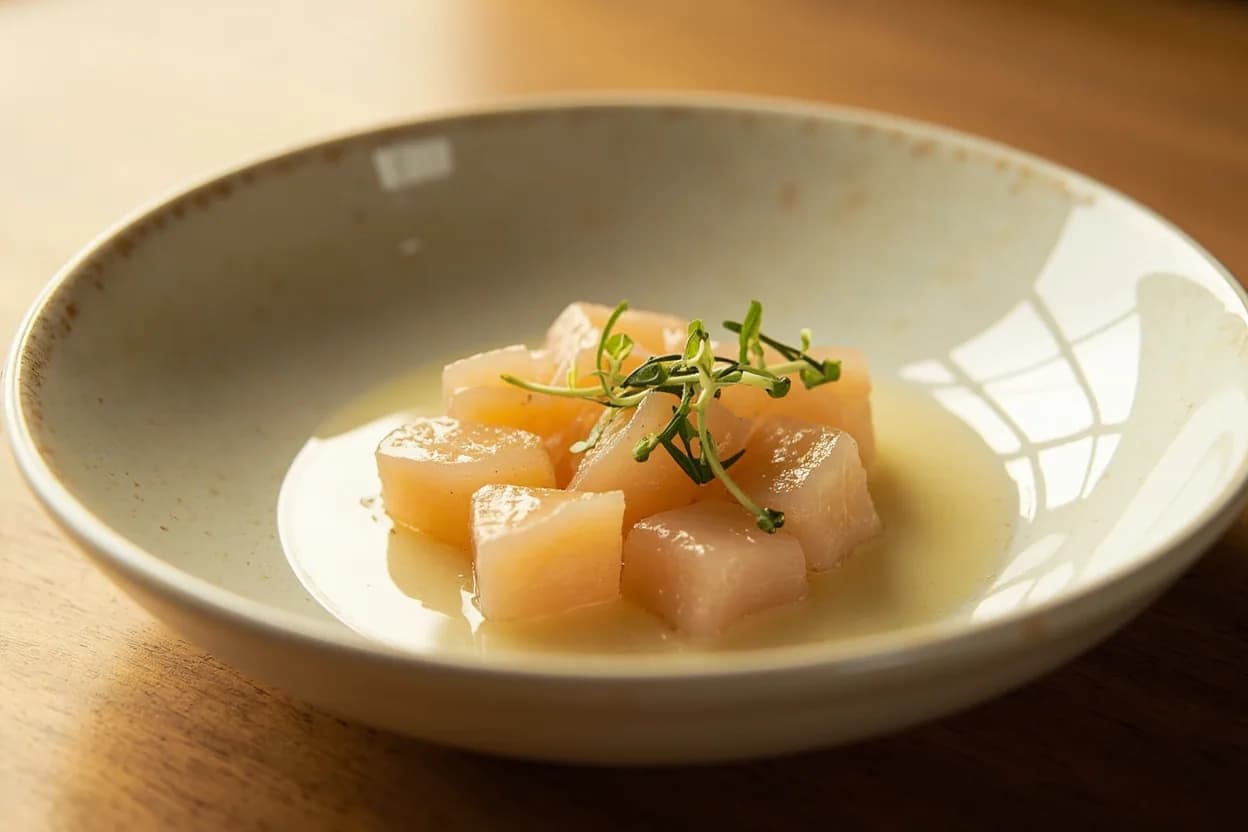
Fish collagen gels below 15°C, far more delicate than meat gelatin, yielding a tender, barely-trembling set that melts on the tongue.
Fish connective tissue contains collagen with a lower melting and gelling temperature than mammalian collagen. When fish stock is chilled, the dissolved gelatin — extracted from bones, skin, and cartilage during simmering — forms a network that sets firmly between 8°C and 15°C (46–59°F). At room temperature (above ~18°C), fish aspic begins to soften and weep. This property governs the texture of cold fish terrines, fish aspics, and pressed fish preparations, distinguishing them structurally from meat-based equivalents.
In photos

What happens
Fish collagen (primarily type I and type V) has a lower proline and hydroxyproline content than bovine or porcine collagen, lowering its helix-to-coil transition temperature. When simmered fish stock is cooled below about 15°C, the denatured collagen peptides re-anneal into a triple-helix gel network. The resulting gel has a much lower melting point (~15–18°C) than meat gelatin (~35°C). Even modestly warm ambient conditions disrupt the network. Gelatin concentration in well-made fish stock is typically 1–3%, yielding a soft, trembling set rather than a firm slab; rich stocks made with fish heads and collars may reach 4–5% and set more firmly.
What to look for
- A properly set fish aspic trembles like panna cotta when the mold is nudged — it does not slosh
- The surface is glassy and clear (if stock was properly clarified), with no liquid pooling
- Sliced terrine holds its shape cleanly but yields immediately under a spoon with no rubbery resistance
- A fully set layer placed on the tongue melts within seconds — distinctly faster than meat aspic
- If the aspic weeps or collapses at kitchen temperature, the gelatin concentration is too low or the set point was not reached
How to check
- Spoon test: place a small amount of warm stock on a chilled plate; refrigerate 5 minutes — if it sets to a soft jelly, gelatin concentration is adequate
- Tilt test: gently tilt the mold from the refrigerator; the mass should move as one trembling unit, not slosh
- Finger-press: a properly set terrine slice resists light finger pressure without cracking or sticking
- Temperature check: confirm refrigerator or blast-chiller has brought the core to below 10°C before unmolding
- Gelatin addition: if natural stock is too weak, bloom and melt powdered gelatin (about 2.5g per 200ml stock) and verify set on a test plate before filling molds
Food safety
Carryover & resting
No carryover effect applies to the gelling step. However, unmolding too early (before the core reaches below 10°C) risks collapse because exterior layers may be set while the center remains liquid.
The science behind it
- Meat aspic set point
Meat gelatin sets at 28–35°C and melts at a higher temperature, making it stable at cool room temperature — unlike fish aspic
- Gelatin concentration
Higher gelatin percentage (% bloom dissolved) raises firmness; fish terrines often add supplemental gelatin to compensate for lean stocks
- Clarification (consommé method)
Fish aspic clarity requires a raft of egg whites and lean fish to remove particulates without overcooking delicate stocks
- Cold-smoking and pressing
Some pressed smoked-fish terrines rely on natural fish gelatin plus residual proteins from partial cooking to bind without added gelatin
- Collagen hydrolysis
Extended simmering of fish bones and skin extracts collagen; over-boiling clouds the stock and can degrade gelatin-forming peptides
Appears in
References
- 1.On Food and Cooking — Harold McGee (Scribner, 2004)
- 2.The Fat Duck Cookbook — Heston Blumenthal (Bloomsbury, 2008)
- 3.Modernist Cuisine, Vol. 2 — Myhrvold, Young & Bilet (The Cooking Lab, 2011)
- 4.Charcuterie: The Craft of Salting, Smoking and Curing — Ruhlman & Polcyn (Norton, 2005)
Confidence: high
Notes
Supplementing with gelatin
Fish stocks made from lean, non-gelatinous species (tuna, mahi-mahi) contain too little collagen to set naturally. Classic French practice adds bloomed leaf gelatin at a rate of about 8–10 sheets per litre of finished stock to achieve a firm, sliceable terrine. Richer stocks from monkfish tail, halibut collars, or turbot bones may need little or no addition.
Service temperature window
Because the gel melts so close to room temperature, fish aspic terrines must be sliced cold and plated just before service, ideally on chilled plates. A room at 22°C will begin to weep a fish aspic within 10–15 minutes of plating — a practical constraint absent from meat terrines.