Starch & Specialty Doneness
Fufu & Ugali Pull (Elasticity Test)
Also: fufu doneness, ugali doneness, pounded yam pull test, cassava fufu elasticity, ugali stiffness test
Fufu and ugali are done when the mass pulls cleanly from the pot, forms a smooth non-sticky ball, and stretches without tearing when a piece is pulled away.
The pull test is the defining doneness assessment for West and Central African fufu (made from cassava, plantain, yam, or cocoyam) and East/Southern African ugali (made from maize meal). Both are thick, pounded or stirred starch porridges cooked to a dense, cohesive dough-like mass. Doneness is not a temperature endpoint but a textural and mechanical state: the fully cooked mass detaches from the walls and bottom of the cooking pot as a single coherent ball, has a smooth, shiny, non-tacky surface, and when a piece is pulled away it stretches to form an elastic strand before breaking cleanly — rather than tearing ragged or staying sticky. For ugali, the additional diagnostic is that the mass is stiff enough to hold the marks of the stirring paddle and does not slump when removed from the pot.
In photos
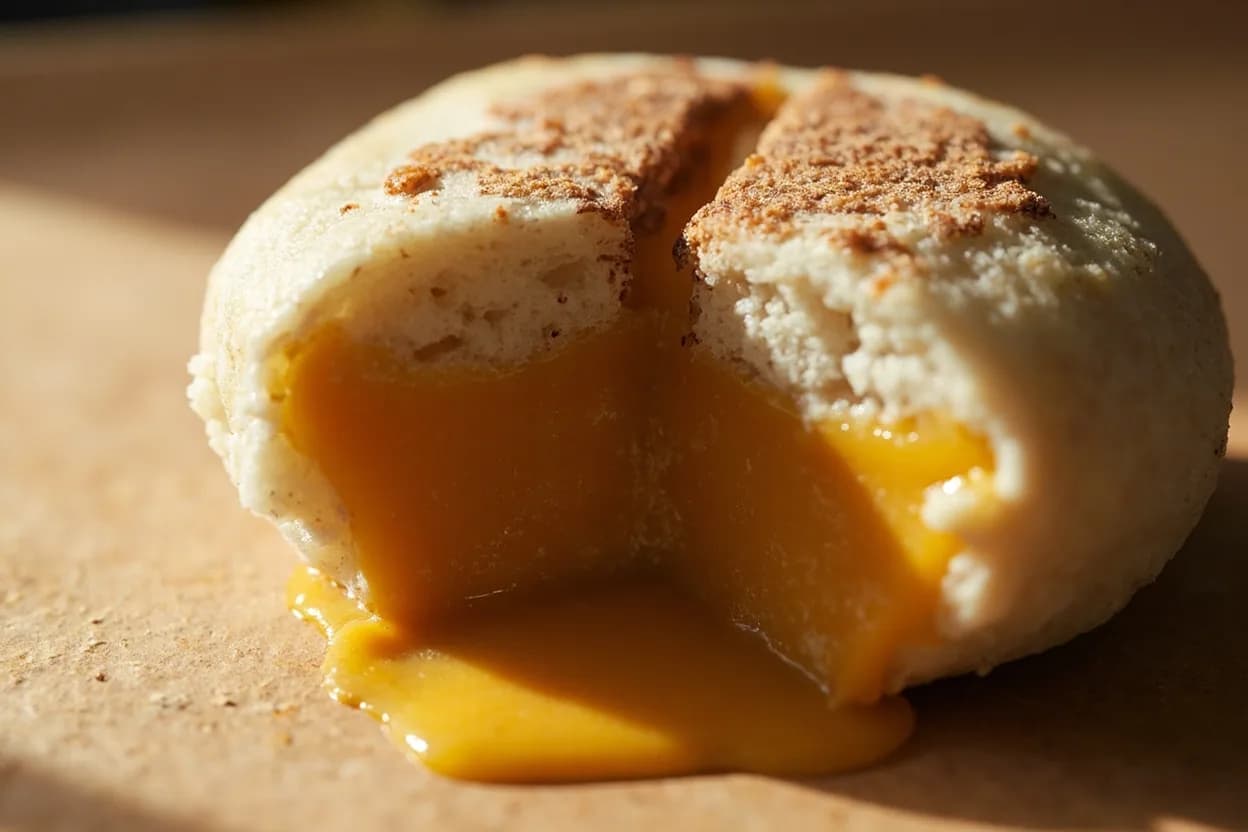
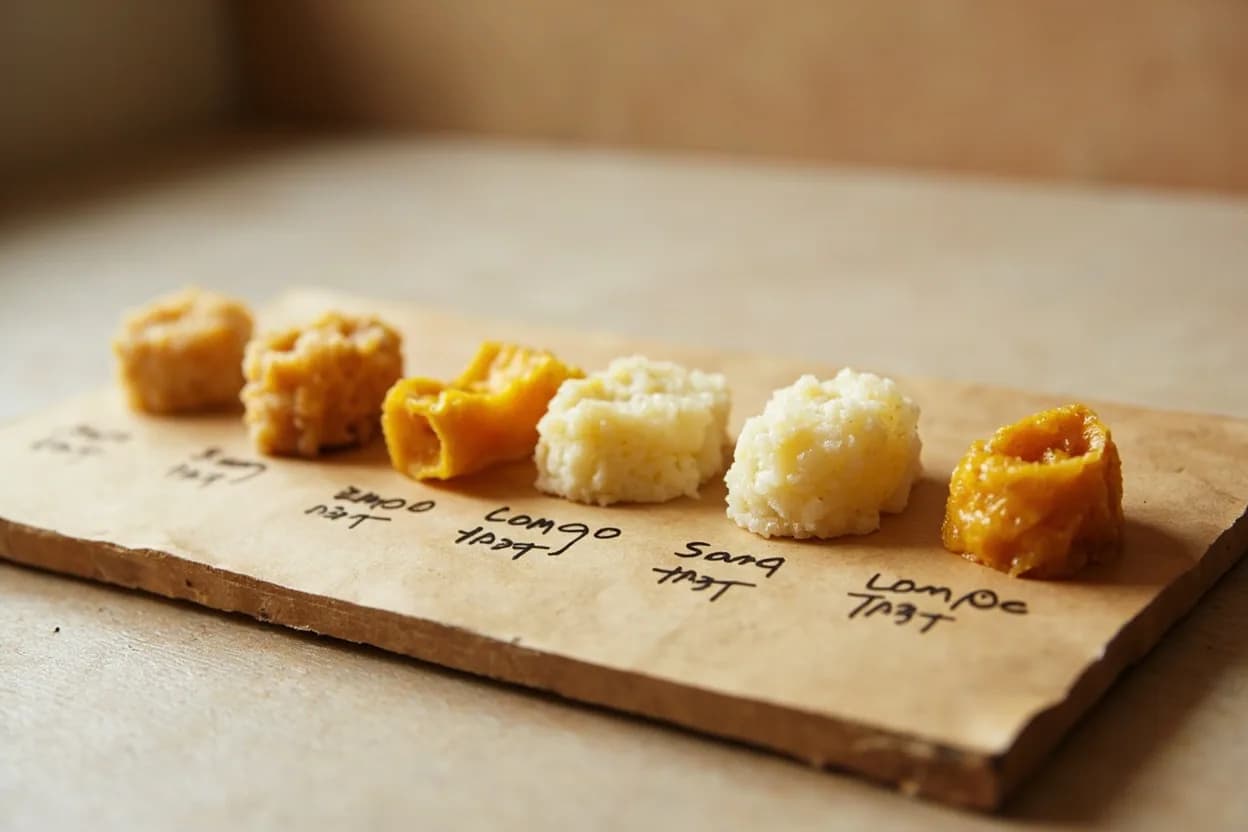
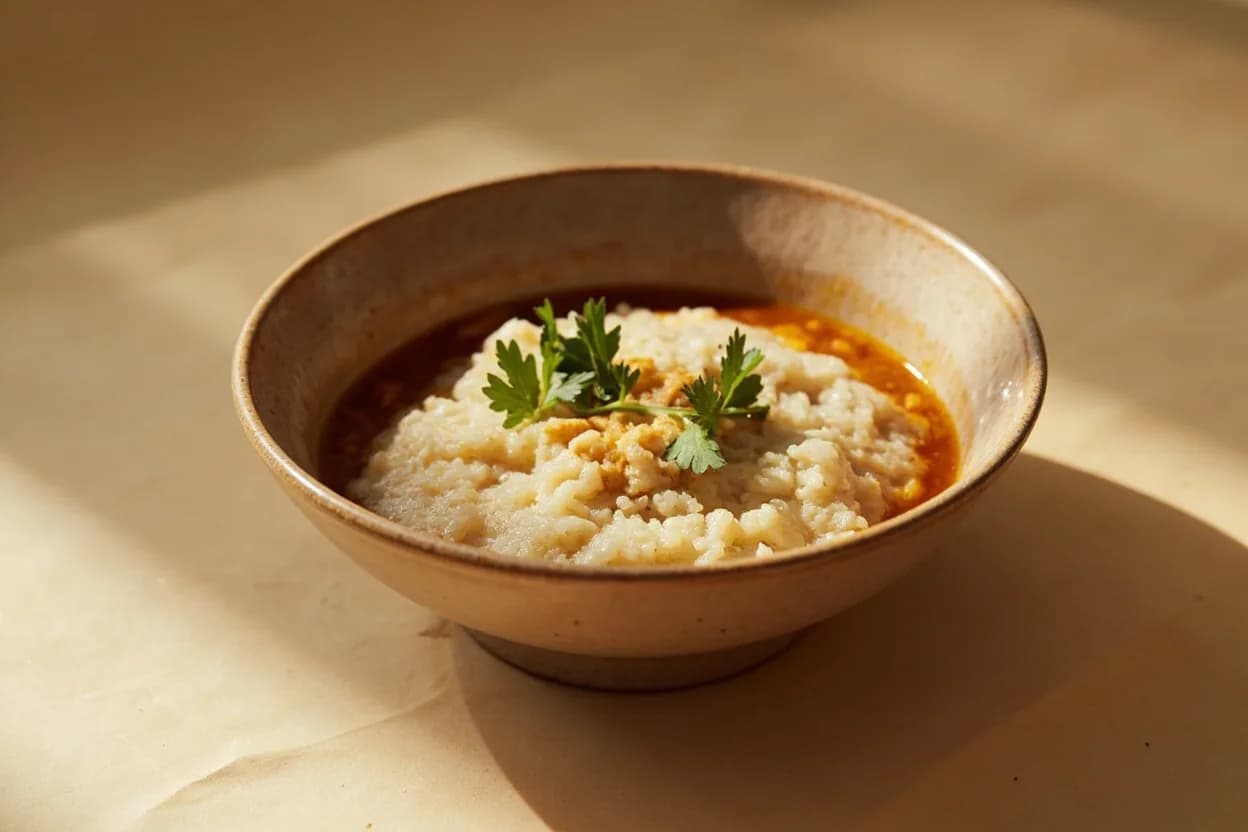
What happens
As cassava, yam, or maize starch is hydrated and heated past the gelatinization temperature (which varies by starch: cassava 52–65°C / 126–149°F; maize 62–72°C / 144–162°F; yam 70–80°C / 158–176°F), granules absorb water and swell, eventually rupturing and releasing amylose into the continuous water phase. Prolonged high-heat stirring crosslinks amylose chains into a viscoelastic network — this is the source of the elastic 'pull.' Continued heat and mechanical stirring (which provides significant shear) converts the initially sticky, lumpy paste into a smooth, cohesive mass with low surface adhesion. The clean pot-pull occurs when the starch network has formed a sufficiently tight matrix to resist adhesion to the metal surface.
What to look for
- The mass detaches from the pot sides and bottom as a single unit when the paddle or mortar pestle is used
- Surface appears smooth, shiny, and slightly translucent (not dull, matte, or lumpy)
- When a piece is pulled away, it stretches 3–5 cm before breaking cleanly — elastic, not stringy or gummy
- No sticky residue is left on a wet hand when the ball is formed and released
- Steam rises evenly from the surface; no raw flour or starchy smell — cooked starch has a neutral, faintly sweet aroma
- The paddle or spoon stands upright if inserted and left for 5 seconds (ugali-specific stiffness indicator)
How to check
- Pull test: pull a small piece from the mass — it should stretch into a smooth, elastic ribbon before tearing cleanly
- Hand-ball test: wet a hand with cold water, press the mass into a ball, and release — properly done fufu/ugali releases without sticking and the ball holds its shape
- Pot-release test: the mass should pull away cleanly from all pot surfaces when scraped with a paddle, leaving only a thin film
- Spoon-stand test (ugali): insert a wooden spoon upright into ugali — it should remain standing unsupported for at least 3 seconds
Carryover & resting
Unlike proteins, starch-based doughs continue to firm as they cool. Ugali especially stiffens significantly off-heat; serve immediately or keep covered with a damp cloth. Fufu may be left in the pot on very low heat (just enough to keep warm) without significant texture change for 10–15 minutes.
The science behind it
The fundamental process; each starch source (cassava, maize, yam) has its own gelatinization temperature range
- Retrogradation
As fufu and ugali cool, amylose chains realign and the mass stiffens further — leftover cold ugali is noticeably firmer and less elastic than when fresh
- Pounding technique (mortar fufu)
Traditional fufu made by pounding boiled tubers in a mortar and pestle achieves the elastic network through mechanical shear rather than just heat — the pull test is identical but reached differently
- Fermentation (fermented cassava fufu)
Some West African fufu traditions use fermented cassava, which alters starch structure; fermented fufu has a sourer flavor but the pull-test doneness indicators remain the same
- Polenta / Posho analogy
Italian polenta and Ugandan posho are made by the same hydration-gelatinization mechanism from maize; doneness cues (pot-pull, surface sheen) are analogous though polenta tends to a softer set
Appears in
References
- 1.The Africa Cookbook — Jessica B. Harris
- 2.Zoe's Ghana Kitchen — Zoe Adjonyoh
- 3.My Grandmother's Hands (recipe chapters) — Nigerian culinary oral tradition, documented
- 4.Starch: Chemistry and Technology — eds. BeMiller & Whistler (Academic Press)
- 5.On Food and Cooking — Harold McGee
Confidence: high
Notes
Fufu is not one dish
In West Africa, 'fufu' describes a method as much as a product. Nigerian fufu is traditionally made from fermented cassava; Ghanaian fufu from cocoyam and plantain pounded together; Sierra Leonean fufu from cassava alone. The instant powdered fufu products sold in diaspora markets (often labeled 'fufu flour') are pre-gelatinized starches that reach doneness in under 5 minutes — the pull and elasticity cues are the same, but the texture is generally denser and less airy than mortar-pounded fresh fufu.
Ugali consistency by region
Ugali consistency varies by country and tribe. Kenyan and Tanzanian ugali is made from white maize flour and cooked stiff — the spoon should stand upright. Zambian nshima is somewhat softer and more porridge-like. Zimbabwean sadza is cooked to a similar stiffness as Kenyan ugali. Ethiopian injera, while fermented and cooked as a flatbread, shares the starch gelatinization mechanism but aims for an entirely different elastic, porous structure — they should not be confused.
Why the mass must pull from the pot
The pot-pull phenomenon is not cosmetic. When the starch network has not formed adequately, the mass adheres to the metal because gelatinized starch acts as a contact adhesive. The transition to non-sticky pot-pull indicates the amylose network has become internally cohesive enough to prefer self-adhesion over adhesion to the metal surface — the same physics that makes a well-developed bread dough windowpane. Any residual stickiness means more heat and stirring are needed.