Pork Doneness
Fresh Sausage Internal Done Temperature
Also: sausage done temp, bratwurst internal temperature, pork sausage 160°F, fresh link sausage temp
Fresh pork sausage links and patties are safe and done at 71°C (160°F) — look for no pink interior and clear-running juices when the casing is pierced.
Fresh sausage is any raw, uncured, uncooked sausage product made from ground or comminuted pork (or pork blends), seasoned with salt, spices, and often fillers, stuffed into natural or collagen casings or formed into patties. Because fresh sausage is a ground meat product, it carries the same 71°C (160°F) minimum internal temperature requirement as all other ground pork. Cured sausages (e.g., salami, pepperoni, summer sausage) that are shelf-stable or fully dried are a separate category and may be eaten without cooking. Smoked fresh sausages (e.g., kielbasa sold raw) are not fully cooked by smoking and also require 71°C before service.
In photos

What happens
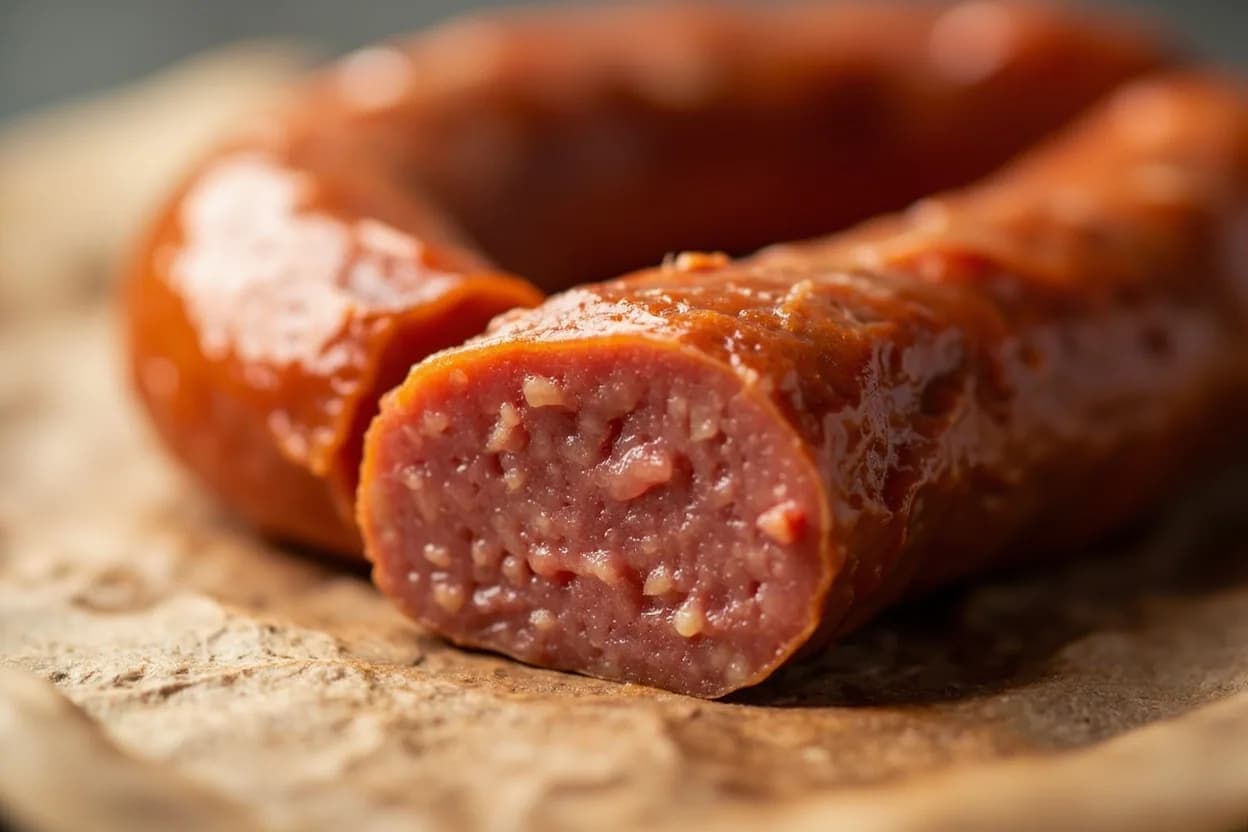
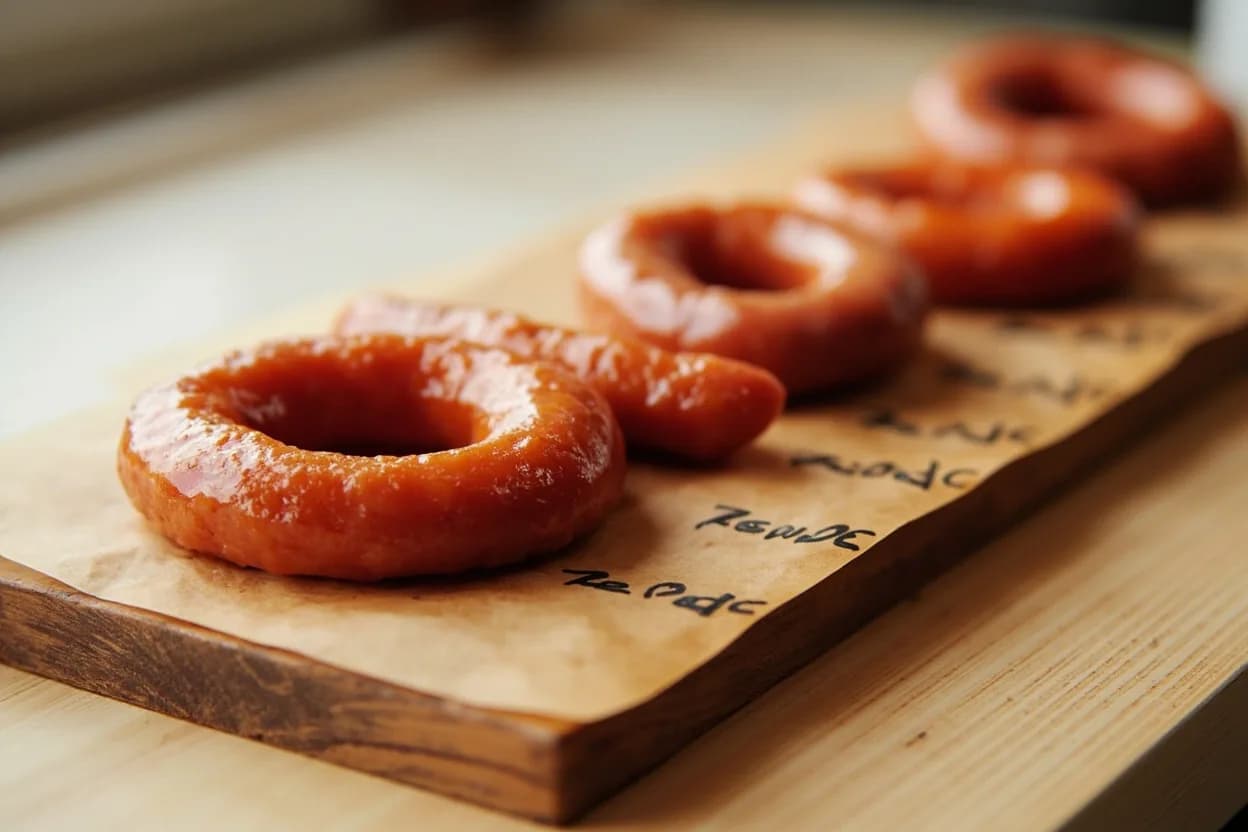
At 71°C, all protein denaturation in the ground pork filling is complete. In a cased sausage, the casing — natural (hog or sheep intestine) or collagen — has fully set and the fat within has rendered and redistributed through the meat matrix, creating the characteristic juicy burst of a properly cooked link. Myoglobin has fully oxidized, producing the uniform gray-brown interior that signals safe doneness. The Maillard reaction on the outer casing produces a deep mahogany to caramel color and snappy texture. In a patty, no internal pink remains and juices run clear.
What to look for
- No pink or reddish zones at the center of the link when cut crosswise
- Juices spurt clear (not pink or bloody) when the casing is pierced with a knife
- Natural casing is golden-brown to mahogany, taut, and snaps audibly when bitten
- Interior appears uniformly gray-brown with visible melted fat pockets
- Firm, cohesive texture throughout — no soft, raw-feeling core
How to check
- Insert a thin-tipped instant-read thermometer (e.g., Thermapen) into the end of the link from the cut tip, along the central axis — the probe must reach the midpoint of the link
- For fat links (e.g., bratwurst, Toulouse sausage), probe from the end along the long axis to reach true center
- Alternatively, cut the largest link in the batch crosswise at the center and inspect for uniform color and clear juices
- For breakfast patties, probe horizontally from the side so the probe tip reaches geometric center
Food safety
The science behind it
The underlying standard for all comminuted pork; fresh sausage is a subset
- Cured Sausage
Dry-cured, fermented, or fully cooked sausages are food-safe without additional cooking to 71°C
Responsible for the mahogany casing color and flavor complexity achieved during pan-frying or grilling
- Par-Boiling Method
Simmering sausages in liquid before finishing on a grill ensures even internal temperature before exterior browning
Appears in
References
- 1.USDA FSIS Safe Minimum Internal Temperature Chart (current)
- 2.Charcuterie: The Craft of Salting, Smoking, and Curing — Michael Ruhlman & Brian Polcyn
- 3.The Food Lab — J. Kenji López-Alt
Confidence: high
Notes
The par-boil-then-sear method
A reliable technique for thick links: simmer in water or beer at 80°C for 10–15 minutes (internal will reach 71°C easily), then finish on a hot grill or cast-iron pan for 2–3 minutes per side to develop color. This avoids the common failure of a beautifully colored exterior with a raw center that occurs when using high direct heat only.
Pink curing salt vs. raw pink interior
Some sausage recipes use sodium nitrite (pink curing salt #1) as a preservative, which fixes myoglobin in a pink state even after full cooking to 71°C — a 'cured pink' that is safe and intentional. Distinguish this from underdone raw pink by confirming the internal temperature and checking that the texture is firm throughout. Recipes specifying curing salt will have this noted.