Pasta & Grain Doneness
Fresh Pasta Doneness
Also: fresh pasta cooked, pasta fresca cotta, handmade pasta done
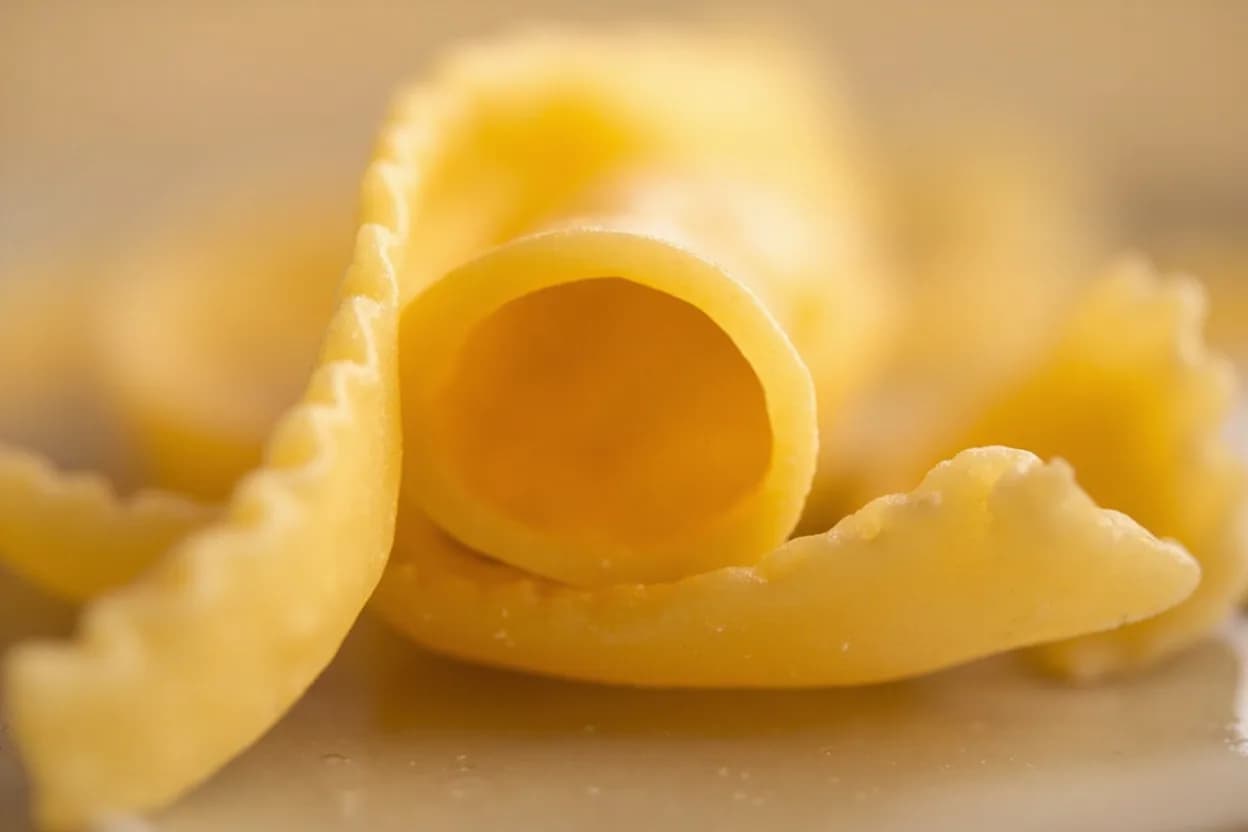
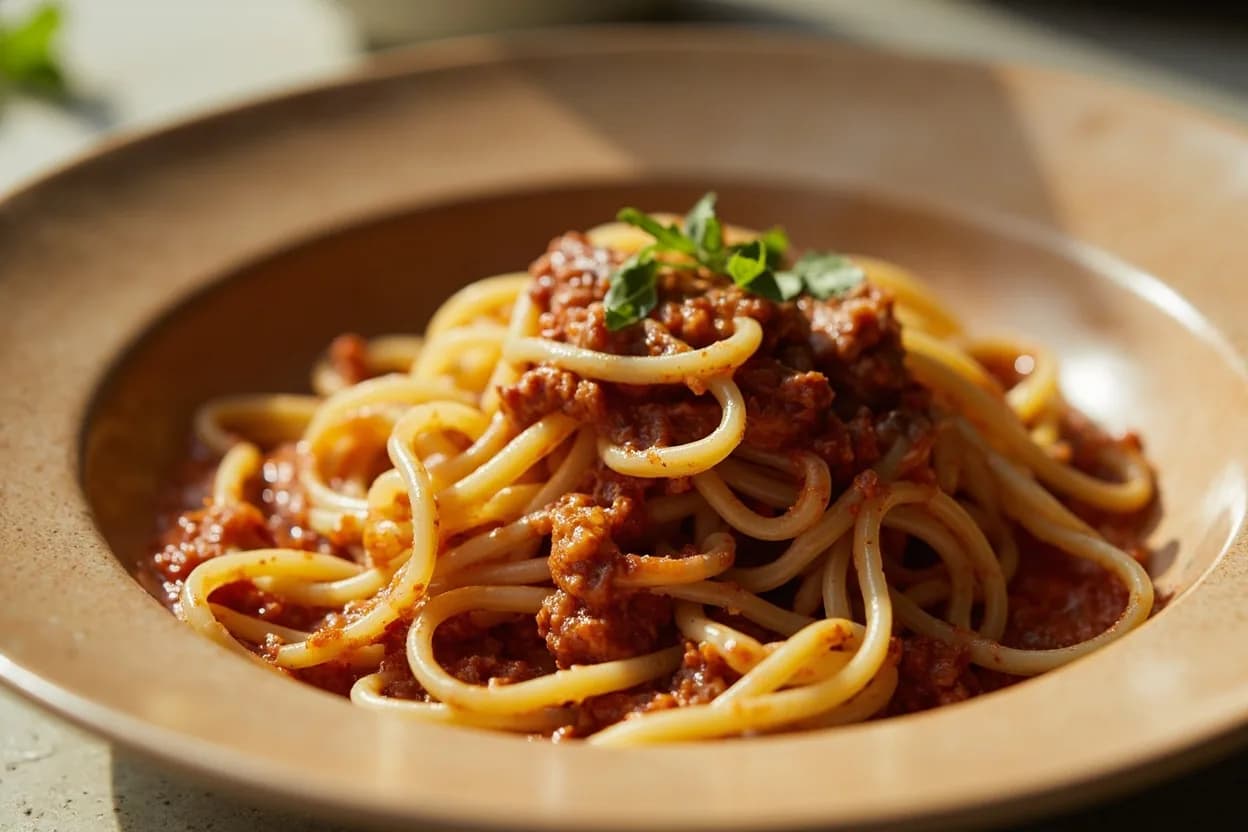
Fresh pasta is done when it turns from translucent to fully opaque and yields a tender-firm bite — typically within 1 to 3 minutes.
Fresh pasta — made with soft wheat flour and eggs (or just water) and not dried — cooks dramatically faster than dried pasta because it already contains significant moisture. Doneness is reached when the egg proteins have fully coagulated, the starch has gelatinized throughout, and the pasta is tender yet still has structure. The white-spot cross-section test used for dried pasta does not apply; instead, color change (from translucent to fully opaque), texture, and a quick bite are the primary indicators. Overcooking fresh pasta is rapid and unforgiving — the window between done and mushy can be under 30 seconds.
In photos

What happens
Because fresh pasta has been hydrated during making, starch gelatinization begins almost immediately when the pasta contacts boiling water. Simultaneously, the egg proteins (ovalbumin, conalbumin, and others) coagulate, firming the structure. The pasta transitions from a translucent, slightly raw appearance to a fully opaque, silky texture as proteins set and starch swells. Unlike dried pasta, there is no hard starchy core to dissolve progressively; the cook is nearly instantaneous and uniform. The moisture content of the pasta also means it absorbs less water from the pot and releases less starch — cooking water from fresh pasta is less starchy than dried pasta water.
What to look for
- Color changes from translucent or semi-opaque to fully opaque throughout
- Pasta floats or rises toward the surface of the water (especially filled pasta like ravioli)
- Biting through a strand reveals uniform, silky texture with no raw or gummy center
- Surface has a soft, slightly slippery feel — not tacky like dried pasta
- Texture is tender-firm, neither chewy nor collapsing
- Flavor is clean, eggy, and wheaty without any raw-dough taste
How to check
- Watch for full opacity throughout the pasta — translucent patches signal undercooking
- For filled pasta (ravioli, tortellini): wait until they float and then cook 30–60 seconds more
- Bite test: remove one piece at about 90 seconds and taste; adjust in 20-second increments
- For rolled sheets (lasagne): test a corner; it should yield cleanly under a finger press with no resistance
Carryover & resting
Fresh pasta carries over quickly in residual heat. Drain and sauce immediately, or shock thin fresh pasta (like noodles) in cold water if holding before service. Filled pastas (ravioli, tortelloni) should be handled gently — they continue cooking in hot sauce and can burst if overworked.
The science behind it
The dried-pasta doneness standard; fresh pasta targets a softer but still-structured finish rather than the firm snap of dried pasta al dente
- Egg protein coagulation
Sets the structure of egg-enriched fresh pasta; fully coagulated proteins create the silky, tender texture
Proceeds faster in fresh pasta due to existing hydration; uniformly complete at doneness
- Sfoglia
The thin rolled dough sheet used in Emilian pasta tradition; doneness in lasagne sheets requires a separate test from strand pasta
- Laminated pasta
Very thin laminated fresh pasta (0.5–1mm) can cook in under 60 seconds and overcooks even faster
Appears in
References
- 1.Mastering Pasta — Marc Vetri
- 2.Pasta by Hand — Jenn Louis
- 3.The Geometry of Pasta — Jacob Kenedy
- 4.On Food and Cooking — Harold McGee
Confidence: high
Notes
Freshness matters: dry vs. wet fresh
Fresh pasta sold at room temperature in market packs has often been partially dried and may take 3–5 minutes — closer to dried pasta timing. True freshly made pasta, used within a few hours of making, cooks in 60–90 seconds for thin cuts and 2–3 minutes for thicker shapes. Refrigerated fresh pasta from a pasta shop typically falls between these extremes.
Gluten-flour effects
Fresh pasta made with '00' soft-wheat flour is more tender and cooks faster than fresh pasta made with semolina, which retains more of the firmness characteristic of dried pasta. Many Emilian-style pasta recipes use 00 flour exclusively; southern Italian-style fresh pasta often incorporates semolina for more bite.