Pasta & Grain Doneness
Pasta Al Dente
Also: al dente, to the tooth, firm pasta
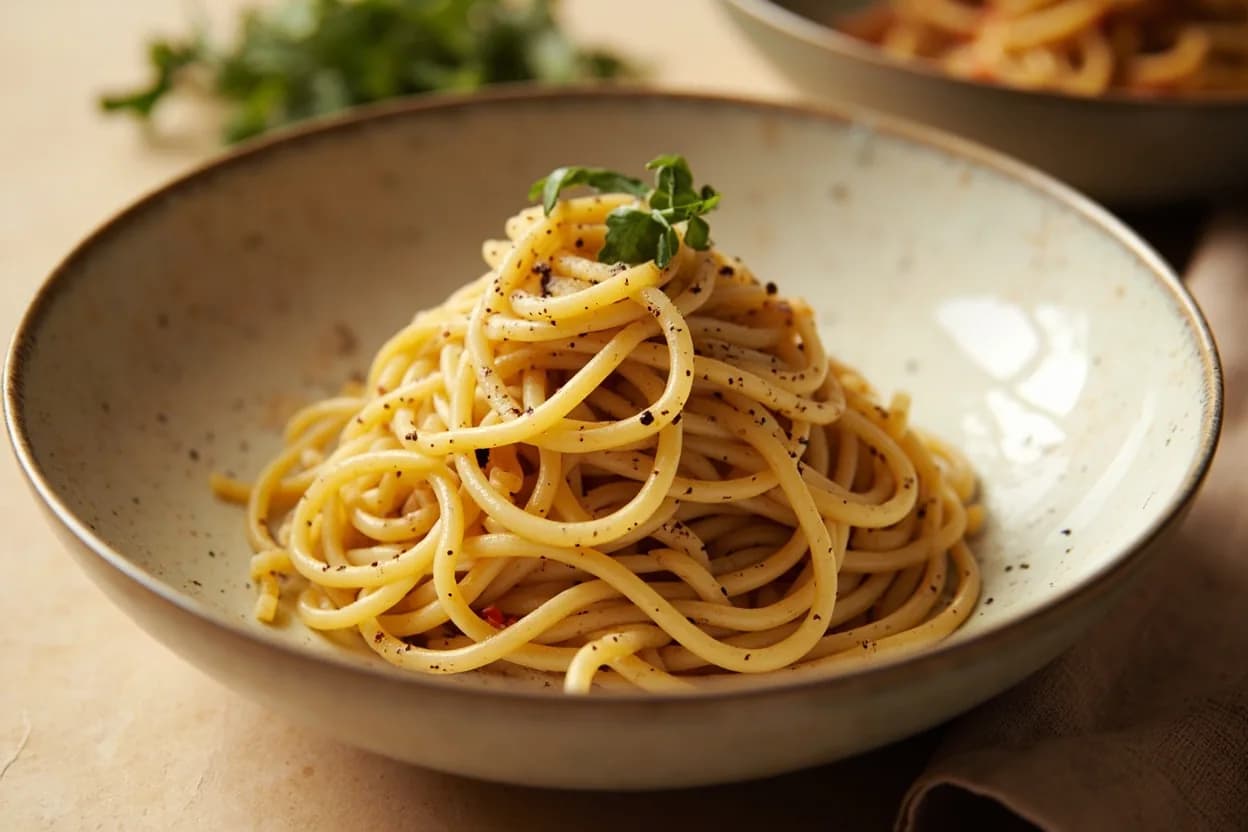
Pasta cooked until tender on the outside with a faint, firm resistance at the center — the Italian gold standard.
Al dente (Italian: 'to the tooth') describes pasta that is fully cooked through but retains a slight, pleasant resistance when bitten. There is no raw, floury core — the starch has gelatinized throughout — but the pasta has not softened to the point of mushiness. A cross-section cut reveals no white spot in dried pasta. The texture is the culinary target for virtually all Italian dried pasta traditions, and increasingly for fresh pasta as well.
In photos

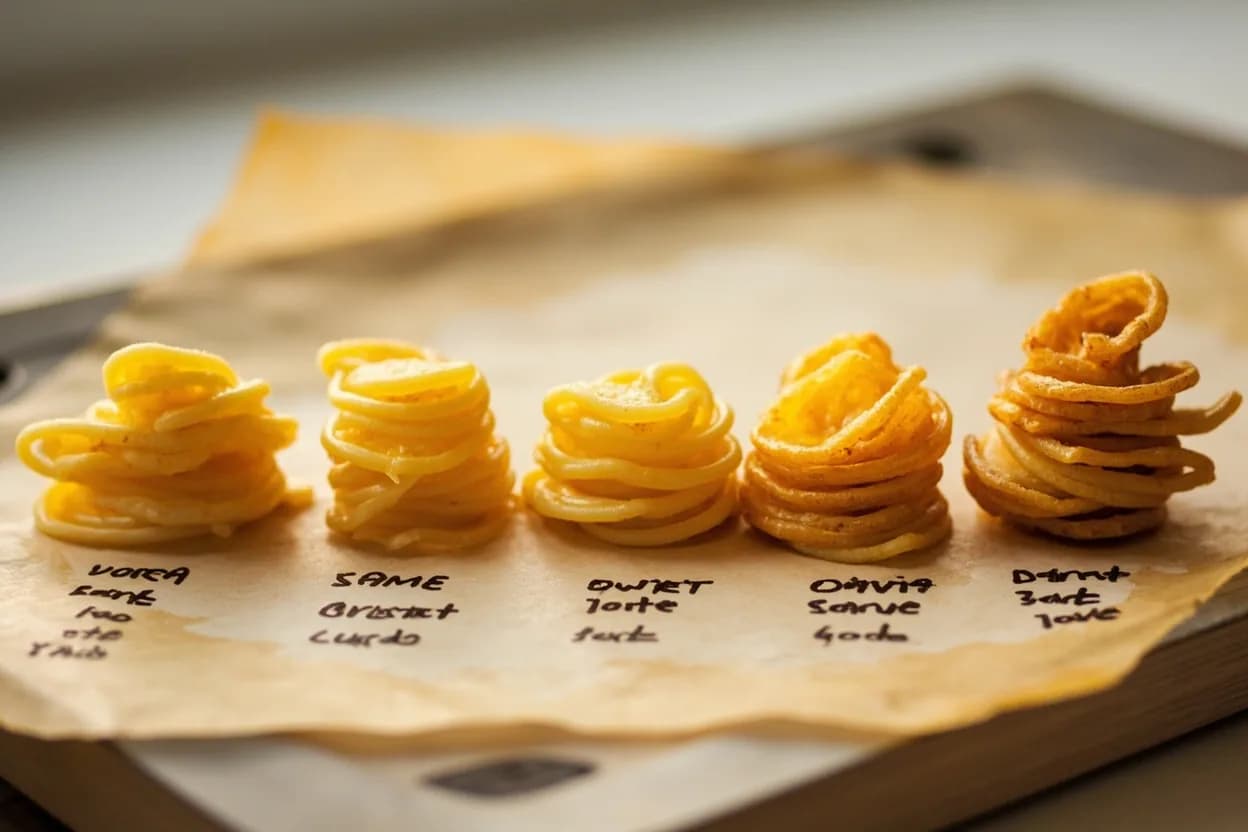
What happens
During boiling, water penetrates the pasta from the outside in, hydrating the starch granules and causing them to swell and gelatinize. The protein matrix (gluten network) simultaneously firms and sets. Al dente is achieved when the outermost starch is fully gelatinized and the gluten matrix is set, while the very center still has slight structural integrity. The starch at the core has absorbed sufficient water to be cooked but has not lost all resistance. Residual starch on the surface also plays a role in sauce adhesion — overcooked pasta leaches too much starch into the water and becomes slick.
What to look for
- A single strand or piece bites cleanly with a slight resistance, no squish or collapse
- Cross-section of a thick pasta shows no white or chalky center (white spot test)
- Pasta holds its shape when lifted from the water with tongs
- Surface is slightly tacky, not slippery or slimy
- Chewing releases a clean, wheaty flavor without raw starch taste
- Pasta curves or flexes slightly rather than breaking or flopping
How to check
- Start tasting 1–2 minutes before the package time; cut or bite a piece and inspect cross-section
- White spot test: cut a thick pasta in half — a white chalky center means underdone; no white spot means al dente or beyond
- Throw a strand against a wall (folk test) — it sticks when cooked, but this doesn't distinguish al dente from overdone; use the bite test instead
- For finishing in sauce: pull pasta 1–2 minutes before al dente and finish in the pan with sauce and pasta water
Carryover & resting
Pasta continues cooking after being drained, especially in a hot colander or when tossed in a hot sauce. For pasta that will be finished in a pan with sauce (pasta risottata technique), pull it slightly underdone from the boiling water — typically 1–2 minutes before the package's suggested time.
The science behind it
The physical process that transforms raw starch into cooked, digestible starch; must complete at center for pasta to be done
- Gluten network
The protein matrix in wheat pasta that provides chew and structure; sets during cooking
- Pasta risottata
Finishing pasta in a pan with sauce and pasta water, requiring undercooking in the boiling step
- Pasta water starch
Starchy cooking water is used to emulsify and bind sauces; properly al dente pasta releases the right amount
Fresh pasta cooks faster and the white-spot test does not apply; al dente for fresh pasta is a softer target
Appears in
References
- 1.On Food and Cooking — Harold McGee
- 2.The Silver Spoon (La Cucchiaio d'Argento) — Phaidon Press
- 3.Pasta by Hand — Jenn Louis
- 4.Mastering Pasta — Marc Vetri
Confidence: high
Notes
Shape and thickness affect timing
Al dente is not a fixed time — it varies enormously by pasta shape, thickness, and whether the pasta is fresh or dried. Thin spaghettini may reach al dente in 5 minutes; thick rigatoni or paccheri may take 14–16 minutes. Whole-wheat and legume-based pastas have different gelatinization curves and may never achieve the same snap as semolina pasta.
Altitude adjustment
At high altitude, water boils at a lower temperature, which slows cooking. Pasta at altitude may require several additional minutes to reach al dente, and the white-spot test becomes even more important than relying on time.