Cheese & Dairy Doneness
Paneer Grill Point: Crust Without Crumble
Also: paneer sear temperature, fried paneer doneness, paneer tikka char point
High heat above 200°C drives Maillard browning on paneer's exterior while the acid-set interior stays firm and moist — the narrow window between a golden crust and a chalky, crumbled block.
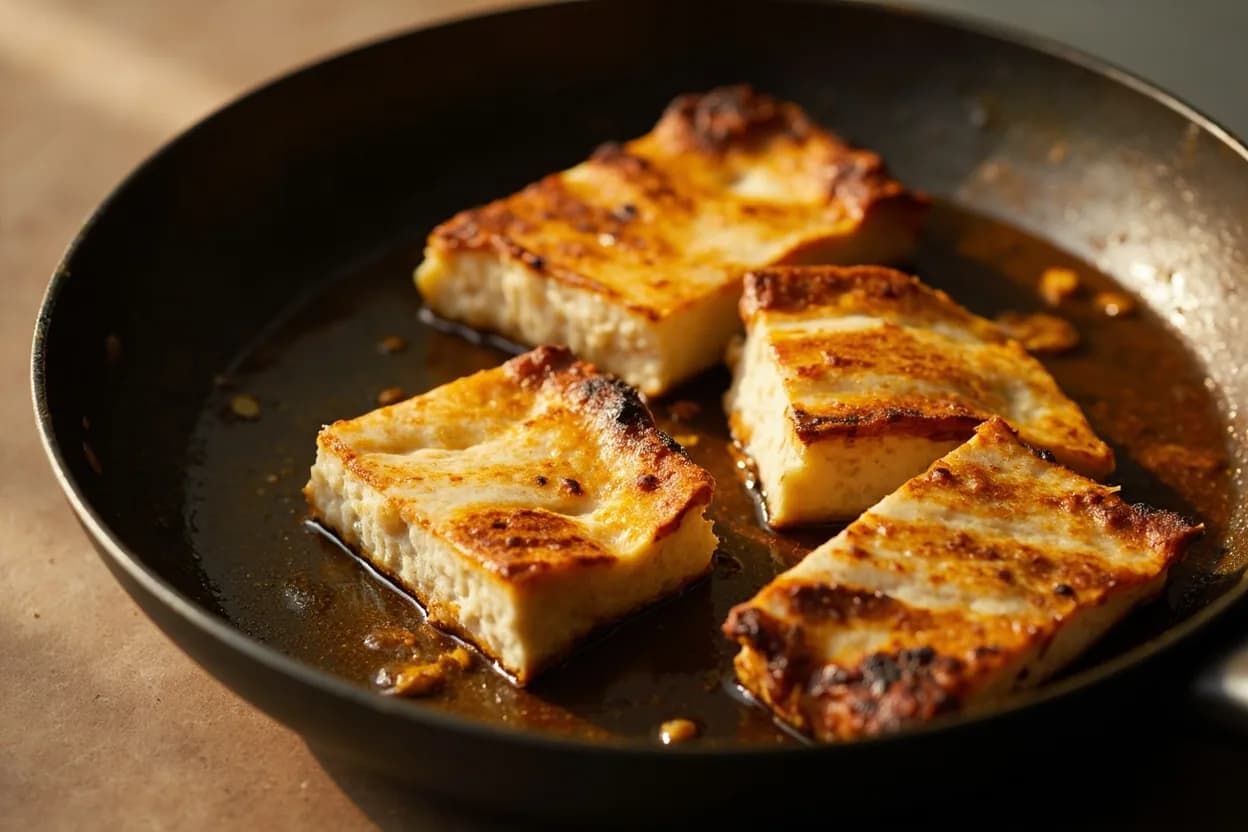
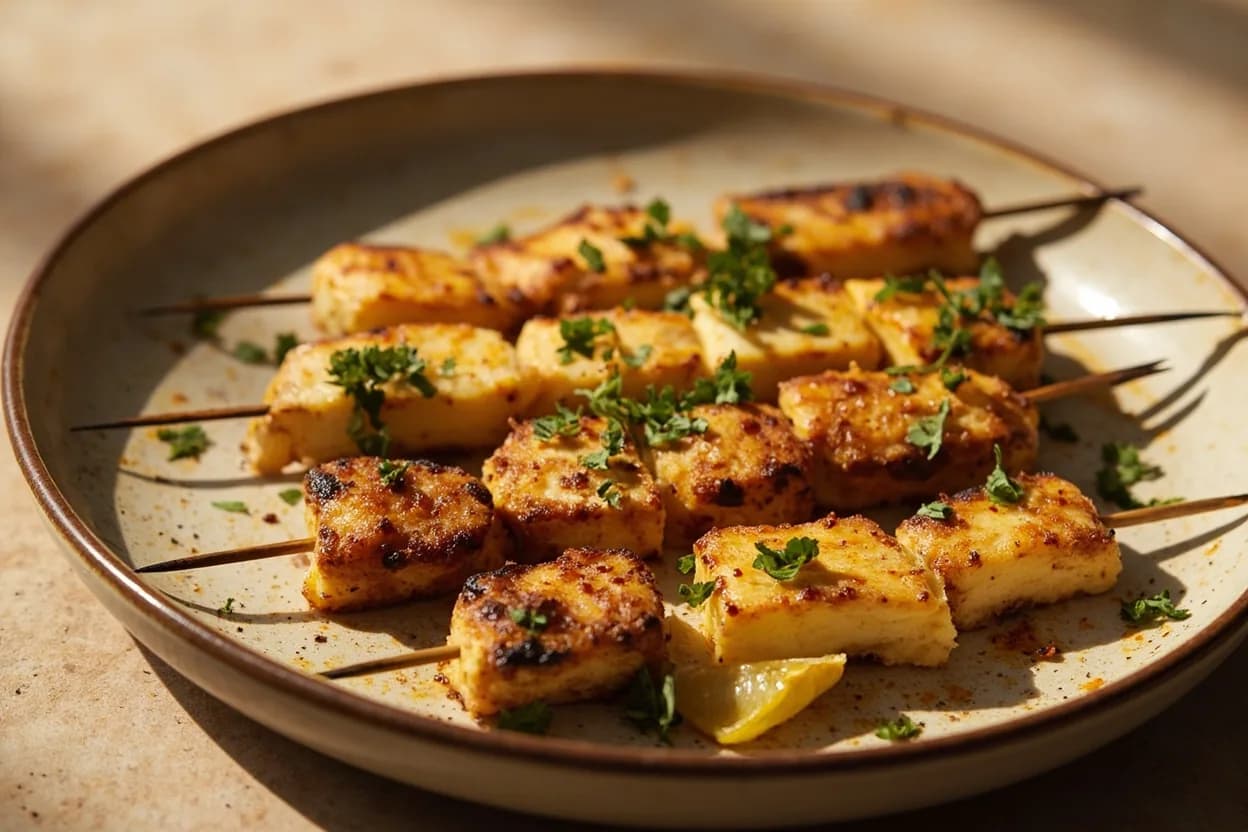
Paneer is an acid-coagulated fresh cheese pressed into a block; its protein structure (tightly bonded casein, not rennet-relaxed) means it will not melt under normal cooking temperatures. When a surface temperature above 200°C (392°F) is applied — via cast iron, grill grate, or tandoor — moisture rapidly evaporates from the exterior and the casein undergoes Maillard browning, producing a firm, golden-to-charred crust. The interior, protected by the crust, retains moisture and softens slightly to a tender, milky texture. Overcooking (extended time at high heat, or re-heating) drives off interior moisture and causes the protein matrix to contract and harden, resulting in a tough, crumbly, or rubbery cube.
In photos

What happens
Paneer's casein structure was set at low pH (~4.6) using lemon juice or vinegar. Unlike rennet-set cheeses, these acid bonds do not relax significantly with heat — paneer retains its structural integrity up to and well beyond 200°C. At the surface, intense dry heat drives off surface moisture within seconds, allowing the temperature to climb rapidly. At 140–165°C the Maillard reaction begins on the dry protein-rich surface: amino acids react with reducing sugars to produce hundreds of brown pigment molecules and aromatic compounds (nutty, caramel, savoury). As the interior reaches 65–75°C it softens and becomes silky without flowing. Beyond this window — if heat is sustained or the cube is thin — internal moisture loss causes the matrix to tighten, producing that familiar grainy, dry-crumble texture that frustrates home cooks.
What to look for
- Distinct sizzle when paneer hits the oiled pan — if there is no immediate sizzle, the pan is not hot enough
- Golden-to-amber crust develops on the contact surface within 60–90 seconds at high heat
- Light char spots at edges and high points indicate ideal grill temperature
- Interior remains creamy-white and gives slightly when pressed with a fingertip — not chalky or dry
- Gentle spring-back when pressed: a firm but yielding resistance, not rigid and hard
- Over-cooked signal: cube crumbles at the edges when handled or the interior looks white and dry rather than slightly translucent
How to check
- Pan/grill temperature check: a drop of water should evaporate instantly on contact — surface must be dry-hot before adding paneer
- Timing: 60–90 seconds per side on a properly preheated cast iron or grill grate at high heat is typically sufficient
- Press test: gently press the cube with a spatula; it should feel firm with slight give — not hard as a rubber eraser
- Probe (for thick pieces or blocks): insert an instant-read thermometer; interior at 65–72°C is ideal
- Colour: uniform golden-brown on seared face; do not flip until the crust releases naturally from the pan without tearing
Carryover & resting
Paneer carries over minimally compared to meat, but grilled paneer continues to lose moisture if left in residual heat. Remove to a plate immediately after searing and serve promptly, or submerge in a warm sauce (palak paneer, matar paneer) where the sauce re-hydrates the exterior and prevents further moisture loss.
The science behind it
The primary source of colour and flavour in grilled or fried paneer — requires a dry, high-temperature surface
- Acid Coagulation
Paneer's non-melting property stems from acid-set curd bonds; this same structure enables grilling without collapse
Contrast with mozzarella: rennet-set cheeses lose structural integrity above 60°C while acid-set paneer retains it
- Tandoor Cooking
Traditional paneer tikka uses a tandoor at 400–480°C; the extreme radiant heat chars the surface in seconds while the interior barely cooks
- Moisture Loss in Proteins
Extended heat drives off the interior moisture that gives paneer its characteristic tender bite; the mechanism mirrors overcooking in meat
Appears in
References
- 1.The Food Lab — J. Kenji López-Alt (W. W. Norton, 2015), Cheese chapter — acid-set vs rennet-set
- 2.On Food and Cooking — Harold McGee (Scribner, 2004), Dairy: fresh acid-set cheeses
- 3.Indian-ish — Priya Krishna (Houghton Mifflin Harcourt, 2019)
- 4.Madhur Jaffrey's Indian Cooking — Madhur Jaffrey (Barron's, 1983)
Confidence: high
Notes
The marinade's role
In paneer tikka, cubes are coated in a yogurt-spice marinade before grilling. The yogurt deposits a thin layer of milk proteins and moisture on the surface that, when hit with high heat, browns rapidly via Maillard while simultaneously insulating the paneer interior from the most extreme temperatures. This is why marinated paneer tikka achieves a more complex, charred-yogurt crust than plain paneer placed directly on a grill.
Homemade vs. commercial paneer
Freshly made paneer pressed for 30–60 minutes has higher moisture content and browns beautifully with a tender interior. Commercial paneer (vacuum-packed, often 4–8% lower moisture) is denser and can become rubbery faster. Soaking commercial paneer in warm water for 20–30 minutes before cooking partially rehydrates it and dramatically improves the final texture when grilled or fried.