Cheese & Dairy Doneness
Pasta Filata Curd Stretching Temperature
Also: mozzarella stretching temperature, spun-curd temperature, filata temperature
The 74–79°C water temperature at which acidified curd becomes plastic and stretchable, enabling the spinning and pulling that defines mozzarella, provolone, and string cheese.
Pasta filata ('spun paste' in Italian) is a family of cheeses — mozzarella, scamorza, provolone, caciocavallo, oaxaca cheese, and string cheese — whose defining step is immersing acidified curd in hot water or whey at 74–79°C (165–175°F), then kneading and stretching the molten mass into a smooth, fibrous structure. Below this temperature range the curd is rubbery and tears rather than stretches; above it the curd melts into an unworkable paste. The precise combination of pH (5.1–5.3 at stretching time) and water temperature governs whether the casein network will slide and realign into parallel fibers or simply fracture.
In photos

What happens
Pasta filata curd must reach a pH of roughly 5.1–5.3 before stretching — acidification (via starter culture or direct addition of citric acid in fast-mozzarella recipes) solubilizes the colloidal calcium phosphate bridges that normally hold casein micelles together. When this acid curd is immersed in 74–79°C water, residual calcium bonds melt sufficiently to allow casein chains to flow past one another and reorient into long, parallel fibrils. The result is a viscoelastic melt: pulling the mass draws fibers into alignment, creating the characteristic layered, fibrous texture. If the water is too cool (below ~70°C), calcium bridges remain too intact for the protein matrix to flow; if too hot (above ~82°C), protein denatures and the emulsion breaks, releasing fat.
What to look for
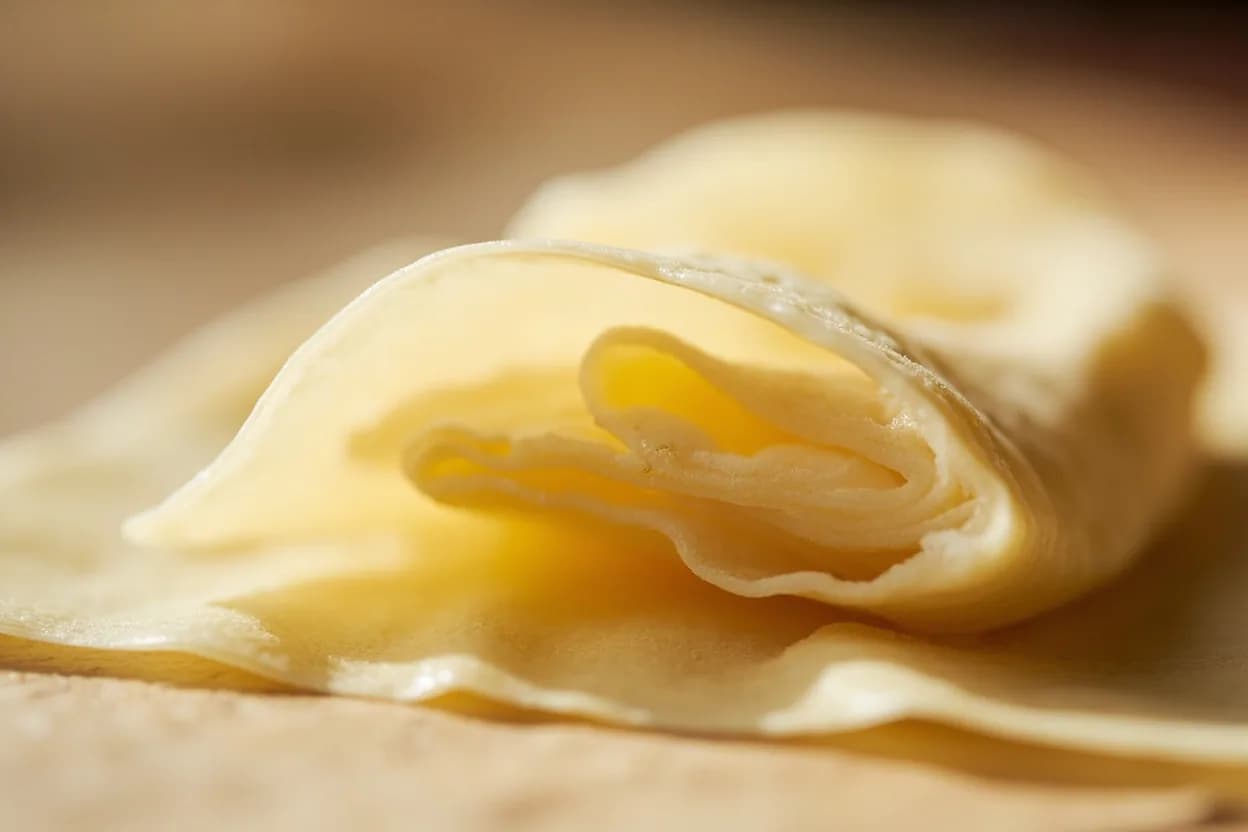
- Properly heated curd stretches smoothly in a continuous sheet without tearing when pulled; it feels like warm taffy
- The surface of the curd mass becomes shiny and translucent at the correct temperature
- Unduly cool curd will tear and crumble at the edges rather than draw out in a clean strand
- Overheated curd becomes greasy and limp, pooling fat at the surface of the hot water
- Correctly stretched mozzarella emits a faint squeaking resistance as fibers slip against each other
How to check
- Use a probe thermometer to verify the hot water or whey bath is at 74–79°C before submerging curd
- Perform a 'stretch test': lift a small piece of heated curd and pull slowly — it should draw out to at least 30 cm without snapping
- Check curd pH with a calibrated pH meter or indicator strip at the moment of stretching; target 5.1–5.3
- Maintain water temperature with continuous heating; the curd mass absorbs heat and will cool the bath, especially for large batches
The science behind it
- Curd acidification pH
pH 5.1–5.3 is inseparable from temperature control — correct temp with wrong pH will not produce a stretchable curd
- Colloidal calcium phosphate
Acid dissolves these bridges, making the casein network fluid enough to stretch at heat
- Citric acid mozzarella
Direct-acid recipes (citric acid added to cold milk before rennet) achieve stretching pH in 30 minutes instead of several hours of starter-culture fermentation
- Oaxaca cheese
Mexican pasta filata cheese ('quesillo') stretched at the same temperatures as mozzarella and wound into a ball; a direct New World descendant of Italian techniques
- String cheese
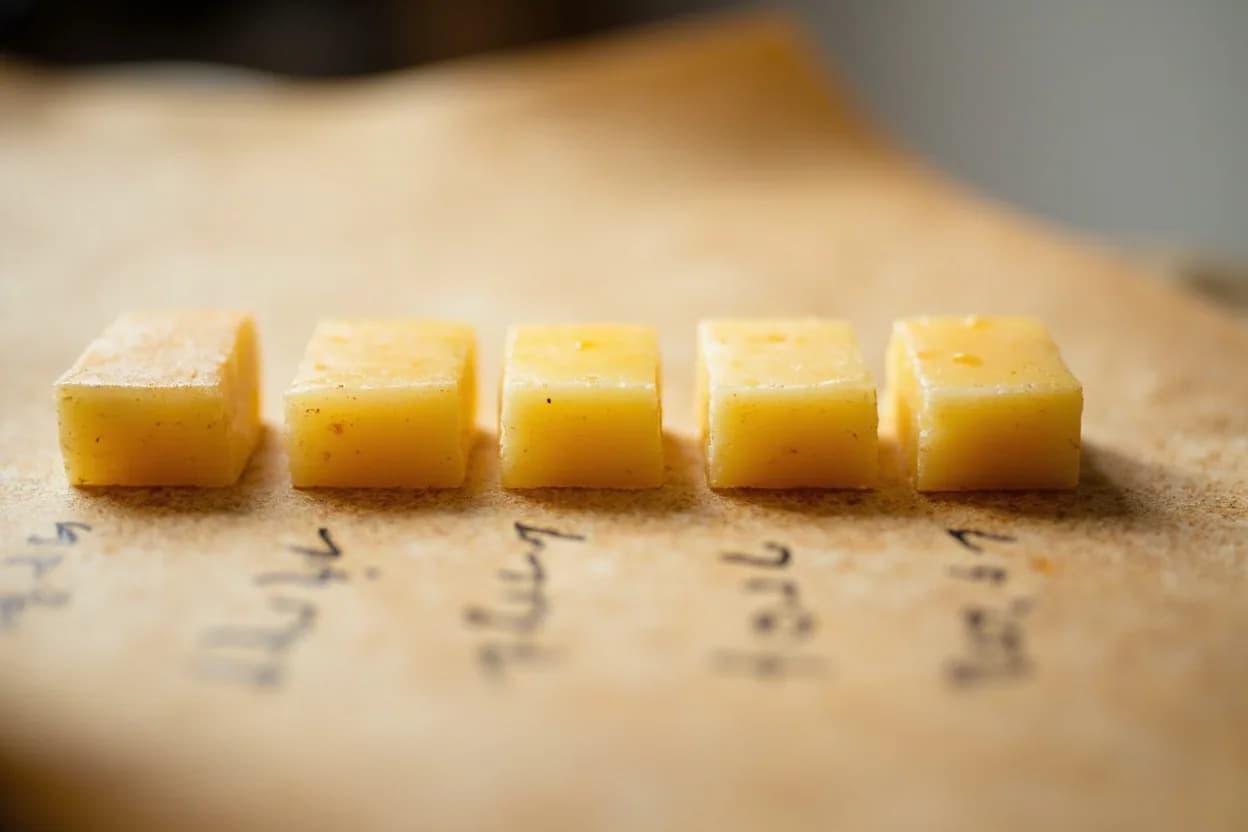
Mozzarella-type pasta filata stretched and extruded through a small die, aligning fibers so strongly that it peels into strands
Appears in
References
- 1.Cheese and Fermented Milk Foods — Frank Kosikowski & Vikram Mistry (3rd ed., 1997)
- 2.Technology of Cheesemaking — Barry Law & Adnan Tamime, eds. (2nd ed., 2010)
- 3.American Mozzarella — P.S. Kindstedt, Pasta Filata Cheeses chapter, in Cheese: Chemistry, Physics and Microbiology Vol. 2, Fox et al. (3rd ed., 2004)
Confidence: high
Notes
Hand-stretch vs. mechanical
Traditional Campanian mozzarella makers ('pizzaioli del latte') stretch by hand in small portions, folding the mass back on itself repeatedly to develop the layered structure. Industrial lines use counter-rotating mechanical arms that replicate this action at scale. Both methods depend on the same 74–79°C window.
Brining and cooling
Immediately after shaping, pasta filata cheeses are plunged into cold, salted brine or ice water. This quench sets the fibrous protein structure and prevents further acid development. Fresh mozzarella meant for same-day consumption is brined in mild (2–3%) salt; aged forms like caciocavallo use stronger brine to support rind formation.