Fermentation & Culturing Temperatures
Pasteurization Threshold
Also: LTLT pasteurization, HTST pasteurization, vat pasteurization, flash pasteurization, milk pasteurization temperature
The minimum time-temperature combinations — 63°C/145°F for 30 minutes or 72°C/161°F for 15 seconds — required to eliminate pathogenic bacteria in milk and other liquids while preserving nutritional quality.
Pasteurization is the targeted application of heat sufficient to reduce pathogenic microorganisms (Salmonella, Listeria, E. coli O157:H7, Campylobacter, Mycobacterium tuberculosis) to safe levels without full sterilization. Two standard protocols exist: Low-Temperature Long-Time (LTLT or vat pasteurization) at 63°C (145°F) for 30 minutes, and High-Temperature Short-Time (HTST or flash pasteurization) at 72°C (161°F) for 15 seconds. Both achieve equivalent 5-log reductions in pathogen load. The threshold is a cumulative lethality function — temperature and time are inversely proportional.
In photos

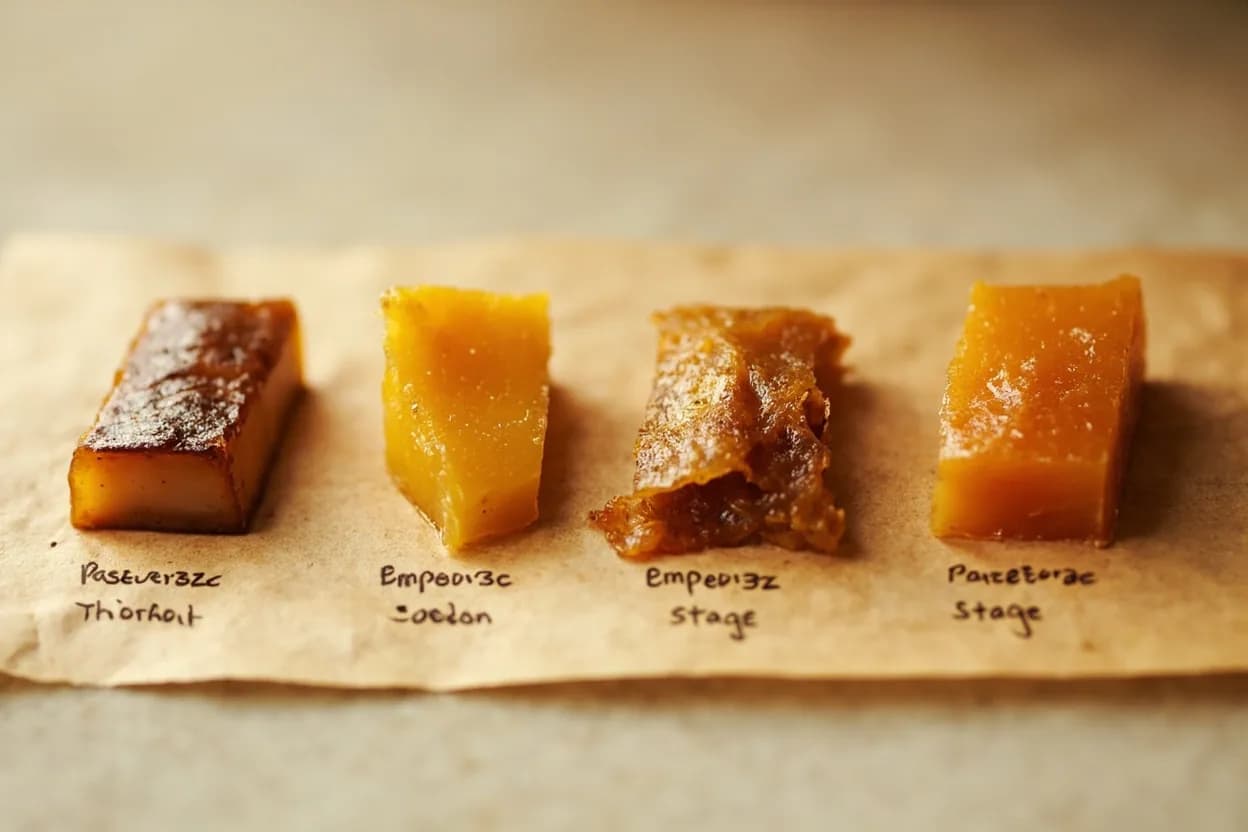

What happens
Heat denatures bacterial enzymes and disrupts cell membranes at sub-boiling temperatures. At 63°C, vegetative pathogens (including Coxiella burnetii, the most heat-resistant non-spore pathogen in milk) are inactivated over the 30-minute hold. At 72°C, the same lethality is achieved in 15 seconds because bacterial death accelerates exponentially with temperature (for most pathogens, every 7°C increase roughly halves the required time). Milk proteins begin partial denaturation: whey proteins (lactalbumin, lactoglobulin) show minor structural changes at HTST that slightly alter texture; caseins are largely unaffected. Cream-line formation in non-homogenized milk is reduced. Alkaline phosphatase, a native milk enzyme whose inactivation mirrors pathogen death, is destroyed — its absence confirms successful pasteurization.
What to look for
- No perceptible change in flavor or color when HTST is correctly applied — pasteurized milk tastes nearly identical to raw
- LTLT (vat) pasteurization may produce a very slight cooked note at the upper end of the hold temperature
- UHT pasteurization (135°C) produces a distinctly cooked, slightly caramelized flavor due to Maillard reactions
- Cream line is reduced or absent after pasteurization and homogenization
- Alkaline phosphatase test (blue = positive = under-pasteurized) is the standard industrial confirmation
How to check
- Use a calibrated NIST-traceable thermometer with ±0.5°C accuracy — critical for regulatory compliance
- For LTLT: measure temperature continuously at the coolest point of the vat for the full 30-minute hold
- For HTST: flow-diversion valve must activate automatically if milk exits the holding tube below 72°C
- Alkaline phosphatase (ALP) test on the finished product: negative result confirms successful pasteurization
- For home cheesemaking: hold milk at 63°C with constant stirring and a kitchen timer set to 30 minutes minimum
Food safety
The science behind it
- Alkaline Phosphatase Test
Enzyme naturally present in raw milk; inactivation at pasteurization temperatures serves as the standard verification marker
- UHT Processing
Ultra-High Temperature treatment (135°C/275°F × 2 sec) achieves commercial sterility, enabling shelf-stable milk without refrigeration
- Thermal Death Time
Mathematical model describing the relationship between temperature, time, and microbial lethality underlying all pasteurization standards
- Coxiella burnetii
The most heat-resistant non-spore pathogen in milk; its inactivation defines the minimum pasteurization requirement
After pasteurization, milk must be cooled to 30–35°C before adding cheese starter cultures
Appears in
References
- 1.FDA Grade 'A' Pasteurized Milk Ordinance (PMO), 2021 Revision — US Food & Drug Administration
- 2.On Food and Cooking — Harold McGee (Scribner, 2004)
- 3.Dairy Science and Technology — P. Walstra, J.T.M. Wouters, T.J. Geurts (CRC Press, 2006)
- 4.Principles of Food Sanitation — Norman G. Marriott, Robert B. Gravani (Springer, 2006)
Confidence: high
Notes
Louis Pasteur's original process
Pasteur developed the process in the 1860s to stabilize wine and beer, not milk. He demonstrated that heating wine to 55–60°C for brief periods eliminated souring bacteria without damaging flavor. Milk pasteurization was mandated progressively in US cities from the 1890s through the 1940s, driven by public health campaigns against tuberculosis and typhoid fever transmitted through raw milk.
Implications for cheesemaking
Pasteurization eliminates most of the indigenous microbial flora of raw milk, which affects the complexity of aged cheeses — the reason some traditional cheesemakers and PDO regulations (for Comté, Gruyère AOC, Parmigiano-Reggiano, and many others) mandate raw milk. Cheesemakers using pasteurized milk compensate by carefully selecting and adding back specific commercial starter cultures.