Starch & Specialty Doneness
Pastry Cream Set Point
Also: crème pâtissière set point, pastry cream doneness, pastry cream thickening temperature
Crème pâtissière must reach at least 82°C — and briefly boil — so its starch fully gelatinizes and its amylase enzymes are destroyed, giving a cream that sets firm on cooling.
Pastry cream (crème pâtissière) is a cooked custard thickened simultaneously by egg proteins and starch (typically cornstarch or flour). Its critical threshold is approximately 82°C (180°F), at which point starch granules complete gelatinization. Unlike a plain egg custard, which curdles if it boils, pastry cream must be brought briefly to a boil (around 100°C) because the starch protects egg proteins from denaturing and simultaneously the brief boil destroys alpha-amylase enzymes present in raw egg yolks that would otherwise liquefy the finished cream during storage — a defect called 'running back.'
In photos
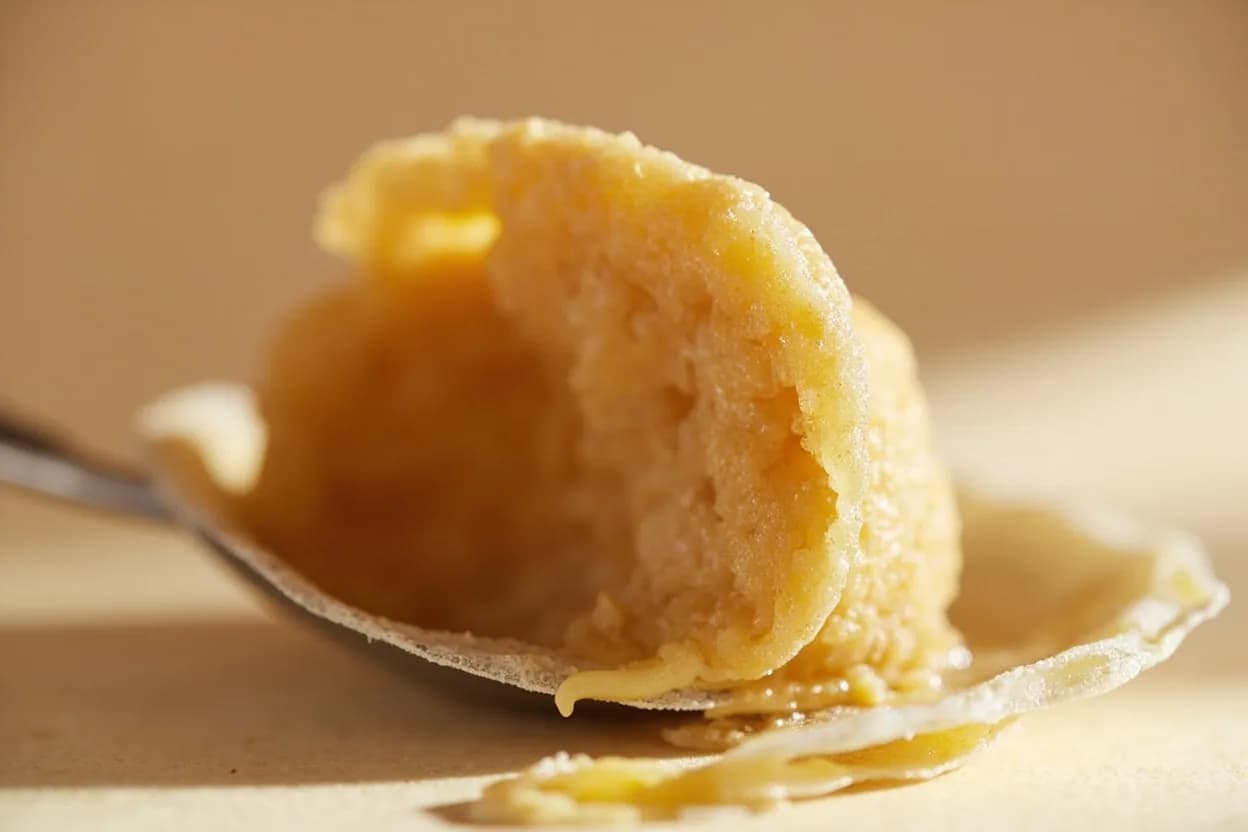
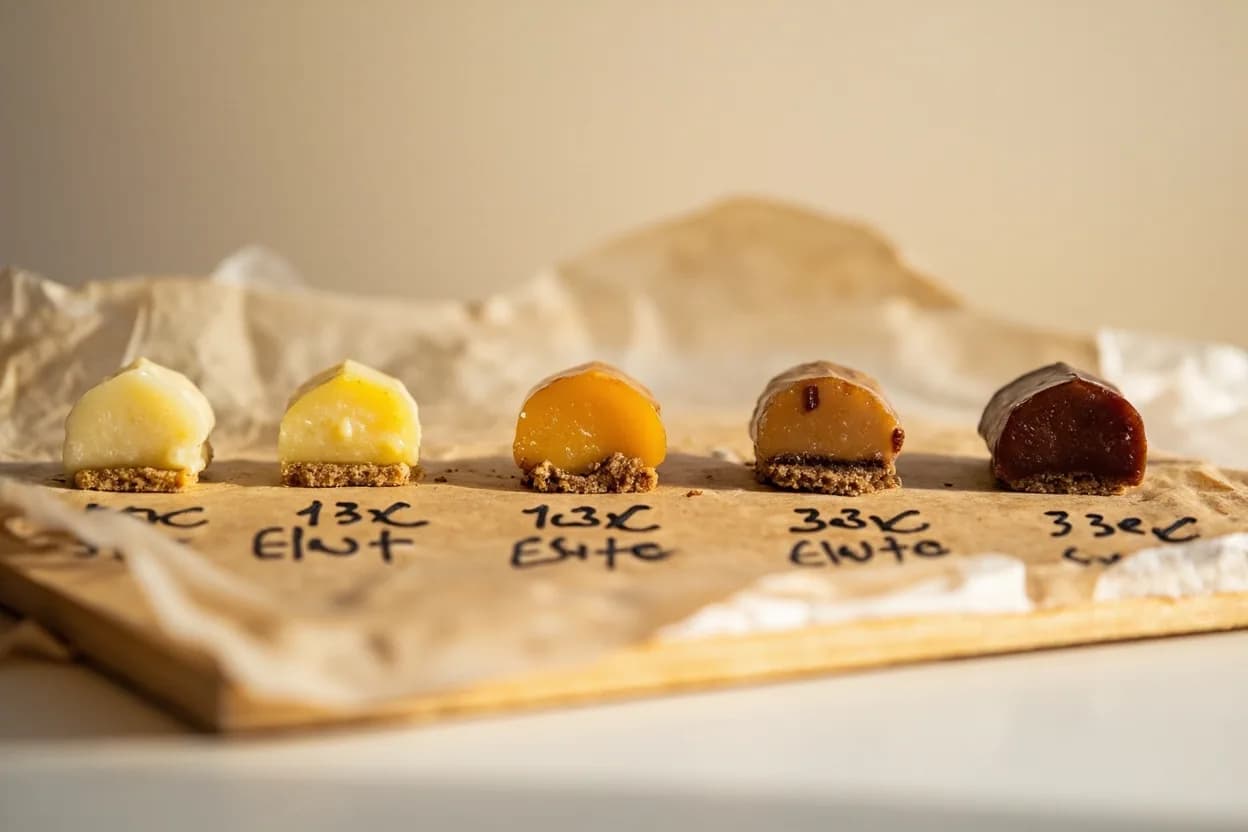
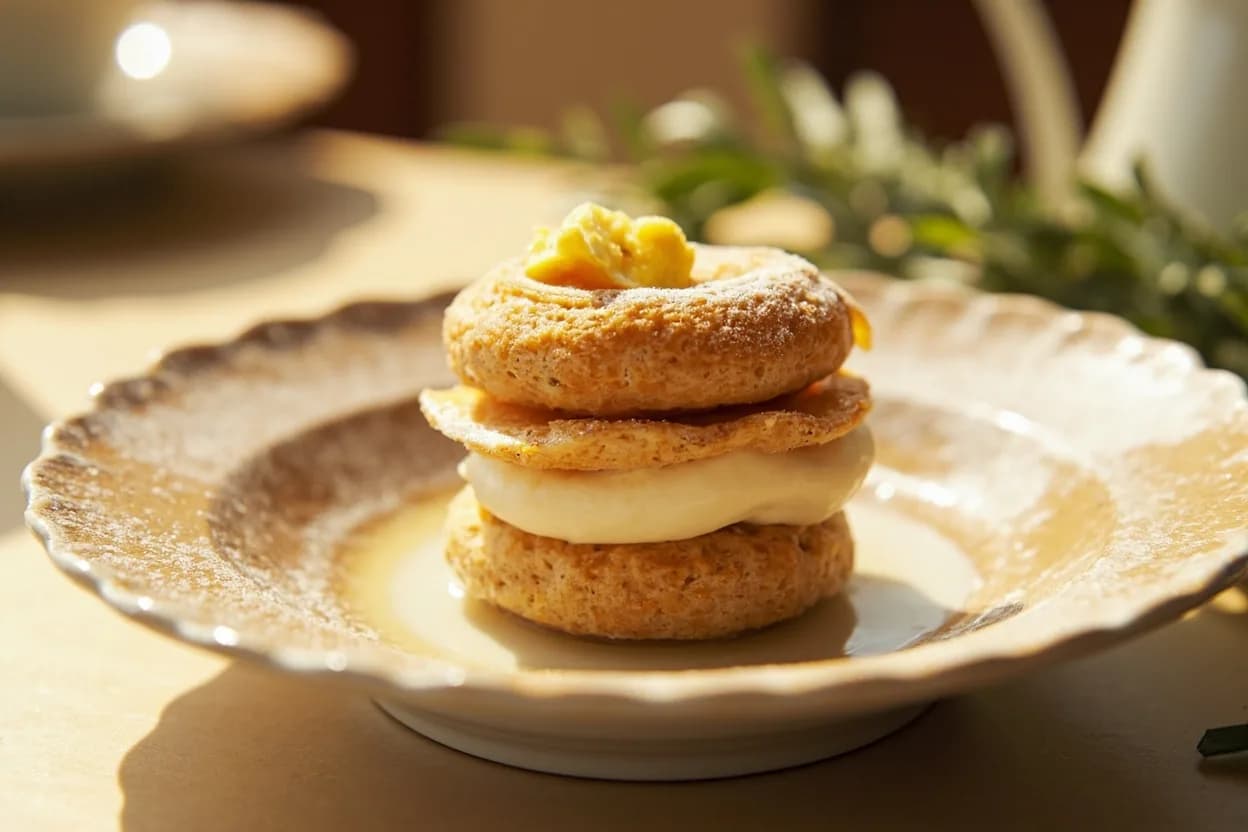
What happens
Below 82°C, cornstarch granules have swollen but not fully ruptured, leaving a starchy, under-gelatinized texture that may thin during storage as alpha-amylase degrades the starch chains. At 82°C, the starch granule network fully gelatinizes, creating a thick, glossy paste. Egg yolk proteins (primarily lipoproteins and phosvitin) contribute additional body. At full boil, two things occur simultaneously: any residual starch is fully cooked out (eliminating raw starch flavor) and alpha-amylase, which is active up to about 70–75°C, is completely denatured. The cream must be stirred constantly during boiling to prevent scorching. On cooling to below 15°C, the starch network contracts and the cream sets to a firm, sliceable consistency.
What to look for
- Cream thickens visibly and begins to 'heave' with large, slow bubbles rather than a rolling boil — this signals gelatinization is complete
- Finished cream coats a spoon thickly and a clean line drawn through the coating does not fill in
- Glossy, smooth sheen — not dull or lumpy — indicates properly hydrated starch
- A faint, clean dairy-egg aroma replaces the raw starchy smell when properly cooked
- On cooling, surface forms a thin skin unless covered with plastic wrap pressed directly against it
How to check
- Use an instant-read thermometer: target 82°C minimum; allow to boil for 1–2 minutes while stirring vigorously
- Nappe test: draw a finger across the back of a spoon — the line should hold clean
- Transfer a small amount to a cold plate; it should set to a firm, sliceable mass within 3–5 minutes
- Check that no watery liquid pools under the cream on the cold plate (a sign of under-gelatinization)
Food safety
Carryover & resting
There is no meaningful carryover cooking effect in pastry cream because it is stirred constantly and transferred immediately. The priority is rapid chilling, not resting.
The science behind it
The core mechanism that thickens pastry cream; cornstarch gelatinizes fully above 82°C, flour-thickened cream above 85°C
- Alpha-Amylase Destruction
Egg yolk enzyme that liquefies starch if pastry cream is not boiled; responsible for 'running back' defect
- Custard Coagulation Temperature
Plain custards must not boil (eggs curdle at 85°C without starch protection); pastry cream reverses this constraint
- Diplomat Cream
Pastry cream lightened with whipped cream; must be made with well-set base to hold structure after folding
- Tempering Eggs
Technique used when making pastry cream to prevent scrambling when hot milk meets cold yolks
Appears in
References
- 1.The Professional Pastry Chef — Bo Friberg (Wiley, 4th ed., 2002)
- 2.On Food and Cooking — Harold McGee (Scribner, revised 2004)
- 3.Bouchon Bakery — Thomas Keller & Sebastien Rouxel (Artisan, 2012)
- 4.Larousse Gastronomique (Hamlyn, 2009 English edition)
Confidence: high
Notes
Why pastry cream can boil when plain custard cannot
In a plain crème anglaise, egg proteins begin to aggregate and curdle irreversibly above about 85°C. In pastry cream, the starch granules physically coat the egg protein strands and interfere with their bonding, raising the curdling threshold above 100°C. This is why classic technique says to boil vigorously for a full minute: the starch protects the eggs while simultaneously completing its own gelatinization.
Flour vs. cornstarch
Cornstarch produces a cleaner, more translucent cream with a lighter texture; it requires a shorter boil (1–2 minutes). Flour-thickened pastry cream is cloudier and more robust, tolerates longer baking inside pastries without weeping, and has a traditional texture preferred by many French pâtisseries. Flour's gelatinization temperature is slightly higher (85–90°C), and the cream should boil for at least 2–3 minutes to cook out the raw flour flavor.