Bread & Dough Doneness
Pâte à Choux Dryout Stage
Also: choux dryout, panade drying, choux pulling stage, film stage
The moment choux dough pulls cleanly from the pan walls and a dry starchy film coats the base — the essential pre-egg step.
The dryout stage is a critical intermediate step in making pâte à choux: after the flour is added to the boiling butter-water mixture, the dough is stirred vigorously over medium heat until it forms a cohesive ball that no longer sticks to the pan sides, a thin starchy film (a panade) forms on the pan bottom, and rising steam visibly escapes. This typically takes 2–4 minutes of active stirring and brings the mass to roughly 74–80°C (165–176°F) internally. The dryout drives off excess moisture from the dough body so that when eggs are beaten in, the paste reaches the correct hydration for maximum steam-leavening in the oven.
In photos
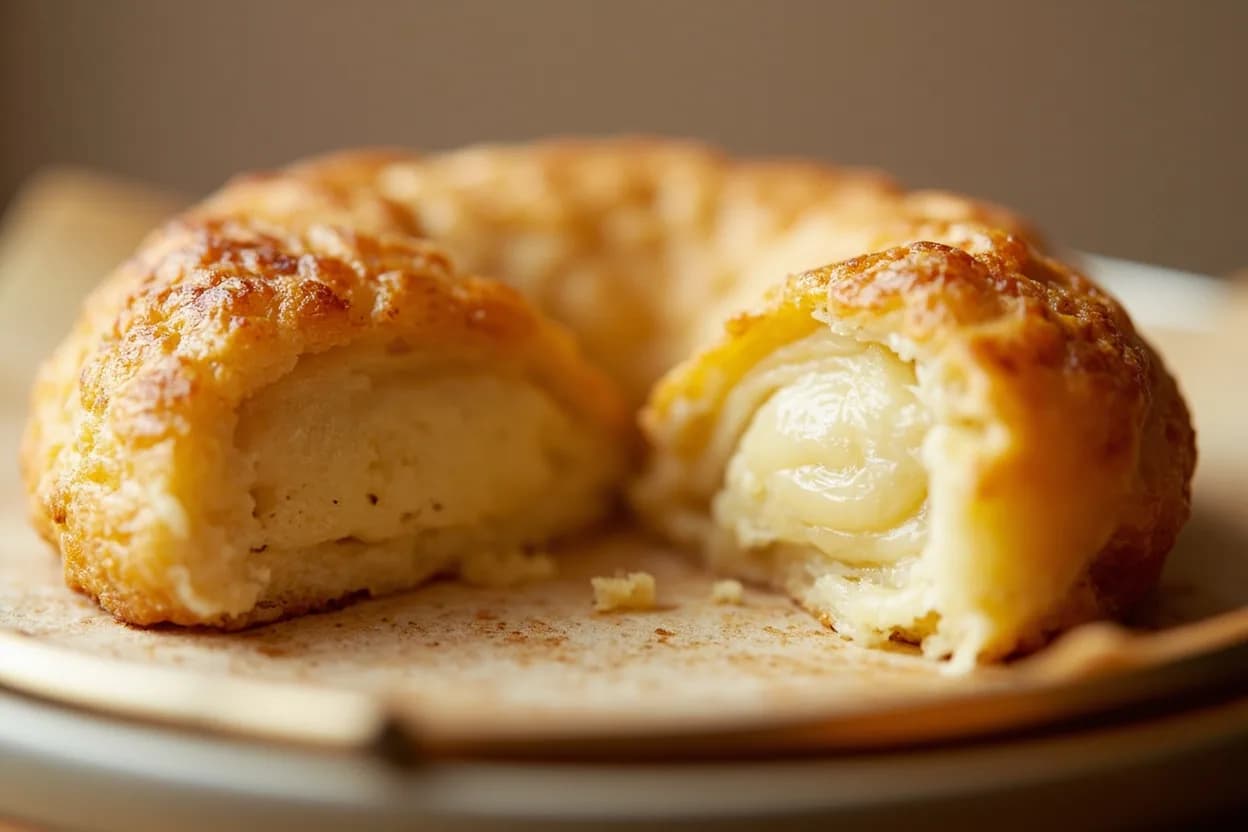

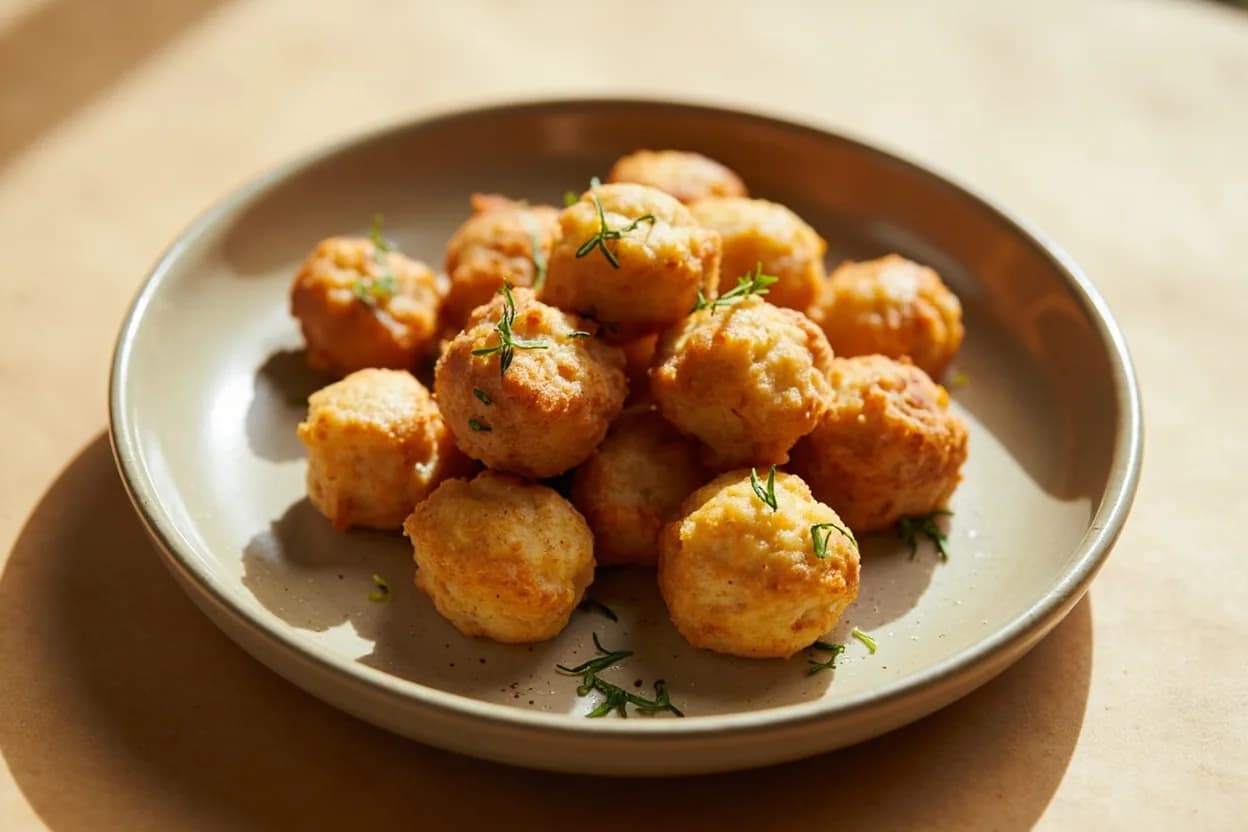
What happens
Heat gelatinizes the starch granules in the flour, causing them to absorb free water and swell into a dense, cohesive network. Continued stirring over heat drives moisture out as steam — you can see and smell it rising from the pan. The proteins in the flour begin to partially set, creating structure that can later trap the steam generated during baking. The thin crust that forms on the pan base (the panade film) is a reliable visual indicator that enough moisture has been driven off. Under-dried dough retains too much water; the egg additions later tip it into a slack, uncohesive paste that won't puff properly. Over-dried dough develops excessive starch crosslinks, resisting egg incorporation and yielding dense choux.
What to look for
- Dough pulls cleanly away from all pan sides and base in one mass
- A pale, matte, starchy film is visible on the pan base when the dough is scraped aside
- Steam rises visibly and the sizzling noise subsides
- Dough surface appears smooth and slightly shiny, not sticky or tacky
- A light, cooked-pastry aroma replaces the raw-flour smell
How to check
- Press a spatula flat against the pan base — a white film should adhere to the pan, not the dough
- Pull the dough ball briefly off the heat; it should hold its shape as a clean mass
- Check internal temperature with an instant-read thermometer — target 74–80°C
- Transfer a small piece to your fingers: it should be hot but not stick
Carryover & resting
After the dryout the dough is transferred to a mixer bowl (or beaten by hand) and allowed to cool for 1–2 minutes before eggs are added. Adding eggs too early — while the paste is above ~60°C — risks scrambling them. No significant carryover cooking occurs post-dryout since the heat source is removed, but the mass retains enough heat to continue gelatinizing the outer starch for another 30–60 seconds.
The science behind it
The core physical process occurring during dryout — starch granules absorb water and swell, binding the dough
- Steam leavening
The mechanism by which choux puffs in the oven; adequate dryout is prerequisite for sufficient steam pressure
The cooked flour-butter-water base before eggs are added; the dryout completes the panade
- Egg incorporation test (ribbon test)
The downstream check that confirms dough hydration is correct after eggs are beaten in
Appears in
References
- 1.The Professional Pastry Chef — Bo Friberg
- 2.Bouchon Bakery — Thomas Keller & Sebastien Rouxel
- 3.Pastry: A Master Class for Everyone — Richard Bertinet
- 4.On Food and Cooking — Harold McGee
Confidence: high
Notes
Why the film matters
Professional pastry chefs use the pan-film test because it is more reliable than timing alone. Stoves vary; humidity affects moisture loss. The film confirms that enough free water has been expelled. Skip it and your paste may be too wet, producing choux that collapse shortly after leaving the oven.
Stand mixer dryout
Some large-batch recipes dry the panade in a stand mixer fitted with the paddle on low heat (using the mixer bowl directly on a burner or induction plate) rather than a saucepan. The same film cue applies, though the paddle's agitation accelerates moisture loss slightly.