Bread & Dough Doneness
Pâte Sucrée Blind-Bake Doneness
Also: blind-baked tart shell, pre-baked pastry shell, pâte sablée blind-bake, tart shell set stage
The tart shell reaches a pale-gold, dry, and fully set state — sturdy enough to hold a filling without soggy patches or shrinkage.
Blind baking pâte sucrée (sweet shortcrust pastry) involves two stages: baking the shell weighted with parchment and pie weights or dried beans until the sides are set and dry (typically 15–18 minutes at 170–180°C/340–355°F), then removing the weights and finishing until the base is golden, dry, and cooked through (a further 8–12 minutes). Full blind-bake doneness is achieved when the base is uniformly pale gold, the surface loses any sheen of raw fat, no translucent raw patches remain on the base or sides, and the shell feels firm to a light tap. Internal base temperature should reach 90–95°C (195–205°F). Partial blind bake (for custard-filled tarts that will return to the oven) stops earlier at a very pale, dry, just-set stage.
In photos
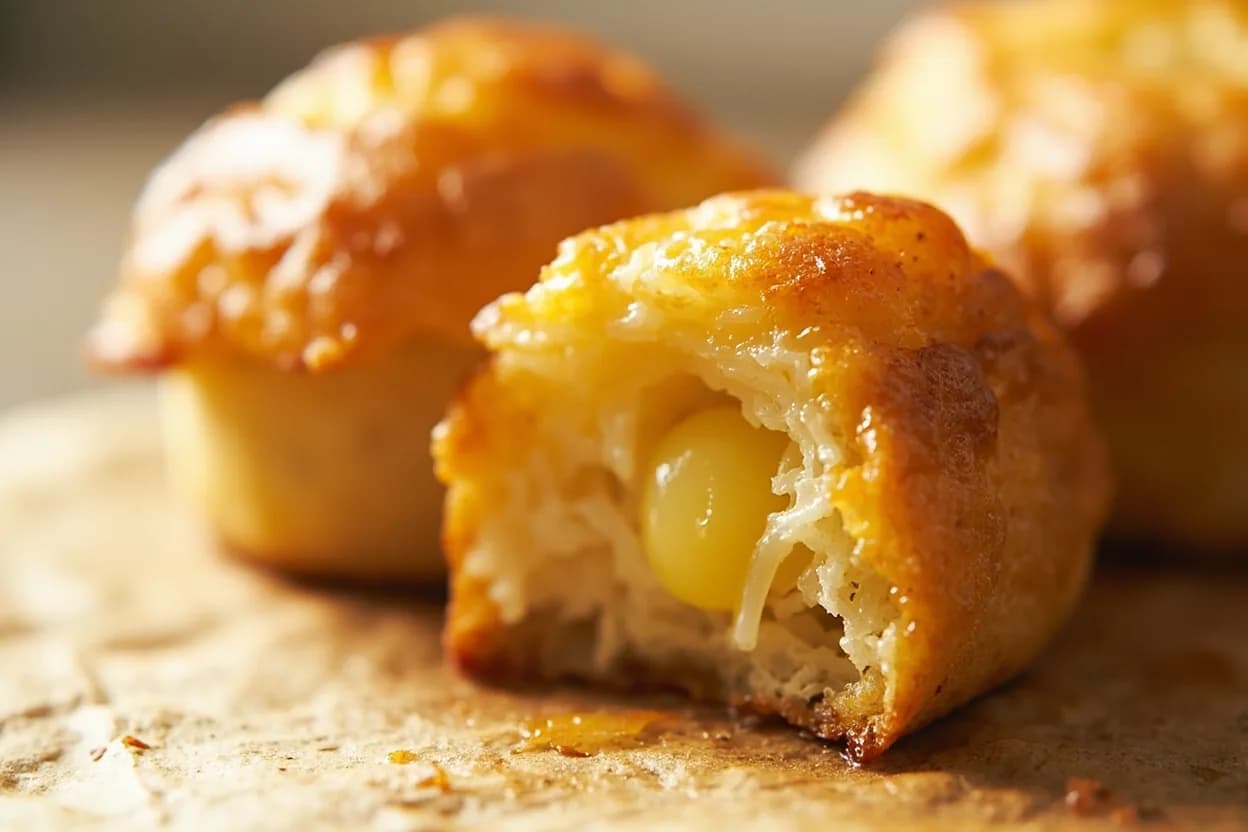

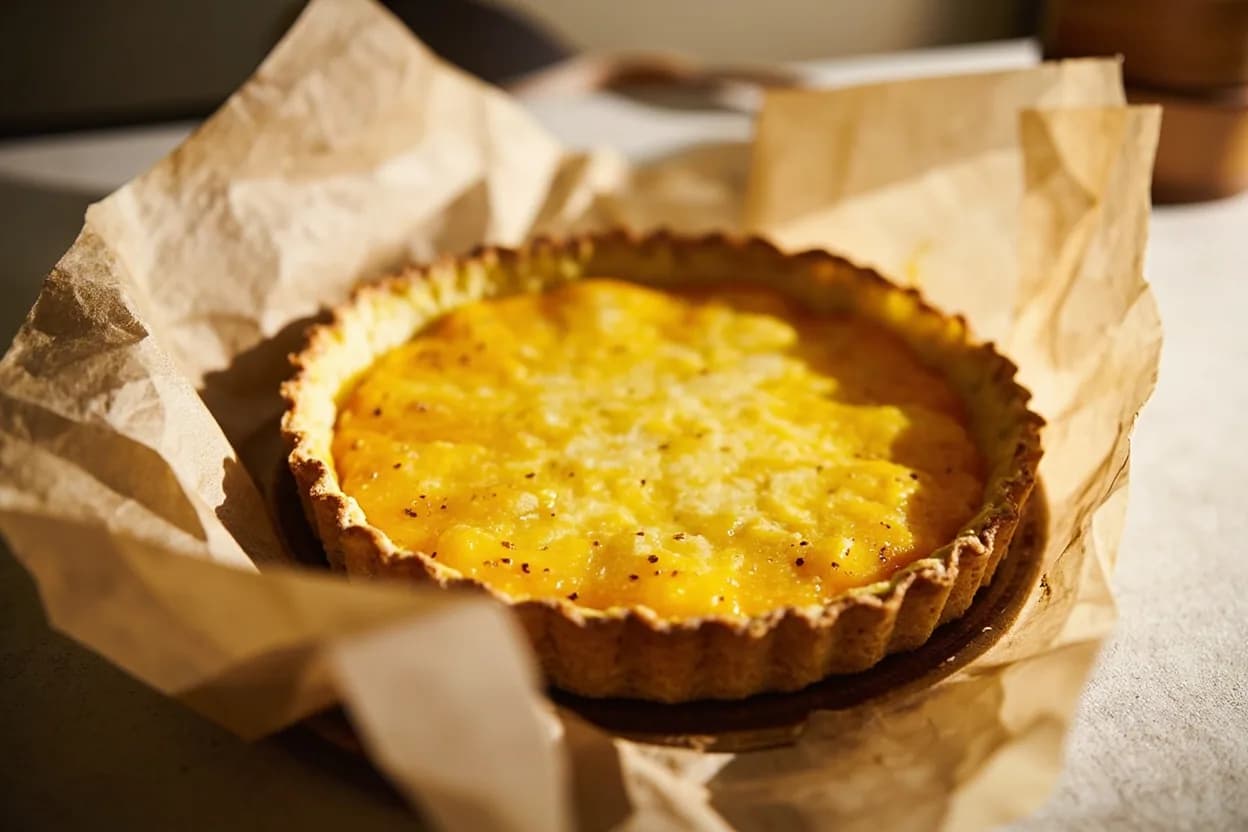
What happens
Fat in the dough melts during early baking, and the starch and egg-yolk proteins begin to set. The sugar content of pâte sucrée (compared to plain shortcrust) means Maillard browning and caramelization begin at moderate temperatures — watchfulness is essential as it browns faster than plain doughs. Pie weights prevent the base from puffing as steam forms from residual moisture. Once weights are removed, the base must dry sufficiently so capillary action does not allow a wet filling to seep into and soften the pastry (the 'soggy bottom' failure). Egg wash applied before the weightless finishing stage adds a moisture barrier and promotes even browning.
What to look for
- Base and sides are uniformly pale gold — no translucent, greasy raw patches
- Surface is matte and dry to the touch, not tacky
- Shell feels rigid and produces a hollow sound when tapped lightly
- A faint, buttery, biscuit aroma without any raw-flour note
- Slight edge contraction away from the tart ring — but walls remain upright, not slumped
How to check
- Lift the tart ring briefly and check the base underside for uniform color — pale gold, not grey or translucent
- Press the base center gently; it should not flex or feel soft
- Insert an instant-read thermometer through the base: target 90–95°C
- Apply egg wash after weights are removed and return to oven — watch for even golden color across the entire base
Carryover & resting
For custard-filled tarts (crème brûlée, lemon tart) that return to the oven, the partially blind-baked shell will continue to brown during the second bake. Stop the blind bake slightly earlier (very pale, just dry) to avoid over-browning after filling. For no-bake fills (pastry cream, ganache), take the shell to full golden doneness before cooling.
The science behind it
- Pâte sucrée
The sweet shortcrust dough being blind-baked — high butter and sugar content means faster browning than plain shortcrust
- Pâte sablée
A higher-fat, more crumbly cousin that follows similar blind-bake doneness cues but is more fragile to handle
- Egg wash barrier
Brushing the partially-baked shell with egg wash before the weightless finish seals the surface against wet fillings
- Soggy bottom
The failure state — underbaked or wet base — that proper blind-bake doneness prevents
Appears in
References
- 1.The Professional Pastry Chef — Bo Friberg
- 2.Patisserie: Mastering the Fundamentals of French Pastry — Christophe Felder
- 3.Tartine — Elisabeth Prueitt & Chad Robertson
- 4.Baking and Pastry: Mastering the Art and Craft — CIA
Confidence: high
Notes
Full vs. partial blind bake
A full blind bake is required for shells filled with no-bake or cold fillings (pastry cream, mousses, set ganache). A partial blind bake — just until dry and barely set but still pale — is used when the filling itself will bake (frangipane, custard), as continued oven time finishes the shell. Confusing the two is a common source of either soggy or over-browned tart shells.
Shrinkage prevention
Pâte sucrée shrinks when the glutinous protein network, tensioned by rolling, relaxes under heat. Rest the lined shell refrigerated (minimum 30 minutes, ideally overnight) before blind baking so the gluten fully relaxes before encountering heat. Under-rested shells shrink noticeably down the sides no matter how well the blind bake is executed.