Charcuterie & Terrines
Pâté & Terrine Internal Set Temperature
Also: terrine doneness, forcemeat set temperature, pâté core temperature
Cook pâtés and terrines to an internal temperature of 68–72°C (155–162°F) to fully coagulate forcemeat proteins, set fat emulsion, and ensure food safety.
Pâtés and terrines are forcemeat preparations — blends of ground or pureed meat, fat, aromatics, and often liver or cream — baked in a water bath (bain-marie) at a low oven temperature (150–165°C). The internal set temperature of 68–72°C marks the point where myosin and actin proteins in the meat fully coagulate, the fat emulsion stabilises, and any pathogens (including Salmonella, Listeria, and Toxoplasma in pork or game) are eliminated to safe levels. Below this range the centre remains undercooked and the slice will weep and crumble; above it the emulsion may break and the texture turns grainy.
In photos
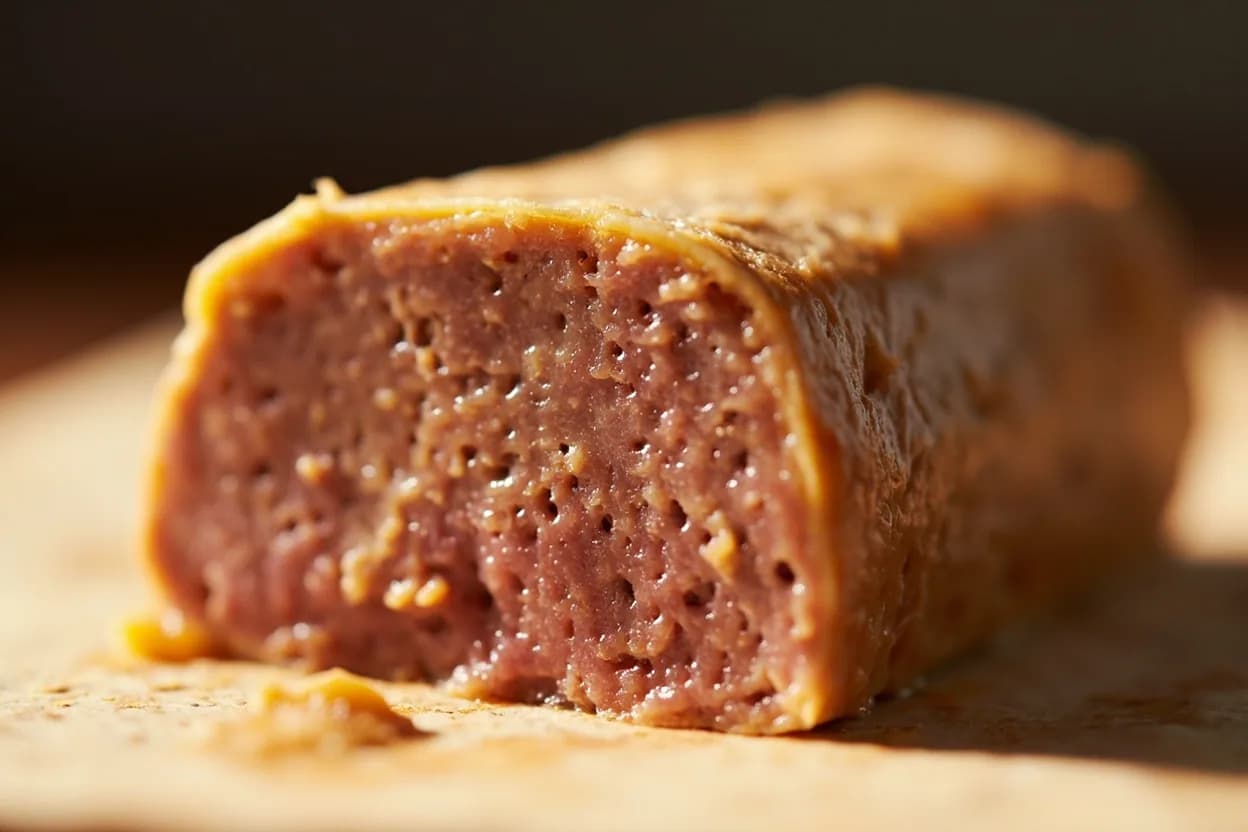
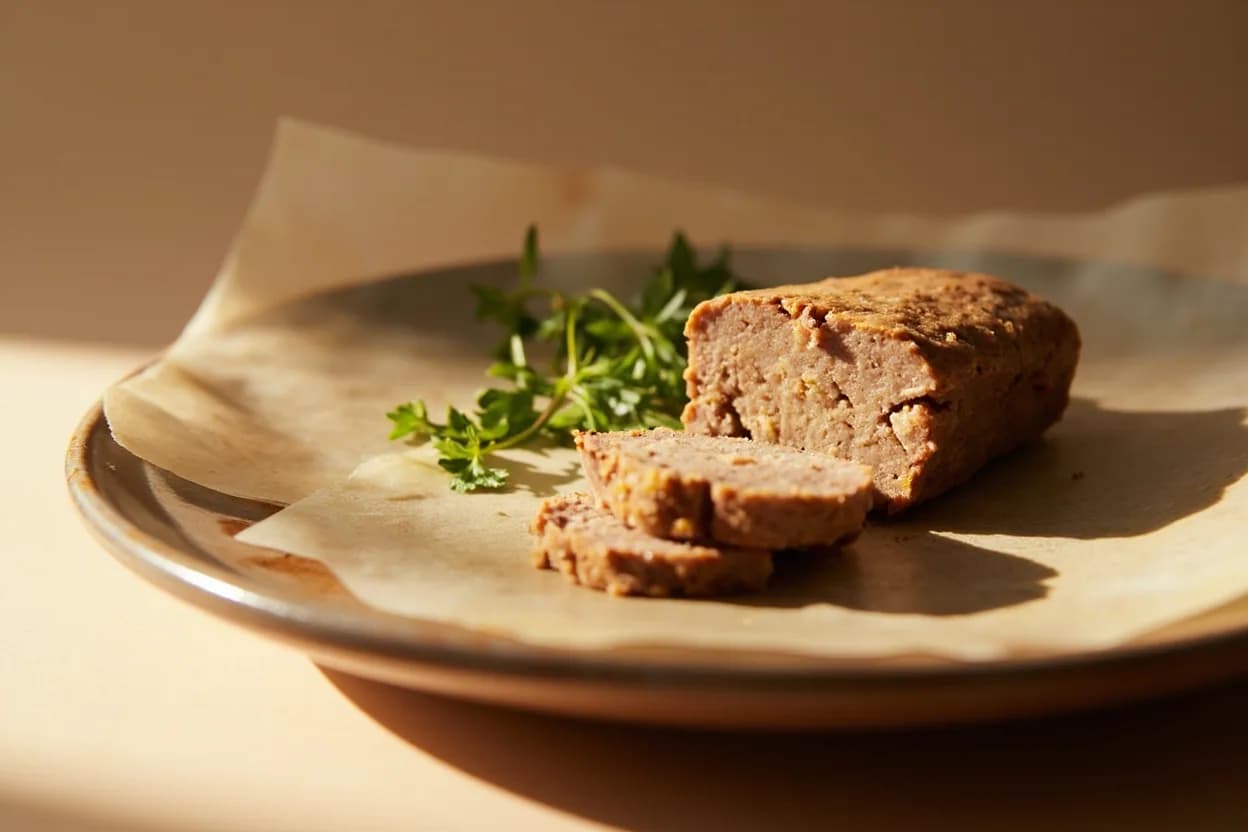
What happens
As the core of the terrine climbs through 60°C, myosin begins to denature and the forcemeat starts to firm. Between 65–70°C, collagen in connective tissue begins converting to gelatin, helping bind the mixture. At 68–72°C, actin fully coagulates and the entire protein matrix sets — the terrine will hold a clean slice when cold. Fat globules, emulsified by the protein network, remain suspended as long as temperature does not overshoot significantly. A bain-marie limits the oven temperature reaching the terrine sides, ensuring slow, even heat penetration and preventing the outer layers from overcooking before the core sets.
What to look for
- A metal skewer inserted into the centre for 10 seconds feels distinctly warm (not cool or cold) when touched to the inner wrist
- The terrine has pulled slightly away from the sides of the mould and the surface is set, not jiggly at the centre
- Juices running from a poked surface should be pale pink at most — not red or bloody
- After chilling overnight the slice holds a clean, firm edge with no wet collapse
How to check
- Insert an instant-read thermometer diagonally into the thickest centre point; hold 10–15 seconds — target 68–72°C
- Skewer test: insert a clean metal skewer for 10 seconds; it should feel hot (not merely warm) against the wrist
- Avoid opening the oven too early — check at the lower end of estimated time and probe immediately
- For large terrines baked in a deep mould, probe two or three positions since temperature can vary by several degrees
Food safety
Carryover & resting
Terrines carry over minimally once removed from the bain-marie and pressed under weights — residual heat is quickly dissipated into the heavy mould. Pull from the oven at 68°C; carryover will bring it to 70°C before it cools.
The science behind it
Water bath used to moderate oven heat and ensure even internal temperature rise
Myosin and actin coagulation is what sets the forcemeat from soft paste to sliceable loaf
- Fat emulsion stability
Overheating above 75°C breaks the fat-protein emulsion, causing greasy, grainy texture
Gelatin from connective tissue helps bind the terrine when chilled
Often poured over the finished terrine surface as a chilled glaze and preservative layer
Appears in
References
- 1.Ruhlman, Michael & Polcyn, Brian — Charcuterie: The Craft of Salting, Smoking, and Curing (2005)
- 2.Peterson, James — Charcuterie and French Pork Cookery (2012)
- 3.USDA Food Safety and Inspection Service — Safe Minimum Internal Temperatures
- 4.McGee, Harold — On Food and Cooking: The Science and Lore of the Kitchen (revised ed., 2004)
Confidence: high
Notes
The bain-marie effect
Baking a terrine in a water bath caps the maximum temperature the surrounding medium can reach at 100°C — far lower than oven air. This means the outer edge of the forcemeat climbs slowly, giving heat time to reach the centre without the exterior overcooking and turning grey. Removing the lid (or foil) in the final 10 minutes allows the surface to take on a light golden colour without drying.
Pressing after baking
Once the terrine is removed from the oven and the bain-marie, it is typically weighted with a board and cans while hot. This compacts any air pockets, improves slice cohesion, and encourages the gelatin network to set under uniform pressure as the terrine chills overnight. Do not skip this step — an unpressed terrine crumbles.