Bread & Dough Doneness
Pizza Crust: Leoparding (Char Spots) & Cornicione Color
Also: leoparding, pizza char spots, cornicione blister, Neapolitan pizza doneness, pizza crust maculatura
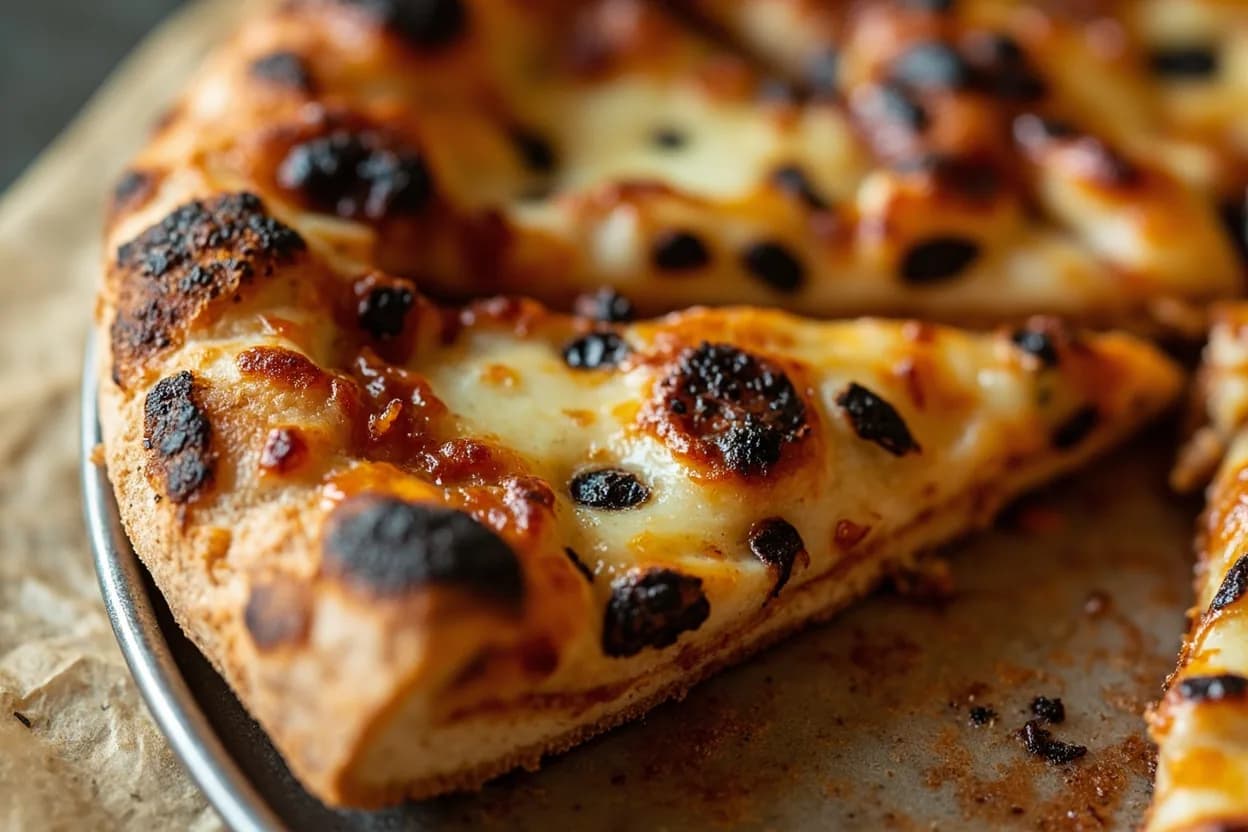
Authentic Neapolitan pizza is done when the cornicione rim is puffed, blistered, and shows irregular dark char spots — the leoparding pattern — earned at 450°C+ in 60–90 seconds.
Leoparding (Italian: maculatura) refers to the pattern of dark brown to near-black irregular char spots that develop on the cornicione (the outer, untopped rim of a Neapolitan pizza) and on the base when baked in a wood-fired or electric oven at 430–500°C (806–932°F) for 60–90 seconds. This pattern is a hallmark of genuine Neapolitan pizza and the primary visual indicator of correct doneness. The cornicione should be puffed and airy (large open gas bubbles have formed and set), blistered in places (a thin char layer over a still-soft interior), and range in color from golden through deep amber to chestnut brown with discrete black spots — never uniformly black or pallid grey. The base should be dry, with a light char on the bottom and no soggy or gummy patches beneath the topping.
In photos


What happens
At extreme temperatures, the outer surface of the dough undergoes rapid and very localized Maillard reaction and pyrolysis simultaneously. Where gas bubbles press the thin dough wall directly against the oven floor or into the dome flame, the surface reaches charring temperatures (above ~220°C at the wall surface) while the interior of the cornicione bubble remains at a much lower temperature — the insulating effect of the trapped gas. This creates the leopard spot: a discrete area of char surrounded by a lighter, still-caramelized rim. The rapid bake also means the interior of the rim stays moist, soft, and slightly chewy, while the outer crust is thin and crisp. The sauce and cheese on top barely have time to fully cook by conventional means — they are mostly flash-heated by radiant energy from the dome.
What to look for
- Cornicione shows discrete black or dark-brown spots surrounded by golden or amber areas — the leopard pattern
- Rim is visibly puffed and blistered, with large visible bubbles that have set as hollow pockets
- Underside shows light, even char marks from the oven floor (not white/pale or uniformly black)
- Cheese is melted, with a few golden or light-brown bubbles, but not dried out or darkened
- Crust sounds hollow when tapped on the base; center base is dry, not gummy or wet under the topping
How to check
- Lift the pizza edge with a peel or long tongs and inspect the base — look for intermittent light char marks, not a uniformly pale or uniformly black bottom
- Check the cornicione color: should range from golden to chestnut with discrete darker spots; continuously black = slightly over; uniformly pale = under
- Slide a peel under and observe whether the pizza lifts cleanly without sticking (a stuck spot indicates an underdone, wet base)
- Time from launch — in a correctly preheated wood-fired Neapolitan oven, 60–90 seconds is the window; rotate at 45 seconds to equalize heat from the fire
Food safety
Carryover & resting
There is effectively no carryover cooking at Neapolitan bake temperatures — the pizza should be served immediately after leaving the oven. The thin crust rapidly loses heat and begins to steam itself soft if left to rest for more than 2–3 minutes. No resting period is used or recommended.
The science behind it
The primary browning chemistry producing the golden-to-brown coloration on the cornicione between the char spots
- Pyrolysis (charring)
The irreversible thermal decomposition of carbohydrates and proteins above ~220°C at the dough surface, creating the black leopard spots and complex bitter-sweet flavor
- Oven spring (pizza)
The rapid gas expansion in the first seconds of the bake that puffs the cornicione into its characteristic airy, blistered form
- Neapolitan dough fermentation
Long cold fermentation (24–72 hours) produces the extensible, gas-retaining dough necessary for proper leoparding — under-fermented dough does not puff or char correctly
- AVPN specification
The Associazione Verace Pizza Napoletana international standard that codifies Neapolitan pizza parameters including oven temperature and bake time
Appears in
References
- 1.The Elements of Pizza — Ken Forkish
- 2.Pizza Quest — Peter Reinhart
- 3.AVPN (Associazione Verace Pizza Napoletana) International Regulation — STG specification
- 4.Modernist Pizza — Nathan Myhrvold & Francisco Migoya
Confidence: high
Notes
Leoparding at home temperatures
Home ovens max out at 250–280°C, which is insufficient for true leoparding in 90 seconds. The workaround is to preheat a baking steel or thick pizza stone for at least 1 hour at maximum temperature, then use the broiler/grill element during the bake to approximate dome heat. This can produce creditable char spots in 4–7 minutes, though the crumb structure will be slightly denser than a wood-fired result due to the longer bake time.
Overly leoparded (burnt) vs. correctly charred
The key distinction is spot discreteness. Correct leoparding has isolated dark spots surrounded by lighter areas; the overall crust is not predominantly black. When the spots merge and the cornicione is mostly dark brown to black over 50%+ of its surface, the pizza is over-charred — excessive bitterness replaces the complex bitter-sweet balance that defines the style. Uniform paleness indicates underbaked dough, insufficient oven temperature, or a dough with too little fermentation gas.