Vegetable Doneness
Plantain Doneness Stages (Green through Overripe)
Also: plátano verde, plátano maduro, tostones stage, maduros stage, sweet plantain
Plantains pass through four distinct ripeness stages — green, yellow, ripe-black-streaked, and fully black — each with its own starch-to-sugar ratio, flavor profile, texture, and correct preparation method.
Unlike bananas eaten raw at full ripeness, plantains are a cooking ingredient at every stage of ripeness, and each stage demands a different technique. Green (unripe) plantains are dense, starchy, and savory — suited to frying for tostones, boiling for fufu, or making chips. Yellow plantains with black streaks are semi-ripe — sweet enough to caramelize but still holding structure for maduros. Overripe, almost entirely black plantains are very sweet, very soft, and best for dessert preparations, pancakes, or deep frying to a jammy, candy-like result. The transformation is driven by amylase enzymes converting starch to sugars as the fruit ripens.
In photos
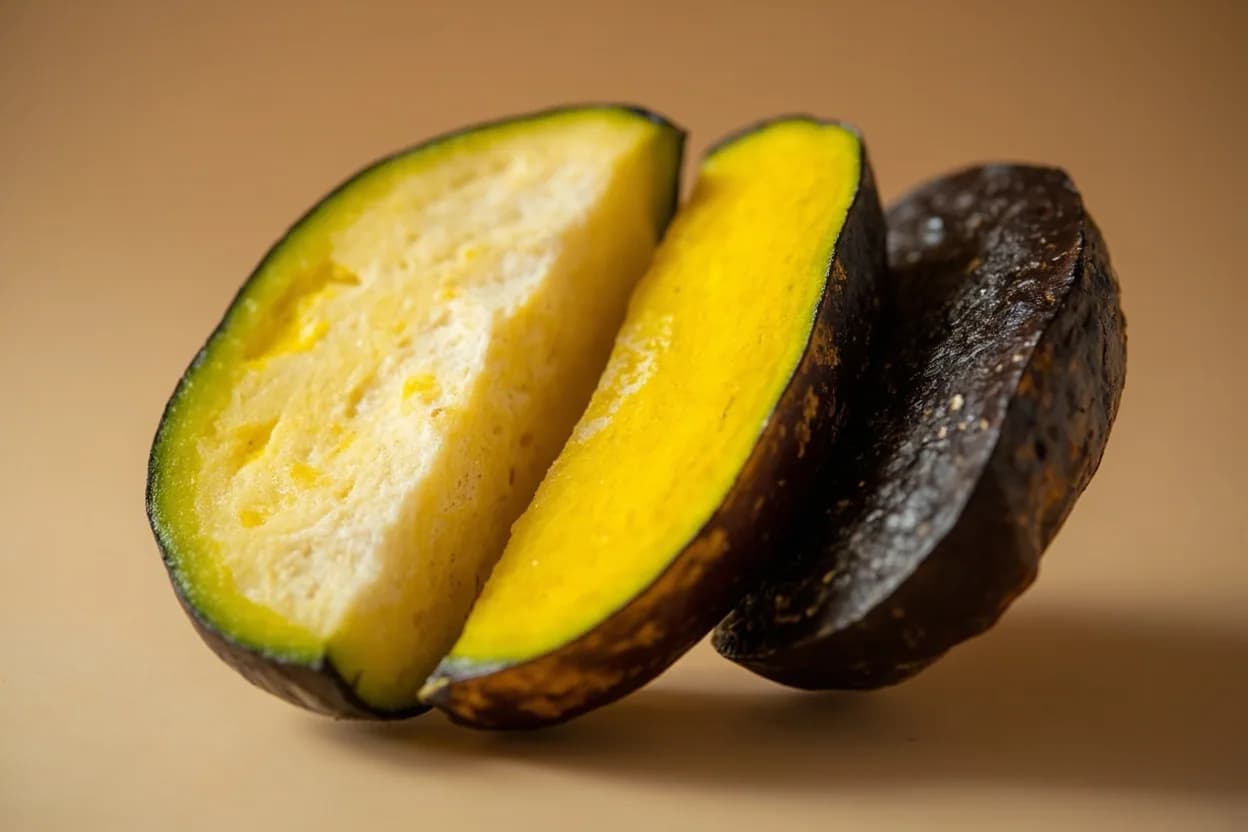
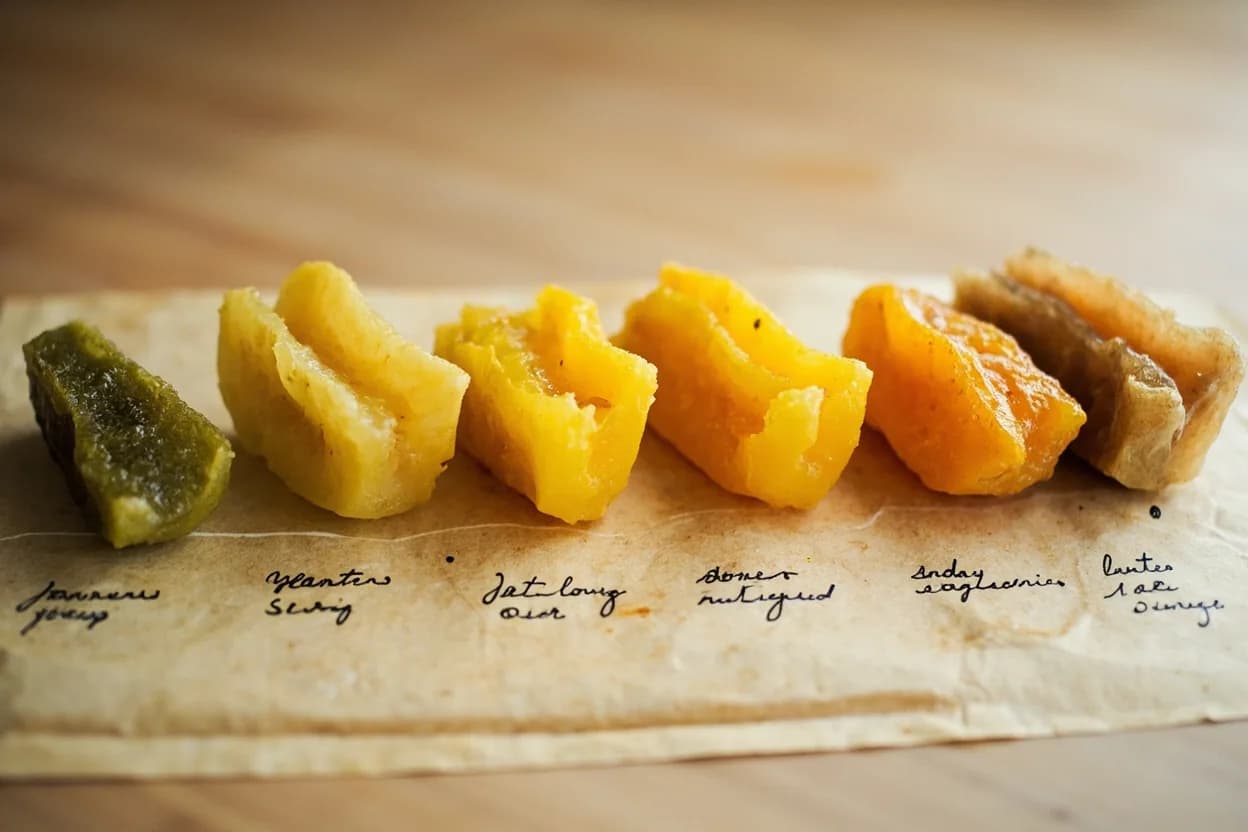
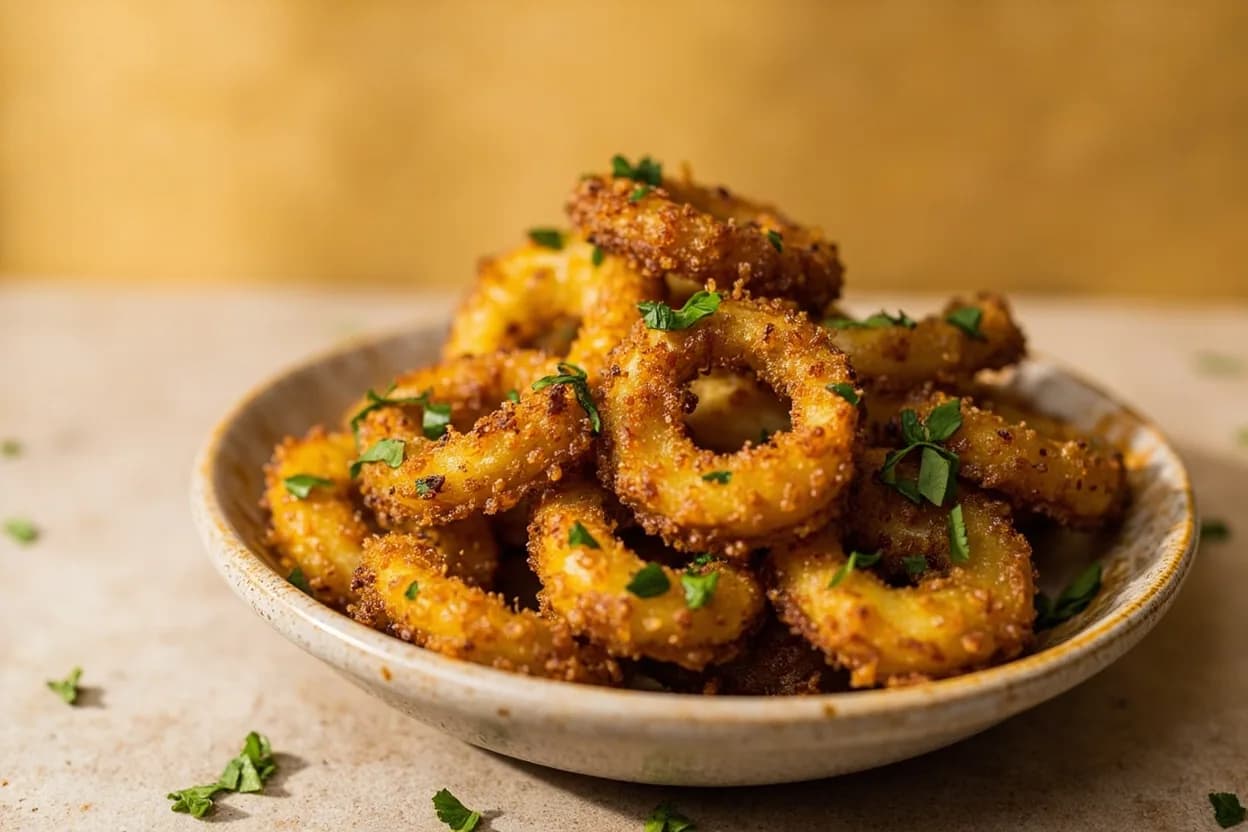
What happens
Stage 1 (green): starch content ~22–25%; sugars very low (~2%); flesh is firm, white, and dense. Amylase activity is minimal. Raw flavor is starchy and slightly astringent from tannins. Stage 2 (yellow): amylase converts starch to sugar; starch drops to ~14–18%; sweetness detectable; flesh yellows and softens slightly but holds shape during cooking. Stage 3 (yellow with black streaks): starch ~8–12%; sugars ~15%; Maillard reactions can occur at pan temperatures; exterior chars and caramelizes beautifully during frying; flesh texture yields like a ripe banana but still sliceable. Stage 4 (black/overripe): starch mostly converted; sugar content ~20–25%; flesh extremely soft and very sweet; cell wall pectin largely degraded; best for preparations that want maximum sweetness and a jammy, almost spreadable texture.
What to look for
- Green stage: skin is hard, waxy green; flesh resists knife firmly; raw starchy smell, no sweetness
- Yellow stage: skin pliable and yellow; flesh gives slightly to thumb press; mild banana-adjacent sweetness
- Yellow-black stage: black patches cover 25–60% of skin; flesh cuts easily; aroma is floral-sweet; caramelizes quickly in pan
- Black/overripe stage: skin 80–100% black; flesh is very soft and may be sticky; intensely sweet with complex fermented-tropical aroma; peels in large sheets
- Cooking cue (tostones): green slice turns opaque white and floats in oil when ready for first fry
How to check
- Skin color is the primary ripeness indicator: green → yellow → yellow-black → black
- Thumb press test: press through skin — green resists completely; yellow gives slightly; black stage collapses under moderate pressure
- Knife resistance: green plantain requires significant pressure; overripe plantain can be pressed with fingers alone
- Peel ease: green skin requires scoring along ridges and peeling with fingernail assistance; black stage peels like tissue paper
- Taste test of a small slice if in doubt — starch sits on the tongue distinctly; sugar dissolves quickly
The science behind it
Naturally occurring amylases convert starch to maltose and glucose as plantains ripen — the engine of the starch-to-sugar transformation
- Maillard reaction / caramelization
Yellow-black and black stage plantains have sufficient free sugars to caramelize and brown rapidly in a hot pan
- Double frying (tostones)
Green plantains are sliced, fried briefly, smashed flat, then fried again at higher temperature — starch structure requires two-fry method to achieve crispness
Boiled green plantain pounded with cassava or yam into a dense, sticky dough — requires green stage for proper starch content
Sweet fried plantains using yellow-to-black stage; the higher sugar content caramelizes to a sticky lacquer
Appears in
References
- 1.My Two Souths — Asha Gomez (Running Press, 2016)
- 2.Coconut & Sambal — Lara Lee (Bloomsbury, 2020)
- 3.Afro-Vegan — Bryant Terry (Ten Speed Press, 2014)
- 4.Gran Cocina Latina — Maricel Presilla (W. W. Norton, 2012)
- 5.On Food and Cooking — Harold McGee (Scribner, 2004)
Confidence: high
Notes
Ripening speed and the kitchen
Green plantains ripen slowly at room temperature (20–25°C) over 7–14 days depending on ambient temperature and initial ripeness at purchase. Refrigeration halts enzymatic ripening and causes the skin to blacken without the flesh actually sweetening — a misleading cue. If you need to accelerate ripening, place in a paper bag at room temperature. If you need to hold a ripe plantain at yellow-black stage, refrigerate for up to 3 days after reaching that color; the flesh will have already sweetened.
Cooking oil temperature by stage
Green plantains for tostones require oil at 160°C (320°F) for the first fry (to cook through the dense starch) and 185°C (365°F) for the second fry (to crisp). Ripe plantains (yellow-black) for maduros require medium heat — 160–170°C in a skillet — because their high sugar content burns quickly. Overripe plantains need even lower heat; they caramelize to near-burning within seconds at high temperatures.