Pork Doneness
Ground Pork Safe Temperature
Also: minced pork done temp, ground pork 160°F, pork mince internal temperature, pork burger done temp
Ground pork, sausage patties, and pork meatballs must reach 71°C (160°F) with no rest — grinding disperses surface pathogens throughout the mass.
Ground pork requires a higher minimum internal temperature than whole-muscle pork because the grinding process mechanically distributes surface pathogens — primarily Salmonella and, historically, Trichinella spiralis — throughout the entire meat matrix. The 2011 USDA revision lowering whole-muscle pork to 63°C (145°F) explicitly did not apply to ground pork, which retained the 71°C (160°F) standard. This applies to fresh-ground pork, commercially ground pork, pork meatballs, pork-based meatloaf, and any product where pork has been comminuted, regardless of whether it is sold raw or partially cooked.
In photos
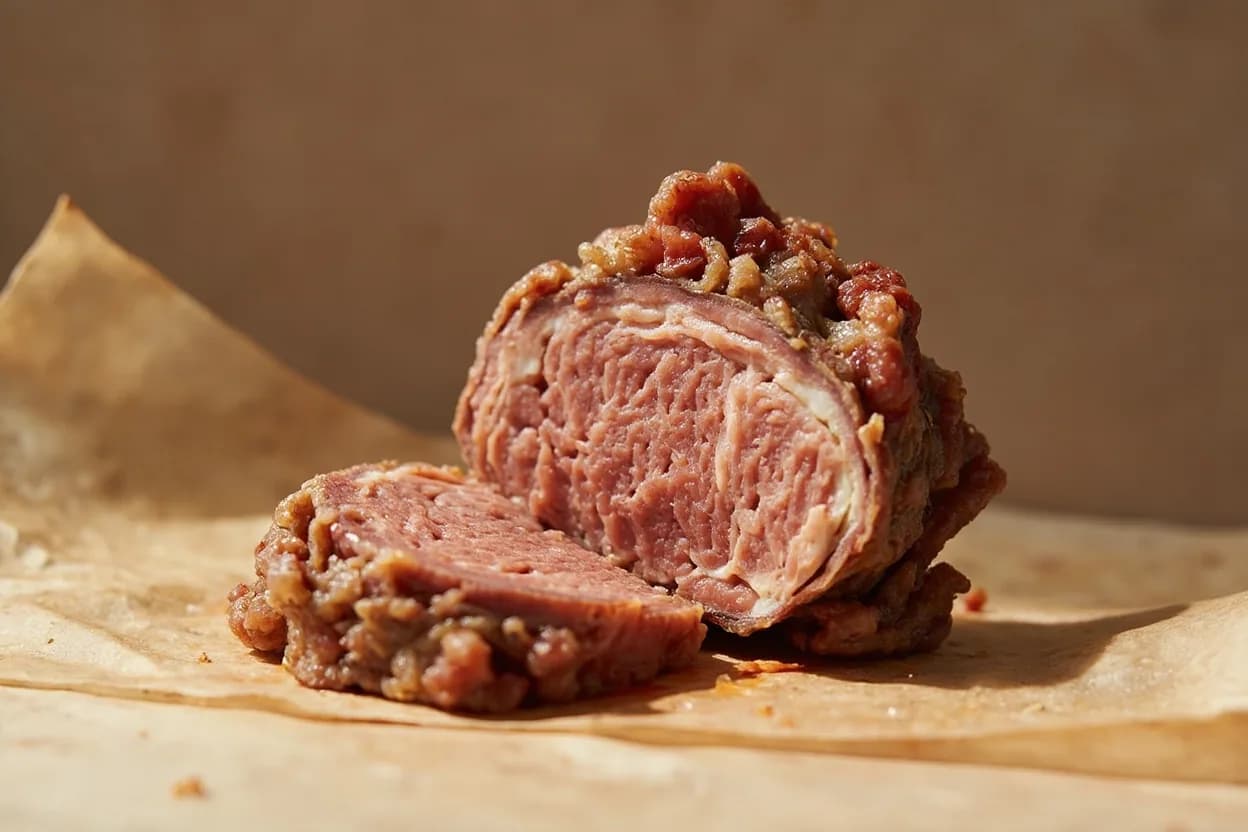

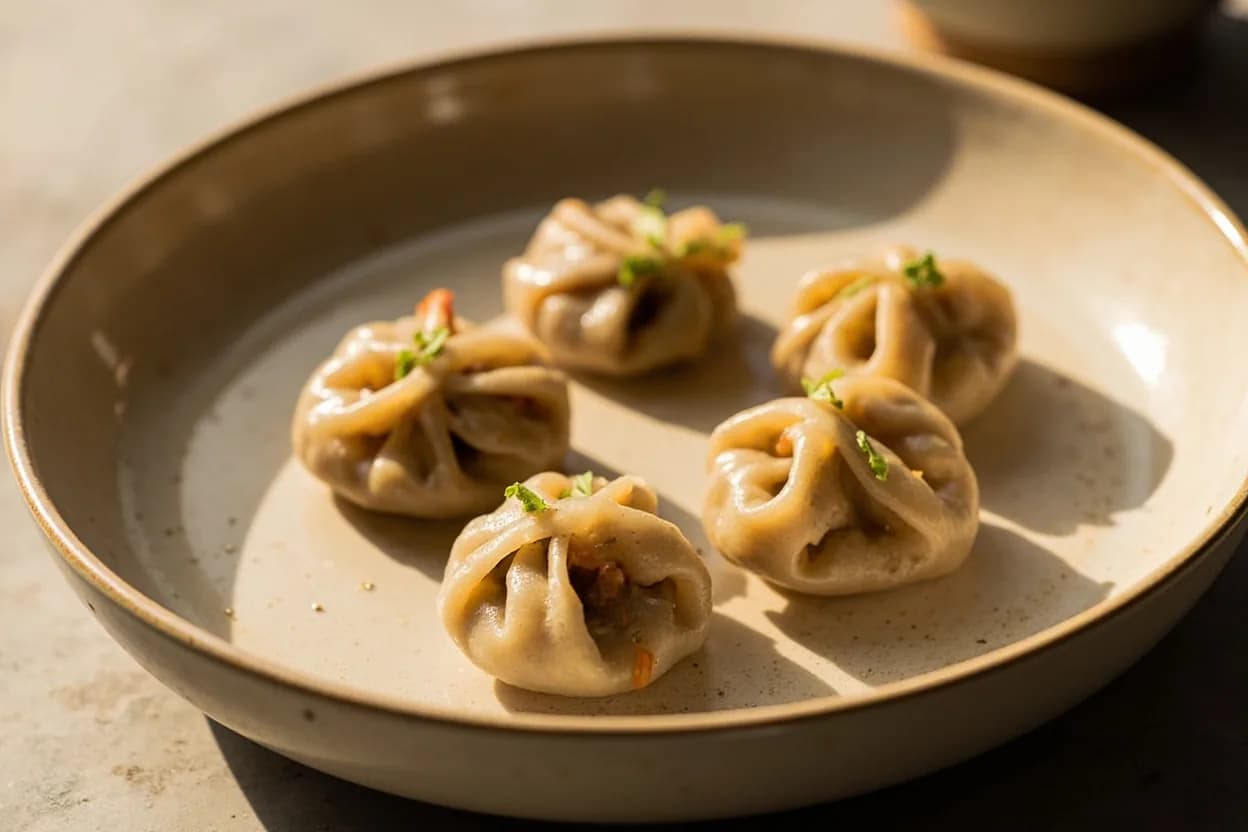
What happens
At 71°C, both myosin and actin have fully denatured throughout the mass. The protein matrix has set firm and most free moisture has been expelled — ground pork at 71°C will be noticeably firmer and slightly drier than whole-muscle pork at 63°C because the disrupted muscle architecture holds less water. Fat cells have fully rendered, basting the interior. At this temperature, Salmonella, E. coli O157:H7, and any viable Trichinella larvae are destroyed. The absence of any pink coloring throughout the patty or meatball signals complete myoglobin denaturation, which coincides closely with 71°C.
What to look for
- No pink color anywhere in a cross-section — uniform gray-brown or white throughout
- Juices run completely clear with no pink tinge
- Patty or meatball feels firm and springs back solidly when pressed
- Surface fat is rendered and visible, not white and opaque
- Steam rises vigorously when the meat is cut open
How to check
- Insert an instant-read thermometer into the geometric center of the thickest patty or meatball — the probe tip must be at the true center, not near the surface
- For thin breakfast patties, probe from the side horizontally so the probe tip reaches the center
- Cut the largest patty in the batch crosswise and inspect for complete absence of pink as a visual backup
- For meatballs in sauce, probe the largest meatball from the top, angling the probe to reach the center
Food safety
The science behind it
- Pork Safe Whole-Muscle Temperature
63°C/145°F standard that applies only to intact cuts — not to ground pork
Fresh pork sausage links and patties use the same 71°C standard as ground pork
Identical 71°C standard; both derive from the same USDA comminuted-meat policy
- Trichinella spiralis
Historically the primary concern in pork; destroyed at 55°C, but 71°C remains the standard for ground product
Appears in
References
- 1.USDA FSIS Safe Minimum Internal Temperature Chart (current)
- 2.On Food and Cooking — Harold McGee
- 3.The Food Lab — J. Kenji López-Alt
Confidence: high
Notes
Why grinding elevates the risk
Whole-muscle pork has pathogens only on the outer surface, where heat kills them almost instantly at grill or pan temperatures. Grinding folds surface meat repeatedly into the interior, creating a uniform distribution of any pathogens that were present. A pork patty seared only to 60°C at the center may have a pathogen-safe surface but a live-bacteria interior — hence the need for the higher temperature standard.
Texture trade-off
Ground pork at 71°C is noticeably firmer than whole-muscle pork at 63°C. Fat content in the blend significantly affects moisture retention: ground pork shoulder (20–25% fat) remains palatable at 71°C where extra-lean pork (7% fat) will be dry. Many Asian meatball preparations add tofu, water chestnuts, or broth to extend moisture — a practical adaptation to the required full doneness.