Beef Doneness
Ground Beef Safe Temperature
Also: burger safe temp, minced beef temperature, hamburger doneness
Ground beef and burgers must reach 71°C/160°F throughout — no pink color test substitutes for a thermometer due to pathogen distribution risk.
Ground beef carries a higher pathogen risk than whole-muscle cuts because grinding distributes surface bacteria (principally E. coli O157:H7, Salmonella, and Listeria) uniformly throughout the mass. The USDA and equivalent international food-safety bodies therefore set the safe minimum for ground beef at 71°C (160°F), higher than the 62.8°C (145°F) threshold for whole-muscle steaks. This target must be reached at the coolest point — the geometric center — with no rest time required.
In photos
What happens
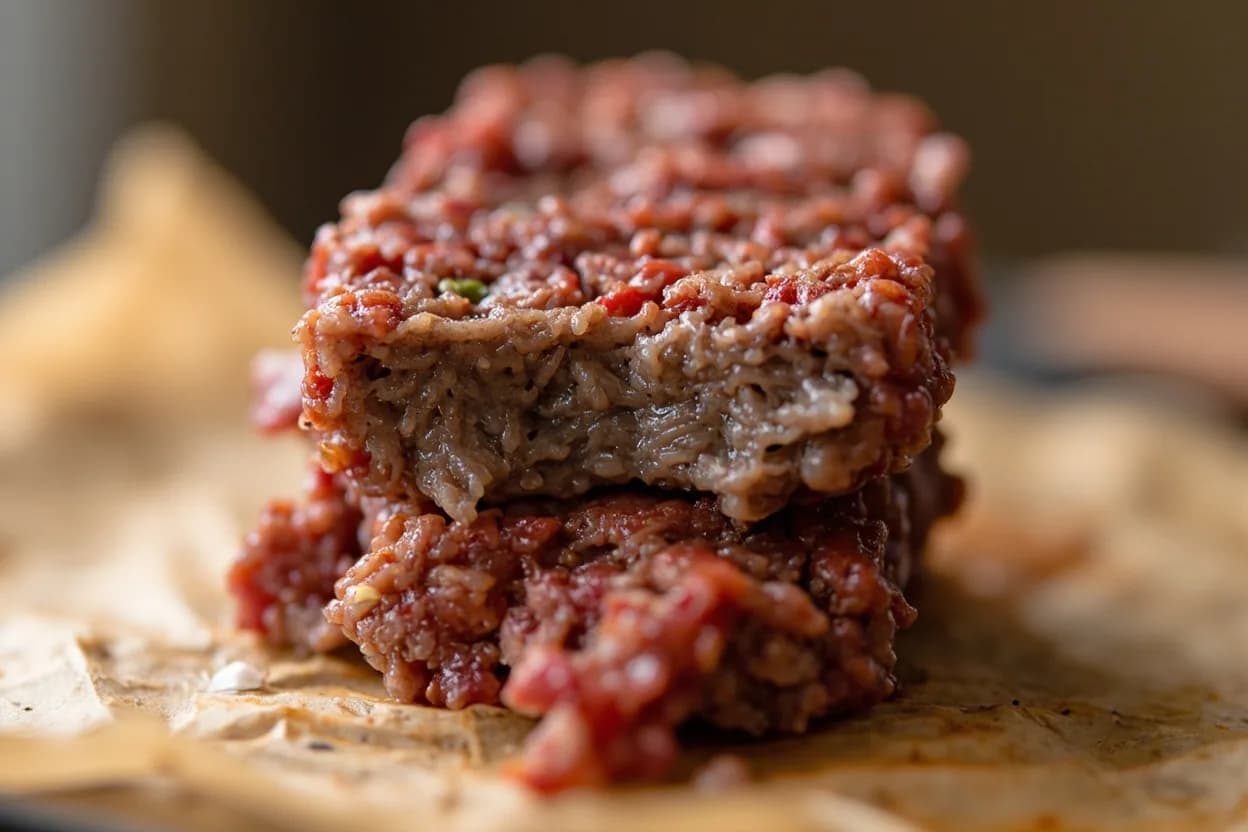
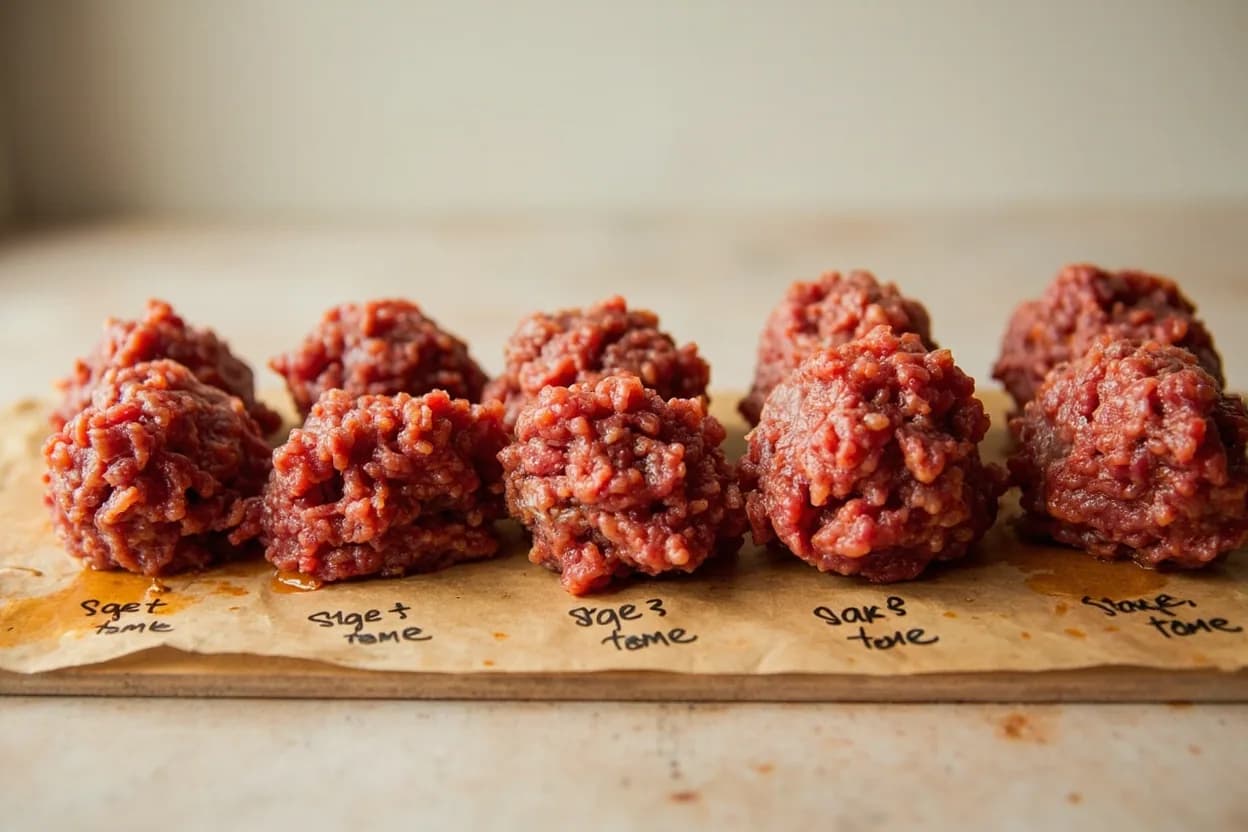
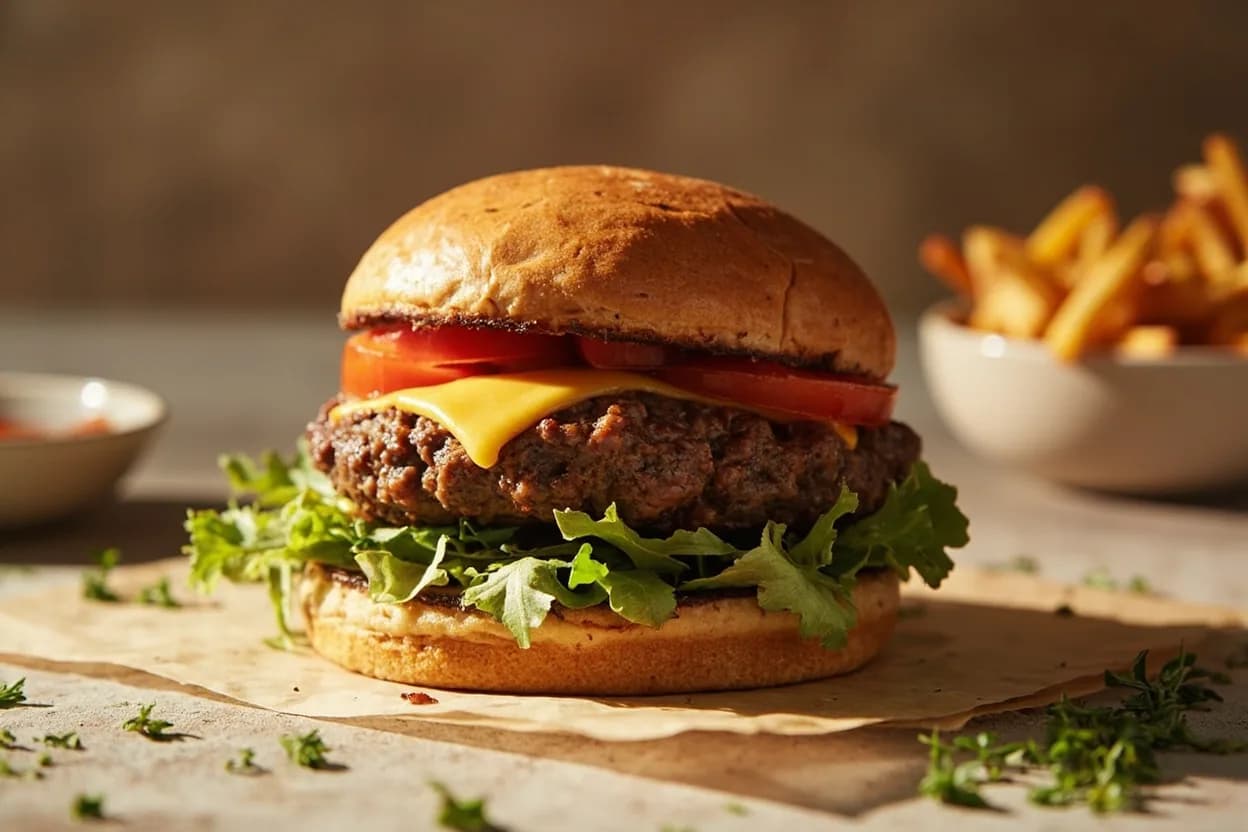
At 71°C, heat penetration reaches the center of a burger patty or meatball and destroys E. coli O157:H7 (log-7 reduction), Salmonella, and most other meat-borne pathogens to safe levels. Myoglobin denatures and the interior turns grey-brown, though color is an unreliable doneness indicator in ground beef (see notes). Fat within the grind has largely rendered, causing the patty to shrink and firm noticeably.
What to look for
- Interior color is uniformly grey-brown with no pink visible — though pink can persist even at safe temperatures
- Juices running from the center are clear or lightly browned, not pink or red
- Patty has firmed considerably and shrunk from its raw diameter by 15–25%
- Center feels set and firm when pressed, not soft or yielding
How to check
- Insert instant-read thermometer sideways through the edge of the patty into the geometric center — the most reliable method
- For burger patties, angle the probe so the tip rests in the thickest central zone, avoiding the griddle or grill surface
- For meatballs and meatloaf, probe the largest piece or the center of the loaf
- Do NOT rely on color alone — internal pinkness can remain above 71°C due to pH and reducing gases; grey color can appear below safe temperatures
Food safety
The science behind it
- E. coli O157:H7
The primary pathogen of concern in ground beef; distributed throughout the grind from surface contamination during processing
- Color as doneness indicator
Unreliable in ground beef — pH, carbon monoxide packaging, and reducing conditions can maintain pink color above safe temperatures
Well-done whole-muscle beef exceeds 74°C; ground beef safe temp of 71°C is its own distinct regulatory threshold
- Whole-muscle beef safe temperature
Whole steaks and roasts require only 62.8°C (145°F) + 3-min rest because the surface — where pathogens reside — is seared first
Surface browning begins well before 71°C is reached at the center, so visual exterior doneness does not confirm safe interior temperature
Appears in
References
- 1.USDA FSIS Safe Minimum Internal Temperature Chart (2023)
- 2.FDA Food Code 2022 — Section 3-401.15
- 3.On Food and Cooking — Harold McGee (2004)
- 4.The Food Lab — J. Kenji López-Alt (2015)
- 5.CDC — E. coli (Escherichia coli) and Food Safety (2023)
Confidence: high
Notes
The color problem
A persistent and dangerous misconception holds that pink equals unsafe and grey equals safe for burgers. Research by the USDA Agricultural Research Service found that up to 25% of ground beef patties turn brown before reaching 71°C ('premature browning'), particularly in patties with low pH or packaged under modified atmosphere with CO. Conversely, high-pH beef can retain pink color well above 71°C. The thermometer is the only reliable check.
Restaurant 'rare' burgers
Some restaurants legally serve medium-rare burgers by using whole-muscle trim ground in-house immediately before service (eliminating cross-contamination risk) or by searing the exterior of the assembled meat block before grinding. These approaches satisfy health codes in many jurisdictions but are not replicable with retail ground beef from a supermarket, where grinding occurs at a central facility days in advance.