Fish & Seafood Doneness
Gravlax Cure Stage (Texture & Color Progression)
Also: gravad lax cure, salmon salt cure stage, dry-cured salmon doneness, gravad lax, cured salmon completion, dry-cure set point, salt-cure finish
A salt-sugar cure transforms raw salmon over 24–72 hours through predictable changes in color, texture, and moisture — knowing when to stop is what separates silky gravlax from salt fish.
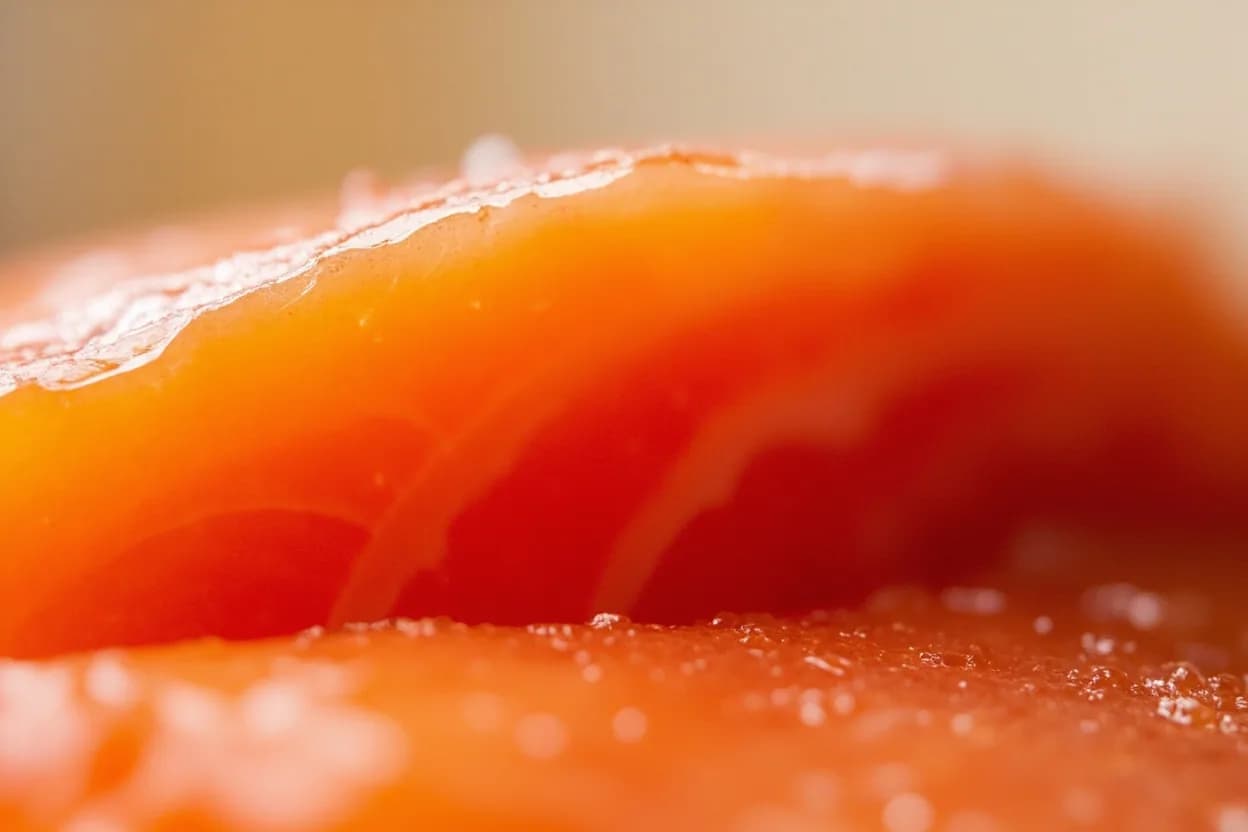
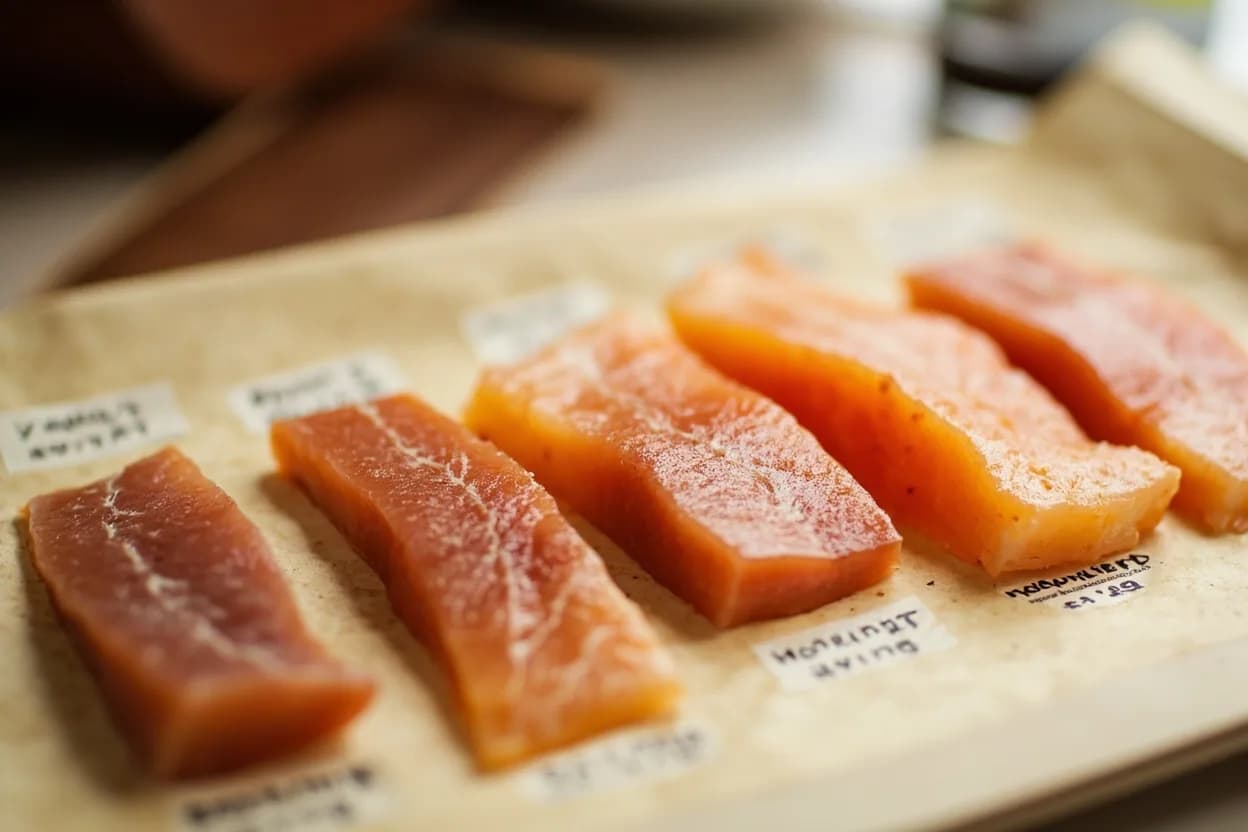
Gravlax (from Swedish 'grav' — grave/pit — and 'lax' — salmon) is cured raw salmon in which a mixture of salt, sugar, and dill draws moisture from the flesh through osmosis, denatures surface proteins through ion exchange, and progressively deepens the color from bright coral to deep amber-orange. Unlike hot-smoked fish, gravlax is never cooked; the cure stabilizes it and transforms texture without heat. The cure timeline divides into three meaningful stages: 24 hours (lox-soft, bright color, mildly cured); 48 hours (intermediate firmness, deeper color, balanced cure); and 72 hours (slice-firm, darkened, intensely cured). Cure completion is judged by texture, color, and the amount of liquid released, not by internal temperature.
In photos

What happens
Salt draws moisture from the flesh via osmosis, concentrating the remaining proteins and inhibiting bacterial growth. Sugar balances the salt's harshness and aids in moisture retention at the surface, contributing to a glossy sheen. Dill and any added spirits (aquavit, gin) impart volatile aromatics. As cure progresses, the surface proteins partially denature from salt ions rather than heat — this is why gravlax has a silkier mouthfeel than cooked salmon; the interior myofibrils remain largely native. The brine that accumulates (about 15–25% of the fish's weight may be released over 72 hours) carries away dissolved proteins and pigments, which deepens the remaining flesh color. The fat content of Atlantic salmon carries dill and citrus aromatics throughout the fillet over time.
What to look for
- 24 hours: surface feels tacky and slightly firm to the touch; color has deepened from bright coral to a richer orange; about half the expected liquid has been released
- 48 hours: flesh resists gentle finger pressure and springs back slowly; color is deep copper-orange; aroma is distinctly of dill, salt, and salmon fat
- 72 hours: flesh is quite firm — yields to a sharp knife in clean, glassy slices without tearing; color is deep amber; a concentrated, almost translucent glaze forms at the surface
- Over-cured (96+ hours): flesh becomes hard and overly salty, color turns brownish, texture is mealy rather than silky
How to check
- Press the thickest part of the fillet with a finger — at 24 hours it yields easily; at 72 hours it feels like firmly set gelatin
- Slice a thin test piece from the tail end (thinnest, cures fastest) to assess texture before the thick center is ready
- Check brine volume: by 48 hours, a large fillet (1 kg) should have released at least 100–150 ml of brine
- Color assessment: the deepening of color from bright salmon-pink toward rich amber-orange tracks closely with cure progress
- Smell: cured gravlax smells cleanly of dill and fat; any off or ammoniacal note indicates a problem with the fish quality
Food safety
The science behind it
- Osmotic Curing
The core mechanism of gravlax: salt draws water out of flesh by osmosis, concentrating flavor and firming texture
- Cold-Smoked Salmon
A related but distinct product — cold smoke adds flavor and some preservation but does not cook the fish; often made from pre-cured gravlax-style salmon
- Lox
Wet-brined salmon (originally from Pacific salmon, now often confused with cold-smoked salmon); softer and milder than gravlax due to wet rather than dry cure
- Dry Curing
The broader category of preservation by salt application without liquid — gravlax is a dry-cure; contrast with wet brine
- Cured Salmon Color
The deepening of color during cure is caused by protein concentration and partial surface denature, not by oxidation or cooking
- Salt Concentration in Curing
Gravlax typically uses a 3–5% salt-by-weight application relative to fish weight; higher proportions cure faster but risk over-salting
Appears in
References
- 1.McGee, Harold. On Food and Cooking: The Science and Lore of the Kitchen. Scribner, 2004.
- 2.Nilsson, Magnus. The Nordic Cookbook. Phaidon, 2015.
- 3.Ruhlman, Michael, and Polcyn, Brian. Charcuterie: The Craft of Salting, Smoking, and Curing. W. W. Norton, 2005.
- 4.FDA. Fish and Fishery Products Hazards and Controls Guidance, 4th ed. U.S. Food and Drug Administration, 2011.
Confidence: high
Notes
The 24-Hour Window and the 72-Hour Window
Home recipes often suggest a 24-hour cure as sufficient; this produces a mildly cured fish closer to lox in character. Restaurant and Nordic traditional preparations run 48–72 hours for the full cure — sliceable, intensely flavored, and structurally stable enough for paper-thin slices without tearing. Choosing your cure length is choosing your product.
Salt-to-Sugar Ratio Affects Rate
A classic 2:1 salt-to-sugar ratio cures efficiently; a 1:1 ratio cures more gently and produces a milder result but extends the timeline. Some chefs add crushed white pepper, spirits (aquavit, gin, vodka), citrus zest, or beet juice (for color) to the cure — these affect aroma but not the fundamental timeline significantly.