Pasta & Grain Doneness
Grain Doneness (Bite Test)
Also: whole grain doneness, farro doneness, barley doneness, freekeh doneness, grain chewy-tender, no chalky core
The chewy-tender, starch-gelatinized state of whole grains — farro, barley, freekeh, spelt, and their kin — with no remaining raw, chalky, or floury core.
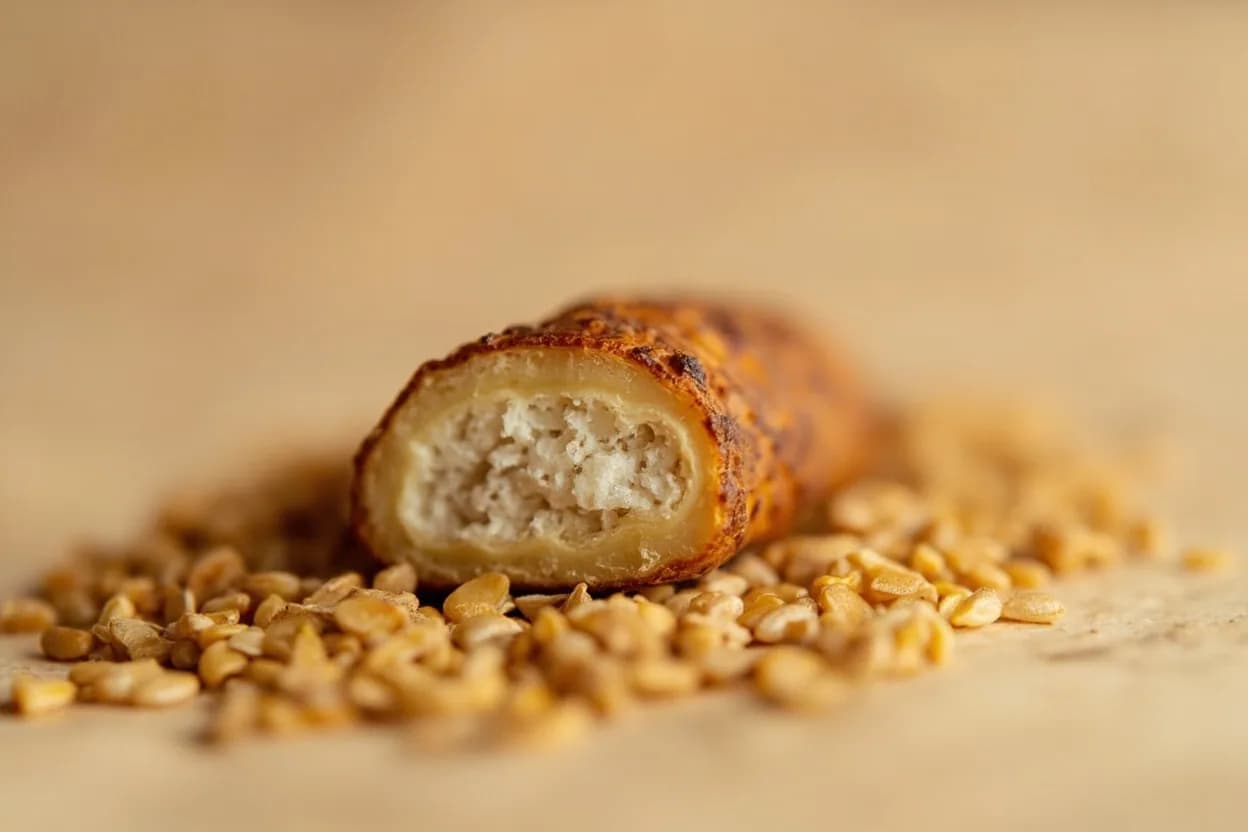
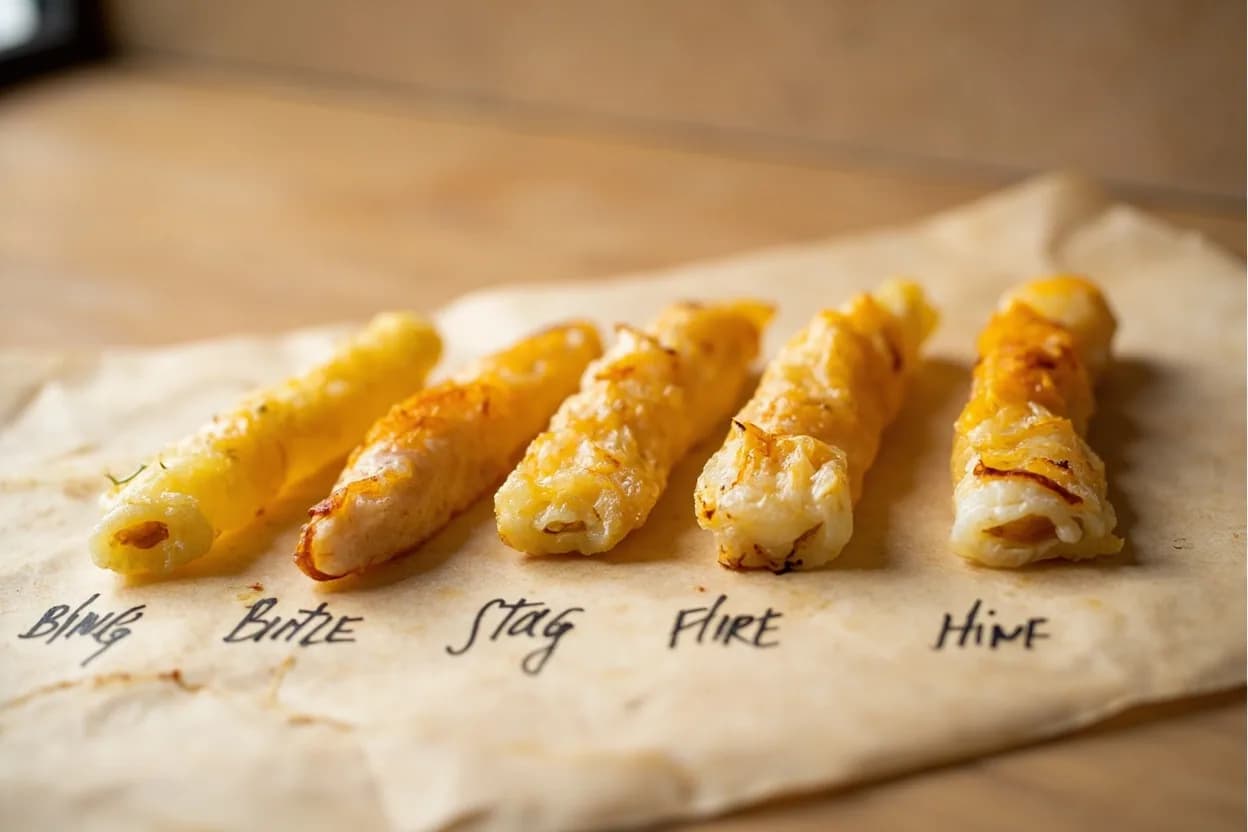
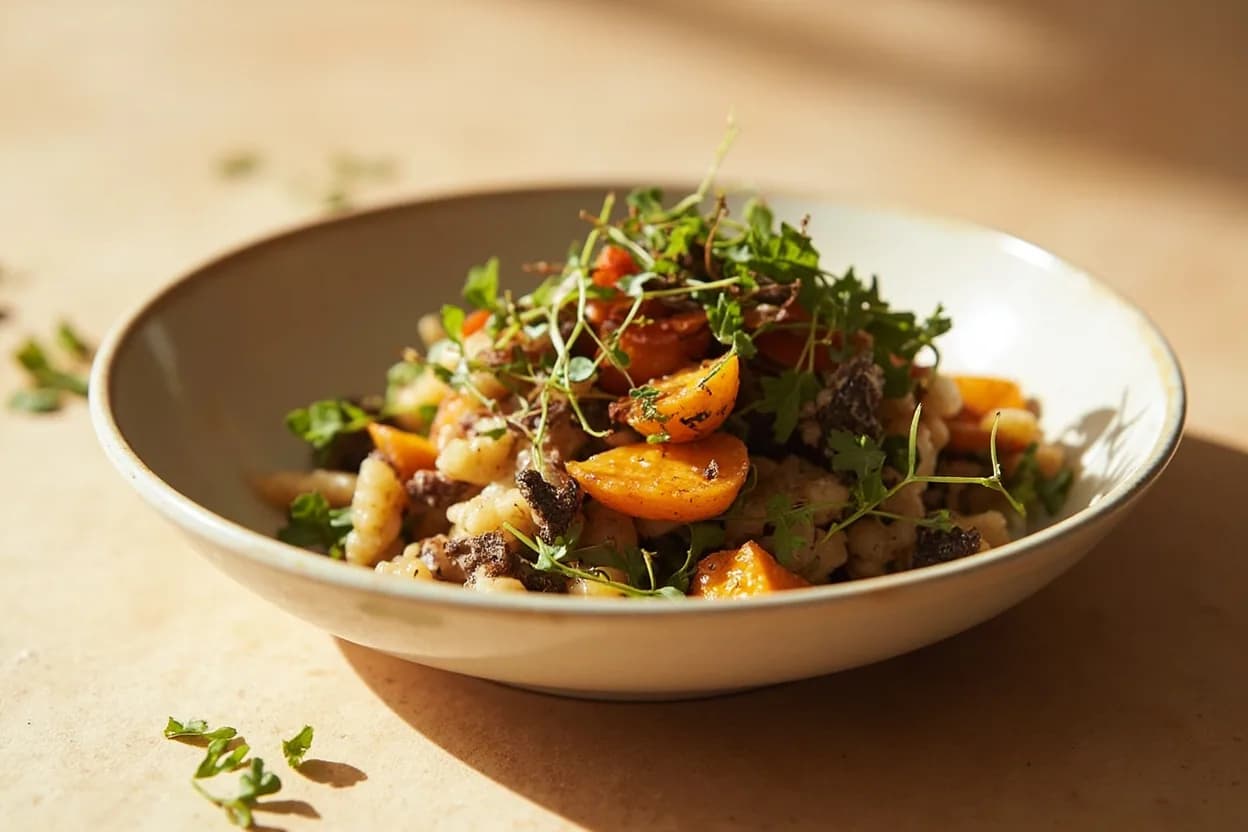
Whole and semi-pearled grains such as farro, hulled barley, freekeh, spelt, einkorn, wheat berries, and Kamut require extended boiling (20–60 minutes depending on variety and whether soaked) until their bran layers hydrate and their dense starchy cores fully gelatinize. Correct doneness is described as chewy-tender: the grain offers genuine, springy resistance when bitten — more than cooked rice but far less than an undercooked grain — with zero chalkiness, rawness, or crunch at the center. The grain should be intact (not split or mushy), uniformly soft throughout, and slightly swollen. This doneness state is judged exclusively by eating a grain, not by a thermometer.
In photos
What happens
Dense whole grains are protected by layers of bran and pericarp that slow water penetration. At a rolling boil, hot water gradually hydrates the outer layers, and heat drives gelatinization inward through the grain. Amylose and amylopectin chains in the starchy endosperm absorb water and swell, losing their crystalline order. When the process reaches the very center — marked by the disappearance of any opaque, white, chalky core — the grain is done. The bran layer remains slightly firm and chewy even when the interior is fully cooked, which is what distinguishes the pleasantly resilient texture of whole grains from the softness of white rice.
What to look for
- No white, chalky, or floury core visible when a grain is bitten and held to the light
- Uniform translucency throughout the grain's cross-section
- Springy, chewy resistance when bitten — not soft like pasta al dente, not crunchy like a raw grain
- The grain has visibly swollen to roughly 2–3× its dry volume
- No raw, starchy, or floury taste on the palate
- Surface feels slightly slippery from released starch when stirred
How to check
- Bite test (primary): remove a single grain, bite it in half, and inspect the cut face — no white or chalky core should remain; the center should look translucent and feel tender
- Chew test: chew the grain fully — it should offer uniform, pleasantly chewy resistance with no hard or gritty spot
- Squeeze test: press a grain between thumb and forefinger — it should flatten without a hard, resistant core; resist without turning to mush
- Taste test: eat a grain and hold it on the tongue for 3 seconds — no starchy, raw, or floury flavor should remain
The science behind it
- Al Dente (Pasta)
Analogous concept for pasta: both describe the elimination of raw starch at the core while maintaining some structural resistance
The heat-and-water process that transforms crystalline starch into a swollen, amorphous, tender gel — the mechanism of grain doneness
- Soaking (Grain Prep)
Pre-soaking hulled barley and wheat berries overnight reduces cook time by 20–30% by initiating bran hydration before heat is applied
- Pearling
Mechanical removal of bran layers speeds cooking dramatically; pearled farro cooks in 20 min while hulled farro takes 50–60 min
Roasted young durum wheat with a distinctly smoky flavor; naturally lower moisture content means it gelatinizes faster than unroasted whole grains
- Grain Salad Doneness
For grain salads, pull slightly before the chewy-tender point (a hair of resistance remains) to survive dressing absorption without becoming mushy
Appears in
References
- 1.On Food and Cooking — Harold McGee (Scribner, 2004)
- 2.Six Seasons — Joshua McFadden (Artisan, 2017)
- 3.Plenty More — Yotam Ottolenghi (Ten Speed Press, 2014)
- 4.The Grains Cookbook — Hana Asbrink (Clarkson Potter, 2023)
Confidence: high
Notes
Timing varies enormously by processing level
The single most important variable is how much bran has been removed. Hulled (whole-grain) farro retains all bran and takes 50–60 minutes; semi-pearled farro (partial bran removal) takes 30–40 minutes; pearled farro takes 20–25 minutes. Most commercially sold farro in Italy and the US is semi-pearled, but packaging often does not say so. When in doubt, begin tasting at 20 minutes and continue in 5-minute intervals.
Salt and acid in the cooking water
Unlike pasta, whole grains benefit from lightly salted cooking water from the start — the salt helps season throughout rather than just the surface. However, acidic ingredients (tomatoes, wine, vinegar) in the cooking water can slow gelatinization by strengthening hydrogen bonds in the starch structure, leading to undercooked-tasting grains. Add acid only after the grains are fully tender.