Aromatic & Fat Doneness
Ghee Clarification Point
Also: butter clarification, drawn butter stage, anhydrous milk fat
The moment at ~150°C when butter's milk solids and water have fully separated, leaving clear golden fat.
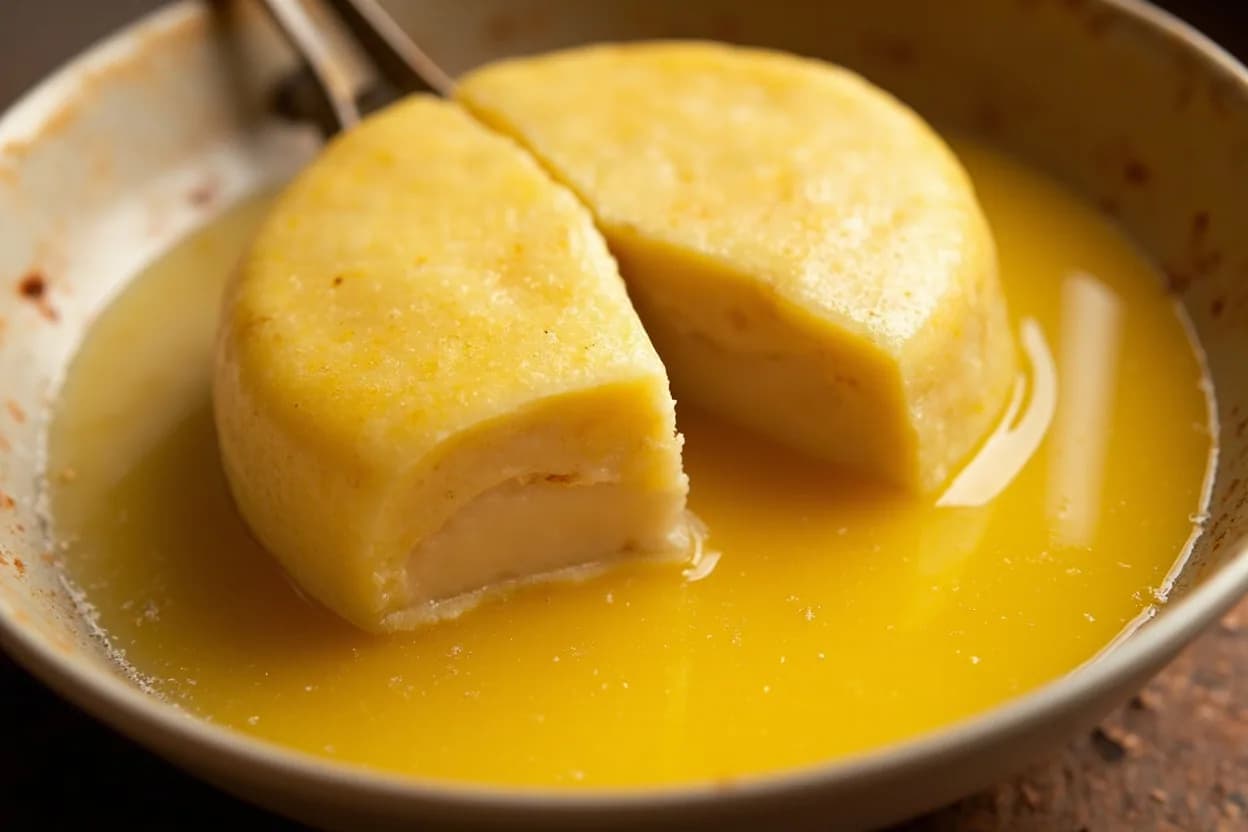
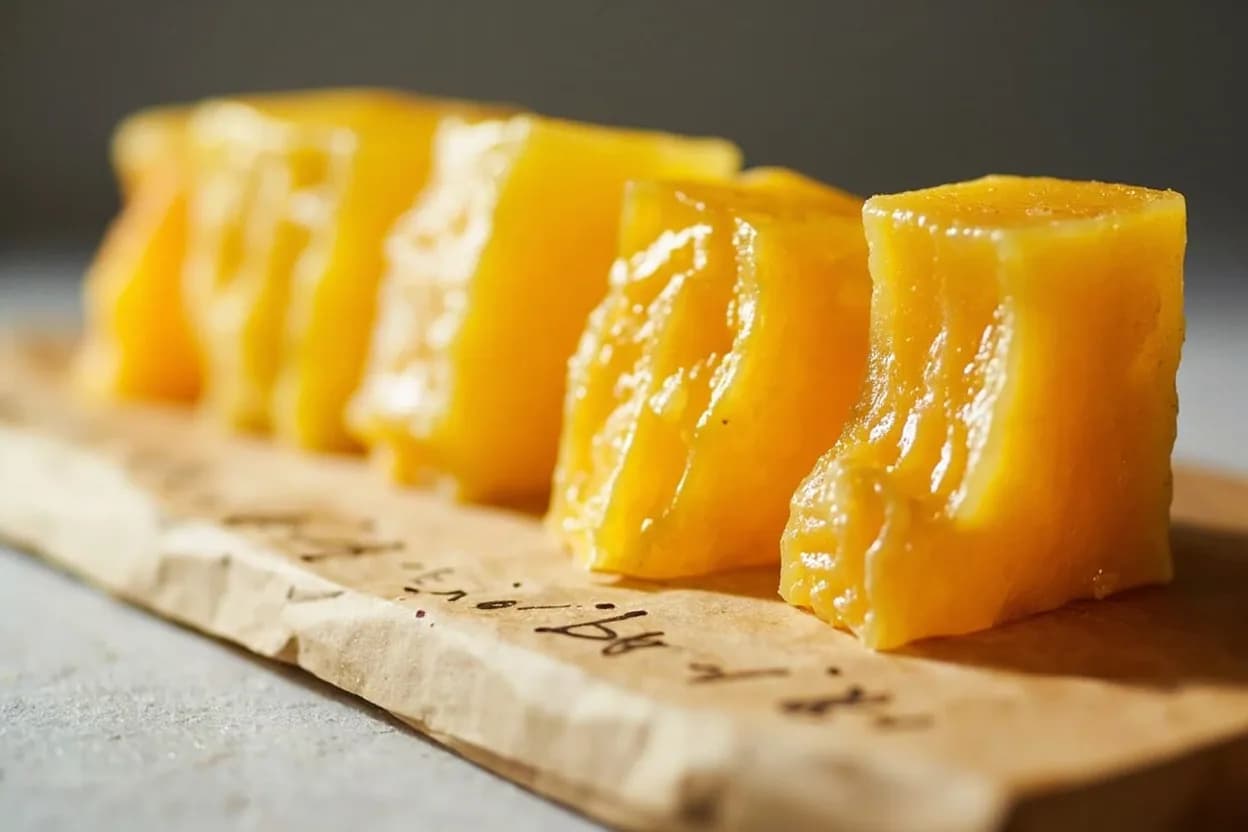
Ghee clarification point is reached when whole butter, rendered at approximately 150°C (302°F), has shed all its water through evaporation and its milk proteins have coagulated and sunk to the bottom of the pan, leaving behind pure anhydrous milk fat of brilliant golden clarity. The surface foam subsides as the last water boils off, signaling completion.
In photos

What happens
Butter is roughly 80% fat, 16–18% water, and 2–4% milk solids (proteins and lactose). As temperature climbs, water evaporates — visible as vigorous bubbling and a thick layer of white foam. Milk proteins (casein, whey) coagulate and cluster at the bottom, turning faintly nutty and golden. Once water is fully gone, boiling ceases, the foam vanishes, and the fat becomes optically clear. At 150°C the Maillard reaction just begins on the settled milk solids, contributing ghee's characteristic toasty, hazelnut undertone. Removal before scorching is critical.
What to look for
- Surface foam subsides and clears completely
- Fat turns deep translucent gold — you can see clearly through it to the pan bottom
- Milk solids on the bottom appear light golden-brown, not dark
- Bubbling drops from vigorous to gentle and then nearly silent
- A faint nutty, toasted-cream aroma replaces the raw dairy smell
- No milky white streaks remain in the liquid fat
How to check
- Infrared or probe thermometer aimed at the fat layer should read 145–155°C
- Tilt the pan — fully clarified fat is transparent; any remaining cloudiness means water or solids still suspended
- Dip a cold metal spoon into the fat: if it drips completely clear with no white droplets, clarification is complete
- Listen: the crackling and hissing of evaporating water stops
Carryover & resting
Remove from heat immediately once clarified; the sediment milk solids continue to brown from residual heat. Strain through cheesecloth or a fine-mesh sieve promptly to halt Maillard progression on the solids.
The science behind it
- Brown butter (beurre noisette)
Intentionally carried further than ghee — milk solids are allowed to brown deeply at ~160°C, adding caramel-hazelnut flavor.
- Smoke point
Pure ghee has a smoke point of ~250°C, far higher than whole butter (~175°C), because the water and proteins that cause early smoking have been removed.
Begins on milk solids near 150°C; brief contact creates ghee's nutty note, prolonged contact produces beurre noisette.
- Clarified butter (European)
Same process but typically stopped before any browning, giving a paler, milder fat used in hollandaise and meunière.
Appears in
References
- 1.On Food and Cooking — Harold McGee
- 2.The Fat Kitchen — Andrea Chesman
- 3.Indian-ish — Priya Krishna
- 4.USDA Composition of Foods Database
Confidence: high
Notes
Ghee vs. clarified butter
Culinary tradition distinguishes the two: European clarified butter is pulled early, keeping the fat pale and neutral. South Asian ghee intentionally kisses the milk solids with brief Maillard browning, producing the characteristic nutty depth. The difference is a matter of minutes and ~10°C at the end of the cook.
Shelf stability
Because water and lactose have been removed, properly made ghee is shelf-stable for weeks at room temperature and months refrigerated. Any residual moisture accelerates rancidity — the visual clarity test is therefore both a quality and safety check.