Fermented Grains & Cereals
Freekeh
Also: frikeh, farik, freek, green durum wheat, smoked green wheat
Fire-roasted young durum wheat with a haunting smoky, grassy flavor that anchors Levantine pilafs and soups with more complexity than any other grain.
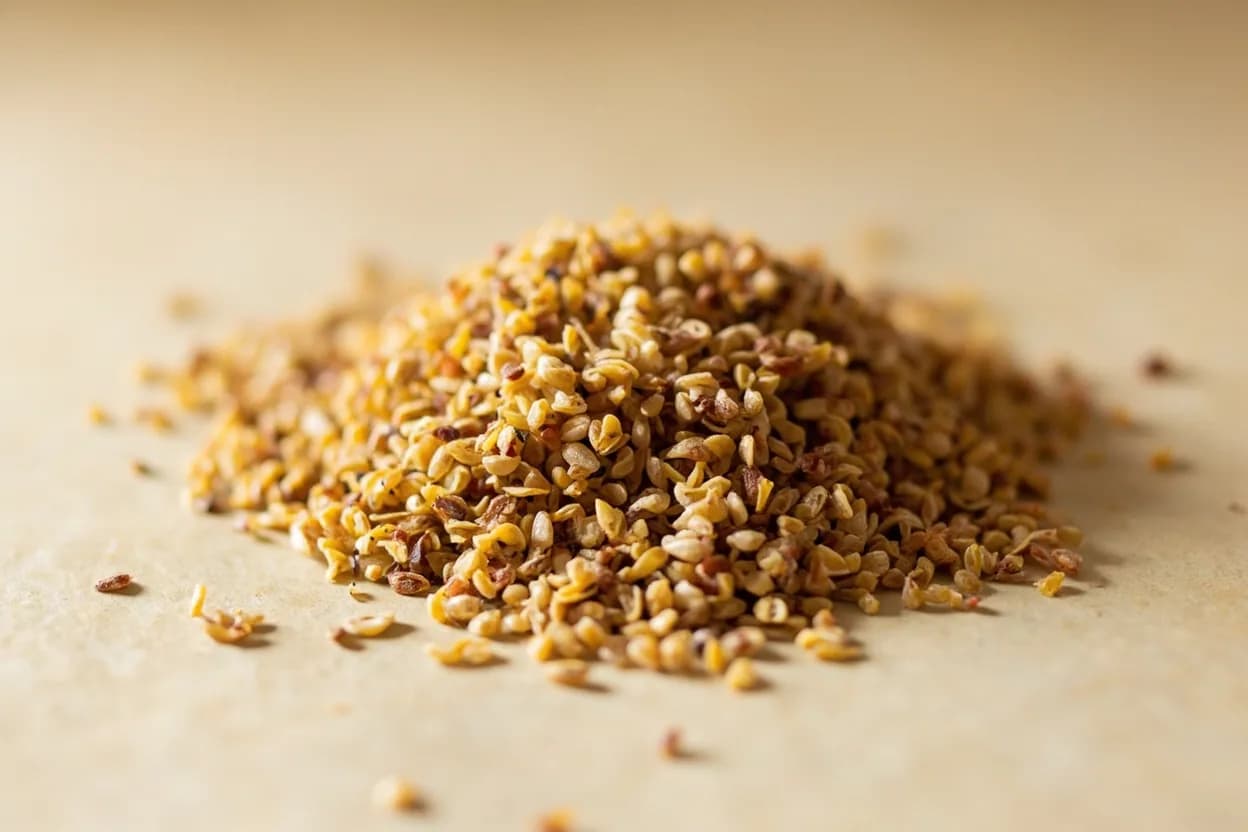
Freekeh is durum wheat harvested while the grain is still green and immature, then immediately subjected to controlled field burning — the straw and chaff ignite while the moisture-laden young grain is protected. The result is a cereal with a unique combination of the wheat's natural grassiness and the char-smoke acquired during roasting. It comes in two forms: whole (the entire kernel, longer cooking time, chewier texture) and cracked (the kernel broken into pieces, closer to bulgur in cooking behavior). The flavor is distinctly smoky and grassy with a light nuttiness, a faint earthiness, and a savory umami quality that intensifies during cooking. Freekeh is low-GI, high in protein and fiber relative to refined grains, and has been eaten across the Levant, Egypt, and North Africa for at least 2,000 years.
In photos
Flavour profile
Classic pairings
- Roast chickenLevantine
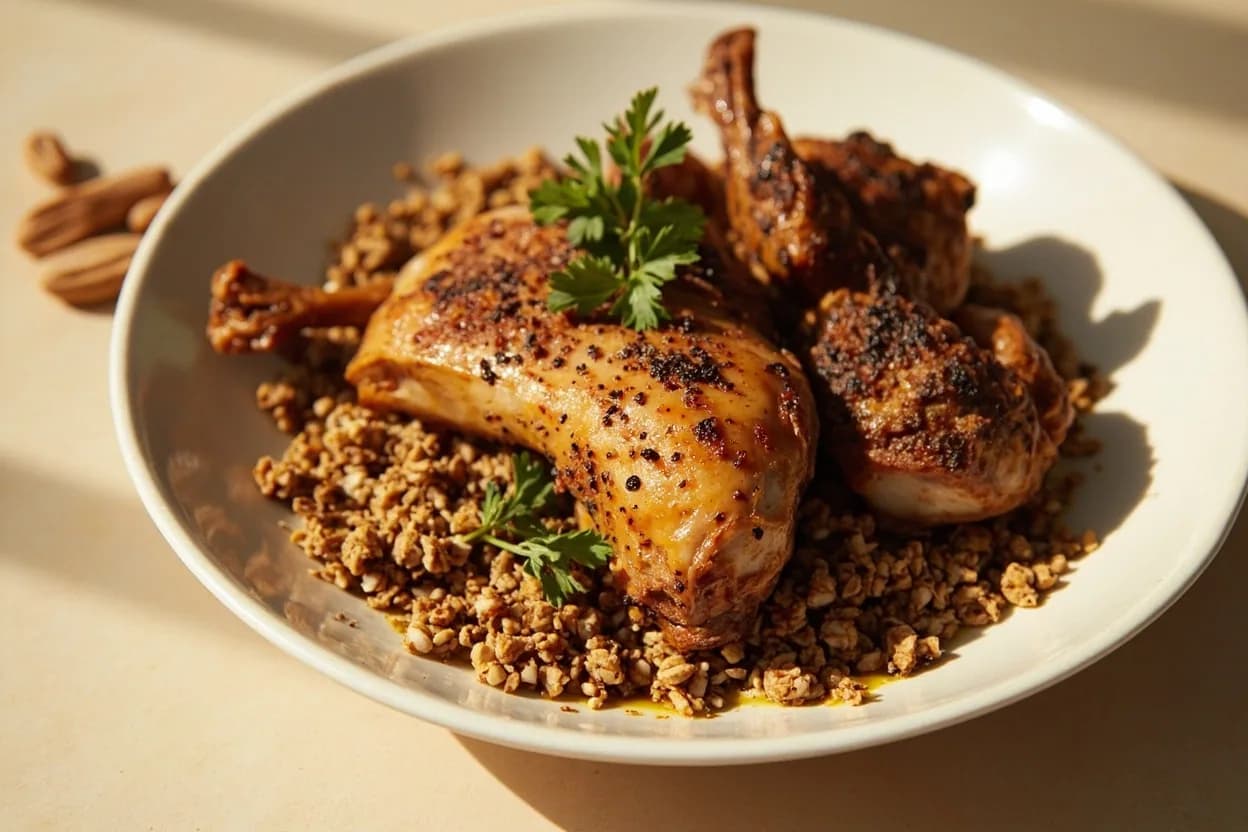
The defining freekeh dish across Lebanon, Palestine, and Syria is roasted chicken served over a freekeh pilaf seasoned with cinnamon, allspice, and toasted pine nuts. The chicken's rendered fat absorbs into the grain while its drippings deepen the smoky flavor.
- Warm spices (cinnamon, allspice, cumin)Levantine / Maghrebi
The spice profile of Arab cooking — particularly Lebanese baharat — complements freekeh's smoke. Cinnamon especially bridges the grain's grassy note and the char, producing a complex aroma.
- LambPalestinian / Levantine
Slow-braised or roasted lamb shoulder is served atop freekeh in festive Palestinian and Jordanian cooking; the fat and gaminess of the lamb make the grain's smoke and earth feel balanced rather than aggressive.
- Toasted pine nutsLevantine
Scattered over finished freekeh dishes as a garnish in the Levantine tradition; the pine nut's resinous, buttery crunch echoes the grain's smoky, slightly piney notes.
- Caramelized onionLevantine
Deeply browned onions — a technique called ifreh or mufaraket basal — are cooked into or over freekeh pilafs across the region. Sweet, dark onion tones counterbalance the grain's bitterness and amplify its umami.
- YogurtLevantine
A cold, tangy yogurt sauce (laban) alongside freekeh's smoky pilaf is a canonical combination across Levantine cuisine; the acidity cuts the grain's richness and cools the warm spices.
- Chicken or lamb brothLevantine
Freekeh should be cooked in meat stock rather than water whenever possible; the glutamates in the broth amplify the grain's own savory depth, and fat from the broth coats each kernel.
Adventurous pairings
- Smoked salmon
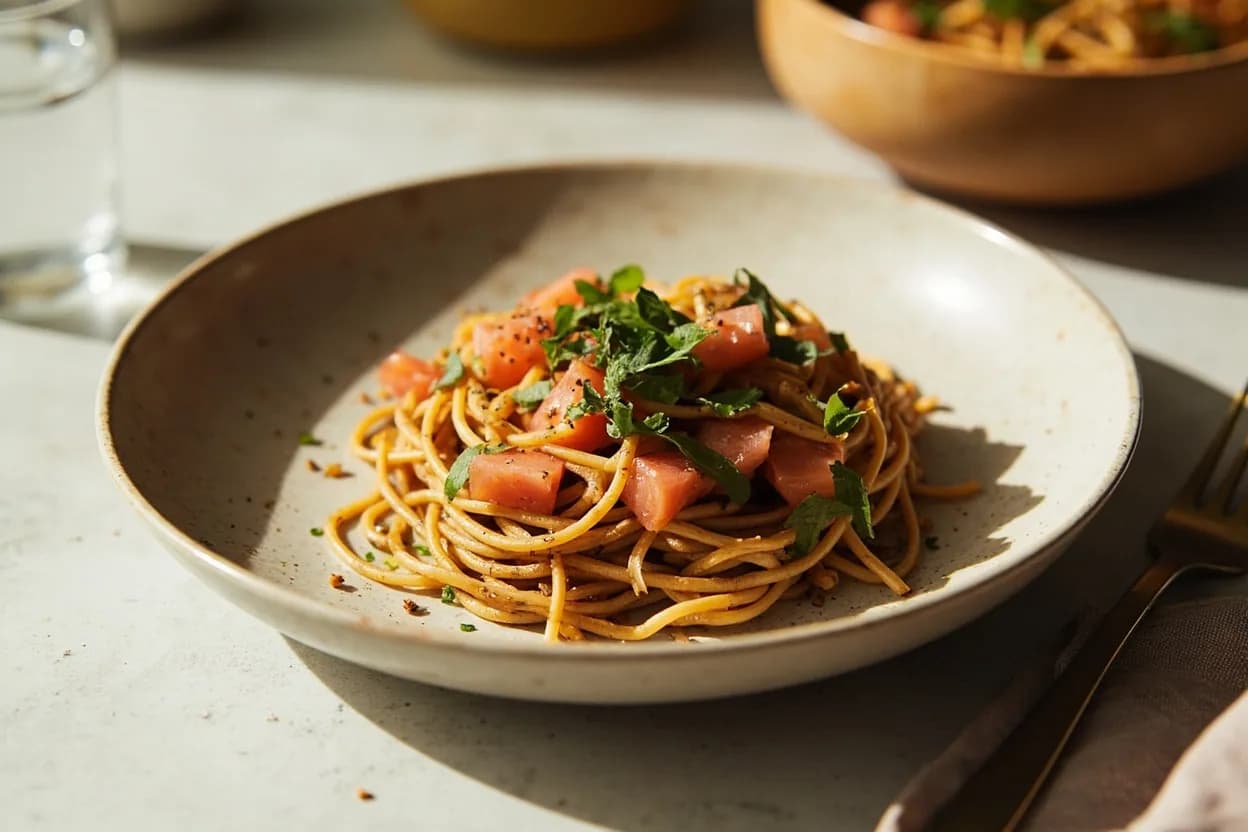
Serve a cold freekeh salad under smoked salmon; the grain's own smokiness doesn't compete but harmonizes, while its grassy freshness cuts through the fish's oil — an elegant grain bowl that requires no smoke to read smoky.
The fermented, briny citrus rind pairs with freekeh's earthiness in a North African register; the lemon's salt and bitter pith sharpen the grain's subtle chlorophyll notes.
- Roasted beets
Both beet and freekeh carry an earthy-mineral backbone; combine them in a warm grain salad with walnuts and labneh for a dish where three different 'earths' (grain, root, dairy) create a layered savory harmony.
Grated bottarga over a freekeh pilaf is a Mediterranean-crossover move; the grain's smoke and the roe's briny umami are two different amplifications of a savory baseline.
- Lapsang souchong tea
Use a strong brew as part of the cooking liquid for freekeh; two smoke-forward ingredients layer to produce a profoundly aromatic grain dish, best with a whole roasted bird.
Tread carefully
- Delicate white fish (plain)avoid
Freekeh's assertive smoke and earthy grassiness overpower the subtle sweetness of sole, flounder, or similar delicate fish; use a lighter grain or serve the fish separately.
- Dairy cream saucesavoid
Heavy cream muffles freekeh's signature smoky character and turns the dish stodgy; the grain's best expressions are dry-fluffy (pilaf) or brothy (soup), not creamy.
- Bright citrus acids added mid-cookavoid
Acid during cooking (rather than at service) reacts with the grain's chlorophyll, dulling color and producing an off-metallic note; add citrus only at the end or as a finish.
How to use it
- Toast dry in a pan before adding liquid to amplify smokiness and add a deeper nuttiness
- Cook in meat stock at a 1:2.5 ratio for whole freekeh, 1:2 for cracked; simmer covered on very low heat to prevent the grain from becoming gummy
- Rest off the heat for 10 minutes, covered, then fluff with a fork — identical technique to Persian rice
- Use cracked freekeh as a direct substitute for bulgur in tabbouleh or kibbeh nayyeh for a smokier register
- Simmer in broth with cinnamon stick, allspice berries, and whole peppercorns (the classic freekeh soup base across the Levant)
- For salads, cook al dente, spread on a tray to cool, then dress while slightly warm
Appears in
Related flavours
- Bulgur
The closest textural substitute — also a cracked durum wheat product, but parboiled not fire-roasted; lacks freekeh's defining smoke.
- Farro
An ancient wheat with a similar nutty earthiness but absent the smoke; Italian in origin versus Levantine, and harder/chewier in texture.
Both ingredients carry wood-smoke as a primary flavor dimension; using lapsang as part of the cooking liquid creates a double-smoked grain that is profound and unusual.
References
- 1.Jerusalem — Yotam Ottolenghi & Sami Tamimi (2012)
- 2.Falastin — Sami Tamimi & Tara Wigley (2020)
- 3.Claudia Roden, The Book of Jewish Food (1996) — freekeh in North African context
- 4.Anissa Helou, Levant: Recipes and Memories from the Middle East (2013)
Confidence: high
Notes
The two-form distinction matters
Whole freekeh and cracked freekeh behave differently enough that recipes should specify which to use. Whole freekeh takes 35–45 minutes to cook and has a pleasantly chewy bite closer to farro or wheat berry. Cracked freekeh cooks in 15–20 minutes and produces a lighter, more textured pilaf — the form used in soups and as a bulgur substitute. Commercially sold 'freekeh' in Western markets is almost always cracked.
Origin and etymology
The word comes from the Arabic root f-r-k (to rub), referring to the rubbing of the charred straw away from the grain after burning. The technique is believed to have originated in the Levant around 2300 BCE — legend holds it was discovered by accident when a village's young wheat stores caught fire and the kernels inside survived edible. It remains central to the cuisines of Palestine, Lebanon, Syria, Egypt, and Algeria.